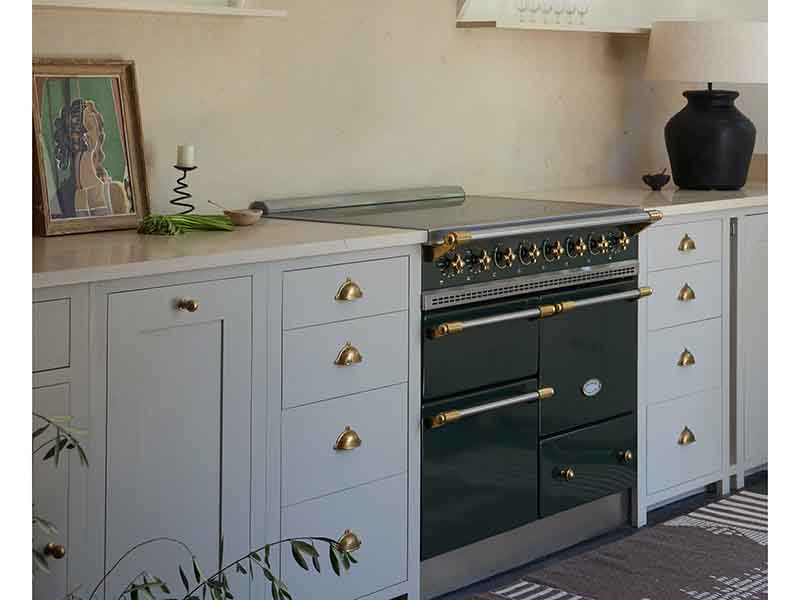

The Lacanche Cluny Classic 100 Induction is not the kind of appliance you casually add to a cart while buying paper towels. It is a French range cooker with the confidence of a tuxedo, the usefulness of a serious kitchen tool, and the sort of old-world charm that makes even reheating soup feel like a culinary decision. At 100 centimeters wide, or just under 40 inches, the Cluny Classic 100 sits in that sweet spot between “statement piece” and “still fits in a real kitchen.”
For homeowners designing a luxury kitchen, the Lacanche Cluny induction range offers a rare blend: French craftsmanship, customizable color and trim options, double ovens, storage drawers, and a five-zone induction cooktop. It looks traditional, but it cooks with modern precision. Think Burgundy workshop meets highly caffeinated electricity.
This guide takes a deep look at the Lacanche Cluny Classic 100 Induction: what it is, who it is for, what makes the induction model special, how it compares with gas and dual-fuel cooking, and what real-life ownership might feel like once the showroom glow meets Tuesday-night pasta.
What Is the Lacanche Cluny Classic 100 Induction?
The Lacanche Cluny Classic 100 Induction is a premium French range cooker from Lacanche, a brand known for handcrafted ranges made in Burgundy, France. The Cluny 1000 model is part of the Classic collection, which means it keeps the brand’s traditional styling: enamel bodywork, metal knobs, a decorative handrail, sturdy proportions, and a design that looks equally at home in a French country kitchen or a polished American remodel.
The “100” refers to its approximate width: 100 centimeters. In U.S. terms, that makes it about 39 3/8 inches wide. It is wider than a standard 30-inch range but less enormous than the grand 48-inch and 60-inch professional ranges often seen in large luxury kitchens. That size makes the Cluny Classic 100 appealing for serious home cooks who want more capacity and flexibility without turning the kitchen into a restaurant line.
The induction version replaces traditional gas burners with a smooth, five-zone induction cooktop. Below the cooking surface, the range typically features two ovens and two lower storage drawers. Depending on configuration and market availability, the ovens may be electric, convection, or other selectable combinations. For buyers, this is one of the biggest attractions of Lacanche: the range is not a one-size-fits-all box. It is more like a tailored suit, except it bakes bread.
Why the Cluny 100 Size Matters
Many premium kitchen appliances are designed around the “bigger must be better” philosophy. The Cluny Classic 100 disagrees politely, probably in French. Its 100-centimeter footprint gives you meaningful cooking space without overwhelming the room. It can serve as the centerpiece of a kitchen island wall, a farmhouse-style cooking alcove, or a transitional kitchen where traditional details meet modern appliances.
The width also allows for two separate ovens. That matters more than many people realize. With two ovens, you can roast vegetables at one temperature while baking a tart at another. You can keep a casserole warm while finishing a roast. You can cook a holiday meal without negotiating with a single oven like it is a tiny apartment elevator.
The Cluny’s oven cavities are intentionally more compact than the giant cavities found in some American pro-style ranges. That may sound like a downside at first, but smaller ovens preheat faster, hold heat efficiently, and create a more controlled cooking environment. For everyday meals, this can be more practical than heating a massive oven just to bake salmon or warm dinner rolls.
The Induction Cooktop: Modern Power Under a Classic Hat
The defining feature of the Lacanche Cluny Classic 100 Induction is its induction hob. Instead of using an open flame or radiant electric coil, induction cooking uses electromagnetic energy to heat compatible cookware directly. The cooktop surface itself is not the main heat source; the pan is.
In practical terms, this means faster heat response, strong simmer control, and a smoother cooking surface that is easier to wipe clean. If tomato sauce splatters on an induction glass surface, it usually does not bake itself into a fossil the way it can on a traditional burner. That alone may save several years of your life, or at least your favorite sponge.
The five cooking zones give the Cluny induction range plenty of flexibility for everyday use. You can boil pasta, simmer sauce, sauté vegetables, and keep a pan warm without playing musical cookware. Induction also shines when you need immediate adjustments. Lower the setting, and the pan responds quickly. Raise it, and water can come to a boil with impressive speed.
Benefits of Choosing Induction Over Gas
Fast Heat and Better Control
One of the biggest advantages of induction cooking is speed. Because heat is generated directly in the cookware, energy transfer is highly efficient. For busy households, this means less waiting for water to boil and more time pretending the kitchen is calm.
Induction also offers excellent low-temperature control. A delicate sauce, melted chocolate, or butter for a hollandaise can be managed with more confidence. Gas is wonderfully visual, but induction is precise in a different way. Instead of judging flame height, you learn settings and response times.
A Cleaner Cooking Surface
The Cluny Classic 100 Induction’s smooth hob is a major lifestyle upgrade for cooks who do not enjoy scrubbing around burner caps, grates, and mysterious crumbs from meals nobody remembers eating. Since the glass surface cools relatively quickly once cookware is removed, spills are generally easier to manage.
That does not mean the cooktop is maintenance-free. You still need induction-safe cleaners, soft cloths, and basic care to prevent scratches. But compared with cleaning heavy cast-iron grates after a sauce explosion, the induction surface feels merciful.
No Open Flame
For families, compact kitchens, or anyone who cooks while multitasking, the lack of an open flame can be reassuring. The pan gets hot, and the surface can retain residual heat, so caution still matters. But there is no exposed gas flame licking the side of a pan or threatening a dish towel that wandered too close to destiny.
Design: The Real Reason People Stare at Lacanche Ranges
Performance is important, but let’s be honest: people notice a Lacanche because it is beautiful. The Cluny Classic 100 Induction has the kind of presence that makes cabinets look more expensive just by standing near them. The enamel finish, polished trim, metal knobs, and rail detail create a sense of permanence. It does not look like a gadget. It looks like it belongs to a kitchen with opinions.
Buyers can often choose from a wide range of colors and trim finishes. Popular choices include classic black, ivory, stainless steel, deep blues, greens, burgundy tones, and other rich enamel colors. Trim options may include brass, chrome, nickel, or stainless-style finishes depending on availability. This customization is one reason designers love Lacanche. The range can either blend into the kitchen or become the star of the room.
In a white kitchen, a dark Cluny induction range creates dramatic contrast. In a warm wood kitchen, ivory or stainless steel can feel timeless. In a colorful kitchen, a bold enamel finish turns the range into a focal point. It is one of the few appliances that can influence the entire design direction of a room.
Oven Configuration and Everyday Cooking
The Cluny Classic 100 typically offers two side-by-side ovens, giving home cooks more flexibility than a single large cavity. Depending on the specific configuration, buyers may select electric ovens, convection options, or other combinations. This matters because different cooking styles benefit from different oven behavior.
An electric static oven is excellent for traditional baking and roasting. It provides steady heat and can work beautifully for cakes, breads, casseroles, and roasted meats. A convection oven uses a fan to circulate hot air, which can help with even browning and multi-rack cooking. Having both styles available, or two electric ovens with grill functions, can make the Cluny useful for both precise baking and big family meals.
The ovens are not oversized in the American mega-range sense, so buyers should measure their favorite roasting pans, sheet pans, and holiday cookware before ordering. The upside is that these ovens are efficient, responsive, and well suited to real-world cooking. Not every dinner involves a 28-pound turkey. Sometimes it is chicken thighs, roasted carrots, and a pan of brownies, which is honestly a stronger weeknight strategy.
Installation Considerations Before Buying
A Lacanche Cluny Classic 100 Induction is a serious appliance, and installation should be planned early in the kitchen design process. Induction models require appropriate electrical service, and requirements may vary by configuration and region. This is not a “plug it in and hope” situation. Work with an authorized dealer, licensed electrician, and kitchen designer before finalizing cabinetry or utility rough-ins.
Because the range is heavy, flooring and delivery access also matter. Measure doorways, stair turns, hallways, and the final kitchen opening. Luxury ranges have a funny way of revealing that a doorway is half an inch too narrow at the least convenient moment.
Ventilation is another key point. Even though induction does not create combustion gases like gas burners, cooking still produces steam, grease, odors, and airborne particles. A properly sized range hood or ventilation system helps keep the kitchen comfortable and protects surrounding cabinetry.
Cookware Compatibility
Induction cooking requires magnetic cookware. Cast iron, enameled cast iron, and many stainless steel pans work well. Copper, glass, and aluminum pans usually do not work unless they have an induction-compatible base. The easiest test is the magnet test: if a magnet sticks firmly to the bottom of the pan, it will likely work on induction.
For anyone upgrading from gas, this may mean replacing a few beloved pans. That can be annoying, especially if your favorite skillet has been with you through three apartments and one questionable stir-fry phase. But once you have the right cookware, induction cooking feels fast, clean, and controlled.
Who Should Consider the Lacanche Cluny Classic 100 Induction?
The Lacanche Cluny Classic 100 Induction is best suited for homeowners who care about both cooking performance and kitchen design. It is not the cheapest way to boil water. It is not the most minimalist appliance. It is not trying to be. This range is for people who see cooking as part function, part ritual, and part daily pleasure.
It makes sense for serious home cooks, design-focused remodelers, entertainers, and anyone building a high-end kitchen around long-term value rather than short-term trends. It is especially appealing if you love the look of a traditional French range but prefer the speed and efficiency of induction cooking.
It may not be ideal for buyers who want smart screens, app controls, or ultra-modern digital interfaces. Lacanche is more tactile. You turn knobs. You feel the metal. You cook. There is something refreshing about an appliance that does not ask to join your Wi-Fi network.
Pros and Cons of the Lacanche Cluny Classic 100 Induction
Pros
- Elegant French styling with extensive customization options
- Five-zone induction cooktop for fast, precise cooking
- Two ovens for flexible meal preparation
- Compact luxury width compared with larger professional ranges
- Smooth cooktop surface that is easier to clean than gas grates
- Strong design value for premium kitchens
Cons
- Premium pricing compared with mainstream induction ranges
- Requires compatible magnetic cookware
- Electrical planning is essential
- Oven cavities may feel smaller than some American-style ranges
- Lead times and customization details should be confirmed before ordering
How It Compares With Other Luxury Ranges
Compared with brands that emphasize commercial-style stainless steel, the Lacanche Cluny Classic 100 Induction feels more decorative and heritage-driven. It is less about looking like a restaurant appliance and more about looking like it belongs in a home where cooking is loved. A stainless pro-style range may say, “I can sear twelve steaks.” A Lacanche says, “I can make dinner and improve the architecture.”
Compared with many modern induction ranges, the Cluny offers more personality. It does not disappear into the kitchen. It anchors it. The trade-off is that you may give up some digital convenience or mass-market availability. But for buyers who want craftsmanship, color, and a sense of tradition, that trade-off is often the point.
Cleaning and Maintenance Tips
To keep the Lacanche Cluny Classic 100 Induction looking its best, treat it like a premium appliance rather than a countertop experiment zone. Wipe spills quickly once the surface is safe to touch. Use cleaners designed for ceramic or induction glass. Avoid dragging rough cookware across the cooktop, especially cast iron. Lift pans instead of sliding them.
The enamel exterior should be cleaned with gentle products and soft cloths. Harsh abrasives can damage finishes over time. Knobs, rails, and trim should be handled carefully, especially if they have polished finishes that show fingerprints. In other words, do not attack your French range with the same energy you use on a muddy grill grate.
Real-Life Experiences With the Lacanche Cluny Classic 100 Induction
Living with a Lacanche Cluny Classic 100 Induction is a little different from simply owning an appliance. It changes how the kitchen feels. The first experience many owners notice is visual: the range becomes the room’s anchor. Guests notice it quickly. Some will ask about the color. Others will touch the rail gently, as if the stove might speak with a French accent. If you choose a bold enamel finish, prepare for compliments. If you choose black, ivory, or stainless steel, expect quieter admiration and lots of “Where did you get that?” questions.
The second experience is speed. Coming from gas or standard electric, induction can feel almost startling. A pot of water heats quickly, and a skillet responds fast when you increase or reduce the setting. The adjustment period is real. The first few meals may involve lowering heat sooner than expected, because induction does not politely wander toward temperature. It arrives. Your onions may go from “softening beautifully” to “auditioning for charcoal” if you cook on autopilot.
Once you adapt, though, the control becomes addictive. Simmering sauces feels calmer. Boiling pasta feels faster. Melting butter feels less dramatic. The flat surface also changes cleanup habits. Instead of removing grates and burner caps, you wipe the glass. For people who cook often, that small daily convenience matters. A clean cooktop at the end of dinner can make the whole kitchen feel less chaotic.
The double ovens create another practical shift. At first, some owners may wonder whether the oven cavities are large enough. Then everyday life happens, and the benefit becomes obvious. One oven can handle roasted vegetables while the other bakes chicken. During holidays, the separation is even more useful. Pies do not have to share space with savory dishes. Side dishes can stay warm without hijacking the main oven. The Cluny encourages better timing, which is basically the secret ingredient in entertaining.
The learning curve is not difficult, but it exists. You need induction-compatible cookware with flat bases. You need to understand how each cooking zone behaves. You need to remember that glass can scratch if you treat it carelessly. You may also need to rethink certain habits from gas cooking, such as shaking a pan aggressively over a flame. On induction, lifting and setting down the pan works better than dragging it like a tiny sled.
The most satisfying experience is how the Cluny combines beauty and usefulness. Some luxury appliances look impressive but feel fussy. The Lacanche Cluny Classic 100 Induction feels substantial. The knobs are tactile. The doors have weight. The design makes cooking feel intentional. Even simple meals gain a little ceremony. Scrambled eggs become breakfast with posture. Soup becomes cuisine-adjacent. Toasting nuts becomes an event you might describe too passionately at dinner.
There are practical realities, of course. This is a premium range, so buyers should be patient with ordering, customization, delivery, and installation. It is not an impulse purchase. It rewards planning. Confirm dimensions, electrical needs, ventilation, finish options, and service support before committing. But once installed, the Cluny Classic 100 Induction can feel like the rare kitchen investment that is both functional and emotional. It helps you cook dinner, and it makes the room feel finished.
Conclusion
The Lacanche Cluny Classic 100 Induction is a luxury French range cooker for people who want more than basic appliance performance. It offers the romance of classic enamel design, the flexibility of two ovens, and the modern speed of a five-zone induction cooktop. It is elegant, practical, customizable, and unmistakably premium.
For the right kitchen, it can be a centerpiece that earns its space every day. It will not be the best fit for every budget or every cooking style, but for homeowners who want a high-end induction range with personality, craftsmanship, and serious cooking ability, the Cluny Classic 100 is one of the most compelling options in the luxury appliance world.