Artist Transforms Her Favorite Disney Princesses Into Anime Art And They Look Too Kawaii

Disney Princesses have survived poison apples, sea witches, cursed spindles, enchanted castles, questionable royal parenting, and at least one extremely dramatic hair day. So naturally, the internet asked the next logical question: what would they look like if they stepped into an anime universe?
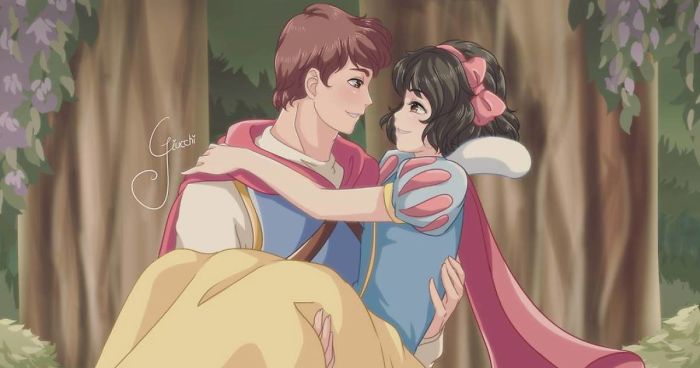
That is where artist Giulliano Ricchi’s charming Disney Princess anime art comes in. The fan-art series reimagines beloved princesses and Disney couples with a soft, expressive, anime-inspired look that feels romantic, glossy, and wonderfully “kawaii.” The result is not a simple costume swap. It is a full visual translation: classic Disney silhouettes meet wide-eyed emotion, delicate shading, polished linework, and the kind of sparkle that makes every character look like they are about three seconds away from starring in a magical opening theme song.
From Ariel and Prince Eric to Mulan and Li Shang, Rapunzel and Flynn Rider, Belle and the human Beast, Tiana, Merida, Jasmine, Cinderella, Snow White, Aurora, and Pocahontas, the artwork taps into something fans already love: seeing familiar characters through a fresh artistic lens. Disney has always inspired fan artists, but this particular transformation works because anime and Disney animation both understand the same secret: emotion looks bigger when the eyes tell the story.
Why Disney Princess Anime Art Feels So Instantly Addictive
There is a reason Disney Princess anime art spreads so quickly online. It combines two massive nostalgia engines. On one side, Disney Princesses represent childhood wonder, fairy-tale romance, bravery, and songs that somehow remain trapped in your brain for decades. On the other side, anime brings intensity, stylized emotion, and dramatic beauty. Put them together, and you get visual comfort food with extra sprinkles.
Anime-style illustration often emphasizes expressive faces, clean shapes, dramatic hair, emotional eye contact, and cinematic poses. Disney character design also depends on personality-driven silhouettes: Ariel’s flowing red hair, Belle’s elegant warmth, Jasmine’s confident posture, Merida’s wild curls, and Rapunzel’s golden waterfall of hair are all instantly recognizable. Ricchi’s art keeps those iconic traits but softens and heightens them through an anime-inspired filter.
The “Kawaii” Factor
The word “kawaii” is commonly associated with cuteness, charm, softness, and emotional appeal in Japanese pop culture. In this series, kawaii does not mean the princesses become childish or one-note. Instead, the style makes them feel sweeter, more intimate, and more emotionally readable. A tilted head, a blush, a sparkling eye, or a gentle smile can change the entire mood of a familiar scene.
That is why the artwork feels so shareable. It is not only pretty; it invites the viewer to say, “Wait, I want a whole anime series of this.” And honestly, who among us would not watch a dramatic shoujo-style version of Beauty and the Beast where every enchanted rose petal gets its own slow-motion sequence?
Giulliano Ricchi’s Anime Makeover: A Fan-Art Love Letter
Fan art works best when it respects the original characters while still offering something new. Ricchi’s series does exactly that. The Disney Princesses are not erased under the anime style; they are enhanced by it. Their key visual identities remain clear, but the mood shifts into something more delicate, romantic, and manga-like.
The Bored Panda feature that helped popularize the series highlighted several pieces, including Brave, Mulan and Li Shang, Prince Eric and Ariel, Aladdin and Princess Jasmine, Flynn Rider and Rapunzel, Princess Aurora and Prince Phillip, Snow White, John Smith and Pocahontas, Prince Charming and Cinderella, Belle and the human Beast, and The Princess and the Frog. Each one shows how a small stylistic shift can make familiar stories feel brand-new.
Best Examples From the Disney Princess Anime Art Series
Merida From Brave: Wild Hair, Softer Energy
Merida is already one of Disney’s most visually dynamic princesses. Her bright curls practically deserve their own billing in the credits. In anime form, those curls become even more expressive, framing her face with movement and personality. What makes the transformation fun is the balance between softness and strength. Merida still looks adventurous, stubborn, and ready to ignore royal instructions, but the anime style gives her a gentler storybook glow.
This is a good example of why fan art can deepen appreciation for a character. Merida’s original design is bold and untamed, while the anime version leans into elegance without taking away her rebellious spirit. She remains the girl who would rather shoot arrows than sit through a lecture on proper princess behavior. Relatable? Very.
Mulan and Li Shang: Drama, Honor, and a Perfect Anime Setup
If any Disney story already has anime potential, it is Mulan. The film has training sequences, hidden identity, family honor, battlefield tension, emotional restraint, and a romantic dynamic built on respect. In other words, it is already halfway to becoming a beautifully animated series with a very intense soundtrack.
Ricchi’s anime-style take on Mulan and Li Shang works because their relationship depends on quiet emotion. Anime art is excellent at showing what characters are not saying out loud. A glance can become a confession. A small smile can feel like a three-chapter arc. The result gives Mulan and Shang a polished, dramatic quality while keeping the core of their bond intact.
Ariel and Prince Eric: Mermaid Romance Meets Shoujo Sparkle
Ariel has always been one of the easiest Disney Princesses to reimagine because her design is so iconic: red hair, ocean colors, curious eyes, and a romantic dream bigger than the entire Atlantic. In anime style, Ariel’s expressiveness becomes even stronger. Her eyes can carry the wonder, longing, and impulsive “I signed what?” energy that defines her story.
Prince Eric also benefits from the anime treatment. In Disney form, he is handsome and kind. In anime form, he looks like he might have a tragic backstory, a violin solo, or both. The pairing feels especially natural because The Little Mermaid is already full of transformation, fantasy, and emotional stakes.
Jasmine and Aladdin: A Whole New Art Style
Jasmine and Aladdin are a strong match for anime fan art because their story blends action, romance, humor, and spectacle. Anime styling can exaggerate the dramatic sweep of their relationship: the rooftop chase, the palace tension, the magic carpet ride, and the classic “you are not who you said you were” problem. A tiny issue, really. Barely worth mentioning. Except, you know, it drives the plot.
In a kawaii anime version, Jasmine’s confidence can be shown through sharper eyes and elegant posture, while Aladdin’s charm can be made warmer and more mischievous. The two characters already have playful chemistry, and the anime style makes that chemistry feel even more like a romantic adventure manga.
Rapunzel and Flynn Rider: The Rom-Com Energy Is Strong
Rapunzel and Flynn Rider may be the most naturally anime-ready Disney couple in the lineup. She is artistic, sheltered, optimistic, and equipped with magical glowing hair. He is sarcastic, handsome, emotionally guarded, and dramatically allergic to making responsible decisions. That is not just a Disney setup; that is premium anime rom-com fuel.
The anime version of Rapunzel can lean into her wide-eyed curiosity and expressive innocence, while Flynn’s smirk becomes even more theatrical. Their dynamic depends on contrast: sunshine meets self-preserving rogue. Ricchi’s style makes that contrast feel sweeter and more visually intimate.
Belle and the Human Beast: Fairytale Elegance With a Manga Glow
Belle has always attracted artists because her personality is defined by imagination. She is a reader, a dreamer, and a person who looks at a cursed castle full of talking furniture and thinks, “Well, this is unusual, but the library is excellent.” In anime form, Belle’s intelligence and warmth can be highlighted through soft facial expression, graceful posture, and dreamy color choices.
Pairing her with the human Beast, often known by fans as Prince Adam, adds another layer. Anime art loves transformation arcs, and Beauty and the Beast is basically the grand ballroom version of one. The style fits the emotional payoff: tenderness after fear, beauty after loneliness, and a romance that says, “Maybe do not judge someone by their horns, claws, or castle décor.”
Tiana and Naveen: Ambition, Charm, and Southern Magic
Tiana is one of Disney’s most grounded princesses. Her story is built around hard work, ambition, family legacy, and the dream of building something with her own hands. Anime fan art can make her elegance shine, but it should also preserve her determination. She is not simply cute; she is capable, focused, and probably better at managing a restaurant than most fictional kingdoms are at managing royal security.
When paired with Naveen, the anime style can bring out the comedy and romance in their relationship. Tiana’s practical energy contrasts beautifully with Naveen’s playful charm. The result is a couple that feels lively, expressive, and ready for either a jazz-filled fantasy film or a cozy slice-of-life anime about opening the perfect New Orleans café.
Why Fans Love Seeing Disney Princesses Reimagined
Reimagining Disney Princesses is not new. Artists have drawn them as modern fashion icons, warriors, villains, historical figures, superheroes, and even realistic portraits. The appeal is simple: these characters are familiar enough to recognize instantly, but flexible enough to survive a creative remix.
That flexibility is part of their cultural power. Snow White, Cinderella, Aurora, Ariel, Belle, Jasmine, Pocahontas, Mulan, Tiana, Rapunzel, Merida, Moana, and Raya each represent different eras of Disney storytelling. Some are classic fairy-tale heroines. Others are adventurers, leaders, fighters, dreamers, or explorers. When artists reinterpret them, they are not just changing outfits or eye shapes. They are asking what makes each character recognizable at the emotional level.
Fan Art Keeps Old Stories Feeling New
Fan art thrives because audiences do not want to leave beloved characters frozen in one pose forever. A good reinterpretation invites fans to rediscover what they loved in the first place. Anime-style Disney Princess art does this especially well because it adds emotional intensity without making the characters feel unfamiliar.
The best pieces create a “double recognition” effect. Viewers immediately know who they are looking at, but they also notice something different: a softer expression, a more dramatic mood, a romantic framing, or a cuter design language. That quick moment of surprise is the spark that makes people save, share, and comment.
The Art Style: What Makes These Princesses Look So Kawaii?
Several visual choices help create the kawaii anime effect. First, the eyes are more expressive and emotionally central. In anime and manga-influenced art, eyes often carry a large part of the character’s personality. Second, the faces are softer, with simplified noses and delicate mouths. Third, the color palettes tend to feel polished and dreamy, creating a gentle glow.
Hair also plays a huge role. Disney already uses hair as a storytelling tool: Ariel’s red waves signal movement and curiosity, Rapunzel’s golden hair symbolizes freedom and magic, Merida’s curls represent wild independence, and Mulan’s changing hairstyle reflects identity and transformation. Anime styling can amplify those meanings by making hair more fluid, shiny, and expressive.
Finally, there is the emotional pose. Anime-inspired portraits often use small gestures to suggest big feelings: clasped hands, angled shoulders, shy smiles, or intense eye contact. These details create the “too kawaii” response because they make the characters feel tender and alive.
Disney and Anime: Two Animation Traditions That Speak Emotion Fluently
Disney and anime come from different artistic histories, but both traditions understand how animation can turn emotion into design. Disney’s classic characters rely on gesture, silhouette, musical rhythm, and theatrical expression. Anime often relies on stylized faces, symbolic backgrounds, dramatic framing, and controlled emotional intensity.
When these approaches meet in fan art, the result can feel surprisingly natural. A princess reaching toward a dream, looking at a love interest, or standing at the edge of a new life already belongs in Disney storytelling. Anime simply gives that moment a different visual language: a little more sparkle, a little more softness, and perhaps a suspiciously perfect breeze.
Experiences and Reflections: Why This Topic Feels So Personal to Fans
There is something oddly personal about seeing childhood characters redrawn in a new style. Many fans first met Disney Princesses when they were very young, back when a plastic tiara felt like formalwear and rewinding a VHS tape counted as advanced technology. Later, those same fans discovered anime, manga, digital art, cosplay, conventions, and online fan communities. Disney Princess anime art sits right at the intersection of those memories.
For many viewers, this kind of artwork feels like watching two different parts of their childhood shake hands. Maybe Ariel was the first princess they loved, while Sailor Moon, Cardcaptor Sakura, or Pokémon introduced them to Japanese animation. Maybe Belle made them love books, while anime taught them that quiet characters could still carry huge emotional worlds. Maybe Mulan showed them courage, and anime later gave them a taste for training arcs, dramatic eye contact, and heroes who discover their strength one impossible challenge at a time.
That is why a simple fan-art post can feel bigger than a gallery of cute drawings. It becomes a nostalgia remix. It lets fans imagine alternate versions of stories they already know. What if The Little Mermaid had been animated like a romantic fantasy anime? What if Brave became a coming-of-age adventure series with magical forests and emotional archery tournaments? What if The Princess and the Frog became a stylish music anime where every restaurant scene looked delicious enough to make your stomach file a formal complaint?
There is also an experience shared by many digital art lovers: the joy of studying how an artist solves a design problem. Transforming a Disney Princess into anime is not as easy as making the eyes larger and adding sparkles. The artist has to decide what to keep, what to simplify, and what to exaggerate. If Ariel’s hair changes too much, she loses her instant identity. If Belle’s expression becomes too generic, her thoughtful personality disappears. If Mulan becomes only “cute,” the artwork risks missing her strength. Good fan art walks that tightrope carefully.
Viewers often respond strongly because they can see both the familiar and the new at once. The princess is still there, but the emotional flavor has shifted. That shift invites conversation. Some fans prefer the original Disney style. Others immediately want posters, stickers, enamel pins, or a full animated reboot. Both reactions are part of the fun. Fan art is not about replacing the original; it is about opening another door into the same beloved world.
On a personal level, Disney Princess anime art also reminds us that stories grow with their audiences. A character you loved at age seven may mean something different at twenty-seven. Cinderella may stop being only a girl with glass slippers and become a symbol of endurance. Tiana may become more inspiring when you understand the reality of working toward a dream. Rapunzel may feel less like a fairy-tale heroine and more like someone learning how to leave a small world for a bigger one. Anime-style art, with its emotional closeness, can make those themes feel fresh again.
And yes, part of the experience is simply that the artwork is adorable. Not every cultural analysis needs to wear a tiny professor hat. Sometimes a princess looks cute, the colors are pretty, the romance is sweet, and the internet collectively says, “I need this as a sticker immediately.” That reaction matters because joy matters. In a digital world full of noise, a beautifully drawn, kawaii princess can be a tiny pocket of delight.
Conclusion: A Kawaii Kingdom Worth Revisiting
Artist Transforms Her Favorite Disney Princesses Into Anime Art And They Look Too Kawaii is more than a catchy title. It captures why Disney fan art remains such a popular corner of internet culture. Giulliano Ricchi’s anime-inspired interpretations bring a soft, emotional, and charming twist to characters people already adore. The series works because it does not fight the original Disney magic; it reframes it.
Whether you love Ariel’s dreamy curiosity, Mulan’s courage, Rapunzel’s sunshine energy, Tiana’s determination, Merida’s independence, Jasmine’s confidence, Belle’s intelligence, or Cinderella’s timeless elegance, these anime-style transformations offer a fresh way to appreciate familiar heroines. They are cute, expressive, nostalgic, and just dramatic enough to make us wonder why there is not already a Disney Princess anime anthology. Someone call a fairy godmother. Preferably one with a production budget.