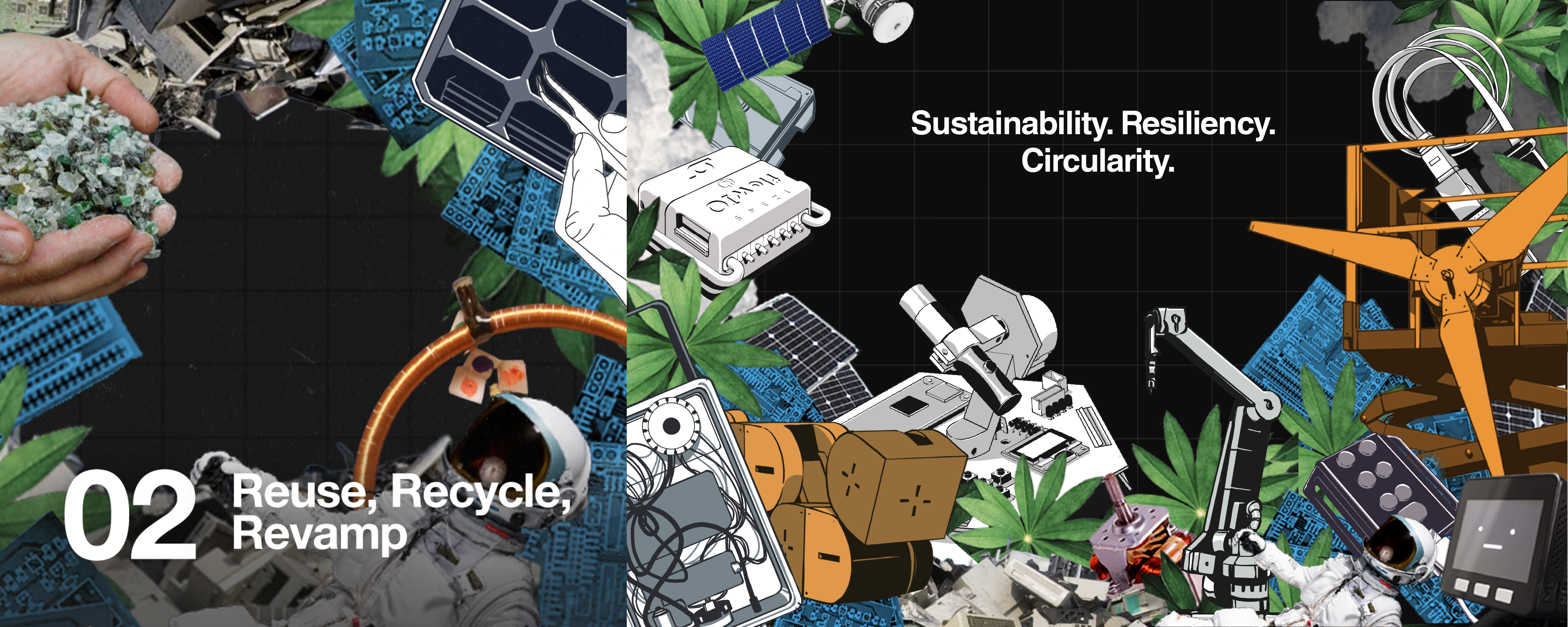

The 2022 Hackaday Prize did not ask makers to simply build something shiny, blinking, and dramatic enough to impress the internet for a weekend. It asked a harder question: what can hardware hackers do when the planet is overflowing with broken gadgets, plastic bottles, acrylic scraps, forgotten circuit boards, and the occasional drawer full of mysterious cables nobody has dared to throw away since 2009?
The answer came through the Reuse, Recycle, Revamp challenge, one of the most practical and refreshingly grounded rounds of the 2022 Hackaday Prize. Instead of treating sustainability like a corporate slogan printed on a reusable tote bag, the finalists turned it into machines, tools, lamps, computers, scanners, skateboard decks, and 3D-printing systems. Some projects reused old electronics. Others transformed waste plastic into usable material. A few did both, because apparently one environmental headache was not enough.
Below is a deep look at the ten finalists, what made them stand out, and why their ideas still matter for anyone interested in open-source hardware, circular design, recycling technology, and the future of responsible making.
What Was the Reuse, Recycle, Revamp Challenge?
The 2022 Hackaday Prize centered on sustainability, resiliency, and circularity. The Reuse, Recycle, Revamp challenge focused on projects that helped keep materials out of the waste stream. That could mean building with discarded parts, creating machines that make recycling easier, or inventing practical tools that give old materials a second life.
The challenge was especially interesting because it did not limit “recycling” to tossing plastic into a blue bin and hoping for the best. In real life, recycling is messy. Plastics must be identified, sorted, cleaned, shredded, melted, extruded, molded, or otherwise persuaded to become useful again. Electronics bring their own complications, from proprietary design to parts that work perfectly but are locked inside broken devices.
That is where the Hackaday community shines. Makers are comfortable asking uncomfortable questions, such as: “Could this broken laptop become a classroom desktop?” “Can a plastic bottle become 3D printer filament?” “Can acrylic scraps from laser cutting become new sheets?” “Can we build a plastic scanner that does not cost as much as a used car?” These are not abstract questions. They are workshop questions, and the finalists answered them with prototypes, documentation, and plenty of delightful stubbornness.
The Ten 2022 Hackaday Prize Reuse, Recycle, Revamp Finalists
1. Upcycle Acrylic Scraps Into New Sheets and Jewelry
Anyone who has used a laser cutter knows the tragedy of acrylic offcuts. You start with a clean sheet, cut out your design, and suddenly you own a colorful pile of awkward leftovers shaped like puzzle pieces from a machine with commitment issues. This finalist tackled that exact problem by showing how acrylic scraps can be heated and pressed into new sheets.
The idea is charmingly practical: collect acrylic scraps, heat them carefully, apply pressure, and create a new usable material. The project used accessible tools such as a panini press-style heat source and a bottle jack. It is the kind of build that makes you look at both your workshop trash and your kitchen appliances with new suspicion.
2. The X-PC
The X-PC project reimagined old laptops as durable computers for schools. Instead of throwing away machines because of missing keys, broken power adapters, or fragile cases, the project removed the working internals and placed them into a more classroom-friendly form factor.
This finalist is important because e-waste is not always “dead” waste. Many discarded devices still contain working screens, motherboards, processors, ports, and memory. The failure point may be something small, cheap, or annoying, such as a keyboard that has suffered the full force of teenage enthusiasm. The X-PC showed that thoughtful redesign can extend the life of technology while reducing replacement costs.
3. PewPew LCD
PewPew LCD brought sustainability into education. The PewPew family of devices is designed to help students learn programming without the usual setup headaches. Instead of installing software, configuring libraries, and praying that every classroom computer behaves, students can write Python programs directly for the device.
In the context of Reuse, Recycle, Revamp, the project explored how old electronic components and spare parts could be used in a simple, affordable learning platform. That matters because sustainable hardware is not only about saving material. It is also about designing tools that can be repaired, understood, reproduced, and used in more places by more people.
4. DIY Solar Bottle Lamp
The DIY Solar Bottle Lamp took a familiar waste item, the plastic bottle, and turned it into a useful lighting system. Inspired by bottle-lamp concepts and solar lighting, the project combined reuse with energy access. Its mission was clear: repurpose discarded bottles and create low-cost solar-powered lights.
This project is especially appealing because it connects recycling with everyday human needs. A recycled bottle is nice. A recycled bottle that helps light a room or garden is better. It is the difference between “Look, I made trash less sad” and “Look, I made trash useful after sunset.”
5. The Trash Printer
The Trash Printer is one of the boldest projects in the finalist group. It is an open-source large-format 3D printer that prints directly from shredded plastic waste. Instead of turning plastic into filament first, the machine skips that intermediate step and goes straight from shredded material to printed object.
That shortcut matters. Traditional plastic recycling often requires multiple stages, each adding cost, complexity, and energy use. By reducing the process to shred and print, the Trash Printer suggests a more local and hands-on model of recycling. It is not trying to make tiny decorative trinkets with perfect surface finish. It is trying to make strong, useful objects from plastic that might otherwise become landfill confetti.
6. Plastic Scanner
Recycling plastic begins with a deceptively simple question: what kind of plastic is this? Unfortunately, that question is often harder than it looks. Many plastics appear similar, labels can be missing, and manual sorting is slow and error-prone.
Plastic Scanner aimed to make plastic identification more accessible by developing an open-source device that can help recognize common plastic types. Industrial sorting systems can use infrared technology, but those machines are often expensive and inaccessible to smaller recyclers or communities with limited resources. A cheaper, open approach could help local recycling efforts become smarter and more effective.
7. Polyformer
Polyformer addressed one of the maker world’s favorite guilt spirals: 3D printing with plastic while worrying about plastic waste. The project demonstrated a machine that turns discarded plastic water bottles into 3D printer filament. The goal was not just clever recycling, but affordable filament production for community makerspaces and low-resource settings.
This finalist later gained even more recognition by placing third overall in the 2022 Hackaday Prize. Its strength was not only the concept, but the way it was designed for replication. Open-source CAD, firmware, accessible parts, and a clear community-centered mission made Polyformer a strong example of circular hardware design.
8. PullStruder
PullStruder also focused on transforming plastic bottles into usable PET filament. The project emphasized a simple, low-cost process that makers could reproduce using scrap and reused parts. Its creator had already shown that bottle-to-filament recycling could attract serious interest, and the Hackaday Prize entry turned that curiosity into a more documented hardware solution.
PullStruder stood out because it made the problem feel approachable. Plastic pollution is enormous, but a maker turning bottles into filament in a home workshop creates a small, visible loop. Drink bottle, strip bottle, pull filament, print part. Is it the entire answer to global plastic waste? No. Is it a meaningful experiment that helps people understand material cycles? Absolutely.
9. ABN6502 SBC R1
ABN6502 SBC R1 brought the reuse conversation into retrocomputing. This single-board computer project encouraged builders to use parts they already had, including older logic chips from vintage circuit boards. Rather than treating older components as junk, it treated them as usable building blocks.
The project is a reminder that circular design is not only about plastics. Electronics contain valuable materials and functional components that often outlive the devices around them. A project that makes use of old chips, stockpiled parts, and accessible components can reduce waste while teaching builders how computers work at a beautifully low level.
10. RPSD: Recycled Plastic Skateboard Deck
RPSD, short for Recycled Plastic Skateboard Deck, developed a manufacturing system for making skateboard decks from recycled plastic. The project’s mold was a key innovation, designed to help produce traditional popsicle-style skateboard decks from recycled material.
What made RPSD especially compelling was its attempt to turn recycling into a replicable micro-manufacturing model. It offered documentation, videos, and system details intended to help others build similar production setups. The project even discussed startup requirements for small producers, showing that recycling hardware can live somewhere between DIY experiment and local business opportunity.
Why These Finalists Matter Beyond the Contest
The Reuse, Recycle, Revamp finalists were not just a list of clever builds. Together, they showed several important patterns in sustainable hardware.
They Made Waste Specific
“Waste” is too vague to solve. The finalists made it specific. Acrylic scraps. PET bottles. Broken school laptops. Discarded plastic packaging. Old logic chips. Plastic types that need sorting. Once the waste stream becomes specific, design becomes possible.
They Favored Local Loops
Several projects focused on local or community-scale recycling. Polyformer imagined makerspaces producing filament from bottles. The Trash Printer proposed turning shredded plastic into large useful objects. RPSD explored small-scale production of recycled skateboard decks. These projects suggest a future where waste does not always travel across oceans or disappear into distant facilities. Sometimes it can be processed closer to where it is produced.
They Treated Documentation as Part of the Invention
Open-source hardware lives or dies by documentation. A clever machine hidden in one person’s workshop is interesting. A clever machine with files, build notes, components, instructions, and lessons learned becomes a community resource. The strongest finalists understood that sharing the process was part of the product.
They Balanced Idealism With Workshop Reality
These projects did not pretend sustainability is easy. Plastic identification is hard. Recycled materials behave unpredictably. Old laptops break in boring ways. Acrylic can burn if heated badly. Large-format printers are not magic recycling unicorns; they are machines with costs, tolerances, and maintenance needs. The finalists were exciting because they lived in that real-world mess and still built something useful.
The Bigger Sustainability Lesson
The 2022 Hackaday Prize finalists arrived at a time when plastic waste, e-waste, and climate resilience were becoming increasingly urgent public issues. Recycling rates for many plastics remain disappointingly low, and electronics continue to contain valuable materials that are too often discarded instead of reused, donated, repaired, or responsibly recycled.
But the Reuse, Recycle, Revamp finalists offered a more hopeful angle. They showed that sustainability does not always begin with a giant factory, a government program, or a glossy campaign video narrated by someone standing near a wind turbine. Sometimes it starts with a maker staring at a pile of scraps and saying, “This still looks useful.”
That mindset is powerful. It changes the design process from “What can I buy?” to “What do I already have?” It changes prototyping from a straight line into a loop. It encourages engineers and hobbyists to think about the afterlife of materials before the first screw is tightened.
Specific Examples of Circular Thinking in the Finalists
The finalist projects can be grouped into a few practical categories. First, there were material transformation projects, including Polyformer, PullStruder, the Trash Printer, RPSD, and the acrylic upcycling project. These entries physically changed waste material into something new, whether filament, printed objects, sheets, jewelry, or skateboard decks.
Second, there were reuse and repurposing projects, such as The X-PC, PewPew LCD, and ABN6502 SBC R1. These projects extended the life of electronics or components by giving them new roles. They recognized that old does not automatically mean obsolete, and broken does not always mean useless.
Third, there were enabling technologies, especially Plastic Scanner. A scanner does not recycle plastic by itself, but it helps make recycling more reliable. That kind of tool is easy to underestimate. Sorting and identification are unglamorous, but without them, recycling systems quickly become expensive guessing games.
Finally, DIY Solar Bottle Lamp added a human-centered layer. It connected reuse with lighting, affordability, and access. Sustainability becomes much more persuasive when it improves daily life, not just a spreadsheet.
Hands-On Reflections: Experiences Makers Can Learn From These Finalists
If you have ever cleaned a workshop after a month of prototyping, the Reuse, Recycle, Revamp challenge feels personal. There is always that strange pile of “not trash yet” material: acrylic corners, failed prints, half-used wires, broken laptop hinges, unidentified plastic bits, and one motor you saved because it “might be useful.” The finalists turned that familiar maker clutter into a design brief.
One practical lesson is to start with the waste you actually produce. A laser-cutting studio should care about acrylic offcuts. A school IT department should care about damaged laptops. A 3D-printing lab should care about filament scraps, bottles, and failed prints. Sustainability becomes easier when it is tied to a real material stream you can see, sort, weigh, and test. Grand environmental ambition is good, but a labeled bin of PET bottles beside a prototype machine is often more productive.
Another experience-based lesson is that recycled material has personality. New material arrives with predictable dimensions, datasheets, and polite behavior. Recycled material arrives with history. It may be dirty, mixed, warped, scratched, brittle, or oddly colored. It may melt beautifully one day and behave like haunted cheese the next. The finalists show that good recycling hardware must include tolerance for imperfection. Machines need adjustability. Designs need testing. Documentation should include failures, because failures are where the useful knowledge hides.
These projects also teach that reuse is often more valuable than recycling. Recycling usually consumes energy to break materials down and reshape them. Reuse can preserve more of the original value. The X-PC is a perfect example: if a laptop motherboard and screen still work, it may be smarter to redesign the enclosure than to shred the device for raw materials. The same idea applies to old chips in ABN6502 SBC R1. A functional component is not waste. It is inventory with a dramatic backstory.
For educators, the finalists offer an excellent teaching opportunity. Students can learn programming with a device like PewPew LCD, electronics through retrocomputing, mechanical design through plastic processing, and environmental science through real recycling constraints. Instead of presenting sustainability as a lecture, teachers can turn it into a build challenge. Ask students to redesign a discarded object into something useful. The results may be weird, but weird is where learning often starts.
For small businesses and community makerspaces, the experience is more strategic. Projects like Polyformer, PullStruder, the Trash Printer, and RPSD suggest that local recycling can become a service, a product line, or an educational program. A makerspace could collect bottles, produce filament, print useful community items, or run workshops on material identification. The economics will not be magically easy, but the finalists show that open-source tools can lower the barrier to experimentation.
The biggest takeaway is simple: do not wait for perfect infrastructure before building better habits. Sort materials. Label scraps. Design for disassembly. Choose fasteners over glue when possible. Publish your files. Share your mistakes. Repair before replacing. And when you see a pile of workshop leftovers, resist the urge to call it junk too quickly. Somewhere in that pile may be a lamp, a computer, a skateboard, a spool of filament, or at least a very respectable excuse to buy another storage bin.
Conclusion: A Finalist List With Real Afterlife
The 2022 Hackaday Prize: Reuse, Recycle, Revamp Finalists represented more than ten clever hardware projects. They showed how open-source makers can tackle sustainability through practical design, community documentation, and a willingness to get their hands dirty with the unglamorous parts of recycling.
From plastic bottle filament and recycled skateboard decks to refurbished school computers and open-source plastic identification, the finalists proved that circular design is not a single technology. It is a mindset. It asks builders to see waste as material, broken devices as opportunities, and documentation as a multiplier.
The planet does not need every maker to solve the entire waste crisis by Thursday. It needs many people building better loops, sharing what works, and making reuse feel normal instead of heroic. The 2022 Hackaday Prize finalists gave that movement a wonderfully practical push.
SEO Tags