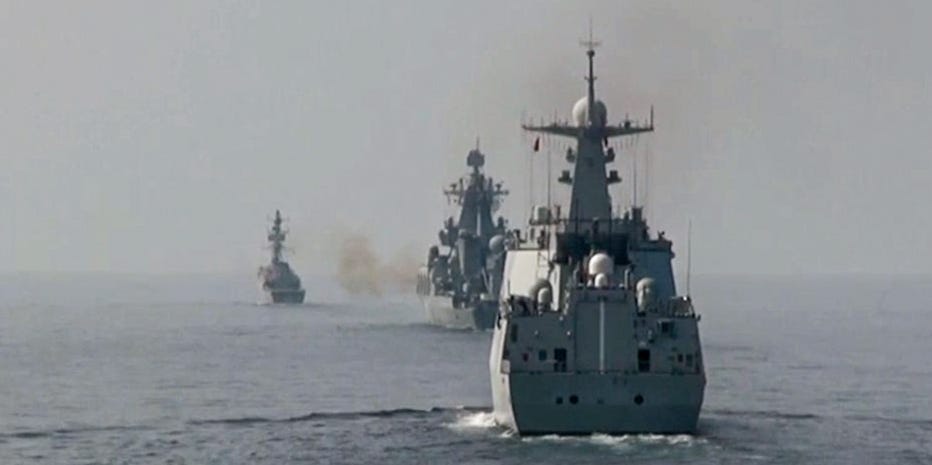
Russia Masses Its Navy Along Ukraine’s Coast as War Becomes a ‘Very Distinct Possibility’

When war clouds gather, they rarely arrive politely. In early 2022, as Russian troops crowded Ukraine’s borders from the north, east, and south, another pressure point was forming on the water. Russian naval forces, including missile-armed ships, submarines, and amphibious landing vessels, moved into the Black Sea and nearby waters, tightening the strategic ring around Ukraine’s coastline. The message was not subtle. It was less “routine exercise” and more “we brought the whole toolbox, including the scary-looking one with wheels.”
The buildup mattered because Ukraine’s southern coast is not just a strip of beach on a map. It is a lifeline. Ports such as Odesa, Chornomorsk, Pivdennyi, Mariupol, Berdyansk, Kherson, and Mykolaiv connect Ukraine to global trade, grain exports, energy flows, and maritime logistics. A Russian naval presence near these routes was not simply symbolic. It threatened Ukraine’s economy, complicated international shipping, and raised the possibility of an amphibious assault along the coast.
At the same time, U.S. officials were warning that a Russian invasion had become a “very distinct possibility.” National Security Adviser Jake Sullivan said Russia had positioned forces in a way that could allow an attack to begin at almost any time. That warning, combined with naval drills in the Black Sea and troop concentrations around Ukraine, turned the crisis from tense diplomacy into something much sharper: a countdown with no visible clock.
Why Russia’s Naval Buildup Near Ukraine Was So Alarming
Russia’s navy did not need to fire a shot to create pressure. By moving warships into the Black Sea, Russia gained several options at once. It could threaten amphibious landings near Odesa or other coastal cities. It could launch cruise missiles from ships or submarines. It could restrict commercial shipping. It could force Ukraine to divert troops away from other fronts to defend beaches, ports, and coastal infrastructure.
That flexibility is what made the deployment so dangerous. A land army points in a direction. A naval force can move, loiter, disappear, reappear, and threaten multiple places at the same time. For Ukrainian planners, the question was not only “Where will Russia attack?” but also “How many places do we have to defend just in case?” That uncertainty is one of the oldest tricks in military strategy: make your opponent guard every door while you choose which one to kick open.
Reports at the time noted that Russia had moved six large amphibious landing ships toward the Black Sea. These vessels were not decorative. Ropucha-class landing ships can carry tanks, armored vehicles, and hundreds of troops. Larger landing ships can transport even more equipment and support operations from the sea. In practical terms, that meant Russia had assembled the kind of naval force that could support landings, coastal raids, or at least a convincing threat of them.
The Black Sea: A Strategic Chessboard, Not Just Water
The Black Sea has always been more than a body of water. For Russia, it offers access to warm-water ports, influence over southeastern Europe, a route toward the Mediterranean, and leverage over Ukraine. For Ukraine, it is a commercial artery. For NATO, it is a sensitive frontier bordered by member states Turkey, Romania, and Bulgaria. Put all of that together and the Black Sea becomes less like a calm maritime neighborhood and more like a crowded chessboard where several players are leaning over the same queen.
Russia’s annexation of Crimea in 2014 dramatically changed the region’s military balance. By taking Crimea, Moscow gained control of Sevastopol, the historic home of the Black Sea Fleet, and expanded its ability to project power across the northern Black Sea. From there, Russian aircraft, coastal missile systems, naval vessels, and surveillance assets could reach deep into waters that mattered to Ukraine’s economy and defense.
By February 2022, the naval buildup looked like an extension of this long-term strategy. Russia was not merely surrounding Ukraine on land. It was trying to dominate the sea lanes, coastal approaches, and psychological space around Ukraine. The effect was to make Ukraine feel squeezed from every direction: troops in Belarus to the north, forces near the eastern border, Crimea to the south, and warships offshore.
Amphibious Ships and the Threat to Odesa
Odesa was one of the biggest concerns. Ukraine’s best-known Black Sea port is economically vital, culturally iconic, and strategically positioned. If Russia could threaten or capture Odesa, Ukraine could be cut off from the sea and placed under severe economic pressure. Even the possibility of a landing near Odesa forced Ukraine to prepare coastal defenses and keep units in the south.
An amphibious assault is difficult, risky, and easy to romanticize in bad war movies. Real landings require coordination, air support, intelligence, minesweeping, logistics, and a favorable coastline. Ships carrying troops are vulnerable when approaching shore. Weather, mines, anti-ship missiles, drones, and coastal artillery can turn an ambitious landing into an expensive disaster. Still, the threat alone can be powerful. Russia did not need to guarantee a successful landing to create operational headaches for Ukraine.
That was the strategic value of Russia’s naval posture. The Kremlin could use the fleet as both a weapon and a distraction. If Ukraine overcommitted to defending Odesa, it might weaken other fronts. If Ukraine ignored the naval threat, it risked a real landing or missile attack. Either way, Moscow gained pressure.
Missile-Armed Ships Added Another Layer of Danger
The naval buildup was not only about landing troops. Russia’s Black Sea Fleet included ships and submarines capable of launching Kalibr cruise missiles. These weapons could strike targets far inland, including command centers, air defenses, logistics hubs, and infrastructure. In the opening phase of a war, missile strikes could be used to disrupt Ukraine’s military response before ground forces advanced.
This is why U.S. officials warned that an attack might begin with aerial bombardment and missile strikes. A modern invasion does not always start with tanks rolling dramatically across a border while orchestral music plays. Often, it starts with cyberattacks, electronic warfare, missile salvos, airstrikes, and confusion. The goal is to stun the defender long enough for the attacker to seize momentum.
Russia’s naval forces fit neatly into that plan. Ships offshore could support attacks without needing to cross a land border. Submarines could add uncertainty. Surface vessels could move in ways that complicated tracking. For Ukraine, the sea became another direction from which danger could arrive.
Shipping, Trade, and the Economic Squeeze
One of the most immediate effects of Russian naval activity was disruption to shipping. Ukraine accused Russia of making navigation in the Black Sea and Sea of Azov extremely difficult through large-scale drills and restricted zones. This was not a minor inconvenience. Ukraine is a major exporter of grain, sunflower oil, steel, and other goods. When shipping routes become unsafe or unpredictable, costs rise, insurers get nervous, companies pause operations, and ports lose traffic.
In plain English: when warships show up near commercial routes, the price of doing business goes up fast. Ships do not like surprises. Insurance companies like them even less. Grain buyers, steel exporters, port operators, and shipping firms all depend on confidence. Russia’s naval posture was designed to attack that confidence before any formal war began.
This economic angle is essential to understanding the crisis. Military pressure and economic pressure were working together. A naval blockade, or even the fear of one, could weaken Ukraine without requiring immediate occupation. It could also affect global food markets, especially countries that rely on Ukrainian grain. The Black Sea may look regional on a map, but its disruptions travel worldwide.
NATO’s Black Sea Challenge
Russia’s naval buildup also exposed NATO’s complicated position in the Black Sea. Ukraine was not a NATO member, so the alliance was not treaty-bound to defend it. At the same time, NATO members Turkey, Romania, and Bulgaria border the Black Sea, giving the region direct alliance significance. The challenge was how to deter Russia without triggering an even wider conflict.
The Montreux Convention, which gives Turkey control over naval passage through the Bosporus and Dardanelles, adds another layer of complexity. Non-Black Sea powers face limits on how long their warships can remain in the Black Sea. That makes sustained NATO naval presence difficult, especially during a fast-moving crisis. In other words, even if the alliance wanted to send a strong maritime signal, geography and treaty rules made it harder.
This helped Russia create a favorable local balance. By moving ships into the Black Sea before the shooting started, Moscow positioned assets where outside powers would struggle to respond quickly. It was a classic case of being early to the parking lot and taking all the good spaces.
From Buildup to Full-Scale War
The warnings proved tragically accurate. On February 24, 2022, Russia launched its full-scale invasion of Ukraine. The attack came from multiple directions, including from Russian-occupied Crimea. The Black Sea Fleet supported the campaign through missile strikes, blockading activity, threats to Odesa, and pressure on Ukrainian ports. Commercial shipping was disrupted, ports were closed, and the maritime dimension of the war quickly became a major factor.
In the early days, Russia appeared to have overwhelming naval superiority. Ukraine’s navy was small, and Russia’s Black Sea Fleet seemed capable of dominating the theater. Yet the war at sea did not unfold exactly as Moscow expected. Ukraine adapted with coastal defense missiles, drones, intelligence, special operations, and creative asymmetric tactics. The sinking of the Moskva, Russia’s Black Sea Fleet flagship, became one of the war’s defining naval moments.
That later shift does not erase the significance of the original buildup. In fact, it makes it clearer. Russia’s decision to mass naval power near Ukraine showed how central the Black Sea was to Moscow’s war planning. Control of the sea was not an afterthought. It was part of the broader attempt to isolate Ukraine, threaten its economy, and support military operations on land.
How Ukraine Changed the Naval Story
One of the most surprising developments of the war has been Ukraine’s ability to challenge Russia at sea despite lacking a traditional large navy. Ukraine used anti-ship missiles, unmanned surface vessels, long-range strikes, and smart targeting to push Russian ships away from parts of the western Black Sea. Over time, Russian vessels became more cautious, and some naval assets shifted farther from Crimea toward safer bases such as Novorossiysk.
This became a case study in sea denial. Ukraine did not need to build a fleet that could match Russia ship for ship. Instead, it needed to make certain waters too dangerous for Russian ships to operate freely. That is a very different goal, and it can be achieved with cheaper, smaller, more flexible systems. Naval drones, coastal missiles, and precise intelligence can make even powerful ships nervous. And nervous ships are less useful.
The result was strategically important. Ukraine eventually reopened maritime export routes and reduced Russia’s ability to impose a full blockade. The Black Sea remained dangerous, but it was no longer a place where Russia could operate without serious risk. That was a remarkable reversal from the early days of 2022, when Russia appeared to hold nearly all the maritime cards.
Why This Buildup Still Matters Today
The phrase “Russia masses its navy along Ukraine’s coast” belongs to a specific moment in early 2022, but its meaning has lasted far longer. It captured the way Russia used military power to signal, intimidate, and prepare. It also showed how modern war is not limited to one domain. Land forces, naval assets, missiles, cyber operations, diplomacy, and economic pressure all moved together.
The buildup also reminds us that warning signs matter. Before the invasion, Russia denied plans to attack. Yet the pattern of deployments told a different story. Amphibious ships, missile platforms, ground troops, logistical support, field hospitals, and exercises all pointed toward military options. Diplomacy was still possible, but the physical facts on the ground and at sea were increasingly hard to ignore.
For analysts, policymakers, and readers trying to understand future crises, the lesson is simple: watch what states move, not only what they say. Warships do not drift into strategic positions by accident. Landing ships do not gather near contested coastlines because someone forgot where the garage was. Military posture is communication, and in February 2022, Russia’s navy was speaking loudly.
Experience-Based Reflections: What the Naval Buildup Teaches Readers
For anyone who followed the crisis day by day, the naval buildup felt like watching a storm form offshore. At first, it could be explained away as exercises, signaling, or coercive diplomacy. Then the pattern became too large to ignore. Ships were moving. Troops were massing. Airspace warnings were appearing. Embassies were urging citizens to leave. The whole situation had the uneasy feeling of a room where everyone can smell smoke but nobody wants to say “fire” too soon.
One practical experience from this episode is that maritime security often feels invisible until it suddenly affects daily life. Most people do not think about sea lanes while buying bread, filling a car with gas, or reading grocery prices. But Ukraine’s ports help feed global markets. When the Black Sea became dangerous, the consequences moved far beyond naval strategy. Grain prices, insurance premiums, shipping schedules, and food security all became part of the same story. The sea is quiet until it is not.
Another lesson is that deterrence depends on credibility and timing. Before the invasion, Western governments released intelligence and issued public warnings in an attempt to expose Russia’s plans and reduce the chance of surprise. That was unusual. Intelligence is often guarded closely, but in this crisis it became part of diplomacy. The goal was to make the cost of aggression clearer and to prevent Moscow from controlling the narrative. It did not stop the invasion, but it did help prepare allies, warn civilians, and frame Russia as the aggressor when war began.
For Ukraine, the experience showed the importance of adaptability. A smaller country facing a larger navy could not win by copying Russia’s fleet structure. Instead, Ukraine found ways to exploit Russian vulnerabilities. Coastal missiles, sea drones, intelligence sharing, and precise strikes changed the balance. The message for smaller states is powerful: defense does not always require matching an enemy platform for platform. Sometimes the smarter path is to make the enemy’s expensive platforms afraid of your cheaper ones.
For ordinary readers, the human side should not be lost inside maps and acronyms. Naval buildups affect sailors, port workers, families in coastal cities, farmers waiting to export grain, and civilians wondering whether their city will be next. In Odesa, the threat of an amphibious landing was not an abstract military scenario. It shaped daily anxiety, defensive preparations, business decisions, and family conversations. Imagine trying to plan tomorrow while warships sit over the horizon. That is not just geopolitics. That is life under pressure.
The final experience-based takeaway is that coastal security is national security. Ukraine’s coastline was not a side issue; it was central to the war’s military and economic stakes. Russia understood that. Ukraine understood it too. The rest of the world learned quickly. When a country’s ports are threatened, its exports, energy routes, military options, and diplomatic leverage are threatened as well. The Black Sea became a reminder that geography still matters, even in an age of satellites, drones, and cyberattacks.
Looking back, Russia’s naval buildup along Ukraine’s coast was both a warning and a preview. It warned that Moscow was preparing more than a political stunt. It previewed a war in which missiles, blockades, drones, ports, grain ships, and coastal cities would all become part of the same battlefield. The headline sounded dramatic at the time. History made it look understated.
Conclusion
Russia’s decision to mass naval forces near Ukraine’s coast was one of the clearest signs that the crisis had moved beyond ordinary diplomacy. The deployment of amphibious ships, missile-capable vessels, and Black Sea Fleet assets gave Moscow options to threaten Ukraine from the sea, disrupt trade, pressure Odesa, and support a wider invasion. When U.S. officials warned that war had become a “very distinct possibility,” the naval buildup helped explain why.
The story did not end with Russia’s initial advantage. Ukraine later challenged the Black Sea Fleet with asymmetric tactics, drones, missiles, and resilience that surprised much of the world. Still, the early 2022 buildup remains a vital case study in how naval power can shape a crisis before the first missile flies. It shows that the sea is not a background detail in war. Sometimes, it is where the future announces itself first.