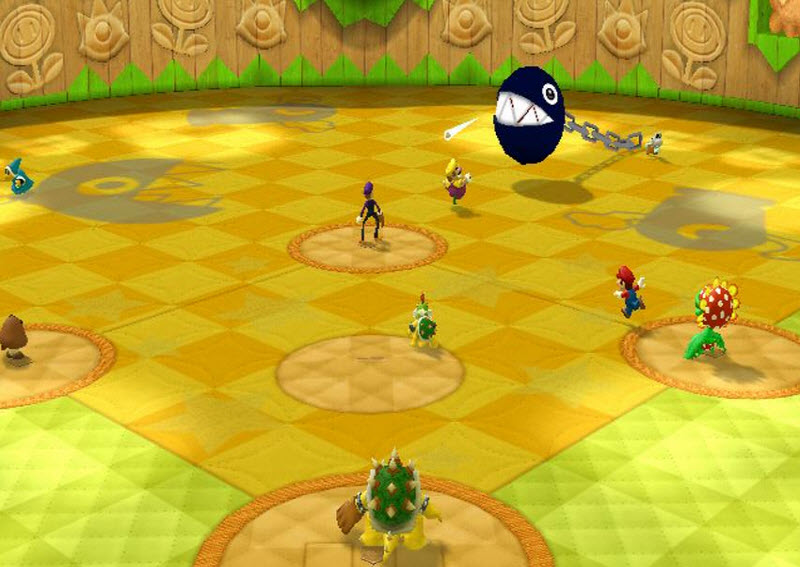

Mario Super Sluggers is what happens when baseball wanders into the Mushroom Kingdom, eats a power-up, and decides regular sports are simply too calm. Released for the Nintendo Wii, this arcade-style baseball game mixes classic innings, batting, pitching, fielding, roster strategy, special moves, character chemistry, and wonderfully chaotic stadiums where the outfield may be more dangerous than the opposing team.
If you are new to the game, the good news is simple: you do not need to be a baseball expert. The game is designed to be friendly, colorful, and easy to start. The better news? Under the cheerful surface, there is enough strategy to keep matches exciting once you learn how captains, teammates, Star Skills, batting timing, pitching tricks, and defensive choices work together.
This guide explains how to play Mario Super Sluggers in 6 steps, from choosing your control style to building a smarter team and winning more games. Think of it as your dugout coach, except with fewer sunflower seeds and more advice about avoiding giant Chain Chomps.
Step 1: Choose the Right Game Mode
Before you swing for the fences, choose a mode that matches what you want to do. Exhibition mode is the quickest way to play a baseball game. You pick a captain, choose your teammates, select a stadium, set the number of innings, and jump straight into the action. This is the best mode for casual matches, multiplayer sessions, and learning the basics without wandering around the map.
Challenge mode is more like a baseball adventure. You explore areas, recruit characters, solve small objectives, play short games, and work toward defeating Bowser Jr. and Bowser. This mode is especially useful because it helps you unlock characters and stadiums while giving you a reason to test different team combinations.
The game also includes minigames and party-style side activities. These are great for practicing specific skills, such as batting accuracy or quick reactions, without committing to a full match. If you are playing with friends or younger players, minigames can be the perfect warm-up before the main event.
Best mode for beginners
Start with Exhibition mode for one or two short games, then move into Challenge mode. Exhibition teaches the rhythm of baseball, while Challenge mode teaches how the larger game works. If you jump straight into advanced team-building without understanding batting and pitching, you may feel like Goomba trying to solve algebra.
Step 2: Pick a Comfortable Control Style
Mario Super Sluggers offers different control options, and your experience can change depending on which one you use. The Wii Remote can be held upright, held sideways, or combined with the Nunchuk. Each style has a different feel, especially when batting, pitching, fielding, and controlling runners.
The upright Wii Remote style is the most motion-based. You swing the remote to bat and make throwing motions to pitch. It feels playful and physical, which makes it fun for casual players. The sideways Wii Remote style uses more button-based controls, which can feel more predictable for players who prefer traditional input. The Nunchuk setup gives extra control, especially for movement and baserunning.
For beginners, the upright Wii Remote style is easy to understand because it feels similar to real baseball: swing to hit, throw to pitch. However, if you want more precision, experiment with the sideways or Nunchuk options. A comfortable control scheme matters because Mario Super Sluggers rewards timing, placement, and quick reactions.
Control tip
Do not change control styles every inning. Pick one, play several games, and build muscle memory. If your swing timing is late every time, the problem may not be your character. It may be that your hands and the Wii Remote have not yet agreed on who is in charge.
Step 3: Learn the Basics of Batting
Batting is the heart of Mario Super Sluggers. Your goal is simple: hit the ball where defenders are not standing. Your actual experience may involve swinging too early, fouling off easy pitches, and watching a slow grounder roll directly into someone’s glove. This is normal. Every great slugger begins by looking slightly ridiculous.
There are several types of swings. A normal swing is quick and reliable. Use it when you want solid contact, especially with runners on base. A charge swing gives you more power, but it requires better timing. If you charge too long or release at the wrong moment, you may miss completely. A bunt is a softer contact play used to move runners or surprise the defense.
Timing matters more than wild swinging. Watch the pitcher’s motion, track the ball, and swing when the ball reaches the hitting zone. If you swing too early, you may pull the ball foul or miss. If you swing too late, you may send a weak hit toward the opposite side. The sweet spot is a clean, confident swing that sends the ball into open space.
How to improve batting quickly
Use normal swings until you can make consistent contact. Then mix in charge swings when ahead in the count or when using a power hitter. Strong characters are great for home runs, but contact hitters can be more useful when you need a base hit. A single with two runners on base can be more valuable than a dramatic strikeout that looked powerful for half a second.
Step 4: Pitch With Purpose, Not Panic
Pitching in Mario Super Sluggers is not just about throwing the ball as fast as possible. A predictable fastball is a gift to good hitters. Instead, vary your timing, speed, and pitch location. Move the pitcher on the mound, aim carefully, and make the batter uncomfortable.
You can throw different types of pitches, including faster pitches, slower pitches, and curved pitches depending on your control style and character. Some pitchers have better stamina, control, or special abilities than others. If a pitcher gets tired, performance can drop, so pay attention to how long you leave the same character on the mound.
Use the corners of the strike zone. A pitch down the middle may be easy to hit, especially against power characters. Aim inside, outside, high, or low to force weaker contact. Against aggressive batters, throw a pitch just outside the strike zone and see if they chase. Against patient batters, mix strikes and balls so they cannot predict your pattern.
Pitching example
Imagine Donkey Kong is at the plate. He can crush mistakes into another postal code. Instead of giving him a friendly fastball, start with a slower pitch outside, then throw a curved strike, then change the timing again. Your goal is not to impress him. Your goal is to make him swing at something he cannot launch into orbit.
Step 5: Build a Smart Team With Chemistry
Team selection is one of the biggest differences between Mario Super Sluggers and a simple arcade baseball game. You choose a captain and fill the rest of your lineup with teammates. Each character has strengths and weaknesses. Some are great hitters, some are fast runners, some are excellent fielders, and some bring special abilities that can change a game.
Chemistry is especially important. Characters who like each other can perform better together, especially during fielding and team plays. Good chemistry can make throws smoother, catches cleaner, and defensive reactions more effective. Poor chemistry can make your team feel clumsy, like everyone showed up to the stadium after reading different rulebooks.
Do not choose only your favorite characters. Favorites are fun, but a winning team needs balance. You want power hitters for extra-base hits, contact hitters for rallies, fast runners for stealing and stretching singles into doubles, and strong fielders to stop big innings. Place speedy players near the top of your batting order and power hitters in run-producing spots.
Simple lineup strategy
Put a fast, reliable hitter first. Place a strong contact hitter second. Use your biggest power hitter third or fourth. Add balanced players in the middle and keep weaker hitters lower in the order. This gives your best sluggers more chances to bat with runners already on base.
Step 6: Use Star Skills and Stadium Features Wisely
Mario Super Sluggers is not normal baseball, and that is exactly the point. Star Skills are special batting or pitching moves that use Team Stars. Captains often have unique special hits or pitches, while other characters may use simpler Star abilities. These moves can turn a close game, but they are limited. Use them at important moments, not just because the animation looks cool.
On offense, a Star Swing can help create a big hit, break a defensive pattern, or drive in runners. On defense, a Star Pitch can disrupt a dangerous batter. The best time to use a Star Skill is when the situation matters: runners in scoring position, a tie game, a tough opponent at the plate, or a chance to take control late in the match.
Stadiums also matter. Many fields include obstacles, unusual layouts, or hazards that can affect the ball. Some outfields are friendly. Others feel like the stadium designer was dared to make baseball less predictable. Learn how each field behaves, and use it to your advantage. A ball hit into a tricky area may become a double, triple, or glorious chaos.
When to save your Star Skill
If you are leading by several runs, save your Team Stars. If the bases are loaded and your best hitter is up, spend one. Mario Super Sluggers rewards players who understand timing. A special move used at the perfect moment feels brilliant. A special move wasted with two outs and nobody on base feels like ordering fireworks for a nap.
Extra Tips to Win More Games
Practice defense before blaming luck
Defense decides many games. Learn how to move fielders, throw to the correct base, and stop runners from advancing. Always think one play ahead. If there is a runner on second and a ground ball goes to shortstop, should you throw to first for the safe out or try to catch the runner going to third? The answer depends on the score, inning, and speed of the runner.
Respect baserunning
Baserunning can turn small hits into big innings. Fast characters can steal, stretch hits, and pressure the defense. However, reckless baserunning can also erase a rally. Do not send everyone charging around the bases like the stadium is giving out free mushrooms at home plate.
Know your characters
Every character has a role. A slow power hitter may be perfect with runners on base but risky when you need speed. A quick character may not hit home runs often but can create pressure with singles and steals. The more you understand each character, the better your lineup becomes.
Common Beginner Mistakes
Swinging at everything
Not every pitch deserves your attention. Let bad pitches go. A patient hitter forces the pitcher to throw better strikes. If you swing at everything, you help the opponent more than their own teammates do.
Using only power hitters
A lineup full of big bats sounds exciting, but it can be slow and inconsistent. Mix power, speed, contact, and defense. Baseball is a team sport, even when the team includes dinosaurs, princesses, ghosts, and plumbers.
Ignoring chemistry
Chemistry is not decoration. It can improve teamwork and make your defense stronger. When two characters work well together, place them near each other in the field whenever possible.
Saving Star Skills forever
Saving resources is smart, but never using them is not strategy. It is digital hoarding. Use Star Skills when they can change the game.
Experience Section: What Playing Mario Super Sluggers Teaches You
The best way to understand Mario Super Sluggers is to play a few matches and notice how quickly the game changes from “cute baseball game” to “wait, why is my outfielder trapped near a hazard while Bowser is rounding second?” That unpredictable energy is part of the charm. The game rewards basic baseball sense, but it also rewards players who adapt when the Mushroom Kingdom turns a routine fly ball into a comedy sketch.
One of the most useful experiences is learning that timing beats panic. At first, many players swing the Wii Remote as soon as the pitcher moves. That usually leads to misses, weak contact, or foul balls. After a few games, you start watching the ball instead of the animation. You learn to wait, breathe, and swing with purpose. The difference is huge. Suddenly, normal swings become reliable, charge swings feel less risky, and your offense starts producing runs without needing a miracle every inning.
Another important lesson is that team balance matters more than raw power. New players often load the lineup with the biggest, strongest characters because home runs are exciting. That works sometimes, but a slow team can struggle when the ball stays in play. A balanced roster with speed, contact, power, and chemistry usually performs better. Fast runners create pressure. Contact hitters keep innings alive. Power hitters punish mistakes. Good fielders prevent disasters. When those pieces fit, the team feels smoother and more dangerous.
Pitching also becomes more interesting with experience. Beginners often throw the same pitch repeatedly, then wonder why the opponent suddenly hits everything. Better players mix speed, location, and timing. A slow pitch after a fast pitch can ruin a batter’s rhythm. A curve toward the edge of the zone can force weak contact. A Star Pitch saved for a dangerous batter can protect a close lead. The more you pitch with a plan, the less you depend on luck.
Challenge mode adds another layer because it encourages exploration and experimentation. Recruiting characters gives you a reason to try players you might ignore in Exhibition mode. You may discover that a character you picked only to complete an objective is actually useful in your lineup. That is one of the game’s quiet strengths: it nudges you to test combinations, learn chemistry, and think like a manager instead of simply picking the loudest character on the roster.
Playing with friends creates the funniest memories. Mario Super Sluggers is competitive, but it rarely feels too serious. A lucky hit, a wild stadium bounce, a clutch Star Skill, or a ridiculous defensive mistake can turn into the highlight of the match. Even losing can be entertaining when the game produces a dramatic finish. It is the kind of sports game where strategy matters, but laughter is basically part of the rulebook.
After enough games, you begin to develop your own style. Maybe you prefer aggressive baserunning and fast characters. Maybe you build around power and wait for big innings. Maybe you love defensive chemistry and winning close, low-scoring games. There is no single perfect way to play. The best approach is to understand the mechanics, build a team that fits your strengths, and adjust when the game throws something weird at you.
That is the real fun of Mario Super Sluggers. It is simple enough for beginners, but flexible enough for players who enjoy strategy. Learn the controls, practice your timing, build a balanced roster, respect chemistry, use Star Skills wisely, and pay attention to the stadium. Do that, and you will stop feeling like a confused rookie and start playing like a Mushroom Kingdom all-star.
Conclusion
Learning how to play Mario Super Sluggers is about more than swinging the Wii Remote and hoping for the best. Start with the right mode, choose a comfortable control style, practice batting and pitching, build a balanced team, use chemistry, and save Star Skills for key moments. Once you understand those six steps, the game becomes more strategic, more exciting, and much easier to enjoy.
Mario Super Sluggers works because it keeps baseball simple without making it boring. It has enough motion-control fun for casual players, enough roster strategy for competitive players, and enough Mushroom Kingdom weirdness to make every match feel different. Whether you are playing alone, unlocking characters in Challenge mode, or battling friends in Exhibition mode, the best advice is simple: stay patient, play smart, and never underestimate a well-timed special swing.
Note: This article is written for the Wii version of Mario Super Sluggers and focuses on practical gameplay guidance, beginner-friendly strategy, and real in-game mechanics.