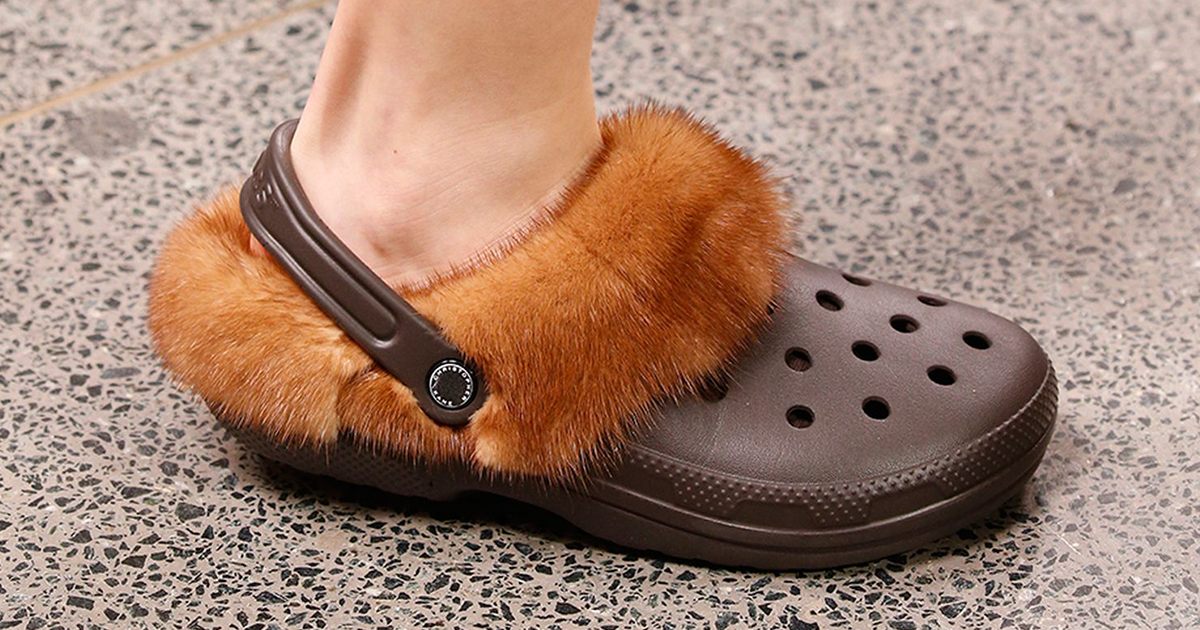

There are certain moments in modern culture when you pause, stare into the middle distance, and ask a serious question: How did we get here? One of those moments arrives the instant you discover furry Crocs. Not regular Crocs. Not even the classic foam clogs that somehow escaped the garden, crossed a parking lot, and strutted onto fashion runways. No, these are Crocs with fuzzy linings, cozy interiors, and enough slipper energy to make your thermostat feel underdressed.
And yet, before we blame civilization, it is worth admitting something uncomfortable: furry Crocs make a weird amount of sense. They are warm. They are lightweight. They are easy to slide on. They are equal parts house shoe, errand shoe, and “I have fully given up on impressing strangers at the grocery store” shoe. In other words, they are not just a product. They are a cultural confession.
This is the simple, fluffy truth behind the furry Crocs trend: people say they want style, but what they really want is comfort with plausible deniability. That is why these fuzzy-lined clogs exist, why people buy them, and why the joke is now very much on the people still pretending beauty is more important than warm feet.
The Furry Crocs Phenomenon Is Ridiculous, but Not Random
At first glance, furry Crocs feel like a prank that got out of hand. The original Crocs were already one of the most polarizing shoes on earth. They were mocked for being chunky, airy, weirdly shaped, and aggressively unconcerned with traditional beauty standards. Adding fur to that formula sounds like the footwear equivalent of putting whipped cream on a cheeseburger.
But products like this do not appear by accident. They appear when several consumer trends collide at the exact same time. Crocs already had the comfort part nailed. The brand also understood customization, casual wear, and the social-media power of a shoe that is impossible to ignore. Once the market leaned harder toward cozy, easy, comfort-first fashion, lined Crocs became less of a joke and more of an obvious next step.
That is the key to understanding why furry Crocs are a thing now. They are not an isolated fashion oddity. They are the natural result of years of cultural drift toward clothes and shoes that feel good first and apologize never.
How Crocs Went From Punchline to Power Move
The ugly shoe stopped being a problem
For years, Crocs survived as a deeply practical shoe with a deeply chaotic reputation. People wore them because they were convenient, washable, breathable, and comfortable. They were beloved by gardeners, healthcare workers, campers, parents, and people who had no intention of winning a “best-dressed” poll. Then fashion did what fashion loves to do: it looked at something mocked by the public and decided it was suddenly interesting.
The ugly shoe trend changed everything. Once fashion embraced clunky sneakers, orthopedic-looking sandals, hiking-style soles, and intentionally awkward silhouettes, Crocs stopped looking like an outlier. They started looking like pioneers. In a world where “weird” became stylish, Crocs had a major advantage: they had been weird the whole time.
Runways helped legitimize the chaos
The shift became impossible to ignore when Crocs began appearing in high-fashion contexts. Christopher Kane put Crocs-adjacent designs into the runway conversation, then the brand’s fashion credibility grew as luxury labels and style media treated the clog like a legitimate object of design discussion. Balenciaga helped supercharge that moment by turning Crocs into an intentionally outrageous runway statement. Once the fashion world started debating whether Crocs were genius or terrible, the brand had already won. Nothing fuels desirability like argument.
Celebrity collaborations made them culturally loud
Crocs also mastered the modern art of staying in the conversation. Collaborations with celebrities and pop-culture figures helped turn a functional shoe into a collectible one. Suddenly, Crocs were not just something your uncle wore while grilling. They were something fans lined up for, posted online, and treated like drops. That shift matters because it changed Crocs from “practical purchase” to “identity object.” Once a shoe becomes a form of self-expression, its odds of surviving internet mockery go way up.
So Why Add Fur?
Because the only thing more powerful than ugly-cool is ugly-cool-and-cozy.
Furry Crocs, or fuzzy-lined Crocs, solve a very specific consumer problem. Standard Crocs are airy and casual, which is great in warm weather or for quick trips outside. But once temperatures drop, people still want the slip-on convenience without the chilly “my toes are learning about November” problem. Enter the lined version: the same easy clog shape, but with soft insulation inside.
It is a clever product move because it expands the use case. Regular Crocs are casual all-rounders. Furry Crocs become hybrid slippers. They live at the intersection of indoor comfort and outdoor laziness. You can wear them around the house, to the mailbox, to class, to the corner store, on a road trip, or while pretending your coffee run is a meaningful personal ritual.
That is why furry Crocs are more than a gimmick. They take the original Crocs promise, which is effortless comfort, and stretch it into colder seasons and more relaxed lifestyles.
Why People Keep Buying Shoes That Make the Internet Scream
Comfort is no longer embarrassing
For a long time, fashion treated comfort as a private concern. You were allowed to want it, but not advertise it. Today that mindset is crumbling. Consumers increasingly want products that fit real life: commuting, remote work, fast errands, long days on your feet, and homes that function as office, lounge, and emotional support center. Shoes that feel easy to wear are not a guilty pleasure anymore. They are the brief.
This explains why Crocs as a brand became so much bigger than critics expected. When a company sells lightweight comfort in a culture that is exhausted, overbooked, and mildly irritated at all times, it does not need universal approval. It just needs relevance.
They let people signal irony and individuality
Crocs thrive in the sweet spot between sincerity and sarcasm. Some people wear them because they love them. Some wear them because they think the shoes are so ugly they become funny. Some wear them because the shoes are customizable, playful, and deliberately unserious. All of those customers can exist at once.
Furry Crocs add another layer to that identity game. They say, “Yes, I know what these look like, and no, I do not care.” That attitude plays extremely well online because it reads as confident, self-aware, and slightly rebellious. In a polished world, absurd shoes can feel oddly honest.
Customization keeps the product from feeling generic
Crocs also figured out that personalization matters. Jibbitz charms and collaborations let wearers build their own tiny universe on their shoes. A pair of furry Crocs can be plain and cozy, or they can look like a craft project that wandered into a convenience store. Either way, the shoe becomes personal. That makes it harder to dismiss as just another trend.
Furry Crocs and the Rise of the Slipper-Outside Economy
One reason furry Crocs feel so current is that they fit perfectly into what might be called the slipper-outside economy. People increasingly want products that blur the old boundaries between homewear and public wear. Robes became elevated loungewear. Leggings became work-adjacent. Expensive blankets somehow became “lifestyle essentials.” Naturally, slippers wanted in on the action.
Furry Crocs are basically slippers with plausible street access. They offer the coziness of house shoes and the utility of a regular sole. That makes them ideal for modern routines, which are rarely glamorous and often involve moving quickly between couch, car, coffee shop, and supermarket. A shoe that can survive all four without requiring socks of industrial strength is a compelling value proposition.
In that sense, furry Crocs are not evidence that the world is ending. They are evidence that people are tired of changing shoes for small missions. The apocalypse angle is funny, sure, but the actual story is much more ordinary: consumers love convenience so much they are willing to wear a fuzzy foam clog in public and call it freedom.
Are Furry Crocs Actually Fashionable?
This depends entirely on your definition of fashionable.
If fashionable means sleek, elegant, traditionally flattering, and approved by every tastefully dressed person in a ten-mile radius, then no. Furry Crocs are not here to compete with leather loafers, sharp sneakers, or minimalist boots. They are not trying to whisper luxury. They are trying to shout comfort from the rooftop while carrying a snack.
But if fashionable means culturally relevant, widely recognized, emotionally expressive, meme-friendly, and impossible to ignore, then yes, furry Crocs are absolutely fashionable. Modern fashion is not just about looking beautiful. It is about sending a message. Sometimes that message is aspirational. Sometimes it is ironic. Sometimes it is simply, “I refuse to suffer for aesthetics before noon.”
That last message, frankly, has a huge audience.
What Furry Crocs Say About Consumers Right Now
We want products that multitask
Consumers increasingly reward products that do more than one job. Furry Crocs are not just shoes. They are slippers, errand shoes, casual travel shoes, dorm shoes, porch shoes, and “I am only stepping out for two minutes” shoes that mysteriously remain on your feet for four hours. That kind of flexibility wins in an economy where people want fewer decisions and more utility.
We care more about feeling than approval
There was a time when public judgment alone might have doomed a product like this. But modern consumers are more willing to prioritize how something feels. If a product is comfortable, useful, funny, and low-stakes enough to become part of everyday life, public mockery can actually strengthen its appeal. Nothing attracts attention like a product that people either adore or despise.
We no longer separate taste from internet culture
Furry Crocs also make perfect sense in a social-media era. They are instantly recognizable. They spark opinions. They look ridiculous in a way that photographs well. They invite jokes, reactions, styling videos, and strong personal takes. Whether the internet crowns them iconic or cursed almost does not matter. Both outcomes create visibility, and visibility is the oxygen of trend culture.
What Furry Crocs Actually Feel Like in Real Life
Here is where the whole debate gets annoyingly practical. You can laugh at furry Crocs from a safe distance, but the experience of wearing them explains why they keep surviving every round of public shaming. The first surprise is warmth. Traditional Crocs are known for ventilation, which is excellent in summer and much less exciting in cold weather. The fuzzy lining changes the mood entirely. Instead of feeling like a breathable foam shell, the shoe suddenly feels like a slipper with a tougher attitude.
The second surprise is convenience. People love talking about style, but daily life is ruled by tiny decisions, and one of the most powerful is whether you can put on your shoes in three seconds. Furry Crocs are outstanding at that. Early class? Slip them on. Taking out the trash? Slip them on. Driving to grab coffee? Slip them on. Standing on a freezing kitchen floor at 7 a.m. while questioning every choice that led to adulthood? Slip them on. That kind of frictionless usefulness is hard to beat.
They are also strangely versatile in lazy-day scenarios. You can wear them around the house like plush clogs, then keep them on for a quick walk outside without feeling completely unprepared. That matters more than fashion purists want to admit. A lot of people are not dressing for a runway; they are dressing for a day full of small, unglamorous movements. Furry Crocs fit that reality beautifully. They are not a statement piece in the traditional sense. They are a lifestyle shortcut.
There is also an emotional side to the experience. Furry Crocs feel unserious, and that is part of the appeal. Not every purchase has to be noble, elegant, or “investment dressing.” Sometimes people want an object that makes them grin a little. A fuzzy clog does that. It has a built-in sense of absurdity, which makes it easier to enjoy. In a market full of hyper-optimized, carefully marketed products, there is something refreshing about a shoe that basically says, “What if comfort won, and also things got a little weird?”
Of course, they are not perfect. Some people will never get past the shape. Others will find the furry interior too warm for all-day wear in mild weather. And yes, styling them can feel like negotiating with a toddler who has unexpectedly strong opinions. But that is almost beside the point. Furry Crocs are not popular because they flatter every outfit. They are popular because they solve a problem while adding personality. They feel cozy, they look memorable, and they carry just enough chaos to make everyday dressing less boring.
That is the real experience of furry Crocs: comfort with comic timing. They make ordinary moments easier while also inviting comments from friends, strangers, and anyone who still thinks footwear should behave with dignity. And maybe that is why they work. In a world full of serious problems and exhausting choices, a ridiculous shoe that keeps your feet warm can feel less like the end of civilization and more like a tiny act of self-preservation.
Final Verdict: No, the World Is Not Ending, but Taste Has Become Much Funnier
Furry Crocs are the kind of product that sounds like satire until you remember the modern economy runs on convenience, comfort, customization, and chaos. They are not successful because consumers lost their minds. They are successful because consumers changed their priorities. They want warmth, ease, personality, and shoes that can keep up with lives that no longer fit neatly into “inside” and “outside” categories.
So yes, furry Crocs are real. Yes, they are a little absurd. Yes, they look like the final form of a society that has collectively decided hard pants and uncomfortable footwear were a scam. But they are also a smart product in a market that increasingly rewards practical weirdness.
If that sounds like the end of the world, it is at least a very cozy one.
SEO Tags