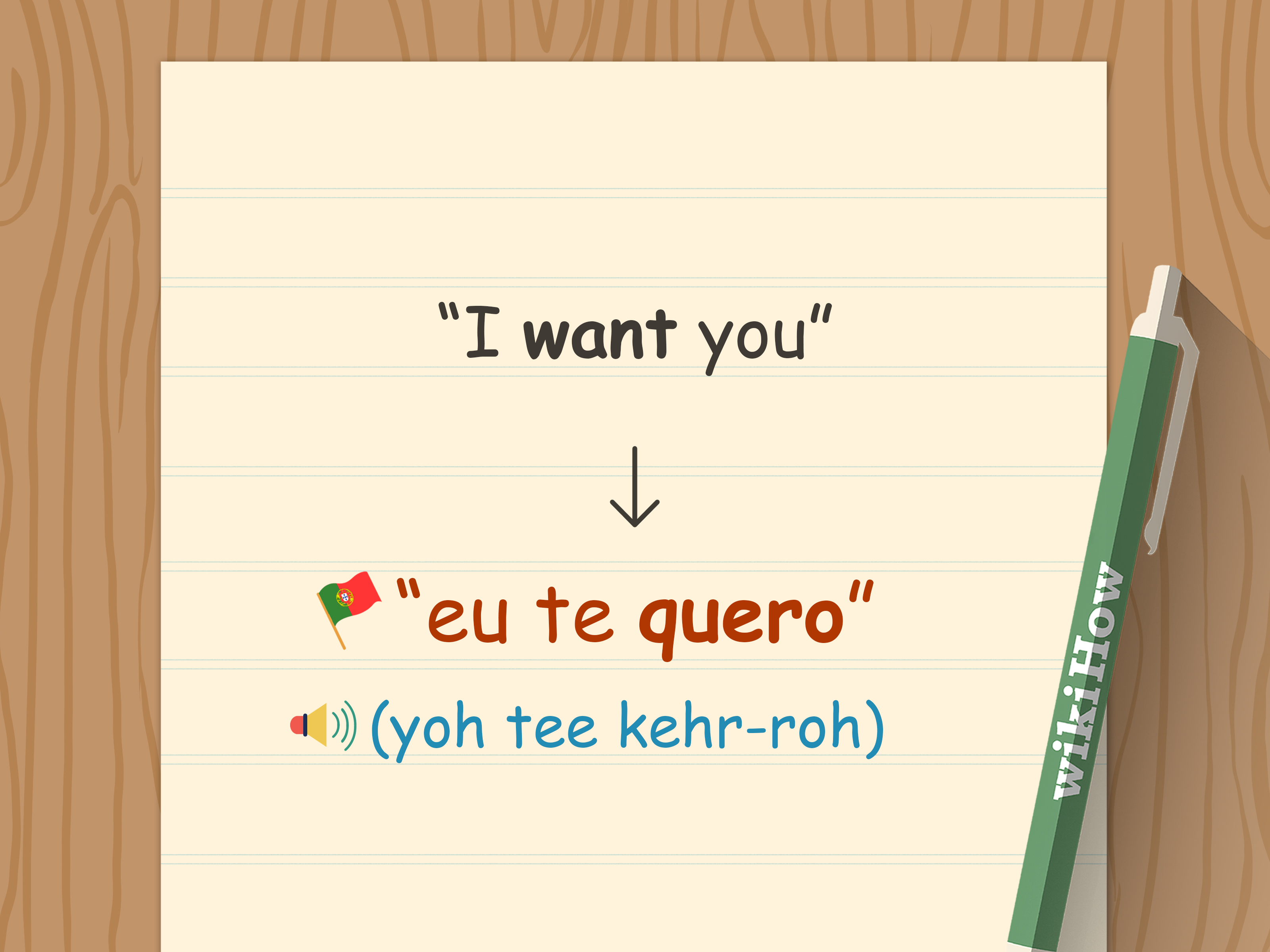

Learning how to say I love you in Portuguese is more than memorizing three pretty words and hoping your pronunciation does not trip over its own shoelaces. Portuguese is warm, musical, expressive, and wonderfully regional. The phrase you choose can sound natural in Brazil, poetic in Portugal, formal in writing, or a little dramatic in the best possible way. In this guide, you will learn three practical ways to say “I love you” in Portuguese, when to use each one, how they differ, and how to avoid sounding like you copied your feelings from a dusty phrasebook.
Why “I Love You” in Portuguese Has More Than One Version
Portuguese is spoken in Brazil, Portugal, and several other Portuguese-speaking communities around the world. That means one phrase can travel across oceans and pick up different accents, rhythms, and social habits along the way. In Brazil, people commonly say “Eu te amo” or simply “Te amo.” In Portugal, you may hear “Amo-te” more often. Both are correct, but they do not always feel identical to native speakers.
Think of it like American English versus British English. A person in New York and a person in London can both say “I’m going to call you,” but the tone, rhythm, and word choices may differ. Portuguese works the same way. If your goal is to express love naturally, you should know not only the translation, but also the setting, relationship, and regional flavor behind the phrase.
The good news: you do not need a PhD in Portuguese grammar to sound sincere. You just need to understand three strong options: Eu te amo, Amo-te, and Eu amo você. Each one says “I love you,” but each one walks into the room wearing a slightly different outfit.
Way 1: “Eu te amo” The Classic Brazilian Portuguese Phrase
Meaning and Pronunciation
Eu te amo means “I love you.” It is one of the most recognized ways to say I love you in Portuguese, especially in Brazilian Portuguese. A simple pronunciation guide for English speakers is:
Eu te amo “EH-oo chee AH-moo” or “EH-oo tee AH-moo,” depending on the region.
In much of Brazil, the “te” may sound close to “chee.” In other areas, it may sound more like “tee.” Do not panic. Portuguese pronunciation changes by region, and native speakers are used to hearing variety. The most important thing is to say it clearly, softly, and sincerely. No need to perform it like a soap opera actor standing in the rain, unless that is your brand.
When to Use “Eu te amo”
Eu te amo is direct, emotional, and serious. It is commonly used between romantic partners, close family members, and sometimes very close friends. In Brazil, it can appear in everyday speech, messages, song lyrics, birthday posts, wedding vows, and late-night texts sent after someone spends twelve minutes choosing the perfect heart emoji.
This phrase is best when the feeling is strong. It is not the same as saying “I like you” or “I have a little crush on you.” If you are still in the “we share memes and maybe eye contact” stage, Eu te amo may be too intense. If you are already in a meaningful relationship or expressing deep family affection, it fits beautifully.
Examples in Sentences
- Eu te amo. I love you.
- Eu te amo muito. I love you very much.
- Eu te amo de verdade. I truly love you.
- Eu te amo mais do que você imagina. I love you more than you imagine.
Can You Just Say “Te amo”?
Yes. In casual Brazilian Portuguese, Te amo is extremely common. The word eu means “I,” but Portuguese often allows speakers to drop the subject when the meaning is obvious. In texting, captions, and daily speech, Te amo sounds natural, warm, and familiar.
Here is the difference in feeling:
- Eu te amo slightly fuller, more complete, more emphatic.
- Te amo casual, affectionate, very common in Brazil.
If you are writing a romantic note, Eu te amo feels polished. If you are texting someone you already love, Te amo feels easy and natural. Both are useful. One wears a nice shirt; the other shows up in comfy clothes and still looks charming.
Way 2: “Amo-te” The European Portuguese Favorite
Meaning and Pronunciation
Amo-te also means “I love you.” This form is especially associated with European Portuguese, the Portuguese spoken in Portugal. A simple pronunciation guide is:
Amo-te “AH-moo-tuh,” with the final sound often softer or reduced in Portugal.
To English-speaking ears, Amo-te may look reversed because the object pronoun te comes after the verb. But in European Portuguese, this placement is normal in many contexts. It is not old-fashioned there. It is not “wrong.” It is just Portuguese doing Portuguese things, which sometimes means moving tiny words around like furniture before guests arrive.
When to Use “Amo-te”
Use Amo-te when speaking to someone from Portugal or when you want European Portuguese style. It is intimate, sincere, and natural in that regional context. While Brazilians will generally understand Amo-te, it may sound formal, literary, or unusual in everyday Brazilian speech. Meanwhile, in Portugal, Eu te amo may sound more Brazilian than local.
This distinction matters if you are writing for a specific person. If your partner, friend, or audience is Brazilian, Eu te amo is usually the safest choice. If the person is Portuguese, Amo-te may feel more native and emotionally accurate.
Examples in Sentences
- Amo-te. I love you.
- Amo-te muito. I love you very much.
- Amo-te cada vez mais. I love you more and more.
- Sempre te amei. I have always loved you.
Should You Say “Eu amo-te”?
You may see Eu amo-te, which literally includes the subject “I.” It is understandable, but Amo-te is often smoother because Portuguese does not always need the subject pronoun. The verb ending already shows who is doing the loving. Convenient, right? Portuguese saw English repeating “I, I, I” and politely said, “We can reduce the paperwork.”
For learners, the easiest rule is this: if you are aiming for Portugal, learn Amo-te. If you are aiming for Brazil, learn Eu te amo and Te amo. If you are not sure which variety to use, choose based on the person you are speaking to, not on which phrase looks cutest on a mug.
Way 3: “Eu amo você” Clear, Direct, and Easy to Understand
Meaning and Pronunciation
Eu amo você means “I love you.” A simple pronunciation guide is:
Eu amo você “EH-oo AH-moo voh-SEH.”
This version is grammatically transparent for English speakers because it follows a familiar structure: subject, verb, object. Eu means “I,” amo means “love,” and você means “you.” It is the phrase that makes your grammar brain relax and say, “Finally, a sentence with a map.”
When to Use “Eu amo você”
Eu amo você is correct and understandable. In Brazilian Portuguese, it can be used naturally, though Eu te amo is usually more common and more emotionally idiomatic. Eu amo você may sound slightly more deliberate, poetic, or emphatic depending on the situation.
It can work well in writing, especially when you want to make the word você stand out. For example, if someone asks, “Who do you love?” the answer Eu amo você puts clear emphasis on “you.” It says, “Not the idea of love, not the playlist, not the dramatic sunset. You.”
However, be careful with regional tone. In Portugal, você can sound formal, distant, or socially tricky depending on the context. Portuguese people often avoid using it casually. So while Eu amo você is understandable, it may not be the most natural choice for European Portuguese affection. For Portugal, Amo-te is usually better.
Examples in Sentences
- Eu amo você. I love you.
- Eu amo você do jeito que você é. I love you the way you are.
- Eu amo você mais a cada dia. I love you more every day.
- Eu amo você, e isso é simples. I love you, and it is that simple.
How It Compares to “Eu te amo”
Both Eu te amo and Eu amo você mean “I love you,” but they feel different. Eu te amo sounds more familiar and idiomatic in Brazilian Portuguese. Eu amo você sounds more explicit and slightly more emphatic. Neither is “bad.” They simply serve different emotional textures.
If you want the safest Brazilian Portuguese phrase, use Eu te amo. If you want to emphasize “you,” use Eu amo você. If you want European Portuguese, use Amo-te. Congratulations: you now have a tiny emotional toolbox, and none of the tools require batteries.
Quick Comparison: Which Phrase Should You Choose?
| Portuguese Phrase | English Meaning | Best For | Natural In |
|---|---|---|---|
| Eu te amo | I love you | Romantic partners, family, close relationships | Brazilian Portuguese |
| Te amo | Love you / I love you | Texts, casual affection, familiar relationships | Brazilian Portuguese |
| Amo-te | I love you | Romantic or deep affection in Portugal | European Portuguese |
| Eu amo você | I love you | Clear emphasis, writing, emotional statements | Mostly Brazilian Portuguese |
Related Romantic Portuguese Phrases You Should Know
Once you learn how to say I love you in Portuguese, you may want a few softer or more specific phrases. Not every emotional moment needs the full fireworks show. Sometimes you need a candle, not a parade.
“Gosto muito de você”
Gosto muito de você means “I like you very much” or “I care about you a lot.” This is gentler than Eu te amo. It is useful when feelings are growing, but you are not ready to launch the emotional rocket.
“Estou apaixonado por você” or “Estou apaixonada por você”
This means “I am in love with you.” Use apaixonado if the speaker is male and apaixonada if the speaker is female. Portuguese adjectives often change with gender, so this detail matters. Tiny ending, big grammar energy.
“Você é muito especial para mim”
This means “You are very special to me.” It is affectionate without being too intense. It works well in a heartfelt message, anniversary card, or sincere conversation.
“Meu amor”
Meu amor means “my love.” It is widely used as a term of endearment, especially in Brazilian Portuguese. Depending on the relationship and tone, it can sound romantic, sweet, or warmly familiar.
Common Mistakes When Saying I Love You in Portuguese
1. Using the Wrong Regional Version
The biggest mistake is not grammar; it is context. Eu te amo is common in Brazil, while Amo-te is more natural in Portugal. If you mix them up, people will usually understand you, but your phrase may sound foreign, overly formal, or regionally mismatched.
2. Saying It Too Soon
In Portuguese, as in English, “I love you” can carry serious emotional weight. It is not usually a casual phrase for someone you met twelve minutes ago near the snack table. For early affection, try Gosto muito de você instead.
3. Trusting Literal Translation Too Much
Literal translation is helpful, but language is not a vending machine. You do not insert English words and receive perfect Portuguese feelings. Eu amo você is literal and correct, but Eu te amo may sound more natural in Brazil. The best phrase is not always the one that matches English word order.
4. Forgetting Pronunciation Practice
A phrase can be grammatically perfect and still sound like it fell down the stairs if you never practice it aloud. Say the words slowly. Listen to native speakers. Repeat the rhythm. Portuguese has a musical flow, and the phrase should feel smooth, not like you are reading a Wi-Fi password.
How to Make Your Portuguese “I Love You” Sound More Natural
If you want to sound natural, keep it simple. Many learners try to decorate romantic phrases with too many words, and suddenly a sweet message turns into a grammar obstacle course. Start with one clean phrase, then add a small detail if needed.
For Brazilian Portuguese, try:
- Te amo.
- Eu te amo muito.
- Eu te amo de verdade.
For European Portuguese, try:
- Amo-te.
- Amo-te muito.
- Amo-te cada vez mais.
For a softer phrase, try:
- Gosto muito de você.
- Você é especial para mim.
- Estou apaixonado por você.
The secret is not complexity. The secret is choosing the right phrase for the right person. A simple Te amo at the right moment can be more powerful than a paragraph that sounds like it was assembled by a nervous dictionary.
Experiences Related to Saying “I Love You” in Portuguese
One of the most interesting experiences learners have with Portuguese is realizing that romantic language is not only about vocabulary. It is about timing, tone, culture, and confidence. Many English speakers first learn Eu te amo from songs, movies, social media captions, or Brazilian friends. The phrase feels easy to remember because it is short and emotional. But the first time someone actually says it aloud, the mood changes. Suddenly, those three words are not just language practice. They are a tiny emotional event wearing Portuguese shoes.
A common learner experience is the pronunciation surprise. On paper, Eu te amo looks simple. Then a Brazilian speaker says it quickly, and te may sound like “chee.” The learner blinks, checks the spelling again, and wonders if Portuguese secretly changed the rules while nobody was looking. This is normal. Brazilian Portuguese often has soft, flowing sounds that differ from what English speakers expect. After a little listening practice, the phrase starts to feel natural. It becomes less like “three separate words” and more like one smooth expression.
Another memorable experience happens when learners discover the Brazil-versus-Portugal difference. Someone may proudly learn Eu te amo, then meet a person from Portugal who says, “We usually say Amo-te.” At first, this can feel confusing. Did the learner study the wrong phrase? Not at all. They learned one regional version. Portuguese is shared by many communities, and each community gives the language its own rhythm. This is not a problem; it is part of the beauty of the language. Learning both phrases is like having two keys for two doors.
There is also the texting experience. In Brazil, many people shorten the phrase to Te amo, especially in messages. It may appear with emojis, stickers, voice notes, or the famous internet habit of stretching words for emotion: te amoooo. Learners often enjoy this because it feels real and casual. It is the kind of phrase people actually use, not just a classroom sentence that lives forever on page 37 next to a picture of a train station.
For people in relationships, saying “I love you” in Portuguese can feel especially meaningful when one partner is a native speaker. Using the other person’s language shows effort. Even if the accent is not perfect, the attempt often matters more than flawless pronunciation. A carefully spoken Amo-te or Eu te amo can feel personal because it says, “I cared enough to learn your words.” That kind of effort has emotional value. It is not just translation; it is attention.
Families can have similar experiences. In Brazilian families, Te amo may be used between parents and children, siblings, grandparents, and close relatives. For learners, this can be a reminder that love phrases are not only romantic. They can be tender, protective, grateful, and familiar. Portuguese affection often appears in everyday life through phrases like meu amor, querido, querida, and saudades. That last word, saudades, is famously difficult to translate neatly, but it often carries the feeling of missing someone deeply.
Finally, many learners discover that the best Portuguese love phrase is the one that fits the moment. A dramatic Eu te amo may be perfect for a serious confession. A quick Te amo may be perfect at the end of a call. A gentle Gosto muito de você may be better when feelings are still new. And Amo-te may be the right choice when speaking European Portuguese. The experience teaches a bigger lesson: language is not only about being correct. It is about being understood, being thoughtful, and choosing words that carry the right emotional weight.
Conclusion
There are three especially useful ways to say I love you in Portuguese: Eu te amo, Amo-te, and Eu amo você. For Brazilian Portuguese, Eu te amo and Te amo are the most common choices. For European Portuguese, Amo-te usually sounds more natural. Eu amo você is clear and correct, especially in Brazilian Portuguese, but it can feel more emphatic or less idiomatic depending on the setting.
The best phrase depends on the person, region, and relationship. If you want to sound natural, do not just translate the wordsmatch the culture. Say it with care, practice the pronunciation, and remember that sincerity does more heavy lifting than perfect grammar. Portuguese may move pronouns around, soften sounds, and add regional surprises, but love still gets the message across. Fortunately, love is one of the few subjects where a little accent can actually make the sentence more charming.
SEO Tags