
Snowmen look simple. Roll a ball, stack another ball, add a carrot, and suddenly the yard has a temporary mayor with excellent posture and no long-term career plan. But behind that cheerful face is a surprisingly deep cultural history. Snowmen have been medieval protest art, Renaissance sculpture, frontier warning symbols, photographic subjects, record-breaking community projects, and holiday icons with better name recognition than many actual monarchs.
The story of history’s most important snowmen is really a story about people. Whenever snow falls, humans get an irresistible urge to shape it into something that looks back at us. Sometimes that “something” is cute. Sometimes it is political. Sometimes it is 122 feet tall and requires a whole town, industrial equipment, and the kind of winter ambition usually reserved for mountain goats.
So let’s put on imaginary mittens and meet the snowmen that mattered most: the icy figures that changed art, folklore, entertainment, photography, civic pride, and the way we think about winter itself.
Why Snowmen Matter More Than We Think
A snowman is one of the oldest forms of public art because it needs almost nothing: snow, cold weather, and a person willing to lose feeling in their fingers for the sake of creativity. Unlike marble statues or oil paintings, snowmen are democratic. You do not need a palace, a patron, or a museum. You need a yard and a willingness to accept that your masterpiece may be destroyed by afternoon sunlight or one deeply suspicious dog.
That short life is part of the magic. Snowmen are temporary by design, which makes them powerful symbols of childhood, climate, memory, humor, and loss. Their fragility gives them emotional weight. We know they will melt, so we enjoy them while they last. That is basically philosophy with a scarf.
Historically, snowmen have also acted as a mirror. Communities have used them to celebrate, complain, joke, mourn, and compete. From medieval manuscripts to modern animated films, snowmen have served as blank white canvases for human imagination.
The Medieval Snowman: Winter’s First Folk Artist
Long before Frosty sang his way into American holiday culture, snowmen were already appearing in European visual history. Research into early manuscripts and winter scenes suggests that people in the Middle Ages built snow figures not merely as children’s play but as public expression. The snowman was accessible sculpture: cheap, fast, and visible to everyone.
In a world where formal art usually belonged to churches, courts, and wealthy patrons, snow gave ordinary people an artistic loophole. When winter arrived, the streets became an open-air gallery. A snowman could be comic, rude, symbolic, devotional, or rebellious. Better yet, it melted before anyone could overanalyze the artist’s intent in a twelve-page academic paper.
The Miracle of 1511: Brussels Turns Snow Into Protest
One of the most fascinating snowman events in history happened in Brussels during the harsh winter of 1511. The city was under pressure from hunger, political frustration, and social tension. Instead of simply grumbling indoors, residents filled the streets with a large number of snow figures. These were not polite little lawn ornaments. They were satirical, political, and often bawdy public sculptures aimed at the powerful.
This event became known as the Miracle of 1511. It showed that snowmen could do more than decorate a town square. They could speak for people who had limited ways to criticize authority. Snow became a social media platform, except colder, heavier, and mercifully free of comment sections.
The Brussels snowmen matter because they reveal a forgotten side of winter culture. Snowmen were not always innocent holiday mascots. They were sometimes temporary protest posters with faces, arms, and a very short expiration date.
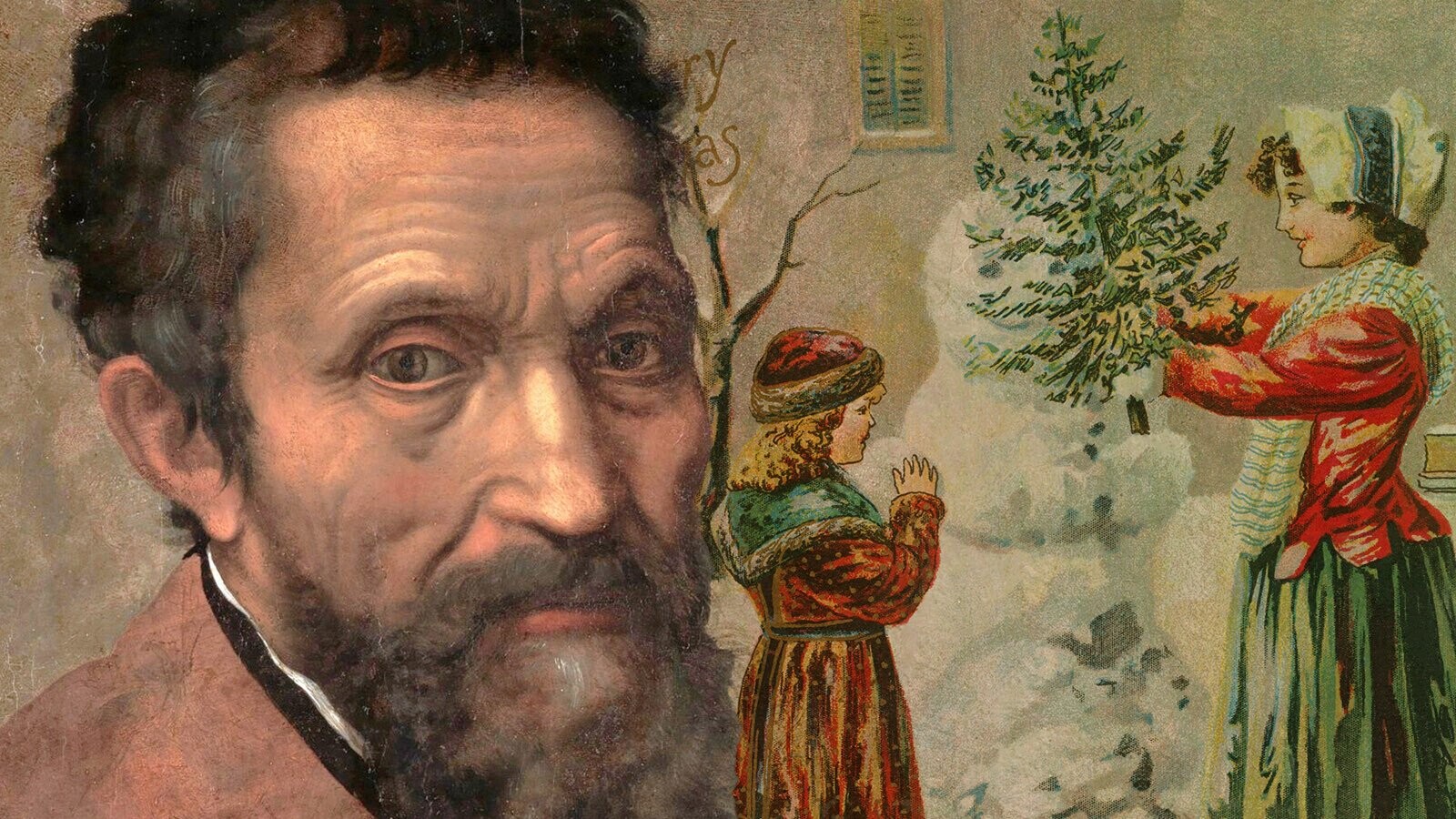
Michelangelo’s Snowman: When a Genius Sculpted With Slush
If history handed out awards for the most impressive snowman résumé, Michelangelo’s icy creation would be a finalist. According to a famous Renaissance anecdote, the young Michelangelo was once asked by Piero de’ Medici, ruler of Florence, to build a snowman in the Medici courtyard. Imagine being so talented that even your snow day activities are commissioned by political elites.
Michelangelo is remembered for marble masterpieces such as David and the ceiling of the Sistine Chapel, but the snowman story has lasted because it captures something wonderful about art: the material does not have to be permanent for the act to matter. Snow may melt, but the legend of a great artist shaping it can survive for centuries.
This snowman is important because it connects childlike winter play with serious artistic skill. It reminds us that creativity is not limited by medium. Marble, paint, bronze, pencil, snoweach can become art in the right hands. In Michelangelo’s hands, even a snowman probably had better anatomy than most gym selfies.
The Schenectady Snowmen: A Chilling Frontier Legend
Not every historic snowman is cheerful. In colonial New York, a grim legend surrounds the Schenectady Massacre of 1690. According to tradition, during a dangerous winter night, the settlement’s gates were left poorly guarded, and the only “sentinels” visible were two snowmen. The story became a haunting symbol of false security.
Whether treated as literal fact, folklore, or moral warning, the snowmen at the gates became important because they transformed a simple winter image into a lesson: appearances are not protection. A snowman may look like a guard from far away, but it cannot watch, warn, or act. That is an unfortunate job description for someone made primarily of precipitation.
These snowmen remain culturally memorable because they show how folklore attaches itself to real events. A snowman can become more than a decoration; it can become a symbol people use to explain danger, negligence, and the cost of assuming everything is fine because something vaguely person-shaped is standing near the entrance.
Mary Dillwyn’s Snowman: The First Famous Snowman Photograph
In the mid-19th century, photography was still young, awkward, and magical. Cameras were not yet the pocket-sized selfie machines we know today. They were scientific instruments, artistic tools, and occasionally heavy boxes that made everyone stand extremely still and look like they had just been told alarming news.
Around 1853, Welsh photographer Mary Dillwyn captured images of everyday life, including people building a snowman. Her snowman photographs are among the earliest known photographic images of a snowman, and they matter for two reasons. First, they preserve a winter moment that would otherwise have vanished. Second, they show how photography began documenting ordinary life, not just formal portraits and grand architecture.
Mary Dillwyn herself is significant as one of Britain’s notable early female photographers. Her snowman images are intimate, playful, and historically rich. They remind us that snowmen are not only things we build; they are moments we want to remember. A snowman melts, but a photograph says, “Not so fast, sunshine.”
Frosty the Snowman: America’s Most Famous Snow Celebrity
No list of important snowmen in history can ignore Frosty. Introduced through the 1950 song written by Jack Rollins and Steve Nelson and popularized by Gene Autry, Frosty became one of the most recognizable snowmen in American culture. The character later gained even more fame through television animation, especially the 1969 Rankin/Bass special narrated by Jimmy Durante.
Frosty’s importance lies in how completely he changed the snowman’s public image. Before Frosty, snowmen could be political, artistic, eerie, or local. After Frosty, the snowman became a warm-hearted holiday friend: cheerful, musical, child-friendly, and magically alive thanks to a hat with suspiciously strong supernatural credentials.
Interestingly, the original Frosty story is not strictly about Christmas. It is about winter magic, childhood wonder, and the bittersweet promise that joy can leave and return. That emotional formula helped Frosty become a seasonal classic. He is fun enough for kids, nostalgic enough for adults, and simple enough for merchandising departments to understand instantly.
Raymond Briggs’ Snowman: The Gentle Icon of Wordless Storytelling
In 1978, British author and illustrator Raymond Briggs published The Snowman, a wordless picture book about a boy and the snowman he builds. The book became internationally beloved, and the 1982 animated adaptation turned the story into a winter classic. With its soft visual style and nearly dialogue-free storytelling, The Snowman proved that a snowman could carry deep emotion without saying a word.
This snowman matters because he is not a joke machine or a holiday mascot. He is a companion, a dream, and a reminder of how quickly beautiful experiences pass. The story’s famous ending, in which the boy finds the snowman melted, has stayed with generations of viewers. It is gentle, but it lands with the force of a mitten-covered existential crisis.
Briggs’ snowman also changed how people think about children’s media. It trusts young audiences with silence, atmosphere, wonder, and sadness. That is rare. Many stories shout their lessons through a megaphone; this one simply lets a boy look at a puddle.
Olympia SnowWoman: The Giant of Bethel, Maine
If Michelangelo’s snowman represents artistic genius, Olympia SnowWoman represents teamwork on a gloriously ridiculous scale. Built in Bethel, Maine, in 2008, Olympia measured 122 feet 1 inch tall and became the Guinness World Record holder for the tallest snowperson. She was named in honor of U.S. Senator Olympia Snowe, which is arguably the most perfect snow-related naming opportunity in American public life.
Olympia was not assembled by a couple of kids with mittens. She required weeks of work, massive amounts of snow, heavy machinery, community coordination, and decorations large enough to make normal craft supplies feel deeply inadequate. Trees became arms. Skis became eyelashes. The whole project turned winter into a civic festival.
Olympia matters because she shows how snowmen can create community identity. Bethel did not just build a record; it built a shared memory. A giant snowwoman can bring volunteers together, attract visitors, and give a town a story that lasts long after the snow disappears.
Angus, King of the Mountain: The Snowman Before Olympia
Before Olympia, Bethel had already made snowman history with Angus, King of the Mountain, a giant snowman built in 1999. Angus stood about 113 feet tall and helped put Bethel on the map as a place where winter ambition is clearly not afraid of heights.
Angus is important because he prepared the ground, literally and culturally, for Olympia. He showed that a record-breaking snowperson could become a community project rather than a private stunt. In the history of snowmen, Angus is the big frosty older sibling who proved the family could dream vertically.
The Böögg: Zurich’s Exploding Snowman of Spring
In Zurich, Switzerland, a snowman-like figure called the Böögg plays the starring role in the Sechseläuten spring festival. The Böögg symbolizes winter and is placed on a pyre. Tradition says that the faster its head bursts, the better the coming summer will be. As weather forecasting methods go, it is less scientific than satellite modeling but much more dramatic.
The Böögg matters because it flips the snowman’s usual meaning. Instead of celebrating winter, this snowman represents winter’s defeat. The community gathers not to preserve him but to send him off with fire, noise, and public excitement. He is less “holiday decoration” and more “seasonal resignation letter.”
Although the Böögg is not an American snowman, it belongs in any serious history of important snowmen because it shows how snow figures can become ritual symbols. Across cultures, snowmen help people make sense of seasonal change. Sometimes we build them because winter has arrived. Sometimes we burn them because we are politely asking winter to leave the premises.
The Modern Art Snowman: Fischli and Weiss Keep Him Cool
Modern artists have also embraced the snowman. Swiss artists Peter Fischli and David Weiss created a refrigerated snowman artwork that has appeared in major art settings. Instead of depending on outdoor weather, the piece uses technology to preserve a snowman inside a controlled environment. It is funny, strange, and quietly philosophical.
This modern art snowman matters because it turns a familiar object into a question. What happens when something temporary is artificially preserved? Is the snowman still natural if machinery keeps it alive? Is it cute, tragic, or a tiny frozen hostage situation?
Like many great artworks, the piece is simple on the surface and complicated underneath. It touches on climate, care, artificial environments, and the human desire to protect what is meant to disappear. Also, it proves that in contemporary art, even a snowman can get better climate control than most apartments.
What These Snowmen Tell Us About Culture
Looking at the most important snowmen in history, several patterns appear. First, snowmen are surprisingly flexible symbols. They can represent joy, protest, danger, nostalgia, civic pride, artistic experimentation, and seasonal change. That is a lot of responsibility for someone with pebble buttons.
Second, snowmen connect high culture and popular culture. Michelangelo’s snowman belongs to art history. Frosty belongs to American music and television. Olympia belongs to public spectacle and community building. Mary Dillwyn’s snowman belongs to photography history. Together, they show that snowmen move easily between museums, backyards, books, songs, and town records.
Third, snowmen matter because they are temporary. Their disappearance is not a design flaw. It is the point. A snowman teaches us to value moments while they exist. The same snow that makes the sculpture will eventually become water, then vapor, then weather again. In other words, every snowman is a tiny climate cycle wearing a hat.
Experience Section: What Building Snowmen Still Teaches Us Today
Anyone who has built a snowman knows the process is part engineering, part art, and part negotiation with numb fingers. The first lesson is patience. Snow does not always cooperate. Powdery snow refuses to pack. Wet snow becomes heavy enough to make you question your life choices. The perfect snowman requires the rare middle ground: sticky enough to roll, firm enough to stack, and not so icy that it turns your front yard into a workplace safety case study.
The second lesson is teamwork. A good snowman often needs more than one builder. Someone rolls the base, someone searches for sticks, someone insists the face needs “more personality,” and someone contributes a scarf without asking whether the scarf will survive the afternoon. This simple collaboration is why snowmen often become family memories. The finished figure is not just a winter decoration. It is proof that people gathered, laughed, argued about carrot placement, and made something together.
There is also a creative lesson. Snowmen invite improvisation. No coal? Use stones. No carrot? Use a leaf, a pinecone, or whatever object the dog has not already claimed. No hat? A bowl works, though it may make the snowman look like he is preparing soup. The snowman’s charm comes from these imperfect choices. A slightly crooked smile or uneven body can make it more memorable than a perfectly symmetrical design.
Building a snowman also teaches acceptance. You know from the beginning that it will not last. Sunlight, rain, wind, neighborhood children, and gravity are all plotting against it. Yet people still build snowmen because the value is in the making, not the permanence. That is a surprisingly grown-up lesson hidden inside a childhood activity.
In a digital world, snowmen feel refreshingly physical. You cannot swipe them into existence. You have to go outside, touch cold snow, notice the weather, and work with the material nature gives you. That hands-on experience matters. It slows people down. It turns a winter day into a story. It gives children a reason to explore and adults an excuse to act like children without having to explain themselves.
Historic snowmen make that experience even richer. When you build a snowman today, you are joining a long human tradition. You are connected, in a small snowy way, to medieval street artists, Renaissance sculptors, early photographers, holiday songwriters, children’s authors, and entire towns that decided winter was not merely something to endure but something to shape.
That may be the greatest lesson of all. Snowmen are important because they prove humans are meaning-makers. Give us frozen water, and we create faces, stories, jokes, warnings, monuments, songs, and memories. Then the sun comes out, the snowman disappears, and somehow the story remains.
Conclusion: The Snowman’s Place in History
History’s most important snowmen are not important because they lasted. They are important because they meant something while they stood. The Brussels snowmen spoke in satire. Michelangelo’s snowman turned snow into legend. Mary Dillwyn’s snowman entered photographic history. Frosty became America’s cheerful winter celebrity. Raymond Briggs’ snowman taught generations about wonder and loss. Olympia SnowWoman showed what a community can build when winter gives it enough raw material and enthusiasm.
Snowmen may be temporary, but their cultural impact is surprisingly durable. They remind us that art can be playful, protest can be creative, memory can be fragile, and even the coldest season can inspire warmth. Not bad for a figure whose traditional nose is also a snack.
Note: This article is based on synthesized historical and cultural information from reputable references on art history, photography history, winter festivals, American entertainment, children’s literature, and world-record snow sculptures. Source links are intentionally not inserted, as requested.