
East London has a talent for turning unlikely places into something memorable. Warehouses become galleries. Railway arches become restaurants. Rooftops become cinemas. And, in one of the more charming twists of urban creativity, a temporary bathhouse in Barking became a small but splashy reminder that bathing can be more than getting clean. It can be social, architectural, therapeutic, and just odd enough to make people talk about cucumber facials at dinner.
The story of a pop-up bathhouse in East London points directly to the Barking Bathhouse, an experimental temporary spa and social space designed by Something & Son and commissioned by Create London. It was not simply a place to sit in steam and pretend your inbox did not exist. It was a playful, thoughtful project that blended sauna culture, local history, low-cost wellness, industrial design, and community life into one compact urban experience.
At a time when wellness spaces can sometimes feel like quiet museums of expensive towels, Barking Bathhouse offered something warmer and more human. It asked a simple question: what if a bathhouse could be affordable, local, creative, and communal again?
What Was the Pop-Up Bathhouse in East London?
The Barking Bathhouse was a temporary spa and bar in East London, created as a pop-up health and social venue. Located in Barking, it brought together a sauna, ice room, treatment rooms, relaxation areas, and a bar serving healthy drinks. It was part spa, part community experiment, part architectural installation, and part reminder that cities do not always need grand marble temples to create meaningful public spaces.
Designed by the Hackney-based studio Something & Son, the bathhouse drew inspiration from Barking’s history of public bathing. Like many towns across the United Kingdom, Barking once had public baths that served practical and social roles. Before private bathrooms became standard in homes, public bathhouses were essential. People went there not only to wash, but also to meet, talk, gather, and take part in civic life. In other words, the bathhouse was the original group chat, just with more steam and fewer typing bubbles.
The pop-up project revived that spirit in a contemporary way. Instead of copying the past exactly, it reimagined the bathhouse for a modern urban audience. Visitors could take a sauna, cool down in an ice room, enjoy treatments, sip something refreshing, and relax in an informal courtyard-style setting. It was wellness without the stiff upper lip.
Why East London Was the Perfect Setting
East London has long been associated with reinvention. Its neighborhoods carry traces of industry, migration, art, trade, music, markets, and everyday working-class resilience. Barking, in particular, sits outside the glossy postcard version of London, which made the bathhouse project feel more interesting. It was not dropped into the obvious luxury zones of Mayfair or Knightsbridge. It appeared in a place where public space, affordability, and local identity mattered.
That choice gave the project a different kind of energy. A pop-up bathhouse in East London could be experimental without feeling detached from real life. It could reference local history while offering something new. It could be stylish without pretending that style required silence, marble columns, and bottled water priced like rare perfume.
Barking Bathhouse also arrived during a moment when London was paying close attention to urban transformation. Temporary architecture, cultural pop-ups, and creative public projects were becoming powerful ways to test ideas. Instead of building permanent monuments first and asking questions later, designers could create flexible spaces, observe how people used them, and learn from the results.
The Design: Industrial, Reusable, and Surprisingly Inviting
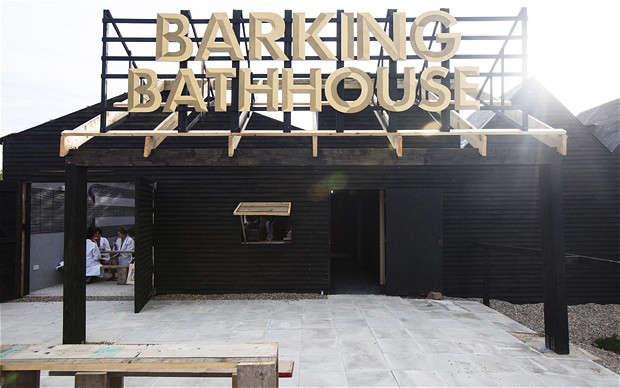
The design of the Barking Bathhouse was one of its most memorable features. It used interconnected volumes and prefabricated elements, giving the whole project a modular quality. This mattered because the bathhouse was temporary. A pop-up structure needs to arrive, work hard, charm people quickly, and then leave without behaving like an architectural diva.
The exterior featured black-stained timber, a design choice that nodded to the area’s industrial character. Rather than hiding behind soft spa clichés, the building embraced a darker, more urban look. Think less “tropical resort brochure” and more “handsome workshop that secretly gives excellent massages.”
Inside, the bathhouse combined functional treatment pods with social areas. The use of salvaged and reusable materials helped the project feel resourceful rather than wasteful. Some areas were designed to be dismantled and reused, an important idea for temporary architecture. A successful pop-up should not become landfill with better lighting.
A Spa with a Social Backbone
Many modern spas are designed around privacy, quiet, and individual escape. There is nothing wrong with that; sometimes the best wellness plan is simply not speaking to anyone for ninety minutes. But the Barking Bathhouse had a different personality. It brought back the social purpose of historical bathhouses. The goal was not only relaxation, but connection.
Visitors could move between heat, cold, treatment, conversation, and refreshment. This circulation made the place feel less like a standard spa and more like a neighborhood gathering spot with better robes. The bar and relaxation yard played an important role because they gave people somewhere to linger. In a good bathhouse, the pause between rituals is just as important as the ritual itself.
The Bathhouse Tradition: More Than a Fancy Soak
Public bathing has deep roots across many cultures. Roman thermae, Turkish hammams, Russian banyas, Japanese sento, Korean jjimjilbang, and Finnish saunas all show that bathing has often been a shared ritual. These spaces were not only about hygiene. They were about recovery, conversation, status, spirituality, health, and belonging.
In Britain, public baths and washhouses became especially important in the nineteenth and early twentieth centuries, when many homes lacked private washing facilities. These buildings served public health goals, but they also acted as civic places. People used them for bathing, laundry, swimming, meetings, sports, and community events. The humble bathhouse often did more social heavy lifting than its tiled walls suggested.
That history makes the East London pop-up bathhouse feel less like a novelty and more like a revival. Barking Bathhouse was not inventing communal bathing from scratch. It was reaching back into a tradition and asking how it might work again in a modern city where loneliness, stress, and over-scheduled lives are common problems.
Wellness Without the Velvet Rope
One of the strongest ideas behind the pop-up bathhouse was accessibility. Luxury wellness often comes with a velvet rope, whether literal or financial. Many people love the idea of a spa day until they see the price and decide that “self-care” means drinking tap water and stretching near the sofa.
Barking Bathhouse challenged that pattern by offering a more approachable model. It combined affordable treatments, local participation, and informal design. Create London worked with local beauticians, while borough gardeners helped develop natural treatments connected to local allotment produce. This gave the project a neighborhood flavor that no imported spa concept could fake.
The result was a wellness space that felt rooted in place. It was not just about heat therapy or cucumber facials. It was about who gets to enjoy care, who gets invited into beautiful spaces, and how design can make wellness feel less exclusive.
Heat, Cold, and the Appeal of Contrast Therapy
The bathhouse included a sauna and cold-room experience, which placed it within the broader tradition of contrast bathing. Moving between heat and cold has long been part of sauna and bathing cultures around the world. In simple terms, heat encourages sweating and relaxation, while cold exposure creates a sharp reset that many people describe as energizing.
Modern wellness culture has embraced this hot-cold rhythm with impressive enthusiasm. Saunas, cold plunges, ice baths, and steam rooms have become popular in cities where people spend too much time sitting, scrolling, and wondering why their shoulders live next to their ears. The appeal is partly physical and partly psychological. A sauna session forces you to slow down. A cold plunge forces you to be very, very present. Nothing says mindfulness like cold water making your soul briefly leave your body and then return with better circulation.
Scientific research on sauna bathing suggests possible benefits for cardiovascular health, relaxation, and overall well-being, though it should never be treated as a replacement for medical care, exercise, or common sense. People with heart conditions, unstable blood pressure, pregnancy-related concerns, or other medical issues should speak with a health professional before using intense heat or cold facilities.
Safety Still Matters
A good bathhouse experience depends on thoughtful safety. Heat, steam, shared water, and public facilities require serious hygiene and management. Hot tubs and spa pools, for example, need careful water temperature control, disinfectant levels, and pH monitoring. Saunas also require clear guidance around hydration, session length, alcohol use, and cooling down.
For visitors, the practical advice is simple: drink water, avoid alcohol before intense heat exposure, listen to your body, and leave the sauna if you feel dizzy, faint, or unwell. A bathhouse should leave you refreshed, not acting out a dramatic Victorian fainting scene.
Why Pop-Up Architecture Works for Wellness
Pop-up architecture is often associated with retail, food markets, art installations, and seasonal events. But the Barking Bathhouse showed that temporary design can also work beautifully for wellness. A pop-up structure can test a concept without demanding decades of commitment. It can activate underused land, bring people to overlooked areas, and generate public conversation quickly.
This is especially useful in cities like London, where permanent space is expensive and planning can be complex. A temporary bathhouse can demonstrate demand, gather feedback, and prove that people want shared wellness experiences outside traditional gym or hotel-spa settings.
The temporary nature also adds excitement. People are more likely to visit a place when they know it will not be around forever. Scarcity creates momentum. A pop-up bathhouse says, “Come now, bring a friend, and maybe do not overthink the cucumber facial.”
The Role of Local Materials and Local People
A major strength of the East London bathhouse concept was its connection to local making. The project did not depend only on imported luxury signals. It used a mix of industrial references, salvaged materials, local services, and community participation. This made the space feel less polished in the conventional sense, but more meaningful.
In design terms, that matters. People can sense when a place belongs somewhere. A bathhouse in East London should not feel like a generic wellness chain with a London postcode glued onto the brochure. It should carry the texture of the neighborhood: its history, humor, rough edges, creativity, and practical intelligence.
Barking Bathhouse did that by treating the community not just as customers, but as part of the concept. Local beauticians, gardeners, designers, and visitors all helped shape the project’s identity. That is the difference between a venue and a place.
What Modern Wellness Spaces Can Learn from Barking Bathhouse
The most important lesson from Barking Bathhouse is that wellness does not need to be sterile. It can be playful, social, affordable, and locally specific. Too many wellness spaces use the same visual language: pale walls, whispering staff, eucalyptus mist, and the emotional intensity of a luxury candle. Barking Bathhouse proved there is another way.
First, wellness spaces can be communal. People want calm, but they also want connection. A shared sauna or relaxation courtyard can create low-pressure social contact that feels more natural than forced networking or awkward small talk over tiny sandwiches.
Second, wellness can be rooted in history. Reviving the idea of public bathing gives a project cultural depth. It reminds visitors that care has always been a collective concern, not just a private purchase.
Third, temporary spaces can be serious. A pop-up does not have to be shallow or gimmicky. With strong design and a clear purpose, a temporary project can influence how cities think about health, leisure, and public life.
How to Imagine a Visit to a Pop-Up Bathhouse in East London
Picture arriving at a black-timber structure tucked into an urban setting that still carries traces of industry. The building does not shout luxury. It suggests curiosity. You step inside and find a series of connected spaces: treatment pods, a sauna, a cool area, a relaxation yard, and a bar where drinks lean toward refreshing rather than reckless.
You start with the sauna. The air is warm, woody, and slightly theatrical. People settle into the heat, first fidgeting, then quieting. Outside, the city continues its usual performance of buses, footsteps, and someone probably being late for something. Inside, time softens.
After the sauna, the cold room offers a bracing contrast. It is not exactly comfortable at first, but that is part of the point. The cold clears the mental fog. Suddenly your brain remembers it has windows. Then comes rest: a robe, a drink, maybe a conversation with someone who also looks surprised to be so relaxed in Barking.
The charm is not perfection. The charm is atmosphere. A pop-up bathhouse is temporary, experimental, and alive. It has the pleasant feeling of a city trying something generous.
The Bigger Meaning of a Small Urban Spa
A pop-up bathhouse in East London may sound like a niche design story, but it touches bigger questions. What should cities offer beyond housing, transport, shops, and offices? Where do people go to recover? How can public space support mental and physical well-being? Can beauty and care be available outside elite settings?
Barking Bathhouse suggested that the answers do not always need to be massive. Sometimes a modest, temporary project can open a larger conversation. It can remind people that relaxation is not frivolous. Community is not outdated. And bathing, when designed with imagination, can become a civic ritual again.
In an age when many people feel digitally connected but physically isolated, bathhouse culture has renewed relevance. Shared heat breaks down social stiffness. Waiting areas encourage casual conversation. Rituals create rhythm. The body gets attention in a world that often treats it like a device-carrying platform for the brain.
Experience Notes: What a Pop-Up Bathhouse Teaches You
Spending time in a bathhouse-style environment changes your pace almost immediately. The first lesson is that you cannot rush heat. You can rush coffee, emails, errands, and possibly breakfast if toast is involved, but you cannot bully a sauna into working faster. The body needs time to warm, sweat, release tension, and settle. That slow rhythm is one of the greatest pleasures of the experience.
The second lesson is that contrast wakes you up. Moving from heat into cold is not subtle. It is more like your nervous system receiving a polite but firm letter written in capital letters. At first, the cold feels shocking. Then breathing deepens, thoughts narrow, and the present moment becomes impossible to ignore. For many visitors, that hot-cold cycle is what makes a bathhouse feel more restorative than simply sitting somewhere nice.
The third lesson is social. A bathhouse creates a rare kind of public intimacy. People are not performing in the usual urban way. They are not dressed for status, hidden behind laptops, or speed-walking through life with headphones on. They are wrapped in towels or robes, slightly pink from heat, and more human than polished. Conversation becomes easier because everyone is participating in the same ritual.
In East London, that social quality matters. The area has always been shaped by layers of community, work, migration, creativity, and reinvention. A pop-up bathhouse fits that spirit because it is practical and imaginative at the same time. It does not ask visitors to escape the city completely. Instead, it offers a pocket of recovery inside the city.
A good visit would likely unfold in stages. You arrive with street noise still in your shoulders. You change, hydrate, and step into heat. The first minutes are restless. You notice the bench, the temperature, the sound of your own breathing. Then the body begins to accept the room. The mind stops opening invisible tabs. After the heat comes cold, and after cold comes rest. That final pause may be the most underrated part of the entire ritual.
The design of a temporary bathhouse adds another layer to the experience. Because the space is not permanent, it feels more precious. You pay attention. The materials, the layout, the courtyard, the reused timber, the improvised charmall of it reminds you that wellness does not require perfection. Sometimes it requires a smart idea, a good stove, somewhere to cool down, and a community willing to show up.
There is also a lesson for anyone designing future wellness spaces. People remember how a place makes them feel. They remember whether it welcomed them, whether it had character, whether it gave them permission to slow down. Barking Bathhouse succeeded because it was not only about treatments. It was about atmosphere, access, and the joy of trying something unexpected in a familiar urban landscape.
The best bathhouse experiences leave you with a strangely simple thought: why do we not make more places like this? Not necessarily identical saunas or pop-up spas, but places where care is shared, design is thoughtful, and relaxation is treated as part of public life. East London’s pop-up bathhouse offered one possible answer, and it still feels fresh: build it lightly, root it locally, make it welcoming, and let people rediscover the pleasure of slowing down together.
Conclusion
A pop-up bathhouse in East London is more than a quirky design headline. The Barking Bathhouse showed how temporary architecture, local history, and communal wellness could come together in a space that felt both useful and imaginative. By reviving the spirit of public baths, using modular design, involving local talent, and creating an affordable place to relax, it offered a smart alternative to the polished exclusivity of many modern spas.
Its legacy is not only about sauna benches, ice rooms, or cucumber-themed treatments. It is about remembering that wellness can be shared. Cities need places where people can pause, recover, and reconnect without feeling priced out or polished into silence. Barking Bathhouse may have been temporary, but its best idea still has staying power: public care can be creative, social, and beautifully local.
SEO Tags