
A humidifier is supposed to make your room feel fresh, cozy, and breathablenot like a forgotten gym sock relaxing in a puddle. Yet if you use one often, especially during dry winter months or allergy season, you already know the truth: humidifiers can get funky fast. Standing water, mineral buildup, and sneaky biofilm can turn that helpful little appliance into a tiny swamp with a plug.
That is where the viral-sounding idea comes in: can you freshen up your humidifier with Listerine? The answer is yeswith a few important safety rules. Listerine can be used as a short, diluted deodorizing rinse for some removable humidifier tanks, but it should not be added to the water tank while the machine is running. In other words, clean with it, rinse it out, and let it dry. Do not turn your humidifier into a minty fog machine. Your lungs did not ask for a mouthwash spa day.
This guide explains how the Listerine humidifier cleaning hack works, when it may help, when to skip it, and how to keep your humidifier smelling clean without damaging the machine or irritating your indoor air. The goal is simple: a fresher humidifier, safer mist, and fewer mysterious odors drifting through your bedroom at 2 a.m.
First, a Safety Reality Check: Do Not Run Listerine Through Your Humidifier
Before we grab the blue bottle and start feeling clever, let’s make one thing crystal clear: Listerine belongs in the cleaning step, not in the operating water. A humidifier turns water into mist or steam that you breathe. If you add mouthwash, essential oils, cleaners, scented liquids, alcohol-based products, or random “freshening” mixtures to the tank during use, the machine may aerosolize ingredients that were never meant to enter your lungs.
Many humidifier brands warn users not to add medications, scented products, essential oils, or chemicals directly to the tank unless the model is specifically designed for them. That matters because humidifiers are not all built the same. Some have wicks, filters, ultrasonic plates, heating elements, gaskets, rubber seals, or plastic parts that can react badly to additives.
So here is the safe version of the hack: use diluted Listerine briefly as a deodorizing rinse after the humidifier is unplugged and emptied. Then rinse thoroughly with clean water and let everything air-dry before refilling the tank with plain distilled or demineralized water.
Why Humidifiers Start Smelling Bad
A humidifier odor usually has a reason. It may not be dramatic, but it is definitely not random. The most common causes include old standing water, mineral scale from tap water, mold, mildew, bacteria, dirty filters, and residue in hard-to-reach corners. If your humidifier smells musty, sour, earthy, or “wet towel adjacent,” it is trying to tell you that cleaning day has arrived.
Portable humidifiers create a perfect little vacation resort for microorganisms when water sits too long. The tank is damp, warm enough for growth, and often exposed to dust from the room. Add tap water minerals, and you get scalethe chalky white buildup that can cling to surfaces and make cleaning more difficult.
This is why daily emptying matters. A good humidifier routine is not glamorous, but neither is breathing mystery mist. Empty the tank every day, wipe it dry when possible, and refill it with fresh water. For deeper cleaning, most health and appliance guidance recommends cleaning every few days or at least weekly, depending on how often you use the unit.
Why Listerine Became a Popular Humidifier Cleaning Hack
Listerine has a reputation for smelling sharp, fresh, and slightly like it could win a fight. Traditional antiseptic formulas contain essential oil ingredients such as eucalyptol, menthol, methyl salicylate, and thymol, along with other ingredients depending on the variety. These ingredients are associated with the mouthwash’s oral-care purpose, especially helping control plaque and gingivitis.
Because of that clean scent, some people use a small amount of Listerine as a quick deodorizing rinse for household items that smell stale. In a humidifier tank, the appeal is obvious: it can help cut musty odor, leave a fresher scent during the cleaning process, and make the tank feel less like it has been hosting pond life.
However, Listerine is not a magic humidifier disinfectant. It is a mouthwash, not an appliance cleaner registered for disinfecting humidifier parts. It may freshen odor, but it should not replace proper descaling, manufacturer-approved disinfecting methods, filter replacement, or regular maintenance. Think of it as a supporting actor, not the entire cleaning cast.
How to Freshen Up Your Humidifier With Listerine
This method is best for a removable plastic water tank that has a mild stale smell but no heavy mold growth, thick slime, or damaged parts. If you see visible mold, read your owner’s manual and use the recommended disinfecting method instead.
What You Need
- Original antiseptic Listerine or a similar antiseptic mouthwash
- Warm water
- A soft bottle brush or clean microfiber cloth
- Distilled white vinegar for mineral buildup, used separately
- A clean towel
- Fresh distilled or demineralized water for refilling
Step 1: Unplug and Disassemble the Humidifier
Always unplug the humidifier first. Remove the tank, cap, tray, filter, wick, nozzle, or any detachable parts according to the owner’s manual. Never clean an appliance while it is plugged in, even if you are feeling brave and the machine looks innocent. Appliances are sneaky.
Step 2: Empty Old Water and Rinse the Tank
Pour out all standing water. Rinse the tank with warm water to remove loose residue. If the water smells stale, do not simply top it off. Topping off old humidifier water is like adding fresh coffee to yesterday’s mug without washing it. Technically possible, emotionally wrong.
Step 3: Make a Diluted Listerine Rinse
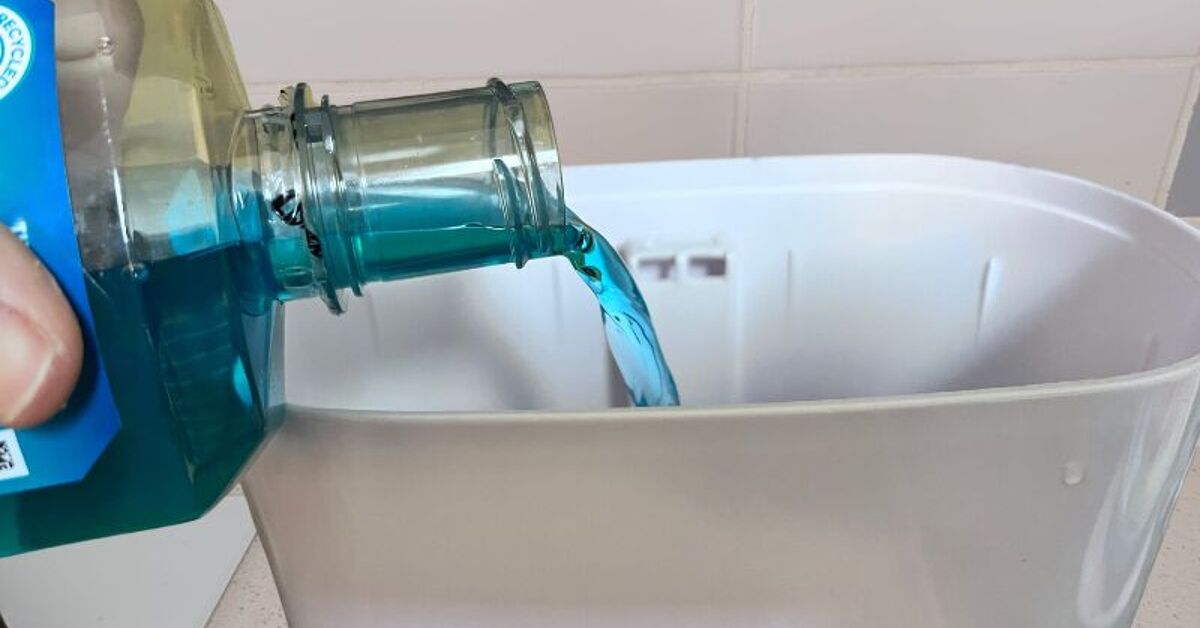
Add about one tablespoon of Listerine to one cup of warm water. For larger tanks, you can scale the amount slightly, but avoid using mouthwash straight from the bottle. Stronger is not always better. A diluted rinse is easier to wash away and less likely to leave scent, dye, or residue behind.
Step 4: Swish, Soak Briefly, and Scrub Gently
Pour the diluted mixture into the tank. Swish it around so it touches the interior walls, cap area, and corners. Let it sit for five to ten minutes. Then use a soft brush or cloth to gently scrub areas with odor or light residue. Do not use abrasive pads that can scratch the plastic, because scratches can give grime more places to hide later.
Step 5: Rinse Like You Mean It
This is the most important step. Rinse the tank several times with clean water until there is no mouthwash smell left. If you can still smell Listerine, keep rinsing. The goal is not to humidify your room with mint vapor. The goal is to remove stale odor from the tank before normal use.
Step 6: Air-Dry Completely
Place the tank and parts on a clean towel and let them air-dry. Drying helps discourage microbial growth and gives you a chance to inspect the tank. If you still smell mildew after rinsing and drying, the problem may be deeper than a quick freshening hack can fix.
Use Vinegar for Scale, Not Listerine
Listerine may help with odor, but vinegar is usually the better household choice for mineral scale. If your humidifier has white, chalky buildup from tap water, soak the affected non-electrical parts in distilled white vinegar according to your manual, then scrub gently and rinse thoroughly.
Do not mix vinegar with bleach, hydrogen peroxide, Listerine, or other cleaning products. Mixing cleaners can create irritating or dangerous fumes. Clean in separate steps only, and rinse well between products. When in doubt, choose the simpler path: vinegar for minerals, manufacturer-approved disinfecting for germs, and plain water for final rinsing.
When You Should Skip the Listerine Hack
Skip this method if your humidifier manual warns against anything beyond water, vinegar, peroxide, or a specific cleaner. Also skip it if your humidifier has a wick filter that absorbs liquid, because mouthwash can leave residue in porous materials. Never soak filters in Listerine unless the manufacturer explicitly says it is safe, which is unlikely.
You should also avoid this hack if someone in your home has asthma, COPD, fragrance sensitivity, severe allergies, or another respiratory condition. Even after rinsing, scent residue may bother sensitive people. In homes with babies, older adults, or immunocompromised people, it is better to stick to the manufacturer’s instructions and proven cleaning basics.
If the tank has visible mold, slimy biofilm, black spots, or a smell that returns immediately after cleaning, do not rely on a mouthwash rinse. Deep-clean the humidifier properly, replace filters, and consider replacing the unit if contamination keeps coming back.
The Best Daily Humidifier Routine
The easiest way to keep your humidifier fresh is to stop odors before they start. Empty the tank every morning after use. Rinse it, wipe accessible surfaces, and let it dry. Refill it only when you are ready to run it again. Use distilled or demineralized water to reduce mineral dust and scale.
Every three days during heavy use, clean the tank and base more thoroughly. Once a week, inspect the nozzle, cap, reservoir, and any removable tray. Replace filters or wicks on the schedule recommended by the manufacturer. If the filter looks crusty, smells bad, or stays discolored after normal use, it is probably done living its best life.
Common Mistakes That Make Humidifiers Smell Worse
Leaving Water in the Tank for Days
Standing water is the villain in most humidifier odor stories. Even clean-looking water can become stale when it sits. Emptying the tank daily is the smallest habit with the biggest payoff.
Using Tap Water in a Hard-Water Area
Tap water can leave mineral deposits behind. Those deposits can make the tank harder to clean and may create white dust around the room, especially with ultrasonic models. Distilled water costs more, but it can reduce buildup and make maintenance easier.
Adding Scented Products to the Tank
Perfume, essential oils, vapor rub, mouthwash, and cleaning products should not go into the tank during operation unless your humidifier is specifically designed for that additive. If you want fragrance, use a proper diffuser or a humidifier model with a designated scent pad or aroma tray.
Forgetting the Base
Many people clean the tank and ignore the base. Unfortunately, the base can collect water, minerals, and residue too. Clean all water-contact parts recommended in your manual, not just the obvious container.
Listerine vs. Other Humidifier Cleaning Options
For odor freshening, a diluted Listerine rinse can be useful in a pinch. For mineral buildup, vinegar is usually better. For disinfection, follow your humidifier manual, which may recommend hydrogen peroxide, diluted bleach, or another method depending on the model. For daily maintenance, plain water, drying, and consistency beat every hack on the internet.
The big lesson is that different cleaning problems need different tools. Mouthwash may make a tank smell cleaner, but it does not dissolve scale like vinegar. Vinegar may remove scale, but it is not always the strongest disinfecting option. Bleach may disinfect, but it can damage some plastics or seals and must be handled carefully. No single product deserves the crown for every job.
How Often Should You Use the Listerine Hack?
Use it occasionally, not daily. If your humidifier smells bad every time you use it, the real problem is probably your routine, your water source, an old filter, or a machine that needs deeper cleaning. A Listerine rinse should be a rare freshening trick, not a substitute for regular care.
A reasonable schedule is once in a while when the tank smells stale after normal washing. If the smell disappears and stays gone, great. If it returns quickly, investigate the base, wick, filter, cap, gasket, and any hidden crevices. Humidifier odors love tiny places.
Experience Notes: What This Hack Feels Like in Real Life
The first time you try the Listerine humidifier cleaning hack, the experience is surprisingly satisfying. You start with a tank that smells vaguely like a damp basement wearing socks, and after a short diluted rinse, it smells sharper and cleaner. The key word, though, is “short.” Letting the mixture sit for five to ten minutes is usually enough for a mild odor. Longer soaking does not automatically mean better results, especially if your tank is made of plastic that may hold scent.
In practice, the biggest mistake people make is not rinsing enough. A quick splash under the faucet may look fine, but your nose will expose the truth. If you can smell mouthwash after rinsing, your humidifier may release that smell the next time it runs. That might sound pleasant for three seconds, until you remember you are breathing it. Multiple rinses make a huge difference. Fill the tank halfway, shake it, dump it, and repeat until the scent disappears.
Another real-world lesson: Listerine helps most when the tank has a light stale smell, not when the humidifier is truly dirty. If there is crusty scale, vinegar wins. If there is slime, you need a deeper cleaning. If there is mold, stop pretending this is a spa treatment and handle it properly. The hack is best for that awkward middle zone where the tank is not disgusting, but it does not smell as fresh as you want.
People with hard water may notice that odor comes back faster because mineral buildup gives residue a place to cling. Switching to distilled water can make the humidifier easier to maintain. It also reduces the chalky film that can appear inside the tank and around the room. That one change often does more for freshness than any clever cleaning trick.
One useful habit is to pair this hack with a “reset day.” Empty the humidifier, clean the tank, check the base, inspect the filter, rinse everything thoroughly, and let the parts dry in open air. Do not rush the drying stage. A dry tank is much less inviting to odor-causing growth than a damp tank sealed up immediately after washing.
The final experience-based tip is to trust your nose but not rely on it completely. A clean smell does not always mean a sanitized surface, and no smell does not always mean the tank is perfectly clean. Use the Listerine rinse for freshness, but let your regular routine do the real work: daily emptying, frequent cleaning, distilled water, proper drying, and filter replacement. That is how you keep a humidifier from becoming a tiny indoor swamp with excellent branding.
Conclusion
Freshening up your humidifier with Listerine can be a simple DIY cleaning hack when used the right way: diluted, briefly, and only while the machine is unplugged and empty. It may help reduce mild stale odors in a removable tank, but it should never be added to the water while the humidifier is running. For safe, clean mist, rinse thoroughly, air-dry completely, use distilled water, and follow your manufacturer’s cleaning instructions.
The real secret is not one magical ingredient. It is consistency. Empty the tank daily, clean it every few days during regular use, descale when needed, replace filters on schedule, and avoid adding scented liquids to the operating water. Do that, and your humidifier can go back to doing its actual job: making dry air more comfortable without smelling like a science project.