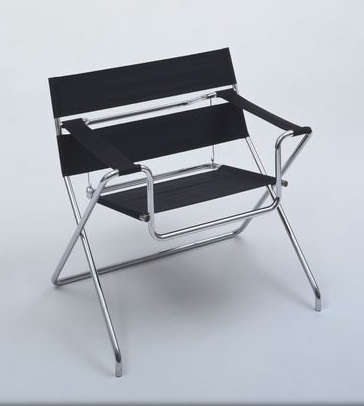

The Marcel Breuer Folding Chair is not the kind of chair that politely sits in the corner hoping someone notices it. It has a sharper personality. It folds, it floats visually, it flashes a little chrome, and it looks as if it was designed by someone who believed furniture should stop wearing heavy Victorian overcoats. That person was Marcel Breuer, one of the great modernist designers of the 20th century and a key figure in the Bauhaus movement.
Often connected with the Model B4 and later known through Tecta as the D4 folding chair, this piece belongs to Breuer’s legendary family of tubular steel furniture. It is related in spirit to the famous Wassily Chair, but it has one extra trick: mobility. It can fold away. For a chair from the 1920s, that was not just convenient; it was practically a mic drop in chrome-plated steel.
In this guide, we will explore the history, design, materials, value, styling potential, and real-life experience of living with a Marcel Breuer folding chair. Whether you are a collector, interior designer, furniture nerd, or someone who simply typed “cool folding chair that does not look like it belongs at a church potluck,” you are in the right place.
Who Was Marcel Breuer?
Marcel Breuer was born in Pécs, Hungary, in 1902 and became one of the most influential architect-designers of the modern era. He studied at the Bauhaus, the German school that treated art, craft, industry, and architecture as members of the same very stylish family. Breuer later became head of the Bauhaus carpentry workshop, where his furniture experiments helped redefine what a chair could be.
Before Breuer and his Bauhaus peers started bending metal into graceful furniture, many chairs were visually heavy, padded, carved, skirted, fringed, and generally dressed like they had somewhere formal to be. Breuer looked at the modern worldbicycles, factories, airplanes, compact apartments, industrial materialsand asked a better question: why should furniture look like it is afraid of the future?
His answer came through tubular steel. Inspired by the strength and lightness of bicycle handlebars, Breuer began experimenting with bent metal frames. This led to a series of designs that changed furniture history: the Wassily Chair, the Cesca Chair, the Laccio Tables, and the folding armchair commonly associated with the B4 or D4 model.
What Is the Marcel Breuer Folding Chair?
The Marcel Breuer Folding Chair is a collapsible lounge-style chair made from tubular steel and flexible fabric or leather straps. The original concept dates to around 1926–1927, during Breuer’s most inventive Bauhaus period. It was first known as the B4 folding armchair, while later production by Tecta is commonly referred to as the D4 folding chair.
The chair’s genius is simple: it combines the clean structure of modernist tubular steel with the relaxed practicality of a folding seat. In other words, it is both architectural and portable. That is a rare combination. Most folding chairs whisper, “I came from a storage closet.” Breuer’s folding chair says, “I studied geometry, vacationed on a terrace, and read manifestos for fun.”
The Basic Design
The chair typically features a chrome-plated or stainless tubular steel frame, fabric or leather straps, arm support, and a folding mechanism that allows it to be stored more easily than a fixed lounge chair. Its open structure creates visual lightness. You can see through it, around it, and almost through the idea of it. That transparency was a major modernist goal: less bulk, more air, more function.
B4 vs. D4: Why the Names Matter
Many people search for “Marcel Breuer folding chair” and quickly run into model names like B4 and D4. The B4 refers to the historic model, while D4 is the name strongly associated with Tecta’s later authorized production. In everyday design writing, people often use these names when discussing the same folding Bauhaus concept. If you are shopping, researching, or authenticating, the model name matters because it can help separate licensed designs, later reissues, vintage pieces, and inspired copies.
The Bauhaus Idea Behind the Chair
The Marcel Breuer folding chair is not just a seat. It is a compact Bauhaus lesson. The Bauhaus believed that good design should combine usefulness, honest materials, efficient construction, and modern aesthetics. The folding chair does all of that without waving a flag or giving a lecture.
Its tubular steel frame shows the structure rather than hiding it. The seat and back use tension rather than thick stuffing. The form is reduced, but not boring. The folding feature adds practical intelligence. This is what makes the chair so interesting: it is not minimalism for decoration; it is minimalism because the unnecessary parts have been politely asked to leave.
Why Tubular Steel Was Revolutionary
Today, tubular steel furniture is everywhere, from office chairs to café seating. In the 1920s, however, using industrial metal tubing in domestic furniture felt radical. Steel had been associated with hospitals, factories, bicycles, and machinesnot the cozy living room where Aunt Linda kept porcelain birds on a side table.
Breuer saw something different. Tubular steel was strong, light, bendable, and visually crisp. It allowed furniture to be made as a continuous line rather than a collection of bulky legs and panels. The Marcel Breuer folding chair uses that idea beautifully. Its frame is not decoration applied to the chair; the frame is the chair’s identity.
How the Folding Chair Relates to the Wassily Chair
The Wassily Chair, also known as the Model B3, is Breuer’s most famous tubular steel chair. Designed in 1925, it translated the idea of a club chair into a skeletal frame of steel and stretched material. The folding chair can be seen as a more mobile, flexible cousin. It shares the Bauhaus interest in lightness, structure, and tension, but it adds the everyday usefulness of folding storage.
That mobility is important. A traditional lounge chair occupies space whether anyone is sitting in it or not. The folding chair is more adaptable. It can be opened when needed and moved away when not. For modern interiorsespecially apartments, studios, small reading corners, and flexible living roomsthat idea still feels remarkably fresh.
Materials: Steel, Eisengarn, Canvas, and Leather
The material story of the Marcel Breuer folding chair is one of the reasons collectors and design lovers care about it so much. The frame is usually the star: slender tubular steel that gives the chair strength without visual heaviness. Depending on the edition, the frame may be chrome-plated, nickel-plated, or stainless steel.
The seating surfaces are equally important. Historic Breuer designs often used Eisengarn, sometimes translated as “iron yarn,” a strong waxed cotton textile connected with Bauhaus textile experimentation. Modern versions may use durable fabric, canvas, or leather straps. Each option changes the chair’s mood. Fabric feels more casual and architectural. Leather adds warmth and a slightly more luxurious character. Black straps create a crisp graphic look, while lighter textiles can make the chair feel airy and relaxed.
Why the Materials Still Feel Modern
The chair’s materials are not trendy in the disposable sense. They are modern because they solve problems. Steel provides a stable frame. Tensioned straps provide support without overstuffing. The folding mechanism adds flexibility. The result is a chair that looks elegant because it is doing its job efficiently. That is the kind of beauty that ages well.
Design Features That Make the Marcel Breuer Folding Chair Special
At first glance, the chair looks simple. Look longer and you start seeing the engineering poetry. Yes, engineering poetry is a real thing, and no, it does not require a beret.
1. Visual Lightness
The chair does not dominate a room the way a bulky upholstered recliner might. Its open frame lets light and space pass through. This makes it useful in smaller rooms where heavy furniture can make everything feel crowded.
2. Functional Folding
The folding feature is not a gimmick. It reflects the modern idea that furniture should adapt to life. Patios, terraces, garden rooms, reading spaces, and flexible interiors all benefit from seating that can move.
3. Honest Construction
There is no attempt to disguise the chair’s structure. The joints, bends, straps, and frame are visible. That honesty is central to Bauhaus design: let the object show how it works.
4. Comfortable Restraint
The Marcel Breuer folding chair is not a marshmallow chair. It does not swallow you whole or make suspicious squishing noises. Instead, it supports the body through angled geometry and tensioned material. The comfort is disciplined, but not cold.
5. Sculptural Presence
Even when folded or placed against a wall, the chair has the presence of a design object. It can function as seating, but it can also anchor a room visually. That is why collectors often treat it as both furniture and art.
How to Style a Marcel Breuer Folding Chair
The Marcel Breuer folding chair works best when it has enough room to breathe. Because the design is linear and open, it pairs beautifully with other modernist pieces, but it can also create contrast in warmer interiors.
In a Modern Living Room
Place the chair beside a low sofa, a simple side table, and a floor lamp. Let the steel frame echo other metal details in the room, such as lighting, shelving, or architectural hardware. Avoid crowding it with too many decorative pillows. This chair is not begging for accessories; it already has cheekbones.
In a Reading Corner
The folding chair can work as a stylish reading seat when paired with a soft rug and warm lighting. Add a small table for books or coffee. The result feels intellectual without becoming stiff. Think “Bauhaus library,” not “waiting room at a dental conference.”
On a Covered Patio or Sunroom
Because early descriptions connected the chair with terraces, gardens, summer houses, and leisure spaces, it feels natural in a sunroom or covered outdoor area. That said, owners should treat materials carefully. Chrome, leather, and specialty fabric do not love harsh weather, long rain exposure, or being forgotten outside like a cheap plastic lawn chair.
In an Eclectic Interior
One of the best ways to use a Marcel Breuer folding chair is to contrast it with softer materials: wool rugs, wood floors, linen curtains, ceramic lamps, or textured walls. The clean steel lines keep the room sharp, while natural materials prevent the space from feeling too museum-like.
Buying Guide: What to Know Before You Purchase
Buying a Marcel Breuer folding chair requires more attention than buying a random folding chair from a hardware store. You are looking at design heritage, production history, condition, and authenticity.
Check the Manufacturer
For the D4 version, Tecta is the name most strongly associated with authorized production. If a seller claims a chair is an authentic Marcel Breuer folding chair, look for documentation, labels, stamps, invoices, or provenance. A vague listing that says “Bauhaus style Breuer-ish maybe rare???” deserves healthy skepticism and possibly a cup of coffee before you continue.
Inspect the Frame
Look for clean bends, stable joints, and signs of quality metalwork. Rust, pitting, deep scratches, loose pivots, or uneven repairs can affect both value and usability. Some wear is expected on vintage pieces, but structural weakness is not charming; it is a chair auditioning to become a problem.
Review the Straps or Upholstery
Fabric, canvas, Eisengarn-style material, or leather should be checked for stretching, cracking, staining, replacement quality, and attachment details. Replaced straps are not always bad, especially if professionally done, but original materials may matter more to collectors.
Understand Vintage vs. Reissue
A vintage piece may carry historic charm and collectible value, while a modern licensed production may offer more predictable usability. The right choice depends on your goal. If you want a museum-level collectible, provenance matters. If you want a chair to actually sit in while reading design books and silently judging ugly furniture, a licensed modern version may be more practical.
Care and Maintenance Tips
Care for the Marcel Breuer folding chair depends on materials, but the basics are straightforward. Keep the metal frame clean and dry. Use a soft cloth rather than abrasive scrubbers. For leather straps, condition them according to professional leather-care recommendations and keep them away from extreme sunlight or humidity. For fabric, vacuum gently and spot-clean only when appropriate for the textile.
Most importantly, respect the folding mechanism. Do not force it. If the chair resists movement, inspect the hinge or pivot points rather than wrestling it like a lawn chair at a family reunion. A good repair professional is cheaper than damaging a design classic.
Why the Marcel Breuer Folding Chair Still Matters
The Marcel Breuer folding chair remains important because it predicted how many people live now. We need furniture that is lighter, smarter, more adaptable, and less visually demanding. Breuer was designing for a world of movement long before “flexible living” became a real estate buzzword.
The chair also reminds us that practical objects can be beautiful without being decorative in the traditional sense. Its beauty comes from proportion, material, logic, and movement. That is why it still looks contemporary nearly a century after its design.
Common Questions About the Marcel Breuer Folding Chair
Is the Marcel Breuer folding chair comfortable?
Yes, but it offers a structured kind of comfort. It is not a plush recliner. The support comes from the angle of the frame and the tension of the straps. People who enjoy firm, lounge-style seating often appreciate it.
Is it the same as the Wassily Chair?
No. The Wassily Chair is Breuer’s famous fixed tubular steel club chair from 1925. The folding chair shares a similar design language but adds collapsibility and a different frame solution.
Can it be used outdoors?
It has historical associations with terraces, gardens, and leisure spaces, but valuable examples should not be left exposed to harsh weather. Covered patios, sunrooms, and protected outdoor settings are safer than full-time outdoor use.
Is it a good investment?
Authentic, documented Breuer designs can hold strong interest among collectors, especially when condition and provenance are good. However, furniture markets change, so buy it because you value the design firstnot because you expect it to pay for your retirement and maybe a yacht.
Experience Section: Living With the Marcel Breuer Folding Chair
Living with a Marcel Breuer folding chair is different from simply admiring one in a museum photo. The first thing people usually notice is how little visual space it consumes. In a room with a normal lounge chair, the furniture often becomes a block of mass. With Breuer’s folding chair, the eye keeps moving. You see the floor, the wall, the rug, the air around the frame. That openness makes the chair especially useful in apartments, studios, and carefully edited interiors.
The second experience is the chair’s personality. It does not disappear into the background. Even though it is minimal, it has confidence. Guests tend to ask about it because it looks both familiar and unusual. It has the casual idea of a folding chair, but the execution is so refined that it refuses to feel temporary. It is the furniture equivalent of someone wearing sneakers with a perfectly tailored black suit.
Comfort depends on expectations. Anyone expecting a deep cushion may need a moment to adjust. The chair supports rather than cuddles. It is good for reading, conversation, listening to music, or adding a flexible lounge seat to a room. It is less ideal for people who want to sink into furniture for three hours and become one with the upholstery. The Marcel Breuer folding chair keeps you relaxed but alert, which is very Bauhaus of it.
Styling it can be surprisingly fun. Against white walls, it becomes crisp and gallery-like. Near wood shelving, it warms up. On a textured rug, the steel frame feels less severe. With a small black side table, it looks almost architectural. With a vintage lamp, it gains personality. The trick is balance: let the chair’s geometry stay visible while adding enough softness around it to make the space livable.
In practical use, the folding feature is more than a historical curiosity. It allows the chair to shift between roles: accent chair, reading seat, extra guest seating, or sculptural object. In a small home, that flexibility matters. You can open it when needed and move it aside when the room has to serve another purpose. Unlike many folding chairs, it does not look apologetic when stored. Even folded, it has a graphic elegance.
The ownership experience also teaches a useful design lesson: good furniture does not need to shout. The Marcel Breuer folding chair is not covered in ornament, yet it attracts attention because every line has a reason. That is the lasting pleasure of the piece. It makes a room smarter without making it colder. It gives you history without turning your home into a lecture hall. And yes, it foldswhich is still a delightful little magic trick for a chair with museum credentials.
Conclusion
The Marcel Breuer Folding Chair is a brilliant example of Bauhaus thinking in action: practical, light, adaptable, and visually unforgettable. Its tubular steel frame, tensioned straps, and folding structure make it more than a collectible design object. It is a chair that anticipated modern living, where rooms change roles and furniture needs to be both useful and beautiful.
Whether you call it the B4, the D4, or simply Breuer’s folding chair, its appeal comes from the same source: intelligent design that still feels alive. Nearly a century later, it remains proof that a folding chair can be elegant, serious, witty, and useful all at once. Not bad for something that can be tucked away when guests leave.
Note: This article is written for web publication and synthesized from real museum, manufacturer, and design-history references. It avoids copied source text, unnecessary citation artifacts, and non-HTML publishing clutter.