
There was a time when military support sounded straightforward: ship the weapons, train the troops, wish everyone luck, and try not to spill coffee on the paperwork. Russia’s war against Ukraine has exposed how incomplete that picture really is. Sending advanced weapons is only the opening act. Keeping them running, under pressure, in bad weather, with shaky connections, limited spare parts, and zero patience for mechanical drama, is the real long game.
That is why one of the most fascinating stories in modern warfare is not just about missiles, artillery, or armored vehicles. It is about troubleshooting. U.S. troops and specialists, operating from Poland and other support hubs outside Ukraine, have used secure chats and video calls to help Ukrainian forces diagnose problems, walk through repairs, and keep donated weapons in the fight. In other words, part of the war’s support infrastructure looks a little like customer service, except the stakes are much higher and nobody is calling to complain about a cracked phone screen.
This remote-maintenance model says a lot about how wars are fought now. It shows that battlefield success depends not just on firepower, but on sustainment, communications, and the ability to solve technical problems fast. It also shows that modern military assistance is no longer just about what gets delivered. It is about what stays operational.
Why Remote Repair Became a Battlefield Necessity
Once the United States and its allies began sending more sophisticated systems to Ukraine, maintenance became unavoidable. Artillery tubes wear down. Electronics fail. Launch systems throw error codes. Vehicles take damage. Optics, software, and subsystems all have their own ways of misbehaving, usually at the exact moment everyone would prefer they behave.
The obvious fix would have been to send experts directly into Ukraine to work alongside local crews. But that was never politically simple. Washington and NATO governments have been careful to avoid putting their own troops into direct combat inside Ukraine, both to reduce escalation risks and to preserve a clear boundary between military support and direct participation in the war. So the workaround was clever, practical, and very twenty-first century: if the mechanics cannot go to the machine, the machine problem comes to the mechanics through a screen.
That remote approach began early in the war and expanded as the need grew. What started as an urgent workaround became a system. U.S. support teams, backed by interpreters, technical manuals, logistics experts, and sometimes defense contractors, created a kind of virtual repair pipeline. It was not glamorous. It was not cinematic. It was, however, exactly the kind of thing that keeps expensive equipment from becoming very large, very disappointing lawn ornaments.
How the Remote-Maintenance System Actually Works
Step 1: The problem gets reported fast
When Ukrainian units run into a malfunction, the issue can be sent through secure messaging channels to translators and support personnel. The reports may include written descriptions, photos, or video clips. In some cases, the next step is a live video session, where experts can look at the system in real time and guide the crew through a diagnosis.
Step 2: Support teams recreate the issue
At U.S. support sites in Poland, soldiers and specialists work with the same or similar equipment. They consult manuals, inspect comparable components, and try to reproduce the fault. That matters because battlefield maintenance is not just about knowing a weapon system in theory. It is about isolating the exact cause of a malfunction under ugly, rushed conditions.
Step 3: The goal is to “fix forward”
The ideal outcome is not to ship the system far from the front for a long repair cycle. It is to restore function as close to the fight as possible. That fix-forward mindset saves time, preserves combat availability, and reduces the logistical burden of moving damaged systems across multiple borders. In practical terms, it can mean the difference between a weapon returning to action quickly or disappearing into a repair backlog that moves at the speed of paperwork and diesel fuel.
Step 4: Outside experts join when needed
Not every problem can be solved by a general maintenance team. Some repairs require deeper expertise from the companies that built the equipment or from highly specialized U.S. Army technical personnel. In those cases, contractors and program experts can be looped in, adding a second layer of support. It is a reminder that modern military aid is not just a matter of shipping hardware. It is a full ecosystem that includes engineering knowledge, translation, spare parts, documentation, and training.
Which Weapons Need This Kind of Help?
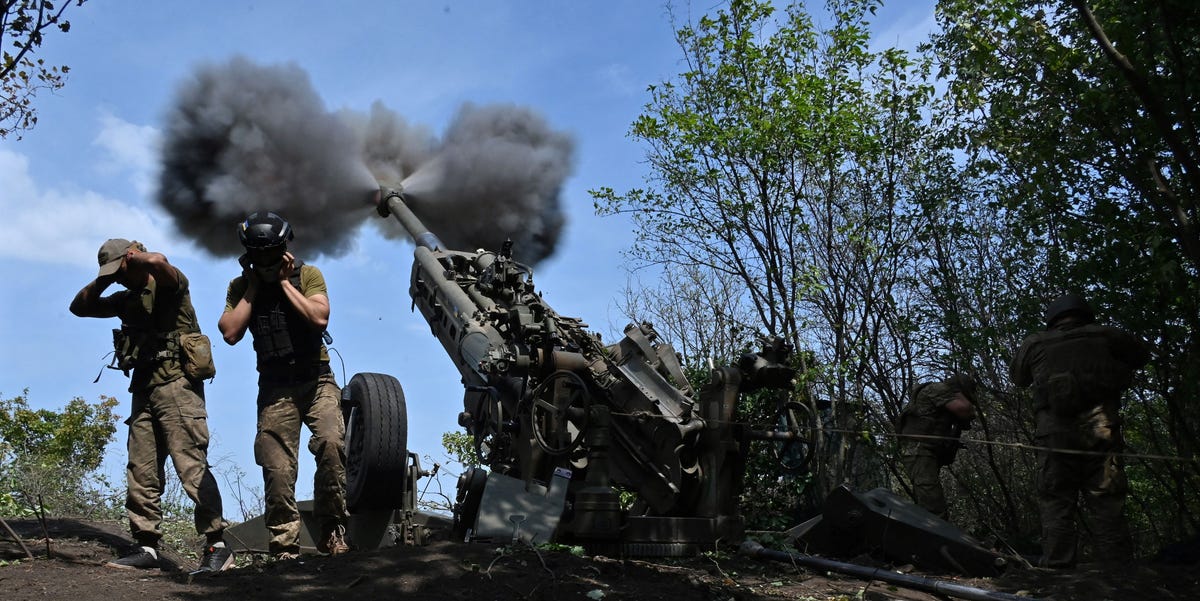
Much of the reporting around this effort has centered on U.S.-supplied howitzers, especially the M777, because artillery has been central to the war and because heavy usage accelerates wear. But the support model has applied more broadly. Rocket launchers, antitank systems, armored vehicles, and other donated equipment can all require troubleshooting or guidance.
That should not surprise anyone. Advanced weapons are powerful, but they are not magical. Precision systems still depend on maintenance discipline. Launchers still need parts. Tubes still erode. Electronics still fail. In fact, the more sophisticated a weapon is, the more important its support chain usually becomes. High-end military technology without a maintenance plan is like buying a race car and forgetting tires exist.
Ukraine’s forces have also pushed many systems hard because battlefield demand leaves little room for gentle treatment. In war, equipment is used for survival, not showroom preservation. That means repair teams are learning not only how systems break, but how they break under operational stress that may exceed peacetime assumptions.
Why This Matters More Than the Headline Suggests
At first glance, “U.S. troops use video chat to help Ukraine fix weapons” sounds like a quirky anecdote from a digital-age battlefield. In reality, it points to one of the most important truths of modern war: sustainment is strategy.
Weapons matter, of course. But operational readiness matters just as much. An artillery piece that cannot fire, a launcher awaiting parts, or a vehicle sidelined by a repair issue does not contribute much to combat power. In a prolonged war, the side that keeps systems functioning longer often gains a major advantage. That is why maintenance support is not some boring back-office function. It is combat power wearing a quieter uniform.
The Ukraine case also exposes a common misunderstanding in public debate. Military aid is often discussed as if it ends when the shipment arrives. It does not. Real support includes training, sustainment, diagnostics, spare parts, industrial production, and the ability to adapt when battlefield conditions reveal new weaknesses. In that sense, remote repair is not an add-on. It is part of the package.
What the U.S. Army Is Learning From Ukraine
This effort is not just helping Ukraine. It is teaching the U.S. Army valuable lessons about future warfare. Army reporting and defense coverage have made clear that remote maintenance in Europe has become a live laboratory for contested logistics. Instead of assuming secure rear areas, unlimited access, and long repair timelines, the Army is learning how to support forces with distributed teams, digital communications, and rapid troubleshooting.
That is a big deal. Future conflicts, especially against well-armed adversaries, may not allow the kind of comfortable support structure the United States enjoyed in earlier wars. Supply lines may be targeted. Communications may be disrupted. Repair hubs may need to stay mobile, dispersed, and partly virtual. Ukraine has shown that the military units with the smartest support models may outperform those with the neatest brochures.
In other words, telemaintenance is not just a clever response to one war. It may be a preview of how Western militaries think about sustainment for years to come.
The Limits of Video Calls in a War Zone
Remote maintenance is useful, but it is not a miracle cure. Some damage cannot be fixed through a screen. Some systems need depot-level repair. Some parts simply are not available when needed. And no video call, no matter how clear, can fully replace a skilled technician standing next to the hardware with the right tools in hand.
Language barriers, connectivity issues, time pressure, battlefield conditions, and security concerns all complicate the process. Even when the diagnosis is right, implementation may be slowed by shortages or by the simple reality that doing mechanical work under threat is harder than doing it in a clean maintenance bay. Shocking news, I know.
There is also the industrial-base problem. Supporting Ukraine has highlighted broader strain in munitions and defense production, including shells, launcher components, and key weapon-system parts. Sustainment is only as strong as the supply chain behind it. A brilliant troubleshooting system still needs actual hardware to back it up.
Remote Repair Is Really a Story About Modern Warfare
Zoom did not win the war. But the underlying principle matters: modern conflict increasingly blends hardware, software, data, communications, and distributed expertise. The battlefield now stretches beyond trenches and firing positions into warehouses, repair cells, encrypted chat groups, production lines, and industrial planning meetings.
That broader ecosystem helps explain why Ukraine has become such an important case study for defense analysts. The war has highlighted the importance of contested logistics, resilient communications, distributed support networks, and the need to maintain equipment under constant pressure. A weapon system is not just metal. It is a supply chain, a training problem, a maintenance cycle, and a knowledge network.
For the United States and its allies, that has major implications. Future security assistance will likely be judged not only by how much equipment is delivered, but by how effectively that equipment can be sustained. The countries that build strong support architectures will have a major edge over those that treat logistics as the boring chapter nobody reads.
Specific Examples That Bring the Story to Life
Several reported episodes capture the human side of this effort. In one strand of coverage, maintainers described taking calls while Ukrainian forces were still under active pressure, trying to help crews troubleshoot systems fast enough to stay operational. In another, a National Guard soldier who had previously trained Ukrainian troops on Javelin missiles ended up offering remote help by phone when one of those fighters ran into trouble. The symbolism is hard to miss: training relationships built before the full-scale invasion evolved into wartime support lines when every minute mattered.
There are also reports of U.S. maintenance teams and contractors using white papers, translated technical materials, and video clips to create reusable fixes for recurring issues. That sounds mundane, but it is actually a major efficiency gain. Every repeated problem that becomes easier to diagnose is one less delay, one less guess, and one less avoidable failure.
Even the structure of the support effort tells a story. As it matured, the mission expanded from early tele-maintenance cells into a broader remote maintenance and distribution system. That evolution shows this was never just a clever one-off. It became institutional.
Experience on Both Ends of the Screen
One of the most compelling parts of this story is the experience of the people involved, because remote maintenance sounds clinical until you picture what it feels like in real life. On the Ukrainian side, a crew dealing with a disabled system is not filing a calm office ticket labeled “minor issue, low urgency.” They are trying to restore a weapon that may be needed within hours, sometimes within minutes. The stress level is obvious. The equipment is valuable, the battlefield tempo is relentless, and there is very little emotional space for a helpful message like, “Have you tried turning it off and on again?”
On the American side, the experience has also been unusual and intense. Army accounts describe soldiers in Poland building relationships with Ukrainian counterparts, handling a flood of service requests, and adapting from traditional maintenance routines to something closer to live tactical support. Reports describe how maintainers used interpreters, consulted program experts, and relied on their own hands-on familiarity with the same systems to talk crews through problems. That creates a strange but powerful form of proximity: they are not physically together, but they are still working the same problem at nearly the same moment.
There is also a deeply human element in the trust that had to develop. Early on, some Ukrainian users reportedly were not fully comfortable with the tele-maintenance process. That makes perfect sense. In any high-pressure environment, especially war, trust is not granted automatically. It has to be earned through results. As more problems were solved and more systems got back into action, confidence grew. Communication increased. The process became smoother. In a war packed with massive strategic questions, this smaller pattern matters: reliable help builds relationships, and relationships improve performance.
The experience also seems to have changed how many U.S. personnel think about sustainment itself. Maintenance is often treated as a support specialty that sits behind the action, but Ukraine has forced a different view. When a crew can restore a weapon near the front instead of losing it to a long repair cycle, maintenance is no longer a background function. It becomes an operational advantage. A wrench, a tablet, an interpreter, and a stable signal can matter more than some people expect.
That lesson travels beyond Ukraine. The maintainers supporting this effort have been helping with real problems under real constraints, and that gives the experience unusual value for the U.S. Army. They are not practicing abstract doctrine. They are learning how support works when access is limited, pressure is constant, and success depends on speed, improvisation, and distributed expertise. In that sense, these video calls are not only helping Ukraine keep weapons working. They are reshaping how a modern military thinks about readiness.
And maybe that is the most revealing part of all. The future of warfare will not be defined only by who builds the best weapon. It will also be defined by who can keep that weapon alive, connected, repaired, and relevant once the battle starts getting messy. Which, as history keeps reminding us, is usually around minute two.
Conclusion
The story of U.S. troops video chatting with Ukraine to fix weapons is not a technological novelty. It is a window into the changing character of war. It shows how support networks, digital communications, engineering expertise, and battlefield urgency now intersect in ways that would have sounded unusual a generation ago. It also proves that sustainment is not the opposite of strategy. It is strategy in work boots.
For Ukraine, remote maintenance has helped preserve the usefulness of donated systems that are too important to lose and too difficult to support casually. For the United States, it has offered a hard-earned preview of how future logistics and repair may work in contested environments. And for anyone trying to understand modern warfare, it offers a simple lesson: the weapons that matter most are often the ones that can still fire tomorrow.
SEO Tags