
If you’ve ever looked at your sad little patch of dirt (or your balcony pot that’s currently auditioning for a
role as “crunchy stick”) and thought, “How is this supposed to help… anything?” congratulations.
You’re exactly the kind of person this story is for.
The idea that a garden can “fix the world” sounds like something you’d find embroidered on a throw pillow.
But in the hands of Georgina Reid gardener, writer, photographer, and founder of the landscape studio
Reid & Friends it becomes a practical philosophy: listen closely, design with care, and treat every
outdoor space like it matters. Because it does.
And the “Friends” part? It’s not just marketing sparkle. It’s a reminder that gardens are collaborative:
people, plants, pollinators, fungi, worms, neighbors, and (occasionally) a dog with strong opinions about
where you’re allowed to kneel. In other words: the whole messy, beautiful ecosystem.
Who is Georgina Reid, and what does “Reid & Friends” mean?
Georgina Reid’s work sits at a sweet spot where design meets ecology meets storytelling. She’s known for
approaching gardens as living systems not outdoor furniture showrooms. In interviews and features, she’s
described a practice rooted in paying attention: to clients, to the site, to the mood of a place, and even to the
wind. That sounds poetic (and it is), but it’s also wildly functional. Wind determines plant stress. Microclimates
determine survival. Listening determines whether a garden becomes a joy… or a weekly guilt appointment.
The “Friends” are both literal collaborators and a wider circle of creative and practical allies people with
different strengths who come together when a project needs it. Think permaculture brains, horticulture wisdom,
design eyes, and hands that can actually build the thing you optimistically drew on a napkin.
The result is a studio identity that quietly pushes back on the myth of the solo genius. In garden terms:
monocultures are fragile. Communities are resilient. Same goes for people.
Why gardens are a real-world “fix” (no cape required)
Gardens won’t solve everything. They won’t end corruption, stop hurricanes from forming, or make your group
chat behave. But gardens do sit right at the intersection of several big, fixable problems:
extreme heat, stormwater flooding, biodiversity loss, stressed-out humans, and food access.
That’s not fluff. That’s infrastructure just with more petals.
1) Gardens cool hot places (and we’re running out of “not hot”)
Cities and neighborhoods that are heavy on pavement tend to trap heat. Trees and vegetation help reduce that
heat by shading surfaces and cooling the air through evapotranspiration (plant sweat, but dignified). That means
gardens aren’t just pretty they can make streets and homes more livable during heat waves.
Translation: planting and protecting tree canopy is not just aesthetic. It’s climate adaptation you can touch.
Also, it’s cheaper than installing a second air conditioner and pretending your electric bill is “a fun surprise.”
2) Gardens help manage stormwater (rain doesn’t belong in your basement)
When rain hits roofs, driveways, and compacted soil, it rushes off fast picking up pollutants and overwhelming
drains. Rain gardens and other “soak it in” landscaping slow runoff, encourage infiltration, and help
filter pollutants before they reach waterways.
A small dip planted with the right species can do the work of a tiny, gorgeous sponge. It’s hard to be mad at
something that solves a civic problem while blooming.
3) Gardens feed pollinators (which quietly feed you)
Pollinators aren’t a niche interest for people who own bee-themed mugs. They’re a cornerstone of food systems.
A large share of flowering plants and many food crops rely on animal pollinators. If pollinators struggle, yields
and biodiversity struggle right along with them.
The fix doesn’t have to be dramatic: more native flowers, fewer pesticides, and continuous bloom across seasons.
Your yard can become a cafeteria that doesn’t require reservations.
4) Gardens build soil health (and soil is basically Earth’s life-support system)
Healthy soil holds water better, cycles nutrients more effectively, and supports diverse organisms from microbes
you’ll never meet to earthworms you’ll accidentally apologize to. Practices like adding compost, mulching, and
keeping soil covered can improve soil structure and organic matter.
Compost is especially underrated. Diverting food scraps from landfills and composting them can reduce methane
emissions associated with anaerobic decomposition, while creating a soil amendment that improves water retention
and resilience.
5) Gardens build community (yes, even for introverts)
Community gardens and neighborhood greening projects do more than grow tomatoes. They create social ties,
improve access to green space, and can strengthen local resilience especially in places that have been historically
under-resourced.
If you’ve ever exchanged basil for someone else’s lemons, you already understand the secret:
gardens are social infrastructure disguised as hobbies.
The Reid & Friends mindset: “Listen first, plant second”
A garden that helps the world usually starts with a garden that actually works for the people living with it.
The most sustainable garden is the one you won’t rip out in frustration next year.
Here are principles you can borrow (no permission slip required):
Design for the site, not for your fantasy self
- Sun and shade: Track light like a detective. Your “full sun” might be “full sun-ish.”
- Water reality: If irrigation is inconsistent, choose climate-appropriate, drought-tolerant plants.
- Wind exposure: Wind is a plant bully. Use hedges, fences, or layered planting as a buffer.
- Soil truth: Clay? Sand? Compaction? Start improving it rather than wishing it away.
Make beauty do a job
“Pretty” and “useful” are not enemies. The goal is a garden where aesthetics are working overtime:
shading a patio, feeding birds, slowing runoff, growing herbs, sheltering beneficial insects, and making you feel
like a competent adult with their life together (even if you ate cereal for dinner).
Think in layers, like nature does
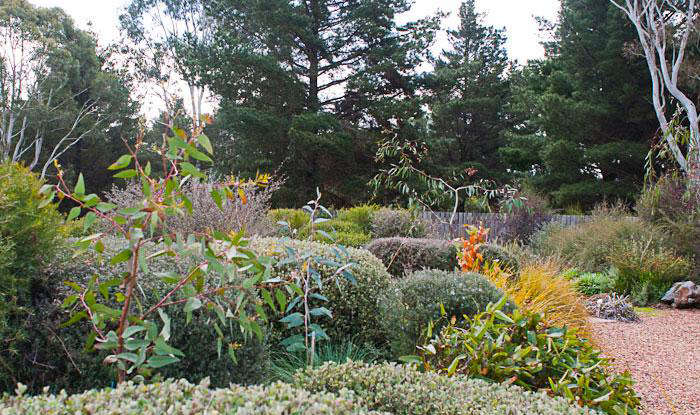
One trick nature uses to stay resilient: layers. Trees, shrubs, perennials, groundcovers, leaf litter.
Layered planting supports more life and protects soil from baking, erosion, and weeds.
It also looks intentionally designed, which is handy when you’re trying to convince guests that the “wild corner”
is not a mistake.
“Small urban spaces vs. wide-open land”: the same puzzle, flipped
One of the most refreshing things about Reid’s approach is that it doesn’t romanticize scale.
In cities, people often want gardens to feel bigger; in rural settings, people may want large spaces to feel more
sheltered and intimate. That’s not a contradiction it’s a human need showing up in different forms.
Either way, the design questions stay surprisingly similar:
Where do you want to linger? What do you want to screen? What do you want to grow? What do you want to hear
birds, wind, your own thoughts, or blessed silence?
A “fix-the-world” garden toolkit you can actually use
Here’s the practical part. If “fixing the world” feels abstract, start with one upgrade at a time.
Choose what matches your space, budget, and attention span.
1) Convert one problem area into a rain-friendly zone
Identify where water rushes off your property (downspouts, driveway edges, low spots).
A rain garden or bioswale can capture runoff and let it soak in slowly. Use deep-rooted plants suited to both wet
and dry cycles, and place it where it intercepts flow not where it floods your neighbor’s garage.
2) Plant for pollinators across the calendar
Pollinator support isn’t just “plant flowers.” It’s “plant sequence.”
Aim for early-season blooms, peak-season nectar, and late-season resources. Mix flower shapes and heights.
If you can manage it, prioritize native plants that local insects evolved with.
3) Shrink the lawn (keep a little if you love it, but stop worshiping it)
Lawn has its place play space, pets, picnics but wall-to-wall turf is water-hungry and ecologically thin.
Reducing even a portion can make room for native beds, shrubs, trees, and food gardens.
Your mower will forgive you. Eventually.
4) Build soil like it’s a retirement account
- Add compost to feed soil life and improve structure.
- Mulch to reduce evaporation, suppress weeds, and protect the soil surface.
- Keep soil covered with plants, leaf litter, or mulch to prevent erosion and temperature swings.
5) Use water-smart landscaping habits
Group plants with similar watering needs (think “hydrozones”) so you’re not overwatering one bed to keep another
alive. Water deeply, less often, to encourage stronger roots. Use drip or micro-irrigation where possible.
And if you’re watering in the middle of the day… your plants aren’t the only ones sweating.
6) Add a shade tree where it counts
One well-placed tree can shade a house, sidewalk, or patio and help reduce local heat. Choose species appropriate
for your region and space constraints, and remember: the right tree in the right place is a long-term climate tool
you can sit under.
7) Make habitat, not just landscaping
Wildlife-friendly gardening isn’t about turning your yard into a nature documentary set.
It’s about the basics: food, water, cover, and places to raise young. Native plants often provide stronger habitat
value for local insects and birds than many non-natives.
8) Go easy on chemicals (your future self will thank you)
Many pesticides don’t distinguish between “pest” and “helpful ally.” Start with prevention: healthy soil,
appropriate plants, and diversity. Use physical removal when you can. If you must treat, choose the least-toxic,
targeted option and follow labels exactly. “More” is not “better.” It’s just… more.
9) Grow something edible (even if it’s just herbs)
Food gardens connect you to seasons, reduce grocery runs, and give you a reason to step outside.
Start small: basil, chives, mint (in a pot unless you enjoy chaos), peppers, or a single tomato plant you will
talk to like it’s a teammate.
10) Join forces: community gardens and neighborhood greening
Not everyone has land and even people who do might want community. Community gardens, school gardens,
and local greening projects build social connection and can increase food access and resilience.
If you’re new, show up consistently, ask questions, and bring snacks. Snacks are diplomacy.
Fixing the world starts with “fixing” your relationship to place
One of the most powerful ideas in Georgina Reid’s orbit is that gardens change how we see.
They slow us down. They reward attention. They make “nature” less like a distant concept and more like
the thing happening right outside your door.
That shift matters because it changes behavior. When you care about a place, you notice heat, drought, runoff,
bird song, soil texture, and what disappears when you spray first and think later. You start making choices that
are less about appearances and more about function, life, and continuity.
That’s the real “Reid & Friends” energy: a garden as a collaboration between human intention and ecological
reality and a reminder that even small, local acts can stack into meaningful change.
Experience Notes: What “Fixing the World, One Garden at a Time” looks like in real life
The phrase sounds grand until you see it in motion usually in sweatpants, holding a trowel, negotiating with
a hose that has the personality of an angry snake. Here are a few experiences gardeners often share when they
start treating their patch of green as part of something bigger.
The balcony gardener who learned that “tiny” can still be mighty
It starts with a couple of pots. Then a third. Then a fourth because you saw a hummingbird once and decided
to dedicate your entire personality to “nectar resources.” You plant herbs for yourself and flowers for pollinators.
You realize bloom timing matters when nothing is flowering and the balcony feels oddly quiet. So you add an
early bloomer, then a late-season plant. Suddenly, your tiny space becomes a reliable stop on a much larger map.
You can’t see the map but you can feel it when butterflies show up like you’re running a pop-up café.
The suburban lawn-slasher who discovered relief is spelled M-U-L-C-H
Someone decides to cut the lawn back “just a little.” They remove a strip near the fence, add compost, and plant
natives and shrubs in layers. The first summer, the bed needs attention. The second summer, it needs less.
The third summer, neighbors start asking questions first suspiciously, then curiously, then with the tone of
someone who wants permission to do the same. The big surprise is how quickly the space becomes easier to manage
than turf, especially once mulch and groundcovers start doing their quiet, relentless work.
The rain-garden convert who stopped fearing storms
In a neighborhood where heavy rain used to mean puddles, runoff, and anxious glances toward the basement,
one household reroutes a downspout into a planted depression. The first storm is the test: water pools where it’s
supposed to, then sinks in. The garden looks alive after rain, not battered by it. Over time, the spot becomes a
favorite: birds come to forage, blooms bring insects, and the whole area feels like it’s performing a job.
It’s not just “landscaping.” It’s a tiny piece of stormwater management, done with plants and patience.
The community gardener who came for vegetables and stayed for people
Community gardens have a way of turning “I don’t really know my neighbors” into “I have opinions about which
tomatoes we should grow next season.” People swap seedlings, share tools, and teach each other what works in
local soil. Someone’s kid learns that carrots are real and not just orange sticks from a bag. Someone else finds
a sense of belonging they didn’t realize they were missing. The garden becomes a meeting place a living bulletin
board and the harvest is as much social as it is edible.
The drought-era gardener who learned to design with reality, not nostalgia
In dry regions, the old dream of a thirsty, English-style lawn can start to feel like an expensive grudge against
the climate. Gardeners begin shifting to water-wise planting: hydrozoning, mulching heavily, choosing regionally
appropriate natives, and letting beauty come from texture and resilience instead of constant watering. The change
is emotional as much as practical a quiet acceptance that the goal is not to dominate nature, but to cooperate
with it. And once that mindset clicks, the garden becomes calmer, stronger, and surprisingly generous.
These experiences aren’t about perfection. They’re about attention, iteration, and community human and
otherwise. That’s how “fixing the world” becomes real: not as one heroic act, but as a series of small, repeatable
choices that keep adding up.
Conclusion
“Fixing the world” doesn’t require a grand estate or a design degree. It requires a shift:
seeing your garden as part of a living system and treating that system with care.
If you take anything from Georgina Reid & Friends, let it be this: listen first, plant with intention,
and let beauty carry a purpose.
Start with one corner. One tree. One rain garden. One compost bin. One patch of native flowers.
The world won’t change all at once but it rarely does. It changes the way gardens grow:
quietly, steadily, and with help from friends you didn’t even know you had.