
Note: This article is written for web publication in standard American English and is based on real historical, cultural, and practical information about Hanukkah candles.
Hanukkah candles may be small, but they have a talent for stealing the whole room. One minute they are sitting quietly in a box, looking like colorful little sticks of wax. The next, they are glowing in a hanukkiyah, turning an ordinary evening into something warmer, brighter, and slightly more magical than your average Tuesday.
At the heart of Hanukkah, also called the Festival of Lights, is the nightly lighting of candles for eight nights. These lights remember the rededication of the Second Temple in Jerusalem and the famous story of a small amount of oil lasting far longer than expected. Whether a family uses classic blue-and-white candles, rainbow-colored candles, hand-dipped beeswax candles, or olive oil lamps, the ritual carries the same message: light matters, especially when the world feels dark.
But Hanukkah candles are not just holiday decor. They come with history, symbolism, blessings, timing, placement, safety rules, and a few details that make first-time candle lighters ask, “Wait, why are we lighting from left to right after placing them from right to left?” Don’t worry. The candles are not trying to trick you. They are just following tradition.
What Are Hanukkah Candles?
Hanukkah candles are the lights kindled each night during the eight-day Jewish holiday of Hanukkah. They are placed in a special nine-branched lamp called a hanukkiyah, often casually called a Hanukkah menorah. The hanukkiyah has eight main holders, one for each night of the holiday, plus a ninth holder for the shamash candle.
The shamash, sometimes translated as the helper or attendant candle, is used to light the other candles. It is usually placed higher, lower, or slightly apart from the rest so it is easy to identify. Think of the shamash as the candle with the job description. The other candles shine for the mitzvah, while the shamash clocks in and gets things started.
Most Hanukkah candle boxes contain enough candles for the holiday, but the traditional count is 44 candles for one hanukkiyah. That number includes the nightly candles plus the shamash used each night: one candle on the first night, two on the second, three on the third, and so on through eight, plus one shamash each night. Add them all up, and you get 44. Math finally gets invited to the holiday table.
The Meaning Behind Hanukkah Candles
Hanukkah commemorates a historic struggle for Jewish religious freedom and the rededication of the Temple in Jerusalem. According to tradition, after the Temple was reclaimed, there was only enough pure oil to keep the Temple menorah burning for one day. Instead, the oil lasted eight days, long enough for more oil to be prepared.
The nightly candle lighting recalls that miracle. Each new flame adds brightness, turning the hanukkiyah into a visual countdown and a spiritual build-up at the same time. Unlike some holidays that begin big and wind down, Hanukkah grows brighter every night. It is the holiday version of “just one more episode,” except with candles, blessings, and usually better snacks.
Why Light In Public View?
A key idea of Hanukkah is pirsumei nisa, publicizing the miracle. That is why many families place the hanukkiyah near a window or in another visible location. The goal is not to show off the fanciest menorah in the neighborhood, although some families do bring impressive candle game. The deeper purpose is to share the story of resilience, faith, and light.
In modern American homes, the hanukkiyah may glow from an apartment windowsill, a kitchen counter, a dining room table, or a community center lobby. Wherever it is placed, it becomes a small public statement: miracles are remembered, identity is honored, and light is worth sharing.
Hanukkiyah vs. Menorah: Is There a Difference?
People often use the word “menorah” for the Hanukkah candleholder, and in casual conversation, that is widely understood. Technically, however, the Hanukkah lamp is called a hanukkiyah. A menorah traditionally refers to the seven-branched candelabrum associated with the ancient Temple. A hanukkiyah has nine places for lights: eight for the nights of Hanukkah and one for the shamash.
This difference matters because the hanukkiyah is designed specifically for the Hanukkah ritual. It can be simple or artistic, traditional or modern, elegant or shaped like a dinosaur if your household believes prehistoric creatures deserve holiday representation. The key requirement is that the eight main lights are clearly separate from the shamash and arranged in a way that makes the nightly candles easy to distinguish.
How to Light Hanukkah Candles
The basic candle-lighting process is simple once you know the pattern. Candles are placed in the hanukkiyah from right to left, just as Hebrew is read from right to left. However, they are lit from left to right, so the newest candle is lit first each night.
Step-by-Step Candle Lighting
On the first night, place one candle in the far-right holder as you face the hanukkiyah. Place the shamash in its special holder. Light the shamash first, recite the blessings, and then use the shamash to light the first candle.
On the second night, place two candles in the two far-right holders. Add the newest candle to the left of the previous one. After lighting the shamash and saying the blessings, light the newest candle first, then move right. Continue this pattern every night until all eight candles are glowing on the final night.
The tradition beautifully teaches that new light deserves attention first. Yesterday’s light still matters, but tonight’s light gets the opening spotlight. Very polite. Very symbolic. Very useful if you enjoy rituals that also function as memory exercises.
The Blessings Over Hanukkah Candles
Before lighting the candles, Jewish families traditionally recite blessings. On most nights, two blessings are said: one blessing for the commandment to kindle the Hanukkah lights, and one blessing thanking God for the miracles performed for ancestors in ancient days. On the first night, a third blessing, the Shehecheyanu, is added to mark reaching a special moment in time.
After the candles are lit, many families sing traditional Hanukkah songs such as “Maoz Tzur” or “Hanukkah, Oh Hanukkah.” Some families keep the moment quiet and reflective. Others have children hovering nearby, already negotiating dreidel rules and dessert timing. Both are historically valid forms of family energy.
How Long Should Hanukkah Candles Burn?
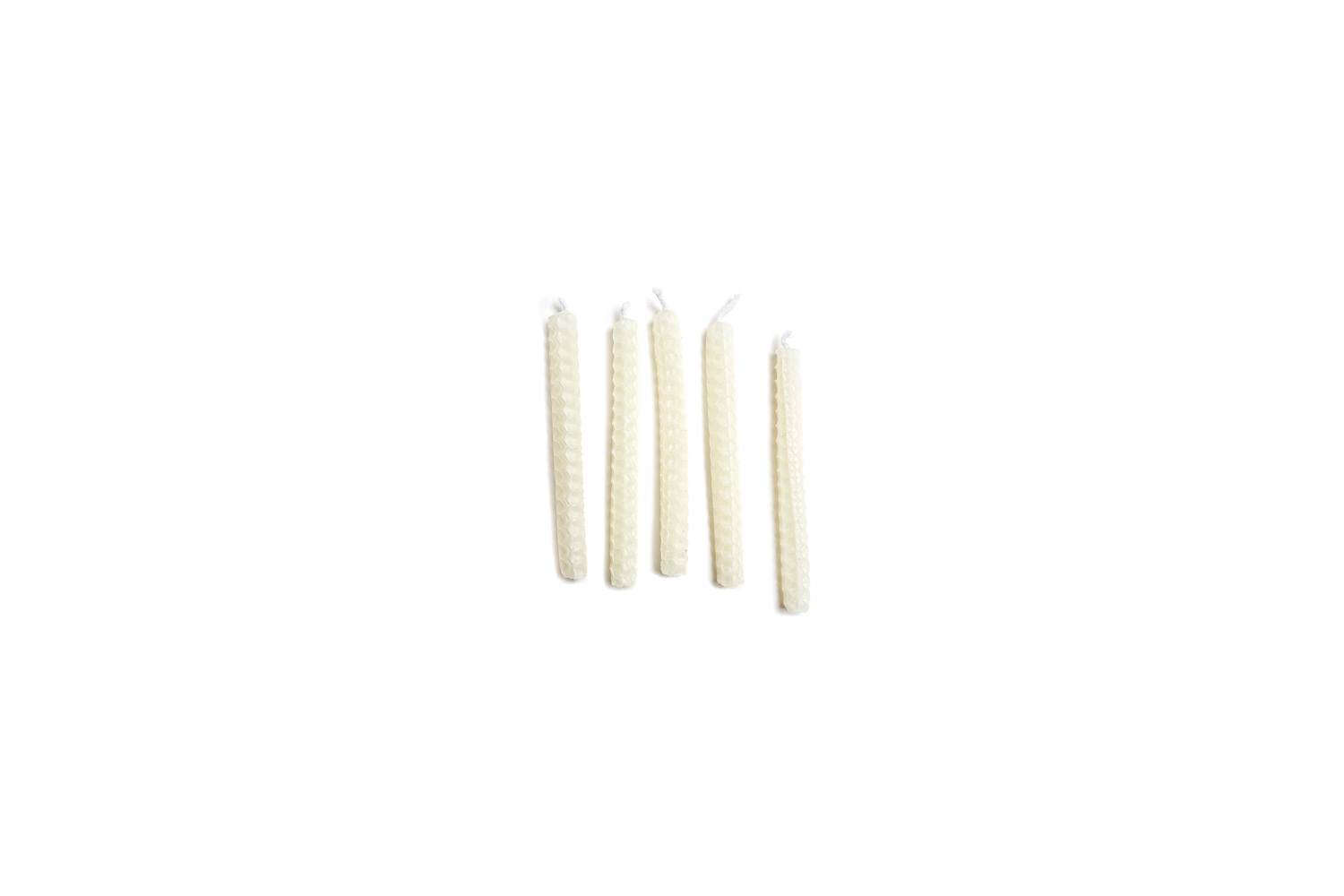
Traditional Hanukkah candles should burn for at least about 30 minutes after nightfall. This is why tiny decorative candles that burn out too quickly may not be ideal for ritual use. Standard Hanukkah candles are usually made to fit common hanukkiyah holders and burn long enough for the mitzvah.
Many families let the candles burn down naturally rather than blowing them out. Since the Hanukkah lights are not meant to be used for practical purposes, such as reading or lighting the room, the shamash remains nearby as the “usable” candle. In other words, if your book suddenly looks readable by candlelight, tradition says the shamash gets the credit.
Types of Hanukkah Candles
Hanukkah candles come in many styles, and choosing them can be surprisingly personal. Some people like the classic blue-and-white look, especially because blue and white are strongly associated with Jewish identity and the Israeli flag. Others prefer multicolored candles because they make each night feel cheerful and festive. Some choose beeswax candles for their natural fragrance and warm color. Others prefer olive oil because the original Hanukkah miracle centers on oil.
Wax Candles
Wax candles are the most common option in American homes. They are easy to find, affordable, and simple to use. Most are designed to fit standard Hanukkah menorahs and burn for the required time. They also come in enough colors to satisfy everyone from minimalists to people whose decorating philosophy is “make it sparkle and ask questions later.”
Olive Oil Lights
Olive oil is considered especially meaningful because it connects directly to the Temple oil story. Some families use glass cups filled with olive oil and floating wicks instead of wax candles. Oil lighting can feel especially traditional and beautiful, though it usually requires more setup and careful cleanup.
Electric Menorahs
Electric menorahs are popular in offices, dorms, hospitals, public spaces, and homes where open flames are not safe or allowed. They are useful for display and can help share the spirit of Hanukkah. However, many traditional authorities distinguish between electric lights and actual flames for fulfilling the candle-lighting mitzvah. For many households, the practical solution is simple: use real candles safely when possible, and use electric menorahs where safety or rules require them.
Hanukkah Candle Colors and Decorations
There is no single required color for Hanukkah candles. White, blue, silver, rainbow, hand-painted, dipped, striped, and ombré candles can all appear in holiday displays. The color choice is usually aesthetic rather than religious law. What matters most is that the candles fit securely, burn properly, and help create a respectful ritual atmosphere.
Decorating around the hanukkiyah can make the holiday feel extra joyful, especially for children. Still, decorations should never crowd the flames. Paper garlands, napkins, curtains, dried flowers, and enthusiastic craft projects should stay far away from lit candles. Hanukkah is the Festival of Lights, not the Festival of Accidentally Setting the Table Runner on Fire.
Hanukkah Candle Safety
Because Hanukkah candles involve open flames, safety is not optional. Place the hanukkiyah on a stable, heat-resistant surface. Keep it away from curtains, books, decorations, cabinets, and anything else that can burn. Never leave lit candles unattended, and keep children and pets supervised around the flames.
A good setup includes a sturdy menorah, candles that fit properly, and enough space around the flames. If a candle leans, fix it before lighting. If wax drips, let it cool before cleaning. If your cat is staring at the shamash like it has made a personal enemy, move the menorah somewhere safer.
Common Mistakes With Hanukkah Candles
Using the Wrong Number of Candles
For one hanukkiyah, a full holiday requires 44 candles. Some boxes include an extra candle, which is helpful because candles occasionally break, vanish, or get claimed by mysterious household forces. On each night, remember to include the shamash in addition to the number of holiday candles.
Lighting in the Wrong Direction
The most common beginner confusion is the candle order. Place candles from right to left. Light them from left to right. The newest candle is always lit first. Once you understand that, the ritual becomes much easier.
Using Candles That Burn Too Quickly
Birthday candles may look cute, but they are usually not the best choice for Hanukkah lighting because they burn too fast. Choose candles made for Hanukkah or other candles that fit safely and burn long enough.
Why Hanukkah Candles Still Feel Powerful Today
Hanukkah candles are powerful because they are both ancient and immediate. They connect families to Jewish history, but they also create a moment that happens right now: a match strikes, a flame catches, and the room changes. Phones pause. Conversations soften. People gather.
In a culture that often moves at full speed, the candles ask for half an hour of attention. They do not shout. They flicker. They do not demand perfection. They simply invite presence. That may be one reason the ritual remains so beloved across generations.
Experiences With Hanukkah Candles: Small Flames, Big Memories
One of the most memorable things about Hanukkah candles is how they turn ordinary spaces into places of memory. A kitchen table becomes a family gathering spot. A windowsill becomes a quiet announcement. A living room becomes, for a little while, the warmest corner of the house. The candles are small, but the atmosphere they create is not.
For many families, the first night has a special kind of excitement. One candle may not look dramatic by itself, but it carries the thrill of beginning. Children often lean in close, not too close, of course, because eyebrows are useful, and watch the shamash touch the wick. Adults may sing the blessings from memory, from a printed sheet, or from a phone screen held at the safest possible distance from the flame. Someone usually asks whether the candle is leaning. Someone else says it is fine. This is how traditions stay alive: through meaning, repetition, and mild household debate.
By the fourth or fifth night, the hanukkiyah begins to look fuller. The growing light changes the mood. Families who were busy with homework, emails, errands, and dinner dishes pause long enough to notice the glow. In many homes, the candle lighting becomes the anchor of the evening. Even when the day has been messy, late, loud, or powered entirely by leftovers, the candles create a reset button.
The final night feels different again. With all eight candles burning, the hanukkiyah becomes bright enough to command attention. It is the grand finale without fireworks, which is good because fireworks indoors would be a terrible idea. The full row of lights can feel joyful, proud, and a little bittersweet. The holiday has built toward this brightness, and then it ends. That is part of its beauty. The candles teach that moments do not need to last forever to matter.
Hanukkah candles also create community experiences. In schools, synagogues, Jewish community centers, public plazas, and family gatherings, candle lighting brings people together across ages and backgrounds. Some people know every blessing by heart. Others are learning. Some are deeply observant. Others are reconnecting with heritage. Some are guests who simply want to understand and honor the tradition. The glow makes room for all of them.
There is also something wonderfully human about the practical side of Hanukkah candles. Wax drips. Wicks refuse to catch. One candle burns faster than the others, apparently training for a race no one announced. Families develop little tricks: foil under the menorah, a dedicated candle tray, a favorite lighter, a specific window spot, a backup box of candles in the drawer. These details become part of the holiday story, too.
In the end, Hanukkah candles are not only about remembering a miracle long ago. They are about practicing hope in real time. Each night says: add light. Add it carefully, add it joyfully, add it even when the world feels complicated. That message is simple enough for a child to understand and deep enough for adults to return to year after year.
Conclusion
Hanukkah candles are more than seasonal objects. They are ritual tools, historical symbols, family memory-makers, and tiny flames with a surprisingly large emotional résumé. From the shamash candle to the final glowing night, the tradition of lighting the hanukkiyah brings together history, faith, resilience, beauty, and community.
Whether you choose wax candles, olive oil lights, blue-and-white tapers, or a joyful rainbow set, the most important part is the act of kindling light with intention. Hanukkah reminds us that even a small flame can carry a big story. And if that flame happens to glow next to a plate of latkes, well, tradition clearly has excellent taste.