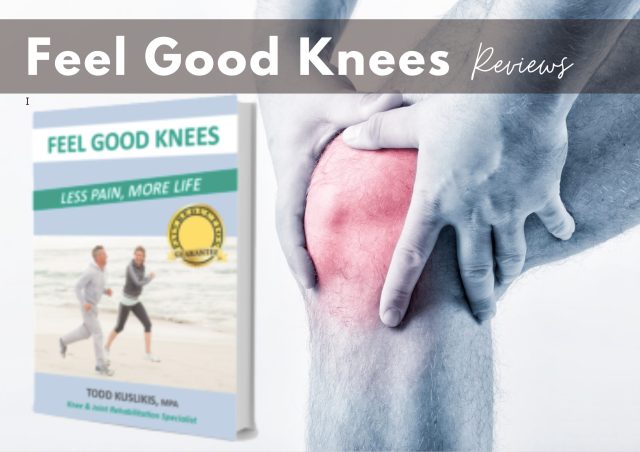

Knee pain has a special talent for ruining normal life. One minute you are walking to the mailbox like a confident adult. The next, your knee makes a sound like a snack bag being opened in a quiet movie theater. That is exactly why programs like Feel Good Knees attract attention: they promise a simple, at-home way to improve knee comfort without expensive equipment, complicated workouts, or immediately jumping to surgery.
But the big question is fair: Is Feel Good Knees legit, or is it another overhyped knee pain product wearing a lab coat it bought online? This consumer-report-style review looks at what the program claims, how it compares with evidence-based knee pain advice, who may benefit, who should be cautious, and whether the marketing raises any red flags.
To be clear, this article is educational and not medical advice. Knee pain can come from arthritis, meniscus injuries, ligament tears, tendinitis, bursitis, poor movement mechanics, inflammation, past trauma, or plain old “I used to jump off things for fun and now my joints remember.” If your knee is swollen, unstable, severely painful, or painful after an injury, see a healthcare professional before trying any at-home program.
What Is Feel Good Knees?
Feel Good Knees is marketed as a natural knee pain relief program created by Todd Kuslikis. Public product pages describe it as a holistic, exercise-based system designed to help reduce knee discomfort, improve mobility, strengthen supporting muscles, and encourage better joint function. The program is commonly presented as a short daily routine, often described as taking about five minutes per day.
Unlike a knee brace, topical cream, supplement, or pain pill, Feel Good Knees appears to be primarily a digital or instructional program. The core idea is that gentle exercises, stretches, mobility drills, and lifestyle habits may help people manage knee discomfort over time. That concept is not strange. In fact, exercise therapy, muscle strengthening, flexibility work, balance training, and self-management education are widely recommended in mainstream knee pain and osteoarthritis guidance.
Where consumers should slow down is the marketing tone. Phrases like “fast pain relief,” “natural alternative,” and “feel better quickly” can sound exciting, but knee pain is not one single problem. A person with mild stiffness from inactivity is not in the same category as someone with a torn ligament, advanced osteoarthritis, or a swollen knee after a fall. Any review of Feel Good Knees has to separate the reasonable idea from the sales-page sparkle.
How Does Feel Good Knees Claim to Work?
The program’s basic promise is that certain low-impact movements may support knee health by improving muscle balance, mobility, circulation, flexibility, and joint stability. That makes sense in broad terms. The knee does not work alone. It depends on the quadriceps, hamstrings, calves, hips, glutes, ankles, and even the way your feet hit the floor. When these areas are weak, tight, or poorly coordinated, the knee can become the poor middle manager absorbing everyone else’s bad decisions.
Feel Good Knees is generally promoted as a progressive system that can be performed at home. The appeal is convenience. Many people do not want to drive to physical therapy twice a week, pay high session fees, or perform gym exercises that feel like auditions for a superhero movie. A short, gentle routine can be less intimidating and easier to stick with.
However, “easy” does not automatically mean “effective for everyone.” A good knee routine should match the user’s pain level, diagnosis, strength, range of motion, balance, and medical history. If an exercise increases sharp pain, swelling, locking, buckling, or instability, that is not a heroic moment. That is your body filing a complaint with management.
Feel Good Knees Reviews 2024: What Are Customers Looking For?
People searching for Feel Good Knees reviews 2024 usually want answers to four practical questions:
1. Does it actually help knee pain?
It may help some users, especially those dealing with mild stiffness, weak supporting muscles, poor mobility, or general age-related discomfort. The most believable part of the program is that it is exercise-based. Strengthening the muscles around the knee can reduce stress on the joint and support stability. Low-impact movement can also help many people stay active without adding unnecessary strain.
2. Is it a replacement for physical therapy?
No. It may be a lower-cost educational program, but it is not the same as an evaluation by a licensed physical therapist or doctor. A professional can test your range of motion, check for swelling, evaluate gait, screen for injury, and adjust exercises to your exact condition. Feel Good Knees may be useful as a general self-help routine, but it should not be treated as a diagnosis or personalized medical plan.
3. Is Feel Good Knees a scam?
Based on publicly available information, it is more accurate to call Feel Good Knees a marketed knee exercise program rather than automatically labeling it a scam. The concept of knee-friendly exercise is legitimate. The caution is that marketing claims may sound broader or more dramatic than what any general program can guarantee. A product can be real and still be overpromoted. That is the consumer sweet spot where skepticism pays rent.
4. Is the refund policy real?
Some official promotional pages mention a 60-day money-back guarantee. Before buying, consumers should always save screenshots of the checkout page, refund terms, order confirmation, customer support email, and any guarantee language. Refund policies are only useful when you know the exact rules, deadlines, and contact process.
Consumer Report Style Analysis: What Looks Good?
Exercise-Based Approach
The strongest point in favor of Feel Good Knees is that it focuses on movement rather than magic. Mainstream knee-pain guidance often emphasizes strengthening, low-impact exercise, education, and weight management when appropriate. A program that encourages gentle, consistent movement is more believable than a mystery pill promising to rebuild cartilage by next Tuesday.
Short Daily Routine
A five-minute routine may sound almost too simple, but simplicity can improve consistency. Many people fail not because they lack motivation, but because the routine is too long, too painful, or too confusing. A short plan can help users build the habit first. Once the habit exists, progress becomes easier.
At-Home Convenience
For busy adults, older users, caregivers, remote workers, and people who dislike gyms, an at-home program is appealing. You do not need fancy machines, matching workout clothes, or the emotional strength to hear someone drop weights beside you like thunder in a warehouse.
Lower Cost Than Many In-Person Options
If the program is available at a low one-time price, it may be cheaper than multiple physical therapy visits. That does not make it medically equivalent, but it may make it accessible for people who want general knee mobility guidance and are not dealing with a serious injury.
What Are the Red Flags?
Big Claims Need Big Proof
Any knee pain program that implies dramatic, universal, or near-instant results should be viewed carefully. Some users may feel better quickly because movement reduces stiffness or improves confidence. Others may need weeks or months. Some may need medical treatment. No general program can honestly promise the same result for every knee.
Testimonials Are Not Clinical Evidence
Customer stories can be encouraging, but they are not the same as controlled research. Testimonials often represent best-case experiences. They may not show how many people tried the program and saw little change. Consumers should read testimonials as personal stories, not scientific proof.
Not Enough Public Independent Testing
There does not appear to be strong, widely available, independent clinical testing specifically proving that Feel Good Knees outperforms standard physical therapy, supervised exercise, or other knee rehabilitation programs. The general exercise principles may be supported, but that is different from proving this exact program is superior.
Possible Confusion With “Consumer Reports”
The phrase “Consumer Report” in search results can make people think a product has been formally reviewed by Consumer Reports. Consumers should be careful here. A consumer-report-style review is not the same as an official Consumer Reports endorsement. Always check whether a product has truly been reviewed by the organization being referenced.
Who Might Benefit From Feel Good Knees?
Feel Good Knees may be worth considering for people with mild to moderate knee discomfort who want a gentle starting point. It may also appeal to people who feel stiff after sitting, want a low-impact routine, prefer natural self-management strategies, or need a simple habit to begin moving again.
It may be especially useful for users who understand that progress is gradual. The best mindset is not “this will cure my knees forever.” A more realistic expectation is: “This may help me move more comfortably, build consistency, and learn knee-friendly exercises.” That expectation is much less likely to cause disappointment.
Who Should Avoid It or Ask a Doctor First?
You should speak with a doctor, physical therapist, or qualified healthcare provider before trying Feel Good Knees if you have severe knee pain, sudden swelling, a recent injury, a popping sound during injury, inability to bear weight, fever with redness and swelling, a visibly deformed joint, knee locking, repeated buckling, or a history of major knee surgery.
People with advanced osteoarthritis, inflammatory arthritis, blood clot concerns, neurological symptoms, or complex medical conditions should also be cautious. At-home exercise can be helpful, but only when the exercise matches the condition. The wrong movement at the wrong time can turn “self-care Sunday” into “why is my knee angry Wednesday?”
Feel Good Knees vs. Physical Therapy
Physical therapy is personalized. A therapist can assess your mechanics, identify weak links, adjust exercises, use hands-on treatment when appropriate, and track progress. Feel Good Knees is more like a self-guided educational program. It may be cheaper and easier to access, but it cannot watch how your knee moves, correct your form, or tell whether your pain is coming from cartilage, tendon, ligament, hip weakness, or another issue.
A practical approach is to see Feel Good Knees as a possible entry-level routine, not a substitute for professional care. If your pain is mild and improves with gentle movement, the program may fit your needs. If your pain is persistent, worsening, or interfering with sleep and daily life, professional evaluation is the smarter move.
Feel Good Knees vs. Supplements, Creams, and Braces
Knee supplements are popular, especially glucosamine, chondroitin, turmeric, collagen, and MSM. Some people report benefits, but the evidence is mixed, and supplements can interact with medications. Creams may provide temporary relief, especially topical anti-inflammatory products, but they do not correct weakness or poor mechanics. Braces may support certain knees, but wearing a brace without strengthening can sometimes become a crutch.
Feel Good Knees has one advantage over many passive products: it asks the user to participate. That matters. Muscles do not strengthen because you bought a product. They strengthen because you use them consistently. Annoying? Yes. True? Also yes.
Pros and Cons of Feel Good Knees
Pros
- Focuses on gentle movement and knee-supporting exercises.
- Can be done at home without expensive equipment.
- Short routines may be easier to follow consistently.
- May be more affordable than repeated in-person sessions.
- Could be helpful for mild stiffness, mobility issues, and general knee discomfort.
Cons
- Not personalized to your exact diagnosis or injury history.
- Marketing may create expectations that are too high.
- Testimonials do not prove results for every buyer.
- Not a replacement for medical evaluation or physical therapy.
- May not be suitable for serious injuries, severe arthritis, or unstable knees.
Is Feel Good Knees Worth Buying in 2024?
Feel Good Knees may be worth buying if you want a simple, low-impact knee exercise routine and you have realistic expectations. The program is most appealing for people who want to improve mobility, build a daily habit, and explore natural knee comfort strategies without immediately spending hundreds of dollars.
It is less appealing if you expect a guaranteed cure, instant pain elimination, cartilage regrowth, or a replacement for medical care. The honest verdict is this: Feel Good Knees is not obviously a scam based on its basic concept, but it should be treated as a general self-help program with marketing claims that deserve careful scrutiny.
Before purchasing, check the current price, refund policy, contact details, and terms of service. Use a payment method that gives you buyer protection. Save your receipt. If the program includes exercises, start slowly and stop anything that causes sharp or worsening pain.
Practical Tips Before Trying Feel Good Knees
- Start with the easiest version of each movement.
- Track pain before and after each session using a 1–10 scale.
- Do not push through sharp pain, swelling, locking, or instability.
- Combine gentle exercise with walking, swimming, cycling, or other low-impact activity if tolerated.
- Support knee health with sleep, hydration, balanced nutrition, and weight management when relevant.
- Ask a professional if pain lasts more than a few weeks or limits daily tasks.
500-Word Experience Section: What Using a Program Like Feel Good Knees May Feel Like
For many people, the first experience with a knee program like Feel Good Knees is not dramatic. There may be no movie soundtrack, no lightning bolt of healing, and no sudden urge to run up stadium stairs. Instead, the first few days often feel like learning how cautious your body has become. You bend a little, straighten a little, test your balance, and realize your knee has been negotiating every movement like a tiny lawyer.
A realistic user experience might begin with skepticism. After all, people with knee pain have usually tried something already: ice packs, drugstore creams, braces, YouTube stretches, new shoes, old shoes, walking less, walking more, and pretending the problem will go away if ignored politely. A short daily routine can feel almost suspicious because it does not look intense. But that may be part of the appeal. When knees are irritated, aggressive workouts can backfire. Gentle consistency often feels safer than heroic effort.
During the first week, a user may notice improved awareness more than pain relief. They may realize one leg is weaker, one hip is tighter, or one foot turns out while walking. These small discoveries matter. Knee pain often involves patterns, not just the knee itself. If the program encourages slow, controlled movement, the user may begin to feel which positions are comfortable and which ones need modification.
By the second or third week, some users may feel less morning stiffness or more confidence going downstairs. Others may not notice much change yet. That difference does not automatically mean failure. Bodies respond at different speeds depending on age, diagnosis, activity level, inflammation, weight, sleep, and consistency. The person who does five minutes daily may have a different outcome than the person who does one session, forgets for six days, and then blames the program while eating cereal over the sink. No judgment. We have all been there.
The most valuable experience may be psychological. Knee pain can make people afraid to move. Fear leads to less activity, less activity leads to weakness, and weakness can make the knee feel even more vulnerable. A simple routine may help break that cycle. Even small wins, such as standing from a chair with less hesitation or walking around the block with more confidence, can feel meaningful.
Still, a responsible user should stay alert. If pain increases, swelling appears, or the knee feels unstable, the program should be paused. Improvement should feel gradual and sustainable, not forced. The best experience with Feel Good Knees is likely to come from treating it as one tool in a broader knee-care plan: gentle exercise, smart pacing, good shoes, healthy body weight, professional guidance when needed, and patience. Knees can be stubborn. They are not trying to ruin your life; they are just very dramatic hinges asking for better management.
Final Verdict: Is Feel Good Knees a Scam?
Feel Good Knees does not appear to be a clear scam simply because it is built around knee-friendly exercise, and exercise is a legitimate part of knee pain management. However, consumers should avoid reading promotional claims as guaranteed medical outcomes. The program may help some users, especially those with mild stiffness or general discomfort, but it is not a cure-all and not a replacement for medical care.
The smartest conclusion is balanced: Feel Good Knees may be a reasonable low-cost option for people seeking a gentle at-home knee routine, provided they understand its limits. Buy only after checking the current refund terms, avoid miracle expectations, and consult a professional if your symptoms are serious, persistent, or worsening.