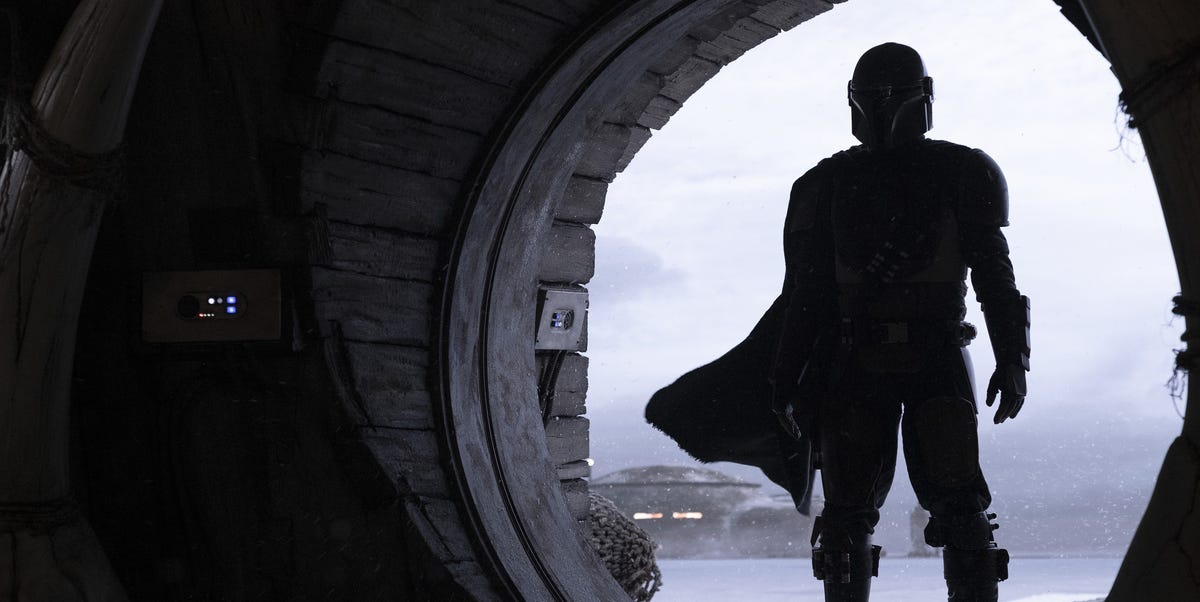

Some Star Wars stories arrive with the subtlety of a Star Destroyer parking over your neighborhood. The Mandalorian did something smarter. It walked in through the side door, wearing beskar armor, carrying a mysterious bounty, and refusing to explain everything at once. That restraint became its superpower. Instead of immediately dragging viewers into another galaxy-wide crisis about chosen ones, Senate drama, or a superweapon with suspiciously poor architectural planning, the series focused on one masked bounty hunter, one tiny Force-sensitive child, and one dangerous galaxy that suddenly felt enormous again.
Created by Jon Favreau and shaped creatively with Dave Filoni, The Mandalorian became the first live-action Star Wars television series and one of Disney+’s defining early originals. Set after the fall of the Empire and before the rise of the First Order, the show explores a messy, half-healed galaxy where law is weak, old loyalties linger, and survival is often more urgent than ideology. That setting gives the series room to do what Star Wars does best: mix myth, adventure, humor, danger, strange creatures, and surprisingly tender emotional beats into one very shiny helmet.
The reason The Mandalorian works so well is not simply that it includes familiar Star Wars elements. It works because it understands how to use them. It expands the universe without turning every episode into homework. It respects canon without worshiping it like a fragile museum artifact. It gives longtime fans plenty to chew on, but it also welcomes new viewers who may not know a Kowakian monkey-lizard from a kitchen appliance. That balance is rare, and in a franchise as beloved and heavily analyzed as Star Wars, it is nearly a Jedi mind trick.
Why The Mandalorian Feels Like Classic Star Wars Without Copying It
At its core, The Mandalorian feels like a space Western. Din Djarin moves from settlement to settlement, taking jobs, meeting desperate locals, facing criminals, and discovering that neutrality is harder to maintain when innocent people keep needing help. The show borrows from samurai films, Westerns, adventure serials, and monster-of-the-week television, all of which have long been part of Star Wars DNA. But it does not merely imitate the original trilogy. It captures the texture of that world: dusty markets, suspicious cantinas, practical creatures, worn-out ships, and characters who look like they have been arguing with the galaxy for years.
That lived-in quality matters. Star Wars is not at its best when everything looks polished and official. It thrives when machinery is dented, deals are shady, and someone in the corner is probably cheating at sabacc. The Mandalorian brings back that sense of place. Planets like Nevarro, Arvala-7, Tatooine, Corvus, and Mandalore are not just backdrops for laser fire. They show different political realities, survival strategies, and cultural histories. The galaxy becomes a patchwork, not a single theme park ride with a lightsaber gift shop at the exit.
Din Djarin: A Hero Built on Silence, Discipline, and Bad Parenting Luck
Din Djarin is a fascinating lead because he begins as almost aggressively unknowable. His helmet stays on. His voice is controlled. His code defines him. He is introduced as a capable bounty hunter who seems more comfortable with carbon-freezing targets than with conversation. Yet the series gradually reveals that his armor is not just protection. It is identity, trauma, religion, family, and emotional distance all rolled into one extremely marketable silhouette.
Pedro Pascal’s performance gives Din warmth even when his face is hidden. That is not easy. Acting through a helmet means every pause, head tilt, and line reading matters. The result is a character who can appear intimidating, confused, stubborn, protective, and mildly exhausted without removing the mask. In other words, he becomes the galaxy’s most emotionally expressive metal bucket.
Din’s journey is not about becoming the strongest warrior. He is already dangerous. His real growth comes from learning attachment, mercy, and responsibility. Grogu changes him not through speeches, but through need. The Child forces Din to choose between the bounty hunter’s code and a deeper moral instinct. From that point forward, The Mandalorian becomes less about capturing targets and more about choosing who deserves loyalty.
Grogu: Small Character, Massive Cultural Footprint
Grogu could have been a gimmick. A tiny green creature with giant eyes and Force abilities sounds like something engineered in a laboratory labeled “Maximum Plush Toy Potential.” Yet the character works because the show treats him as more than a cute reaction machine. He is vulnerable, powerful, funny, mysterious, and occasionally a tiny chaos goblin with snacks on his mind.
The relationship between Din and Grogu gives the series its emotional engine. Their bond is simple enough to understand instantly: a guarded warrior protects a child. But over time, it deepens into a story about found family. Din saves Grogu, but Grogu also saves Din from a lonely life defined by contracts and rules. The show wisely lets their connection develop through action. A hand reaching out, a shared cockpit moment, a rescue, a worried glancethese small beats carry more weight than a galaxy-sized monologue.
Grogu also lets The Mandalorian explore the Force from a fresh angle. Instead of focusing on Jedi politics or formal training alone, the series shows the Force as something mysterious, instinctive, and sometimes frightening. Grogu’s abilities are impressive, but his innocence keeps the story grounded. He is not a symbol of destiny first; he is a child first. That distinction makes the magic feel human.
Expanding the Star Wars Universe Without Turning It Into a Checklist
One of the biggest challenges in modern franchise storytelling is connection overload. A cameo can be thrilling, but too many references can make a story feel like it is constantly elbowing the audience and whispering, “Remember this? Please clap.” The Mandalorian avoids that trap more often than not by making its connections serve the story.
When Bo-Katan Kryze appears, the show uses her to explore Mandalorian identity, leadership, and conflicting traditions. When Ahsoka Tano enters the story, she helps reveal Grogu’s name and history while widening the spiritual and historical scope of the series. When Boba Fett returns, the show gives him presence and purpose rather than treating him as a collectible action figure who wandered onto set. Even Luke Skywalker’s appearance works because it resolves Grogu’s immediate journey and tests Din’s willingness to let go.
These moments matter because they are not just fan service. They are bridges. The Mandalorian connects animated series, original trilogy mythology, New Republic politics, and post-Empire uncertainty in a way that feels organic. The series understands that the Star Wars universe is richer when it feels interconnected, but still dangerous when explored from the ground level.
The New Republic Looks Messy, and That Is a Good Thing
A major strength of The Mandalorian is its portrayal of the galaxy after the Empire’s defeat. The victory in Return of the Jedi was not a magic reset button. The New Republic may exist, but it cannot instantly fix every broken system, abandoned planet, or Imperial remnant. That political mess gives the series texture.
Through characters like Carson Teva and storylines involving former Imperial personnel, the show suggests that history does not vanish just because the good guys won a major battle. Bureaucracy moves slowly. Evil adapts. Ordinary people get stuck in the middle. This approach makes the timeline between the original trilogy and the sequel trilogy more compelling. We see how instability can linger, how institutions can miss warning signs, and how small missions can reveal big problems.
The best part is that The Mandalorian usually keeps these ideas grounded in adventure. The show does not stop to deliver a galactic policy lecture. It shows the consequences through outposts, patrols, spies, ruins, and uneasy alliances. That is smart storytelling. Nobody wants a twenty-minute Senate zoning debate unless someone at least brings a rancor.
Mandalorian Culture Gives the Series Its Mythic Weight
The title is not just a cool label. The Mandalorian spends much of its run asking what it actually means to be Mandalorian. Is it bloodline? Creed? Helmet rules? Shared suffering? Loyalty? Control of the Darksaber? The answer changes depending on whom you ask, which makes the culture feel alive rather than decorative.
Din’s covert follows a strict interpretation of “The Way,” while Bo-Katan represents a different Mandalorian tradition shaped by politics, war, and loss. Their tension gives the series one of its richest themes: identity is powerful, but it can also become a cage. Season 3 leans into this question by exploring Mandalore itself, the scattered clans, and the possibility of reunification. Whether viewers preferred the intimate focus of earlier seasons or the broader cultural arc, the show deserves credit for treating Mandalorians as more than cool armor with jetpacks.
The armor still helps, of course. Let us not pretend jetpacks are not doing some heavy lifting here.
Technology That Makes the Galaxy Feel Real
Behind the scenes, The Mandalorian became famous for its use of StageCraft, ILM’s virtual production technology built around massive LED environments. This approach allowed actors and filmmakers to work inside immersive digital settings rather than relying only on green screens. The result helped give the series its cinematic feel, with lighting and reflections that made alien landscapes feel physically present.
But the show’s visual success is not just about technology. It is about taste. The production design favors tactile details: weathered armor, dusty fabrics, chunky controls, practical creatures, and ships that look like they need maintenance every fifteen minutes. The Razor Crest became beloved because it felt like a working ship, not a glossy showroom model. Later, Din’s modified N-1 starfighter gave the series a different flavor: faster, sleeker, and slightly hilarious when paired with Grogu’s tiny passenger bubble.
The combination of old-school Star Wars texture and new-school filmmaking tools lets The Mandalorian feel both nostalgic and modern. It honors the handmade charm of the franchise while using advanced production methods to open up new storytelling possibilities.
Villains, Creatures, and Side Characters Keep the Galaxy Interesting
Great Star Wars stories need memorable side characters, and The Mandalorian delivers plenty. Kuiil brings wisdom and dignity. Greef Karga evolves from slippery guild boss to civic leader. Peli Motto adds comic energy and mechanical know-how. Moff Gideon gives the series a sharp Imperial threat, complete with ambition, cruelty, and a cape that knows exactly what franchise it is in.
The creature work also deserves praise. Mudhorns, krayt dragons, blurrgs, spider-like ice creatures, and various background aliens help restore the sense that Star Wars is a weird universe. Not every creature needs a full biography. Sometimes it is enough for a monster to appear, cause chaos, and remind everyone that space travel is not for people who enjoy predictable vacations.
These details are essential to world-building. The galaxy feels bigger when every stop has its own problems, customs, predators, scams, and snack options. The Mandalorian understands that exploration is not just about visiting famous planets. It is about making unfamiliar places feel specific.
Why the Series Appeals to New Fans and Longtime Star Wars Viewers
For new viewers, The Mandalorian offers a clean entry point. You do not need to memorize the entire Skywalker saga to understand a warrior protecting a child. The emotional stakes are immediate. The episodes are accessible. The action is clear. The humor is dry. The tiny green co-star does much of the marketing work simply by existing.
For longtime fans, the series adds layers. References to Mandalorian history, the Darksaber, Ahsoka, Boba Fett, Imperial remnants, cloning experiments, and the fragile New Republic reward deeper knowledge. Yet the show usually places those details inside character-driven stories. That is the key. Lore is seasoning, not the whole meal. Too much, and suddenly everyone is chewing through a textbook with laser swords.
This dual appeal is why The Mandalorian became such a significant Star Wars success. It gave casual viewers a compelling adventure and gave dedicated fans meaningful expansion. It proved that the franchise could move beyond the Skywalker family while still feeling unmistakably Star Wars.
The Mandalorian and the Future of Star Wars Storytelling
The influence of The Mandalorian can be seen across the modern Star Wars landscape. It helped build a connected streaming era that includes series such as The Book of Boba Fett and Ahsoka, while also pushing Din Djarin and Grogu toward the big screen with The Mandalorian and Grogu. That move makes sense. The characters began in episodic storytelling, but their appeal has grown large enough for theatrical adventure.
More importantly, the series showed that Star Wars does not always need to chase maximum scale. Sometimes the best way to explore a massive universe is to narrow the lens. A bounty. A village. A child. A helmet. A choice. From those small pieces, the show builds emotional meaning and galactic consequence.
Personal Viewing Experience: Why The Mandalorian Feels So Easy to Return To
Watching The Mandalorian feels different from watching many franchise shows because it has a strong sense of rhythm. Some episodes move the main plot forward in obvious ways. Others feel like side quests. That structure may frustrate viewers who want every minute to serve a giant finale board covered in red string, but it is also one of the show’s greatest charms. It lets the galaxy breathe.
The series is especially enjoyable when viewed as a collection of campfire stories from the Outer Rim. One week Din is helping a village fight raiders. Another week he is transporting a nervous passenger. Then he is dealing with pirates, beasts, droids, Jedi, Mandalorian politics, or the ongoing challenge of keeping Grogu from touching things he absolutely should not touch. The variety makes the world feel open. It gives the impression that beyond every hyperspace jump is another problem, another culture, another creature, and probably another repair bill.
What stands out most on rewatch is how much emotion the series finds in quiet moments. The action is fun, and the blaster fights are polished, but the heart of the show often lives in silence. Din looking at Grogu. Grogu reaching toward Din. A pause before a difficult decision. A character choosing honor when survival would be easier. Those moments give the show its staying power.
There is also something comforting about the show’s clarity. Din may live in a morally complicated galaxy, but his personal code gives the story a strong spine. He changes, questions, and grows, yet he remains guided by loyalty and duty. In a franchise filled with prophecies and cosmic destinies, it is refreshing to follow a character whose biggest problem is often practical: protect the kid, finish the job, fix the ship, avoid dying, repeat as necessary.
The humor helps too. The Mandalorian rarely turns into full comedy, but it knows when to let the air out of its own seriousness. Grogu’s food obsession, Peli Motto’s chatter, awkward cockpit moments, and Din’s occasional confusion around normal social behavior make the series warmer. The show understands that Star Wars should be mythic, but it should also be fun. A galaxy far, far away should include awe, danger, and at least one tiny creature doing something ridiculous in the background.
From a fan’s perspective, the best thing about The Mandalorian is that it makes Star Wars feel explorable again. It restores the sense that the galaxy is not limited to one family, one conflict, or one famous desert planetalthough, naturally, Tatooine still finds a way to show up, because Tatooine has the franchise persistence of glitter. The series opens doors without demanding that every door lead to a trilogy. It reminds viewers that smaller stories can make a universe feel larger.
That is why the show remains so easy to recommend. It has action for viewers who want adventure, lore for fans who enjoy connections, humor for casual audiences, and emotional stakes for anyone who has ever become unexpectedly attached to a small being with giant ears. The Mandalorian explores Star Wars in all the right ways because it remembers that wonder is not created by scale alone. Wonder comes from discovery, character, mystery, and the feeling that the next planet might contain something you have never seen before.
Conclusion
The Mandalorian succeeds because it understands the Star Wars universe as both myth and frontier. It gives viewers iconic imagery, memorable characters, strange worlds, thrilling action, and emotional simplicity without flattening the franchise into nostalgia bait. Din Djarin and Grogu work because their bond is personal, but their journey reveals the larger galaxy around them: broken governments, surviving Imperial threats, divided cultures, forgotten planets, and ordinary people trying to endure history’s aftershocks.
The series does not explore Star Wars by explaining every corner of it. It explores by moving through it with curiosity. That is the right way. Not every mystery needs an immediate answer. Not every cameo needs applause lights. Not every adventure needs to decide the fate of the universe. Sometimes all Star Wars needs is a lone Mandalorian, a child with impossible power, a ship that may or may not survive the episode, and a dangerous road ahead. This is the Wayand yes, the phrase still works.