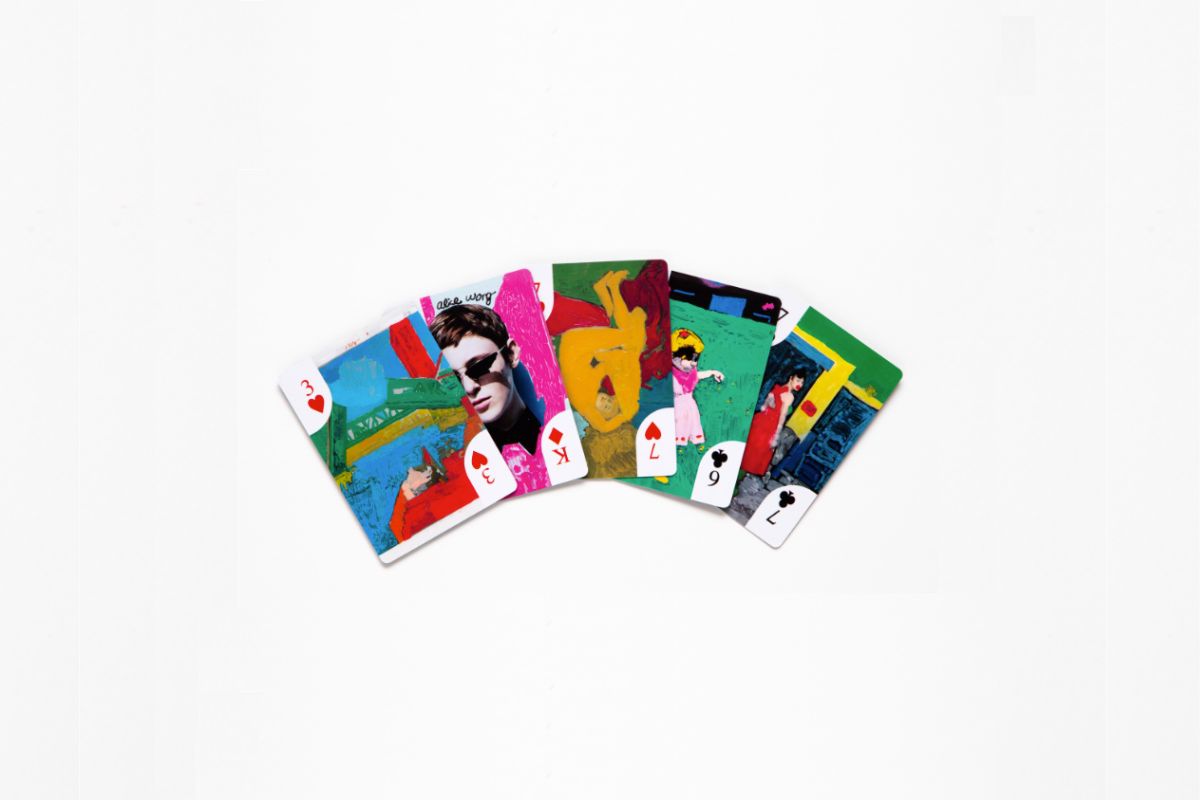

The Alice Wong Playing Card Deck is the kind of object that quietly ruins ordinary decks for you. One minute, a playing card is just a rectangle you shuffle while someone explains rules for the third time. The next, it becomes a pocket-sized artwork: portable, collectible, conversational, and just strange enough to make a coffee table feel like it has joined a gallery opening.
Created by artist Alice Wong and sold through Creative Growth, the deck sits at a lively crossroads: contemporary art, inclusive design, artist merchandise, accessible collecting, and the very human pleasure of holding something beautiful in your hands. It is not merely a deck for passing time. It is a deck that asks you to look twice, then maybe a third time, because Wong’s visual language has a habit of making the familiar feel freshly mysterious.
For collectors, design lovers, museum-shop browsers, and people who believe game night deserves better than a battered deck rescued from a kitchen drawer, the Alice Wong Playing Card Deck offers a small but meaningful way to bring contemporary art into daily life. It is useful, affordable, giftable, and visually memorable. In other words, it has the rare charm of being both an art object and something you can actually use without needing white gloves and a security guard named Bernard.
Who Is Alice Wong?
Alice Wong is a Hong Kong-born artist associated with Creative Growth Art Center in Oakland, California. Her art practice has included drawing and ceramics, but she is especially recognized for transforming vintage photographic portraits with bright color, acrylic markers, and enamel. Instead of treating old photographs as fixed historical documents, Wong reactivates them. She covers, highlights, interrupts, and reimagines faces and forms until the original image becomes something new: part portrait, part puzzle, part visual wink.
That approach matters when thinking about an artist-designed playing card deck. A standard deck is already built on repetition, identity, disguise, and symbolism. Hearts, clubs, diamonds, and spades repeat in strict systems. Face cards look regal and theatrical. Numbers behave themselves. Wong’s art, by contrast, loves disruption. She works with found imagery and gives it a second life through bold color and unexpected visual decisions. Put that sensibility into a deck, and suddenly a familiar object starts behaving less like a game accessory and more like a tiny exhibition that happens to shuffle.
Creative Growth: The Community Behind the Deck
The Alice Wong Playing Card Deck is also connected to a larger story: the history and mission of Creative Growth Art Center. Founded in 1974 by artist Florence Ludins-Katz and psychologist Elias Katz, Creative Growth is widely recognized as a pioneering nonprofit arts organization supporting artists with developmental, mental, and physical disabilities. Based in Oakland, it provides studio space, materials, professional development, exhibitions, and gallery representation.
That last part is important. Creative Growth is not built around the idea that art is a cute side activity. It treats artists as artists. Their work appears in galleries, museums, design collaborations, publications, collections, and product projects. This professional context gives the Alice Wong deck more weight than a novelty item. Buying or gifting it is not just about picking up a pretty deck; it is also a way of participating in a broader ecosystem that values disabled artists as serious contributors to contemporary culture.
In recent years, Creative Growth has gained even broader visibility through major institutional recognition, including a high-profile partnership with SFMOMA connected to the organization’s 50th anniversary. Works by Creative Growth artists, including Alice Wong, have been placed into important museum conversations. The deck carries some of that energy in a form that fits in a jacket pocket. Not bad for something that weighs less than your phone and is far less likely to demand a software update.
What Makes the Alice Wong Playing Card Deck Special?
1. It Turns a Common Object Into a Collectible Artwork
Playing cards are among the most familiar designed objects in the world. Most people know the feel of a deck before they know the history of one. We shuffle them, fan them, drop them, stack them, and occasionally accuse a sibling of hiding the good cards. That everyday familiarity is exactly what makes an artist deck so compelling. It takes something ordinary and gives it a new emotional charge.
The Alice Wong Playing Card Deck works because it does not need to shout. It slips art into a routine object. Instead of hanging on a wall where only one room can enjoy it, the deck can travel from a shelf to a table to a backpack to a gift box. It makes art portable. It makes collecting less intimidating. It also gives people who may not normally buy original artwork a way to connect with an artist’s practice.
2. It Reflects Wong’s Interest in Altered Portraits and Visual Play
Alice Wong’s broader work often begins with photographic portraiture. Her use of bright color and obscured forms can make old images feel wonderfully unstable. Are we looking at a person, a memory, a mask, a joke, or a beautiful interruption? The answer may be yes, all at once.
That sensibility fits playing cards surprisingly well. Cards are already about hidden information. You hold them close. You reveal them at the right moment. You read symbols, faces, values, and patterns. Wong’s art adds another layer of looking. A card becomes not only a tool in a game but an image with personality. It invites attention before, during, and after play.
3. It Is Affordable by Art-World Standards
Original contemporary artwork can be expensive, and for good reason: it reflects time, materials, skill, studio support, and an artist’s evolving practice. But that can make collecting feel out of reach for many people. Artist-designed objects bridge the gap. A deck like this allows someone to own a piece connected to a real artist and a real arts organization without needing a collector’s budget, a climate-controlled storage unit, or a mysterious consultant who only speaks in gallery whispers.
At its listed price point, the Alice Wong Playing Card Deck belongs to the world of accessible art objects. It can be a gift, a keepsake, a design accent, or a starting point for learning more about Wong’s work and Creative Growth’s artists. That accessibility is part of its appeal.
Why Playing Cards Are a Perfect Canvas for Artists
Playing cards have always been more than game pieces. Historic decks have carried political satire, luxury illustration, educational themes, regional costumes, advertising, courtly imagery, and museum-worthy design. The structure of a deck gives artists a ready-made system: suits, ranks, repetition, symmetry, backs, faces, boxes, and jokers. Within those boundaries, there is plenty of room to misbehave creatively.
A deck is also democratic. Unlike a painting that hangs in one place, a deck is touched, shared, rearranged, and experienced in motion. Every shuffle changes the order. Every deal creates a temporary composition. In that sense, an artist-designed deck is not frozen. It performs. It moves through hands and conversations. It allows viewers to encounter art one card at a time, which is a very friendly way to enjoy contemporary work.
For Alice Wong, whose work often transforms found portraits into bright, strange, humorous images, the deck format feels especially natural. Playing cards already have personalities: kings with authority, queens with elegance, jacks with suspicious energy, and jokers who look like they know where the snacks are hidden. Wong’s approach gives that world a fresh visual pulse.
How to Use the Alice Wong Playing Card Deck
For Game Night
The simplest way to enjoy the deck is also the best: use it. Bring it out for family games, solitaire, matching games, or casual gatherings. A distinctive deck changes the mood of a table. People notice it. They ask where it came from. Suddenly, the game has a story attached to it, and that story opens the door to Alice Wong, Creative Growth, and the broader world of artist-designed objects.
For Display
Not every deck has to live in a drawer next to takeout menus and expired batteries. The Alice Wong Playing Card Deck can work as a small display object. Place it on a coffee table, bookshelf, studio desk, or game shelf. If you collect decks, it can sit beside other art decks, museum decks, vintage decks, or design-focused editions. It is compact, but visually confident.
For Gifting
This deck makes a strong gift because it does not feel generic. It suits art lovers, design fans, card players, teachers, hosts, collectors, and people who already have too many mugs. Pair it with a small notebook, a puzzle, a museum membership, or a handwritten note about Creative Growth. The result feels thoughtful without becoming overly formal. Nobody wants a gift that arrives wearing a tuxedo and demanding applause.
The Deck as a Conversation Starter
One of the best things about artist-designed objects is their ability to begin conversations naturally. You do not need to deliver a lecture. You simply place the deck on a table and let curiosity do its charming little tap dance. Someone picks up the box. Someone asks about Alice Wong. Someone notices the artwork. The object becomes an invitation.
That invitation matters because many people still encounter disability arts through narrow assumptions. Creative Growth’s model challenges those assumptions by placing artists in professional, cultural, and market contexts. The Alice Wong Playing Card Deck is small, but it participates in that larger shift. It says that inclusive art is not hidden away. It belongs in homes, stores, museums, conversations, collections, and yes, even on the table next to a bowl of pretzels.
Design Analysis: Small Format, Big Personality
The playing card format creates a useful design test: can artwork hold attention at a small scale? Alice Wong’s visual language is well suited to that challenge. Her use of color, shape, and altered faces can remain lively even when reduced. The result is a deck that can be appreciated both as a practical item and as a set of miniature compositions.
Small-format art has its own intimacy. A large painting asks you to step back. A playing card asks you to lean in. That shift changes the relationship between viewer and artwork. You are not just looking; you are holding. You are turning the image over. You are noticing details at the speed of play. The Alice Wong deck benefits from this closeness. It makes the viewer an active participant rather than a distant observer.
Collectibility and Cultural Value
Artist decks have become increasingly popular among collectors because they combine design, function, and cultural storytelling. Museum stores, independent art spaces, and design shops often carry playing cards because they are easy to gift and easy to live with. They do not require framing, installation, or a wall free of nail holes. They only require attention.
The Alice Wong Playing Card Deck has collectible appeal for several reasons. It is tied to a specific artist. It is connected to Creative Growth, a historically significant arts organization. It reflects a broader movement toward recognizing disabled artists within contemporary art. And it belongs to a long tradition of playing cards as visual culture. That combination gives the deck more meaning than a standard souvenir.
Of course, the best reason to own it is simpler: it looks interesting and feels good to share. Collectibility is nice. Joy is better.
Why This Deck Matters Now
The timing of the Alice Wong Playing Card Deck feels especially relevant because the art world is paying closer attention to access, inclusion, authorship, and the systems that decide which artists become visible. Creative Growth has spent decades building a different kind of system, one that gives artists tools, space, support, and public platforms. As museums and design audiences increasingly recognize the importance of that work, objects like this deck become ambassadors.
They travel farther than exhibitions. They enter homes. They appear at gatherings. They get wrapped as holiday gifts. They sit on desks where people can see them every day. That circulation may seem modest, but culture often moves through modest objects. A card deck can carry an artist’s name into rooms where a gallery catalog never lands.
Buying Tips: Who Is This Deck Best For?
The Alice Wong Playing Card Deck is a strong choice for anyone who likes functional art. It is especially suited for:
- Collectors of artist-designed playing cards and museum-store objects
- Fans of Creative Growth and disability arts organizations
- People who enjoy colorful, portrait-based contemporary art
- Gift shoppers looking for something thoughtful, compact, and affordable
- Design lovers who want everyday objects with stronger visual character
- Hosts who want game-night accessories that do not look like they retired in 1998
If you are buying it as a gift, include a short note explaining who Alice Wong is and why Creative Growth matters. That small context turns a good gift into a better one. Without context, it is a cool deck. With context, it becomes a story someone can hold.
Experience Section: Living With the Alice Wong Playing Card Deck
The experience of having an Alice Wong Playing Card Deck nearby begins before anyone plays a game. Imagine it sitting on a coffee table during a slow Saturday afternoon. A friend reaches for it because the box catches their eye. They expect ordinary cards, but the artwork changes the rhythm of the moment. Instead of immediately asking, “What are we playing?” they ask, “Where did you get this?” That is the first small victory of a good artist object: it interrupts autopilot.
Using the deck during a casual game makes the experience even better. With standard cards, players usually focus only on suits and numbers. With an art deck, people pause. They study a card before placing it down. They compare images. Someone makes a comment about color. Someone else notices the way the artwork changes the mood of the table. The game continues, but it now has a second layer: looking. The deck becomes a shared visual experience, not just a tool for keeping score.
There is also a private pleasure in handling a deck like this. Shuffling cards is a small ritual: square the edges, split the deck, bridge the cards, tap them flat. When the cards carry artwork by a real contemporary artist, that ritual feels more intentional. You become aware of the object as design. The weight, the box, the repeated images, the reveal of each cardall of it becomes part of the experience. It is a reminder that art does not have to stay on a museum wall to matter.
The deck also works beautifully as a quiet educational object. A parent, teacher, or host can use it to start a conversation about artists with disabilities, inclusive studios, contemporary portraiture, or the difference between mass-produced decoration and artist-led design. The lesson does not have to feel heavy. In fact, it works best when it feels natural. “This deck was designed by Alice Wong, an artist connected to Creative Growth in Oakland,” is enough to begin. Curiosity can do the rest.
As a gift, the experience is equally strong. Many gifts are either useful but boring or beautiful but impractical. This deck avoids that trap. It can be played, displayed, collected, or simply admired. It is small enough to wrap easily and meaningful enough to feel personal. Give it to someone who appreciates art, and they may keep it on a shelf. Give it to someone who enjoys games, and it may become the deck they bring out when guests come over. Give it to someone who likes unusual design, and they may treat it like a tiny traveling gallery.
Over time, the Alice Wong Playing Card Deck can become associated with specific moments: a rainy evening, a family visit, a quiet solo game, a conversation about art that started unexpectedly. That is the magic of functional art. It does not sit apart from life. It gets folded into life. It collects memories while still being an object in use. And if a deck of cards can make people look more closely, talk more openly, and appreciate an artist they may not have known before, then it has already done more than most objects its size could reasonably brag about.
Conclusion
The Alice Wong Playing Card Deck is a compact, joyful example of how contemporary art can enter everyday life without losing its depth. It reflects Alice Wong’s vivid visual practice, Creative Growth’s influential role in disability arts, and the long tradition of playing cards as both functional tools and collectible design objects. Whether used for games, displayed as a design piece, or given as a thoughtful gift, the deck carries more than cards. It carries a story about visibility, creativity, access, and the pleasure of seeing ordinary things become wonderfully strange.
Editorial note: This article is written for web publication and synthesizes real public information about Alice Wong, Creative Growth, artist-designed playing cards, and contemporary art objects without inserting source-link clutter into the article body.