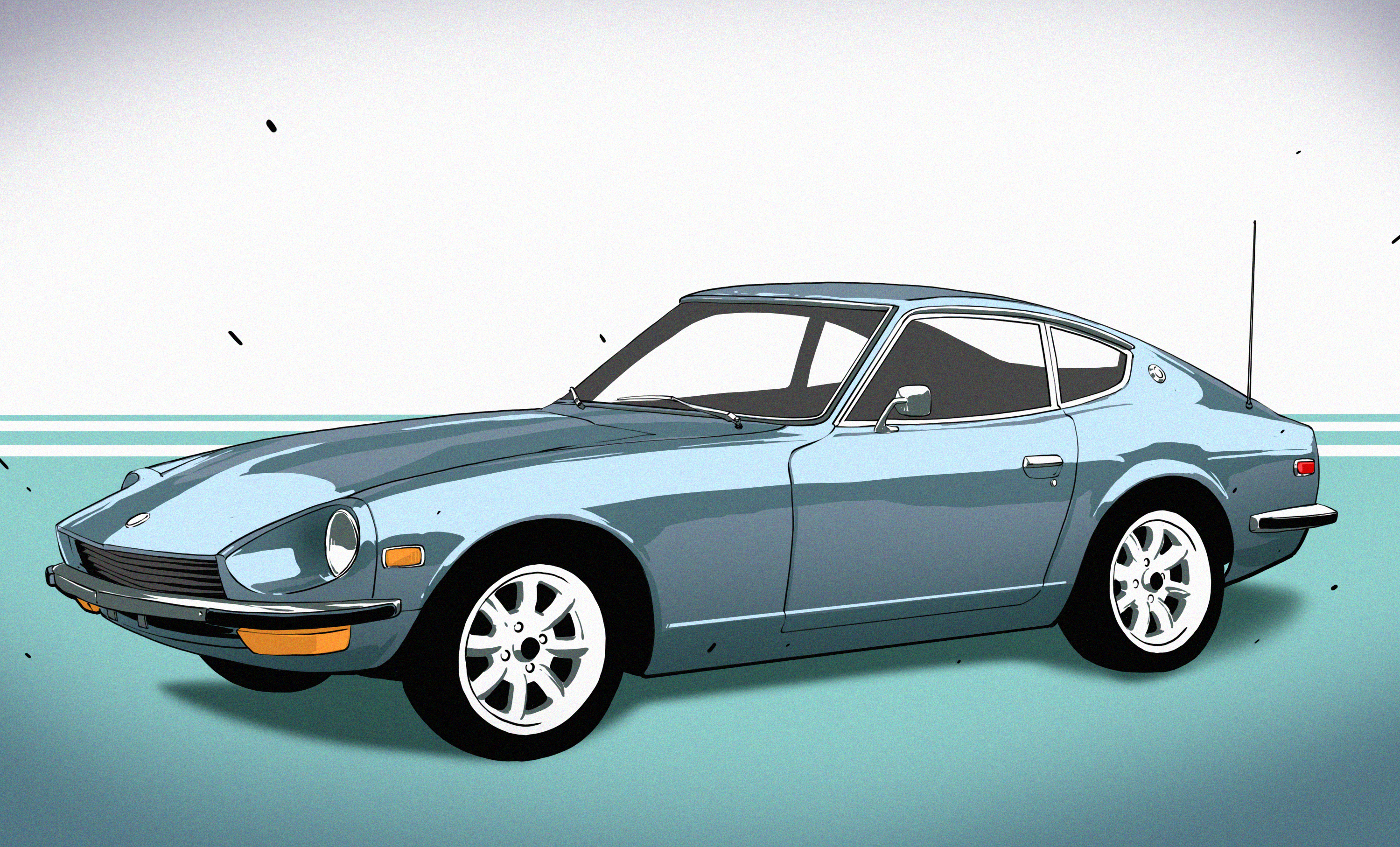

If you own a 1983 Datsun Z, which in the U.S. usually means the S130-generation Datsun 280ZX, you already know the car has personality. It has long-hood charm, inline-six smoothness, pop-up-era styling, and enough vintage electronics to make a multimeter feel like a therapist. So when people talk about “Megasquirting” one, they are not talking about making the car louder with stickers. They mean installing a MegaSquirt standalone engine-management system to control fuel, ignition, or both.
For many Z owners, a MegaSquirt EFI conversion is the sweet spot between old-school wrenching and modern tuning. The original Nissan/Bosch-style fuel injection was advanced for its day, but four decades later, brittle connectors, aging sensors, tired wiring, and limited adjustability can turn a fun Datsun into a rolling guessing game. MegaSquirt gives the L28E or L28ET engine a programmable brain. Done correctly, it can improve drivability, cold starts, throttle response, data logging, and future upgrade potential. Done carelessly, it can convert your weekend into a garage opera starring fuel smell, laptop rage, and one very judgmental timing light.
What “Megasquirting” a Datsun Z Actually Means
MegaSquirt is an aftermarket ECU platform used to manage electronic fuel injection and ignition timing. In a 1983 Datsun 280ZX, that usually means replacing or supplementing the factory ECU so the owner can tune the engine with modern software such as TunerStudio. Depending on the build, the setup may control fuel only, fuel and spark, batch-fire injection, wasted spark, coil-on-plug ignition, or even sequential fuel injection with the right trigger hardware.
The 1983 280ZX came with Nissan’s 2.8-liter L-series inline-six. Naturally aspirated cars used the L28E, while turbo models used the L28ET. The naturally aspirated L28E is known for its cast-iron block, aluminum head, single overhead camshaft, electronic multiport fuel injection, and famously durable seven-main-bearing crankshaft. Turbo cars added forced induction, lower compression, stronger supporting pieces, and factory electronic control that was impressive in the early 1980s. But “impressive in 1983” and “pleasant to tune in the laptop age” are not always the same thing.
Why I Chose MegaSquirt for a 1983 Datsun Z
The main reason is control. The factory system can run well when every component is healthy, but it does not invite easy changes. Add a bigger cam, turbo upgrade, intercooler, larger injectors, modern ignition, or a different intake setup, and suddenly the stock ECU feels like a rotary phone at a smartphone convention.
MegaSquirt makes the engine’s behavior visible. Instead of guessing why the car stumbles at 2,200 rpm, you can log manifold pressure, throttle position, coolant temperature, intake air temperature, AFR, timing, and battery voltage. You can see what the engine is doing instead of reading spark plugs like ancient scrolls. That is a huge advantage for any modified Datsun Z.
Another reason is parts flexibility. A MegaSquirt-equipped 280ZX can use modern sensors, a wideband oxygen sensor, upgraded injectors, improved ignition drivers, trigger wheels, or plug-and-play harness solutions. Owners can choose a basic MS2-style setup for budget-friendly control or step up to MS3/MS3Pro-level hardware for more advanced features. The right choice depends on the goal: reliable street car, turbo weekend weapon, track build, or “I accidentally bought individual throttle bodies at 1:00 a.m.” project.
Understanding the 1983 Datsun Z Platform
The 1983 280ZX sits at an interesting point in Z-car history. It was more grand tourer than stripped sports car, with extra comfort, better aerodynamics, and more technology than earlier S30 cars. Under the hood, however, the L-series inline-six still carried the soul of the Z. The L28E naturally aspirated engine displaced 2,753 cc and used electronic multiport fuel injection. Later versions, including 1981–1983 engines, commonly used flat-top pistons and the P79 head, giving them higher compression than earlier L28E variants.
The L28ET turbo engine is the glamorous sibling. Factory turbo cars used a Garrett-style turbocharger, lower compression, and Nissan’s ECCS engine management. In period, the 280ZX Turbo was quick enough to embarrass plenty of larger, more expensive machinery. Today, the L28ET remains a favorite for MegaSquirt conversions because boost and programmable engine management are natural friends, assuming the tuner is not trying to make 400 horsepower on wishful thinking and 40-year-old fuel hose.
Planning the MegaSquirt Conversion
The planning stage matters more than the buying stage. It is tempting to order an ECU, harness, wideband, injectors, and shiny sensors in one heroic online-shopping sprint. Do not start there. Start with the engine’s goal.
Define the Build
A naturally aspirated L28E street build may only need clean fuel control, a reliable crank or distributor trigger, a wideband O2 sensor, and conservative ignition timing. A turbo L28ET build needs more attention to boost control, ignition safety, fuel pressure, injector size, intercooling, and knock prevention. If the plan includes sequential injection or coil-on-plug ignition, the trigger setup becomes much more important.
Inspect the Car First
Before installing MegaSquirt, check the basics: compression, vacuum leaks, fuel tank condition, fuel pump health, regulator behavior, injector seals, grounds, alternator output, battery condition, and ignition components. A standalone ECU will not magically fix a weak fuel pump, cracked intake boot, or corroded engine ground. It will simply log the misery more accurately.
Choose the Hardware
Common choices include MS2-based systems, MicroSquirt, MS3, MS3Pro, and Datsun-specific plug-and-play or semi-plug-and-play options. A universal wire-in setup can be cost-effective but requires careful wiring. A plug-and-play style harness can save time, reduce errors, and preserve sanity, especially if the original harness looks like a raccoon practiced dentistry on it.
Key Parts for a MegaSquirt 1983 Datsun Z Setup
A typical conversion may include the ECU, wiring harness, manifold pressure connection, coolant temperature input, intake air temperature sensor, throttle position input, injector wiring, ignition trigger input, coil or ignition module output, fuel-pump control, and wideband O2 integration. Many owners also add fresh injector connectors, shielded wiring for trigger signals, proper relays, fuses, and upgraded grounds.
The wideband oxygen sensor deserves special attention. A narrowband sensor is fine for old emissions feedback, but a wideband lets you tune air-fuel ratio across idle, cruise, acceleration, and boost. For MegaSquirt tuning, a wideband is not a luxury. It is the difference between cooking with a thermometer and cooking by sniffing smoke from the kitchen.
Wiring: The Part Everyone Respects Eventually
Wiring is where MegaSquirt conversions succeed or become folklore. The 280ZX engine bay has enough factory wiring to make the job look deceptively simple, but age changes everything. Insulation hardens. Connectors oxidize. Previous owners add mystery splices. Someone, somewhere, may have used a household wire nut. Do not assume anything.
Good wiring practice means using correct wire gauge, proper crimping tools, heat shrink, quality terminals, clean grounds, fused power feeds, and logical routing. Sensor grounds should return to the ECU as recommended by the MegaSquirt hardware manual. High-current devices such as injectors, coils, and pumps should not share sloppy ground paths with delicate sensor signals. Trigger wiring should be shielded when appropriate, because ignition noise can create sync loss and make the engine behave like it is haunted.
On many L28 setups, injectors are wired in two banks for batch-fire control. For example, cylinders 1–3 may be grouped on one injector channel and 4–6 on another, depending on the harness and ECU configuration. Turbo distributor or optical crank-angle-sensor setups require extra care, especially if using an aftermarket trigger disc. Exact wire colors and pinouts vary, so every install should be checked against the ECU manual, wiring diagram, and the specific parts on the car.
Fuel System Considerations
A MegaSquirt ECU can command injectors beautifully, but it cannot overcome a poor fuel supply. Replace old fuel hose with EFI-rated hose. Verify pump capacity. Check the fuel-pressure regulator. Inspect the tank for rust and sediment. Make sure the return line is clear. If upgrading injectors, confirm impedance, dead time, flow rate, and fuel-pressure assumptions before building a base tune.
For a naturally aspirated L28E, moderate injector upgrades may not be necessary unless the engine has significant modifications. For an L28ET, injector sizing should match the horsepower target and fuel type. Bigger is not automatically better. Oversized injectors with poor low-pulse behavior can make idle tuning frustrating. The best injector is the one that supports the goal while still behaving politely at idle and cruise.
Ignition Control: Where the Magic Lives
Fuel tuning gets attention, but ignition timing is where a MegaSquirt Datsun Z can really transform. Programmable timing can sharpen throttle response, improve cruise efficiency, and make boost safer. It can also destroy an engine quickly if the timing map is reckless. A safe base map is essential.
Before tuning, lock the timing in TunerStudio and verify it with a timing light. The timing shown on the laptop must match the crank pulley. If the ECU thinks the engine is at 10 degrees but the engine is actually at 25 degrees, the problem is not “a little off.” It is a tiny invitation to detonation. Set trigger angle, tooth settings, and distributor phasing carefully. On turbo cars, keep timing conservative under boost until the fuel table, AFR targets, intake temperatures, and boost control are stable.
First Start: The Moment of Truth
The first start is exciting, but it should be boring. Boring is good. Before cranking, confirm sensor readings with the engine off. Coolant and intake temperatures should look realistic. Throttle position should move smoothly from closed to wide open. MAP should read near atmospheric pressure with the engine off. Battery voltage should be healthy. RPM should read zero until cranking. Fuel pump prime should work. Injectors should not be leaking. Nothing should smell like a barbecue hosted by an electrician.
During first start, the engine may need cranking pulse-width adjustment, afterstart enrichment, warmup enrichment, and idle-air attention. A common approach is to keep the engine running long enough to reach operating temperature, then tune the main VE table once warmup enrichment has tapered out. After the hot tune is close, revisit cold start and warmup behavior. Trying to perfect cold start before the main table is reasonable is like decorating a house before pouring the foundation.
Tuning with TunerStudio
TunerStudio is the main software many MegaSquirt users rely on for configuration, dashboards, data logging, and tuning. Its VE Analyze Live feature can suggest fuel-table changes based on measured AFR and target AFR. That does not mean the laptop is now the tuner and the human is just decorative. Auto-tune tools are helpful, but they need good sensor calibration, reasonable AFR targets, safe ignition timing, and steady driving conditions.
Start with idle, light cruise, and gentle acceleration. Let the engine operate in stable cells long enough for meaningful changes. Avoid tuning full boost or high-rpm areas on public roads. A dyno session with an experienced tuner is money well spent for power areas, especially on turbo cars. Street tuning can refine drivability; dyno tuning can safely explore load and rpm zones that are hard, illegal, or foolish to reach on the street.
Common Problems and Fixes
Sync Loss
Sync loss often points to trigger wiring, noise, incorrect input settings, poor grounding, or trigger-wheel configuration. Use shielded wire, verify polarity, check ECU jumpers or settings, and review composite logs.
Rich Idle
A rich idle may come from incorrect injector dead time, too much fuel in the VE table, low idle vacuum, wrong required-fuel settings, or a wideband calibration mismatch. Fix the math before blaming the engine.
Hard Hot Starts
Hot-start trouble can involve heat-soaked intake air readings, cranking timing, afterstart enrichment, fuel pressure bleed-down, or too much cranking fuel. Log the start and adjust one thing at a time.
Unstable Timing
If timing jumps around, inspect the trigger input, distributor shaft play, crank signal, ignition module, and ECU configuration. Do not tune around unstable timing. Fix it first.
Is MegaSquirt Worth It on a 1983 Datsun Z?
Yes, if you want tunability, data, and room to grow. No, if you want a five-minute bolt-on that requires no learning. MegaSquirt rewards patience. It is not difficult in the mythical sense, but it is detail-heavy. The car will teach you electricity, fuel delivery, combustion, sensor calibration, and humility. Especially humility.
For a mostly stock 1983 280ZX, the biggest benefit may be reliability and drivability rather than raw horsepower. For a modified L28ET, the benefits can be much larger: safer boost control, better fueling, programmable ignition, and the ability to support modern upgrades. The ECU is not the whole build, but it becomes the command center for the build.
Experience Notes: What Megasquirting My 1983 Datsun Z Taught Me
The biggest lesson from Megasquirting a 1983 Datsun Z is that the ECU is rarely the hard part. The hard part is everything around it. The engine may be strong, but the car is old enough to have stories in places no scan tool can read. A flaky ground near the intake manifold can act like a bad sensor. A cracked vacuum hose can make the fuel table look wrong. A tired alternator can create voltage swings that change injector behavior. Before touching the tune, the car needs to be mechanically honest.
I learned to label everything. Every connector, every relay, every fuse, every sensor lead. When the dashboard is out, the harness is half-open, and the laptop is connected, confidence disappears fast if the wiring looks like spaghetti that lost a fight. A simple label saying “IAT signal” can save an hour. A printed wiring diagram with notes in the margin can save an entire weekend. The neatness is not for show; it is for future you, who will otherwise be lying upside down under the dash muttering things not approved for family websites.
The wideband changed the whole experience. Before installing one, tuning felt like guessing. After installing it, the engine finally had a voice. At idle, I could see when it was too rich. At cruise, I could lean it slightly for smoother running and better fuel economy. During acceleration, I could command richer targets and watch the engine respond. The wideband did not tune the car by itself, but it made tuning logical instead of mystical.
Ignition timing was the area that demanded the most respect. Fuel mistakes often feel sloppy. Timing mistakes can be expensive. I verified base timing repeatedly with a timing light before trusting the software. Once the timing was stable, the engine felt completely different. The L28 woke up. Throttle response became sharper, idle quality improved, and the car felt less like a restored classic and more like a vintage machine with a modern nervous system.
Another experience worth sharing: do not chase perfection on day one. The first goal is a safe start, then a stable idle, then clean warm cruise, then moderate acceleration, then final refinement. Trying to tune every cell immediately is how people end up with messy tables and no idea what changed. Work in layers. Save tune revisions often. Use clear file names. “final_final_REALfinal.msq” is funny until you have six of them and none are actually final.
The reward is huge. A MegaSquirt-equipped 1983 Datsun Z feels more transparent. You understand why it starts, why it stumbles, why it pulls, and why it behaves differently on a hot day. The car keeps its analog charmthe long hood, the straight-six sound, the old Z driving positionbut gains a level of control that Nissan engineers in 1983 would have loved to have on a laptop. It still smells faintly like fuel and ambition, but now it tells you what it wants.
Note: This article is for educational and editorial purposes. MegaSquirt wiring, fuel-system work, and ignition tuning can damage parts or create safety risks if done incorrectly. Always verify wiring against the correct ECU manual and factory service manual, use proper fusing and EFI-rated components, and consider professional dyno tuning for high-load or turbocharged setups.
Conclusion
Megasquirting a 1983 Datsun Z is one of the most rewarding upgrades an owner can make, especially if the goal is modern control without erasing vintage character. The L28 platform responds well to thoughtful fuel and ignition management, and MegaSquirt gives the owner the tools to tune with data instead of superstition. The conversion requires planning, careful wiring, sensor calibration, safe timing, and patience, but the payoff is a classic Z that starts better, drives cleaner, logs smarter, and welcomes future upgrades.
In short, MegaSquirt does not turn a 1983 Datsun Z into a new car. That would be a shame. It turns it into a better version of itself: still mechanical, still soulful, still a little dramatic, but now with a programmable brain and fewer excuses.
SEO Tags