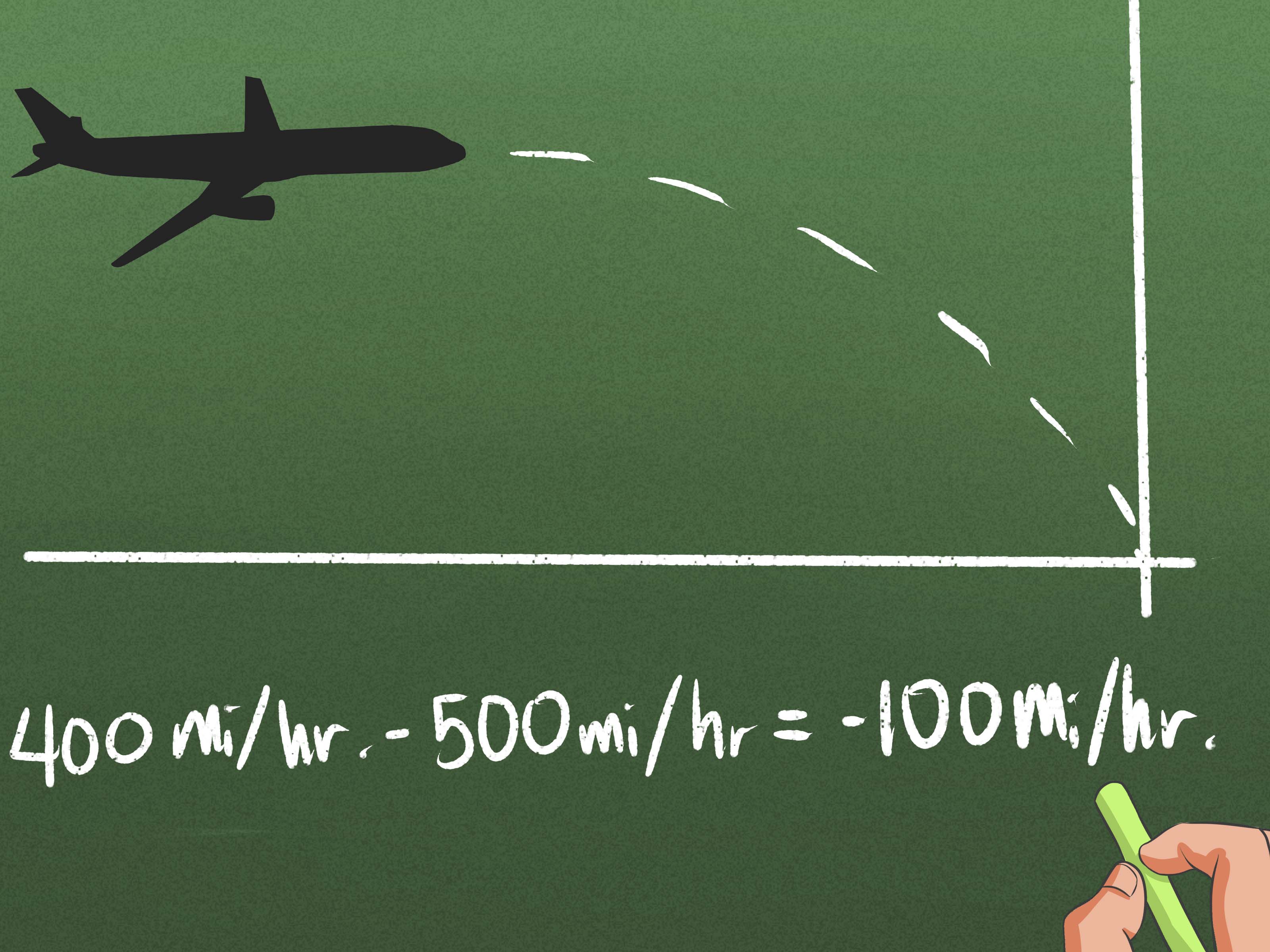

Average acceleration sounds like one of those physics terms that walks into the room wearing a lab coat and carrying a clipboard. But do not panic. At its heart, average acceleration is simply a way to describe how quickly velocity changes over a period of time. If a car speeds up, slows down, changes direction, or does some dramatic movie-trailer maneuver around a corner, acceleration is involved. Physics is just giving that change a number instead of saying, “Wow, that thing really moved differently.”
The main formula for average acceleration is beautifully short: average acceleration = change in velocity ÷ change in time. In symbols, it is usually written as aavg = (vf – vi) / (tf – ti). Here, vf means final velocity, vi means initial velocity, tf means final time, and ti means initial time. That is the whole engine under the hood.
In this guide, you will learn how to find average acceleration in 10 clear steps, how to handle units, how to read a velocity-time graph, and how to avoid common mistakes that make homework problems suddenly look like ancient riddles carved into stone.
What Is Average Acceleration?
Average acceleration is the rate at which velocity changes over a selected time interval. Velocity includes both speed and direction, which means acceleration can happen when an object speeds up, slows down, or changes direction. A car moving faster down a straight road is accelerating. A bicycle slowing at a stop sign is also accelerating, even though everyday language calls it “decelerating.” A satellite moving around Earth is accelerating too, because its direction keeps changing.
The word “average” matters. Average acceleration does not tell you every tiny detail of motion during the interval. It tells you the overall change from the beginning to the end. Think of it like checking your phone battery at noon and again at 5 p.m. You may not know exactly what happened every minute, but you can still calculate the average battery drain. Physics does the same thing with velocity.
The Average Acceleration Formula
The standard formula is:
aavg = Δv / Δt
Because Δ, the Greek letter delta, means “change in,” the formula means:
average acceleration = change in velocity / change in time
Expanded, the formula becomes:
aavg = (vf – vi) / (tf – ti)
The most common SI unit for acceleration is meters per second squared, written as m/s². This unit means “meters per second, per second.” For example, an acceleration of 3 m/s² means the velocity changes by 3 meters per second every second. Not exactly casual dinner conversation, but very useful once a moving object enters the story.
How to Find Average Acceleration: 10 Steps
Step 1: Identify the Initial Velocity
Start by finding the object’s initial velocity, often written as vi or v0. This is the velocity at the beginning of the time interval you are studying. For example, if a car begins at 5 m/s, then the initial velocity is 5 m/s.
Be careful: initial velocity is not always zero. Students sometimes assume every object starts from rest, but physics has a sneaky sense of humor. If a skateboarder is already moving when the clock starts, the initial velocity is whatever their velocity is at that moment.
Step 2: Identify the Final Velocity
Next, find the final velocity, written as vf. This is the velocity at the end of the chosen time interval. If the same car increases its velocity from 5 m/s to 25 m/s, then the final velocity is 25 m/s.
Velocity can be positive or negative depending on direction. If you define east as positive, then west may be negative. This is why direction matters. A velocity of -10 m/s does not mean the object is moving “badly.” It means it is moving in the negative direction according to the chosen coordinate system.
Step 3: Find the Change in Velocity
Now subtract the initial velocity from the final velocity:
Δv = vf – vi
Example: If a car goes from 5 m/s to 25 m/s, then:
Δv = 25 m/s – 5 m/s = 20 m/s
The car’s velocity increased by 20 m/s. That is your change in velocity. If the answer is negative, the velocity decreased in the positive direction or changed toward the negative direction. A negative acceleration is not automatically “wrong”; it may simply mean the object is slowing down or accelerating opposite your positive direction.
Step 4: Identify the Initial Time
Find the starting time, written as ti. In many beginner problems, the initial time is 0 seconds. For example, a problem might say, “A runner starts timing at 0 s and reaches a velocity of 8 m/s at 4 s.” In that case, the initial time is 0 s.
However, graphs and data tables may start at a different time. A velocity-time graph might ask for average acceleration between 2 seconds and 6 seconds. Then your initial time is 2 s, not 0 s. The clock may have been running before your chosen interval began, and physics expects you to notice. Rude? Maybe. Fair? Absolutely.
Step 5: Identify the Final Time
Find the ending time, written as tf. This is the time at the end of the interval. If the car reaches 25 m/s at 4 seconds, then the final time is 4 s.
The final time must match the final velocity. Do not accidentally pair a velocity from one moment with a time from another moment. That is like putting pineapple on the wrong pizza: controversial, confusing, and likely to cause arguments.
Step 6: Find the Change in Time
Subtract the initial time from the final time:
Δt = tf – ti
Example: If the time changes from 0 s to 4 s, then:
Δt = 4 s – 0 s = 4 s
Time intervals should usually be positive in basic average acceleration problems. If you get a negative time interval, double-check the order of your values. You may have subtracted backward, which is a classic physics oops.
Step 7: Divide Change in Velocity by Change in Time
Now plug your values into the average acceleration formula:
aavg = Δv / Δt
Using the car example:
aavg = 20 m/s / 4 s = 5 m/s²
The average acceleration is 5 m/s². This means the car’s velocity increased by an average of 5 meters per second every second during the interval.
Step 8: Include the Correct Units
Units are not decorative sprinkles. They tell you what the number means. Since velocity is measured in meters per second and time is measured in seconds, acceleration is measured in meters per second per second, or m/s².
If your velocity is given in kilometers per hour and time is given in seconds, convert units before calculating if your teacher or problem asks for SI units. For example, 72 km/h equals 20 m/s. Unit conversion is not glamorous, but it prevents answers that look impressive and are completely wrong.
Step 9: Interpret the Sign of the Answer
The sign of acceleration tells you direction. A positive acceleration means the change in velocity points in the positive direction. A negative acceleration means the change in velocity points in the negative direction.
For example, suppose a car moving in the positive direction slows from 30 m/s to 10 m/s in 5 seconds:
aavg = (10 – 30) / 5 = -20 / 5 = -4 m/s²
The average acceleration is -4 m/s². The negative sign shows that the acceleration is opposite the positive direction. In everyday speech, you might say the car is slowing down. In physics, you say it has negative acceleration. Same motion, fancier vocabulary.
Step 10: Check Whether the Answer Makes Sense
Before celebrating, ask whether the answer is reasonable. Did velocity increase? Then acceleration should point in the direction of that increase. Did velocity decrease while the object moved in the positive direction? A negative acceleration may make sense. Did you divide by the correct time interval? Did you include units? Did you accidentally use speed when the problem asked for velocity?
A quick reasonableness check can save you from writing something like 900 m/s² for a bicycle casually rolling down the sidewalk. Unless the bicycle has joined a space program, something probably went wrong.
Example 1: Finding Average Acceleration of a Car
A car speeds up from 12 m/s to 28 m/s in 8 seconds. Find its average acceleration.
Given:
- Initial velocity: 12 m/s
- Final velocity: 28 m/s
- Time interval: 8 s
Solution:
aavg = (vf – vi) / Δt
aavg = (28 – 12) / 8 = 16 / 8 = 2 m/s²
The car’s average acceleration is 2 m/s². This means the car gained 2 meters per second of velocity each second on average.
Example 2: Finding Average Acceleration When an Object Slows Down
A bike slows from 15 m/s to 3 m/s in 6 seconds. Find the average acceleration.
aavg = (3 – 15) / 6 = -12 / 6 = -2 m/s²
The average acceleration is -2 m/s². The negative sign shows that the bike’s acceleration is opposite the positive direction of motion. In normal language, the bike is slowing down. In physics language, it is accelerating negatively. Physics enjoys making simple things sound like they have a graduate degree.
Example 3: Using a Velocity-Time Graph
On a velocity-time graph, average acceleration is the slope of the line connecting two points. The formula for slope is “rise over run,” which in this case means change in velocity over change in time.
Suppose a graph shows velocity increasing from 4 m/s at 2 s to 16 m/s at 8 s. Then:
Δv = 16 – 4 = 12 m/s
Δt = 8 – 2 = 6 s
aavg = 12 / 6 = 2 m/s²
The average acceleration is 2 m/s². If the graph line slopes upward, acceleration is positive. If it slopes downward, acceleration is negative. If the line is horizontal, velocity is constant and acceleration is zero.
Common Mistakes When Calculating Average Acceleration
Mistake 1: Using Velocity Instead of Change in Velocity
Average acceleration is not v / t unless the initial velocity is zero and the initial time is zero. The safer formula is always (vf – vi) / (tf – ti). Subtract first, then divide.
Mistake 2: Ignoring Direction
Velocity is a vector, so direction matters. If an object changes direction, the signs of velocity become important. A ball thrown upward may have positive velocity on the way up and negative velocity on the way down, depending on your coordinate system.
Mistake 3: Forgetting Units
An answer like “4” is lonely and suspicious. Is it 4 m/s²? 4 ft/s²? 4 slices of pizza per homework problem? Always include acceleration units.
Mistake 4: Confusing Average and Instantaneous Acceleration
Average acceleration is measured over a time interval. Instantaneous acceleration is acceleration at a specific moment. If the problem gives two velocities and two times, it is likely asking for average acceleration. If it gives a velocity function and asks for acceleration at one exact time, you may need calculus.
Average Acceleration vs. Instantaneous Acceleration
Average acceleration gives the overall rate of velocity change across an interval. Instantaneous acceleration gives the rate at one instant. Imagine driving through town. Your average acceleration between two traffic lights might be small because you sped up, slowed down, and stopped. But at one moment, when you pressed the gas pedal, your instantaneous acceleration could have been much larger.
For most introductory physics problems, average acceleration is enough. It helps you describe motion clearly without needing every tiny detail. That is why the formula is so common in middle school, high school, and introductory college physics.
Real-Life Places You See Average Acceleration
Average acceleration appears in many everyday situations. Cars accelerate when entering a highway. Trains accelerate after leaving a station. Runners accelerate at the start of a race. Elevators accelerate upward and downward, which is why your stomach occasionally feels like it is negotiating a separate travel plan. Sports, transportation, amusement parks, aerospace engineering, and even phone motion sensors all involve acceleration.
Understanding average acceleration also helps explain safety. A car that changes velocity quickly has a larger acceleration. Seat belts, airbags, helmets, and crumple zones are designed with changes in velocity and time in mind. Increasing the time over which a velocity change happens can reduce the force experienced during a stop or collision. That is physics quietly doing public service work.
Practice Problems
Problem 1
A scooter speeds up from 2 m/s to 14 m/s in 3 seconds. What is its average acceleration?
Answer: (14 – 2) / 3 = 12 / 3 = 4 m/s²
Problem 2
A car slows from 24 m/s to 6 m/s in 9 seconds. What is its average acceleration?
Answer: (6 – 24) / 9 = -18 / 9 = -2 m/s²
Problem 3
A runner’s velocity changes from -3 m/s to 5 m/s in 4 seconds. What is the average acceleration?
Answer: (5 – (-3)) / 4 = 8 / 4 = 2 m/s²
Notice that subtracting a negative number turns into addition. This is where math tries to test your emotional stability, but the rule is simple: keep the signs, follow the formula, and breathe.
Experience-Based Tips for Learning Average Acceleration
One of the best ways to understand average acceleration is to stop treating it like a formula trapped in a textbook and start noticing it in normal life. When you ride in a car, you can feel acceleration before you calculate it. When the car starts moving from a red light, your body leans back slightly because the car’s velocity is increasing forward. When the driver brakes, your body tends to lean forward because the car’s velocity is decreasing. Your body is not doing homework, but it is definitely collecting data.
A helpful learning experience is to use a simple stopwatch and a safe, ordinary motion, such as a rolling toy car on a flat surface. Mark two points on the floor, record the time, and estimate how the speed changes. You may not get laboratory-perfect data, but you will begin to see that acceleration is about change. Students often understand the concept faster when they connect it to something visible instead of only staring at symbols until the symbols start looking personally offended.
Another practical trick is to write the formula in words before writing it in symbols. Start with: “average acceleration equals final velocity minus initial velocity, divided by final time minus initial time.” Then replace the words with numbers. This prevents the most common mistake: grabbing one velocity and dividing it by one time. The formula is not asking for velocity divided by time in general. It is asking how much velocity changed during a specific time interval.
Graphing also makes the topic much easier. Draw a velocity-time graph and choose two points. The slope between those points is the average acceleration. If the line rises, the acceleration is positive. If it falls, the acceleration is negative. If it is flat, the acceleration is zero. This visual method is especially useful for students who find equations dry. A graph turns the formula into a picture, and sometimes the brain says, “Oh, now you tell me.”
When practicing, use realistic examples. A car going from 0 to 30 m/s in 10 seconds has an average acceleration of 3 m/s². A runner going from 0 to 8 m/s in 4 seconds has an average acceleration of 2 m/s². These numbers feel believable. If your answer says a normal school bus accelerates at 600 m/s², your calculator may have obeyed you, but your setup probably betrayed you.
It also helps to remember that negative acceleration is not a villain. Negative simply means direction. If your positive direction is forward, then braking may produce negative acceleration. If your positive direction is upward, gravity near Earth is often written as approximately -9.8 m/s² for vertical motion. The sign tells the story of direction; it does not grade the object’s personality.
Finally, build the habit of labeling every value before calculating. Write vi, vf, ti, and tf clearly. Then calculate Δv and Δt. Only after that should you divide. This small routine makes average acceleration problems much less mysterious. Physics becomes easier when you turn each problem into a checklist instead of a wrestling match.
Conclusion
Finding average acceleration is a straightforward process once you understand the idea behind it. Average acceleration measures how quickly velocity changes over time. Use the formula aavg = (vf – vi) / (tf – ti), keep track of direction, include correct units, and check whether your answer makes sense. Whether you are studying cars, bikes, runners, falling objects, or graphs, the same basic method works.
The big secret is this: average acceleration is not about memorizing a scary equation. It is about comparing “before” and “after.” How did velocity change? How long did that change take? Divide those two pieces, and you have your answer. Physics may still wear a lab coat, but now at least it has introduced itself politely.
Note: This article is written for educational publishing and uses standard introductory physics conventions. For classwork, always follow your teacher’s preferred notation, rounding rules, and sign convention.