
White henna-inspired tattoos have a special kind of magic. They sit on the skin like lace gloves, bridal veils, snowflakes, moonlight, or that one delicate table runner your grandmother guards like it belongs in a museum. Soft, ornamental, and beautifully dramatic without shouting for attention, these designs have become a favorite for weddings, festivals, beach vacations, photo shoots, and anyone who wants body art that feels romantic rather than rebellious.
But before we sprinkle imaginary glitter over everything, let’s clear up one important detail: “white henna” is usually not true henna. Natural henna comes from the Lawsonia inermis plant and stains the skin in orange, red, brown, or deep chestnut tones. White henna-inspired body art, on the other hand, is commonly created with cosmetic body paint, body-safe adhesive, temporary tattoo decals, shimmer, or white pigment products. It mimics the swirling beauty of mehndi patterns without leaving the traditional henna stain.
That difference matters. It affects how long the design lasts, how it should be applied, what it looks like on different skin tones, and how safely you can wear it. When done thoughtfully, white henna-inspired tattoos can look breathtakinglike elegant lace stitched directly onto the skin, minus the sewing needle and the questionable life choices.
What Are White Henna-Inspired Tattoos?
White henna-inspired tattoos are temporary or semi-temporary body art designs that borrow from the visual language of traditional henna and mehndi. Think mandalas, paisleys, vines, dots, florals, finger trails, wrist cuffs, anklets, back pieces, and lace-like ornamental borders. The difference is the color and material. Instead of staining the skin with plant-based dye, white versions usually sit on top of the skin.
Most white henna designs fall into three main categories. The first is body-paint style white henna, applied with a cone or applicator bottle using a mixture of cosmetic adhesive and white pigment. The second is white temporary tattoo stickers or decals, often sold in sheets for bridal parties, festivals, and beachwear. The third is permanent white ink tattooing, where white pigment is inserted into the skin by a professional tattoo artist. These three may look similar in photos, but they are very different experiences.
For this article, the focus is mainly on white henna-inspired temporary tattoos and white ink designs that imitate lace, not traditional plant henna. That distinction helps readers avoid confusion, especially because the word “henna” is often used loosely in beauty marketing. A white design may look like henna, but it does not behave like natural henna.
Why White Henna Designs Look So Elegant
White has a built-in softness. It can look bridal, celestial, beachy, icy, minimalist, or luxurious depending on placement and pattern. When paired with henna-inspired motifs, the result feels detailed without feeling heavy. Black ink can be bold and graphic; brown henna feels earthy and traditional; white henna-inspired tattoos look airy, ornamental, and almost fabric-like.
The lace effect comes from contrast and negative space. A good white henna design does not need to cover every inch of skin. It uses dots, loops, petals, and fine lines to create the illusion of embroidery. On deeper skin tones, the contrast can be striking and luminous. On lighter skin tones, the effect is more subtle, like a secret design that appears beautifully in the right light. Either way, it has the kind of graceful detail that makes people say, “Wait, is that a tattoo or designer lace?” That is the moment. That is the drama. That is why we are here.
Popular White Henna-Inspired Tattoo Styles
1. Bridal Lace Hands
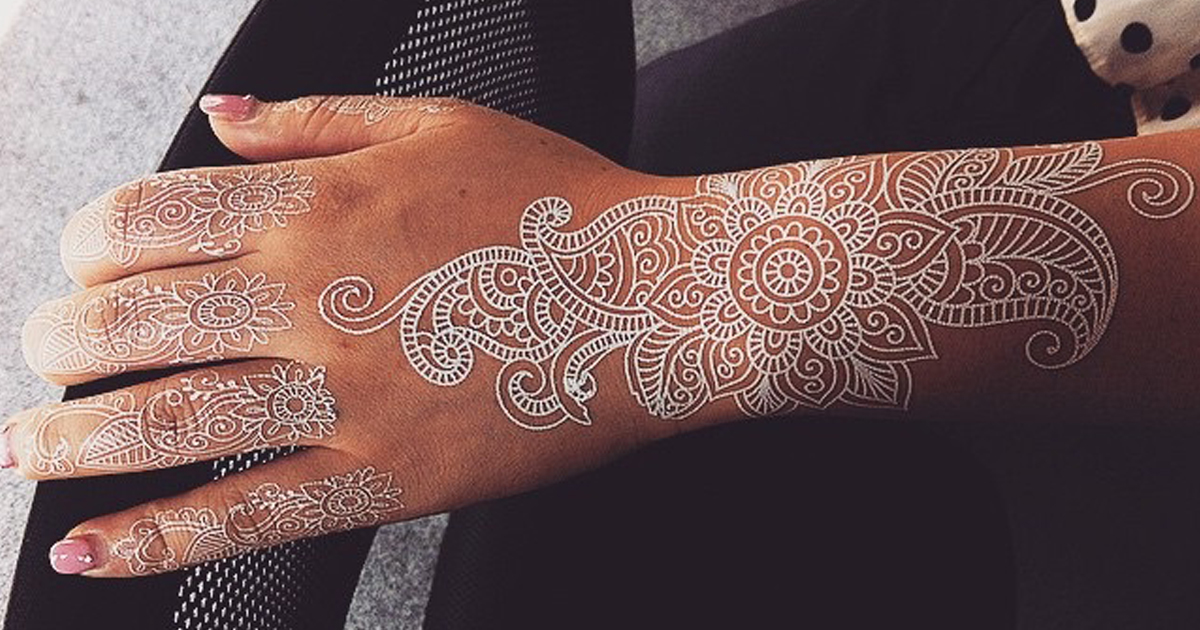
One of the most popular looks is the white bridal hand design. It often covers the fingers, back of the hand, and wrist with mandalas, flowers, dots, and lace-like chains. This style is especially beautiful for brides who want a soft, modern look that coordinates with a white gown, pearl jewelry, or sheer gloves.
A white hand tattoo can be minimal, with just finger lines and tiny floral accents, or elaborate enough to look like a custom couture glove. The best versions leave breathing room around the knuckles and fingertips so the design moves naturally with the hand.
2. Wrist Cuffs and Bracelet Designs
White henna-inspired wrist cuffs are perfect for people who want a jewelry effect without actual jewelry. These designs wrap around the wrist like lace bracelets, sometimes extending slightly onto the hand or forearm. They work beautifully for weddings, garden parties, music festivals, and summer outfits where metal bracelets might feel too heavy.
Common details include scalloped borders, repeating dots, tiny leaves, and dangling chain shapes. The result looks like a bracelet that politely refuses to jingle every time you reach for iced coffee.
3. Shoulder and Collarbone Lace
White designs on the shoulder or collarbone have a romantic, editorial quality. They photograph beautifully with off-the-shoulder dresses, swimsuits, and simple tank tops. Floral mandalas, crescent moons, ornamental vines, and lace fans are especially flattering in this area because they follow the body’s natural curves.
This placement is also ideal for people who want the design to be visible only with certain outfits. It is elegant, not loud. It whispers, “I planned this,” without needing a megaphone.
4. Back and Spine Designs
A white henna-inspired back tattoo can look breathtaking, especially when placed along the spine, upper back, or shoulder blades. Symmetrical mandalas, lotus patterns, lace wings, and trailing vines create a graceful silhouette. These designs are popular for bridal photography, beachwear, maternity shoots, and formal events.
The key is proportion. A tiny design can get lost on the back, while an oversized one may look costume-like. A skilled artist or well-chosen temporary tattoo sheet will balance the design with the wearer’s body shape and outfit.
5. Anklets and Foot Lace
White henna-inspired foot tattoos are made for sandals, beach days, and barefoot celebrations. They often include anklet bands, toe details, mandalas on the top of the foot, and delicate chains that mimic jewelry. On vacation, this style gives “goddess walking through a resort lobby” energy, even if you are mostly walking to the breakfast buffet.
Foot designs do face more friction from shoes and movement, so temporary versions may wear off faster here. For best results, apply them before an event and avoid tight straps that rub directly over the pattern.
White Henna vs. Natural Henna vs. White Ink Tattoos
Understanding the differences can save you from disappointment and possible skin irritation. Natural henna stains the skin and usually appears orange at first before deepening to reddish-brown or brown. It can last around one to two weeks depending on the paste, skin chemistry, placement, and aftercare.
White henna-inspired body art does not stain the skin. It sits on top like makeup or adhesive decoration. Because of that, it is usually shorter-lived, often lasting one day to a few days depending on the product and how careful you are. It is wonderful for events, photos, and short-term styling, but it is not the right choice if you want a long-lasting stain.
Permanent white ink tattoos are different again. They require a licensed tattoo artist and involve pigment being placed into the skin. White ink can look subtle, raised, or scar-like after healing, and it may fade, yellow, or become less visible over time. Anyone considering permanent white ink should consult an experienced artist, look at healed examples, and understand that fresh tattoo photos do not always show the long-term result.
Safety First: What to Know Before Trying White Henna-Inspired Tattoos
Body art should be beautiful, but it should also be safe. The biggest safety rule is simple: know what is going on your skin. Products sold as “henna” can vary widely. True henna is plant-based and stains in warm reddish-brown tones. Black henna may contain para-phenylenediamine, often called PPD, which is associated with serious allergic reactions in some people. Brightly colored or mystery “henna” products can also be questionable if the ingredients are unclear.
For white henna-inspired tattoos, check that the product is intended for cosmetic skin use. Avoid craft glue, acrylic paint, wall paint, random internet mixtures, or anything that sounds like it belongs in a garage rather than on a wrist. Body-safe adhesive and cosmetic-grade pigments are the safer route.
Patch testing is a smart move, especially if you have sensitive skin. Apply a small amount of the product to a discreet area and wait to see if redness, itching, burning, swelling, bumps, or irritation occurs. If your skin complains, listen to it. Skin is not being dramatic; skin has receipts.
How Long Do White Henna-Inspired Tattoos Last?
The lifespan depends on the type of design. White temporary tattoo stickers may last a few days if applied properly and kept away from heavy friction. White body paint and adhesive designs may last through an event or slightly longer, depending on the formula. Permanent white ink tattoos can last for years, but their visibility and tone may change as they heal and age.
Placement plays a major role. Designs on hands, fingers, feet, and wrists tend to fade or peel faster because those areas move, wash, sweat, and rub against surfaces constantly. Designs on the shoulder, upper back, chest, or thigh may last longer because they experience less friction.
For temporary white henna-inspired tattoos, treat them like delicate lace. Avoid scrubbing, oil-based lotions, exfoliants, tight clothing, and long soaking baths. Basically, do not challenge the tattoo to a survival contest. It is pretty, not a superhero.
Best Occasions for White Henna-Inspired Tattoos
White henna designs shine at weddings. Brides may choose them as a modern alternative to traditional mehndi, especially when they want a monochrome look that pairs with white gowns, pearls, or lace sleeves. Bridesmaids can wear matching wrist or hand designs for a coordinated but non-permanent detail.
Festivals are another natural fit. White henna-inspired tattoos pair well with flowing dresses, metallic accessories, glitter makeup, flower crowns, and bohemian styling. They are also popular for beach vacations because they look beautiful against sun-kissed skin and swimwear, though it is important to remember that water, sunscreen, and sand may shorten the life of temporary designs.
Photo shoots are perhaps the most forgiving setting. Since many white henna-inspired tattoos are temporary, they are perfect for fashion shoots, maternity portraits, engagement photos, music videos, and social media content. You get all the visual impact without a lifetime commitment. It is like borrowing a couture accessory from your own imagination.
Design Ideas That Look Like Elegant Lace
Floral Lace
Floral white henna tattoos are timeless. Roses, lotus flowers, peonies, daisies, and tiny vines can be arranged into lace-like clusters. For a delicate look, choose thin lines and small petals. For a bolder statement, use larger flowers with dotwork and ornamental borders.
Mandala Lace
Mandalas are ideal for hands, shoulders, backs, and sternum designs. Their circular symmetry creates a polished centerpiece, while surrounding dots and petals create the lace effect. A white mandala on the shoulder can look like a snowflake decided to become jewelry.
Finger Lace
Finger designs are small but high-impact. Lines, dots, rings, and tiny leaf trails can make fingers look decorated without actual rings. This is a favorite bridal look because it photographs beautifully during bouquet shots, ring close-ups, and hand-holding portraits.
Moon and Star Lace
Celestial white henna designs use crescents, stars, suns, and tiny constellations. They work especially well on wrists, collarbones, ankles, and upper backs. The mood is dreamy and mystical without looking like you raided a planetarium gift shop.
Minimal Lace Accents
Not every design needs to be elaborate. A small white vine around the wrist, a tiny mandala behind the ear, or a short lace border near the collarbone can feel modern and refined. Minimal white henna-inspired tattoos are perfect for people who want elegance with restraint.
How to Choose the Right Placement
Placement should match your outfit, event, and tolerance for maintenance. If you want a design that shows in photos, hands, wrists, shoulders, collarbones, and feet are strong choices. If you want something more private, try the ribs, upper thigh, back of the neck, or spine.
For weddings, think about the dress first. A strapless gown pairs well with shoulder or collarbone designs. Long lace sleeves may compete with hand tattoos, while a simple satin gown can make white body art stand out beautifully. For beachwear, ankle and foot designs feel relaxed and playful. For festivals, wrists, forearms, and chest designs are easy to show off.
Also consider movement. Designs over joints, fingers, and feet may crack or fade sooner. Larger flat areas generally hold temporary body art better. If your tattoo needs to survive dancing, sweating, hugging, and emotionally dramatic cake cutting, placement matters.
Aftercare Tips for Temporary White Henna-Inspired Designs
Temporary white henna-inspired tattoos require gentle treatment. Start with clean, dry skin. Avoid applying heavy lotion or oil before application because it may prevent the design from sticking. Once the design is in place, give it time to set according to the product instructions.
To make it last longer, avoid rubbing the area. Pat skin dry instead of wiping after washing. Skip exfoliating scrubs, body oils, and rough towels. If the design is on your foot or ankle, choose shoes that do not scrape across the pattern. If it is on your wrist, be careful with tight watchbands or bracelets.
Removal depends on the product. Some temporary tattoos come off with oil-based remover, while adhesive body art may require gentle cleansing. Never scrape aggressively. If the design refuses to leave, do not panic. It is temporary body art, not a haunted roommate. Be patient and gentle.
Aftercare Tips for Permanent White Ink Tattoos
Permanent white ink tattoos need professional aftercare. Follow the instructions from your tattoo artist, keep the area clean, avoid picking at scabs, and protect the tattoo from sun exposure during healing. Once fully healed, sunscreen helps reduce fading and discoloration.
White ink can be unpredictable. It may heal more subtly than expected, blend into the skin, or change tone over time. People with different skin tones may see very different results. Before booking, ask your artist for photos of healed white ink tattoos, not only fresh ones. Fresh white ink often looks brighter than it will after the skin settles.
Common Mistakes to Avoid
The first mistake is assuming white henna is natural henna. It usually is not. The second mistake is buying products without reading ingredients. If a product does not clearly state that it is intended for skin, skip it. Your body is not a test wall.
The third mistake is choosing overly complex designs for areas with lots of movement. Tiny details may blur, crack, or disappear faster on fingers and feet. The fourth mistake is expecting permanent white ink to look exactly like a temporary white decal. Skin tone, healing, pigment quality, and artist technique all affect the final result.
The fifth mistake is over-accessorizing. White henna-inspired tattoos already look like jewelry. Pair them with simple rings, pearls, thin chains, or minimalist outfits. Let the lace effect breathe. Elegance loves space.
White Henna-Inspired Tattoos on Different Skin Tones
One reason white henna-inspired tattoos are so loved is their versatility. On deep and rich skin tones, white designs can look bold, luminous, and high-contrast. Floral lace, mandalas, and wrist cuffs often photograph beautifully. On medium skin tones, white designs can create a soft golden-hour glow, especially when paired with shimmer or metallic accents.
On lighter skin tones, the look may be more subtle. Instead of dramatic contrast, the design can resemble raised lace, frost, or delicate embroidery. This can be stunning for bridal styling, especially when paired with sheer fabrics and pearl details.
The best approach is to choose design weight based on contrast. If the white is very visible on your skin, fine lines may be enough. If the white blends in more, slightly thicker lines or larger motifs may help the design show clearly.
Experience Section: What It Feels Like to Wear White Henna-Inspired Lace
The first time someone wears a white henna-inspired tattoo, the reaction is often a mix of delight and surprise. It does not feel like wearing a heavy accessory. It feels like discovering that your skin can temporarily join the fashion department. A white lace wrist cuff can make a simple black dress feel styled. A delicate mandala on the back of the hand can turn ordinary gesturesholding a glass, opening a door, reaching for your phoneinto tiny cinematic moments.
For brides, the experience can be especially emotional. Traditional henna has deep cultural significance in many communities, but not every bride wants the same color palette or level of permanence. White henna-inspired designs offer a soft alternative for modern bridal looks. They can echo lace sleeves, veil embroidery, pearl hairpins, or floral appliqué on a gown. During photos, the details can make close-up shots feel intentional and personal. The design becomes part of the styling story rather than an afterthought.
At festivals, the experience is more playful. White henna-inspired tattoos pair beautifully with movement: dancing, walking, waving, laughing, and pretending you are not tired after six hours on your feet. A wrist or shoulder design catches the light in quick flashes. People may ask where you got it, whether it is permanent, and whether they can get one too. This is your moment to become the unofficial ambassador of temporary lace tattoos. Please accept the imaginary sash with dignity.
For beach vacations, white henna-inspired tattoos feel relaxed and photogenic. An ankle design with sandals, a shoulder mandala with a swimsuit, or a small collarbone vine with a linen shirt can create an effortless look. The practical side is that water, sunscreen, and sand may shorten the life of the design. The emotional side is that even one perfect sunset photo can make it worthwhile. Not everything beautiful has to last forever; sometimes it just needs to survive brunch and a breeze.
People who prefer subtle body art often enjoy white henna-inspired tattoos because they are decorative without feeling intense. A black tattoo may feel too bold for a first experiment, while white body art feels softer and more temporary. It gives you permission to try a placement before committing to a permanent tattoo. You might discover that you love wrist designs but dislike finger details, or that shoulder art makes you feel elegant while foot art disappears too quickly under sandals. Temporary body art is a low-risk style laboratory.
The biggest lesson from wearing white henna-inspired lace is that preparation makes the difference. Apply it to clean skin. Choose the placement based on your outfit. Avoid lotion beforehand. Carry yourself carefully for the first hour. And perhaps most importantly, manage expectations. This is not natural henna, and it is not meant to last for weeks. It is a special-event beauty detail, like false lashes, a silk scarf, or lipstick that somehow survives coffee but not tacos.
When the design begins to fade, it can feel a little sad, especially if it looked amazing. But that temporary quality is part of the charm. White henna-inspired tattoos let you become a slightly different version of yourself for a day or two: more romantic, more dramatic, more “I might own a villa in Santorini,” even if your actual plan is laundry. They are wearable art with an expiration date, and sometimes that is exactly what makes them fun.
Conclusion
Stunning white henna-inspired tattoos that look like elegant lace are more than a passing beauty trend. They are a graceful blend of body art, fashion styling, bridal detail, and temporary self-expression. Whether you choose a delicate wrist cuff, a floral hand design, a shoulder mandala, or a lace-like back piece, the appeal lies in the softness of white against skin and the intricate patterns borrowed from henna-inspired artistry.
The smartest way to enjoy them is to understand what they are. White henna is usually not natural henna. Temporary versions sit on top of the skin and are best for short-term beauty moments, while permanent white ink tattoos require serious thought, a skilled artist, and realistic expectations. Safety matters, ingredients matter, and aftercare matters. But when chosen well, these designs can look breathtakinglike lace, light, and a little bit of magic decided to meet on your skin.