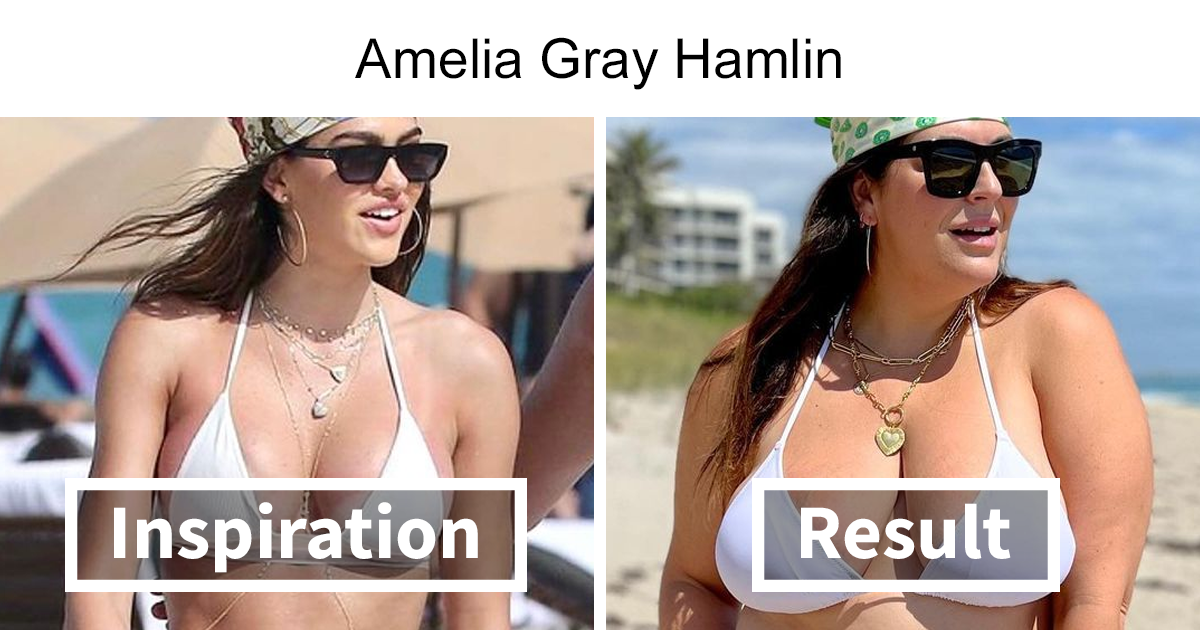

There is a tired old myth floating around the internet, lurking in dressing rooms, and occasionally shouting at us from social media: that a woman has to be skinny to be stylish, attractive, confident, or worthy of attention. Thankfully, that myth is getting exposed for what it is: outdated nonsense with good lighting.
The truth is much more interesting. Looking good has never belonged to one body type. It comes from presence, personal style, posture, grooming, energy, and the rare superpower known as wearing clothes that actually fit. A woman can be curvy, midsize, plus-size, athletic, petite, broad-shouldered, soft, strong, or gloriously hard to categorize and still look fantastic. In fact, some of the best-dressed women in real life are not trying to become smaller at all. They are simply dressing like they already belong in the room.
That is what makes the idea behind this title so powerful. When a woman steps out looking polished, expressive, and completely comfortable in her own skin, she challenges a beauty standard that has overstayed its welcome. She proves that style is not a size. Confidence is not a clothing tag. And beauty does not begin only after somebody loses ten pounds, buys a trendy green juice, and apologizes for taking up space.
Why This Message Matters More Than Ever
Body image is not a shallow topic. It affects how people move through the world, how they talk to themselves, what they wear, how often they participate in social events, and sometimes whether they believe they deserve to be seen at all. When women are taught that thinness is the main ticket to beauty, they often start treating their bodies like endless renovation projects. The mirror becomes a performance review. The closet becomes a courtroom. And one bad photo can feel like a federal indictment.
That pressure does not come out of nowhere. For years, mainstream beauty culture pushed a very narrow look as the gold standard. Even now, despite more diverse representation, many women still absorb the idea that being “put together” and being “small” are basically the same thing. They are not. A good outfit does not ask for your BMI before it does its job.
More people are finally rejecting this mindset. Instead of chasing perfection, they are choosing body acceptance, body neutrality, and practical confidence. That shift matters because it moves the conversation away from punishing appearance standards and toward a healthier question: how do you want to feel in your body and in your clothes?
Looking Good Is About Style, Not Shrinking
The most obvious proof that you do not have to be skinny to look good is standing right in front of us every day. Women in all sizes look amazing when they dress with intention. They know their proportions. They understand what cuts flatter them. They choose fabrics that drape well, colors that light up their features, and silhouettes that feel like themselves. That is not luck. That is style literacy.
Some women discover this after years of hiding in oversized black clothing that was never really their aesthetic. Others learn it when they stop buying “goal jeans” and start buying jeans for the body they have now. And that moment can be weirdly revolutionary. Suddenly, instead of asking, “How do I make myself fit this trend?” the question becomes, “How do I make fashion work for me?”
That is when the magic happens. A structured blazer can sharpen a look. A belt can create definition. A well-cut dress can highlight movement and shape. Monochrome outfits can lengthen the frame. Tailoring can transform something from “almost” to “wow.” None of that requires thinness. It requires self-awareness, experimentation, and the courage to stop dressing for an imaginary future version of yourself.
The Secret Nobody Should Have Had To Reveal
Here is the secret that should have been common knowledge all along: clothes are supposed to fit the person. The person is not supposed to suffer for the clothes. If a pair of pants digs in, gaps strangely, or makes you feel like a wrapped sandwich, the pants are the problem. Not your body. Fashion has sold this backward logic for a long time, and many women paid for it with their confidence.
Once that mental switch flips, getting dressed becomes less dramatic and much more fun. Instead of punishment, style becomes communication. Instead of camouflage, clothing becomes expression. Instead of “How can I hide?” the mood becomes “How do I want to show up today?”
Confidence Changes How People See You
It is easy to dismiss confidence as one of those fluffy words people toss around when they cannot define beauty. But confidence really does change presentation. It affects posture, eye contact, expression, movement, and voice. A woman who feels good in what she is wearing often looks better because she is no longer fighting herself every five seconds.
That does not mean she wakes up every morning feeling like a runway icon with wind machine privileges. Real confidence is usually less dramatic than that. It is quieter. It sounds like choosing the outfit that fits instead of the one that sends you into negotiations with your zipper. It looks like going to dinner without tugging at your shirt every eight seconds. It feels like wearing the swimsuit, showing up for the photos, and refusing to spend the whole event thinking about your stomach from profile view.
Confidence also grows when women stop waiting for permission. You do not need to be thinner before you wear bold color. You do not need a smaller waist before you try a body-skimming dress. You do not need to earn style through self-criticism. Frankly, self-loathing has had a long run as a fashion consultant, and its results were terrible.
The Problem With Tying Beauty Only To Thinness
When thinness becomes the main standard of attractiveness, women end up judging themselves by a moving target. Trends change. Beauty ideals shift. Algorithms reward extremes. One decade wants “heroin chic,” another wants curves in the “right” places, and another wants a face that somehow looks natural after three filters and two syringes. If you build your self-worth on chasing those standards, you are signing up for a game designed for you to lose.
That pressure can also create shame. Women may avoid social events, dating, shopping, or being photographed because they think they are not ready to be seen yet. Ready for what? Existing? Appearing in daylight? Ordering pasta without issuing a statement? The emotional cost of appearance pressure is real, and it can rob people of joy long before it changes anything physical.
There is also a practical contradiction in thinness-only beauty culture: it ignores how beauty actually works in everyday life. Most people do not walk around ranking strangers by dress size. They notice energy, style, friendliness, humor, grooming, and how someone carries themselves. A woman with a radiant smile, good accessories, and a great coat often leaves a bigger impression than someone who technically fits an old-fashioned beauty ideal but looks uncomfortable and disconnected.
Body Neutrality Can Be More Helpful Than Forced Positivity
For some women, “love your body every second of every day” is not realistic. They do not want to stand in front of the mirror giving TED Talks to their thighs. Fair enough. That is where body neutrality can help.
Body neutrality is the idea that your body does not have to be your favorite thing about you in order to deserve respect. You can appreciate what your body does without feeling constant pressure to adore how it looks. That may sound less exciting than full-on body positivity, but for many people, it is more sustainable.
In daily life, body neutrality can look like this: wearing clothes because they are comfortable and expressive, not because they create the smallest possible outline; eating because your body needs fuel, not because you are trying to “undo” dinner; moving because it helps your mood, strength, and energy, not because you are trying to punish yourself for having a body in the first place.
That mindset often creates better style, too. When you are not obsessing over disguising every inch of yourself, you make clearer choices. You buy what fits. You notice quality. You focus on line, texture, shape, and color. You start dressing like a person, not a problem.
How Women Actually Prove This In Real Life
The woman in this title could be a model, creator, office manager, teacher, mom, student, entrepreneur, or the best-dressed lady in line for coffee on a Tuesday. The point is not celebrity. The point is visibility. Every time a woman in a non-thin body dresses boldly, posts a photo, walks into a room without apologizing, or wears what she genuinely likes instead of what supposedly “slims,” she pushes back against a limiting story.
She proves it when she wears white pants even though some ancient fashion rule claimed that white is only for women with the metabolism of a hummingbird. She proves it when she chooses a fitted dress instead of a sack. She proves it when she gets tailored pieces instead of settling for whatever technically zips. She proves it when she treats style as art instead of punishment.
And she proves it most of all when she refuses to postpone her life. No more “I’ll buy better clothes after I lose weight.” No more “I’ll go to the beach next year.” No more “I hate every photo of myself, so I’ll stay behind the camera.” A woman who stops delaying joy is already rewriting the rules.
Specific Examples Of What Helps
What tends to work has less to do with size and more to do with intention. Clothes with structure usually photograph well. Proper bra fit can change the line of an entire outfit. Tailoring can make affordable clothing look expensive. Necklines can balance proportions. High-rise trousers can create a clean silhouette. Statement earrings can pull attention upward. Comfortable shoes improve posture more than people realize. Skin care, hair care, and neat grooming can elevate a look before the outfit even enters the chat.
Most important, women who look good usually wear things that make sense for their actual lives. They are not playing dress-up for a fantasy version of themselves. They are developing a signature. That might be polished minimalist, artsy layers, romantic dresses, denim and blazers, sporty basics, vintage glamour, or “I own one leather jacket and it does all the emotional heavy lifting.” Style becomes believable when it feels lived in.
What This Conversation Should Never Become
There is one thing worth making clear: rejecting thinness as the only beauty ideal is not the same as insulting thin women. The goal is not to replace one body hierarchy with another. Beauty is not more valid because it is curvy, and it is not more valid because it is slim. The healthiest message is much simpler: people do not need to meet a single body standard to be attractive, stylish, or worthy of respect.
It is also important not to confuse appearance with health. A person’s size does not reveal everything about their habits, fitness, confidence, or mental well-being. That is one reason body-based assumptions are so unreliable. Looking good and feeling good may overlap, but they are not identical, and nobody should have to audition for basic dignity through appearance.
If body image struggles start to interfere with daily life, relationships, eating, movement, or mental health, that is a sign to seek help from a qualified medical or mental health professional. Support is not dramatic. It is smart.
The Bigger Lesson
The real lesson behind “Woman Proves That You Don’t Have To Be Skinny To Look Good” is not just about fashion. It is about freedom. Freedom from the idea that beauty only counts when it comes in a smaller package. Freedom from waiting to participate in life. Freedom from dressing for shame instead of self-expression. Freedom from treating your body like an unfinished apology.
Women look good when they look like themselves on purpose. When they stop shrinking their personalities to match shrinking beauty standards. When they choose fit over punishment, presence over comparison, and style over fear. The woman who proves this is not performing a miracle. She is doing something much more radical: she is refusing to disappear.
And honestly, that is always a good look.
Experiences That Show Why This Message Hits Home
Ask enough women about this topic and the same kinds of stories show up again and again. One woman says she spent years buying clothes a size too small as “motivation,” only to realize all she had really purchased was an expensive collection of guilt. Another says she avoided sleeveless tops until one hot July afternoon when she finally decided that sweating through a cardigan was not the noble act she had made it out to be. She wore the tank top. Nothing tragic happened. Nobody fainted. The sky remained intact. She just felt more comfortable, and that tiny act changed the tone of the whole summer.
Another woman remembers being the funny friend, the helpful friend, the stylish friend even, but never allowing herself to think of herself as the beautiful friend because she had absorbed the idea that beauty had a weight limit. It took seeing other women with bodies like hers show up in fitted dresses, sharp tailoring, bright lipstick, and unapologetic confidence for her to realize that the rule was fake. Not difficult. Not harsh. Fake.
There are women who say the turning point came in a fitting room. They tried on the larger size and suddenly the outfit looked better, not worse. The world did not end because the number on the tag changed. The jeans fit. The waist sat correctly. The fabric moved properly. Instead of feeling defeated, they felt relieved. It was never their job to squeeze themselves into a brand’s sizing logic and call that success.
Some experiences are social. A woman posts a photo she almost deletes because she can see her stomach, her arms, or the curve of her face. Instead of mockery, she gets comments from friends saying she looks radiant, happy, and strong. Another goes to a wedding in a body-hugging dress after years of hiding in loose cuts and realizes that nobody is analyzing her the way she analyzes herself. People are busy dancing, eating cake, complimenting her earrings, and asking where she got the dress. That discovery can feel like emotional jet lag. Wait, you mean everyone was not conducting a secret committee meeting about my upper arms?
Then there are the women who become role models without trying. A daughter watches her mother stop criticizing her own body in mirrors. A friend notices another friend wearing a swimsuit without apology and feels brave enough to do the same. A coworker starts dressing with more color and shape after seeing someone else do it first. Confidence is contagious in that way. It gives other people permission to loosen their grip on the same old insecurities.
These experiences matter because they reveal something bigger than fashion advice. They show that many women were never actually lacking beauty. They were lacking permission. Once they stop waiting for the “right” body to begin living, style becomes easier, photos become less scary, and ordinary life becomes more fun. That is the quiet proof at the center of this whole idea: you do not have to be skinny to look good. You just have to stop handing the definition of “good” to a standard that was never fair to begin with.
Conclusion
A woman does not become stylish, attractive, or worthy only after becoming smaller. She looks good when she dresses with intention, moves with confidence, and stops treating her body like a problem to solve before life can begin. Thinness may still dominate some corners of beauty culture, but real life keeps offering better evidence. Women of every size look incredible every day because beauty is broader than fashion myths and far more human than a number on a tag.
The most powerful thing a woman can do may be surprisingly simple: wear the outfit, take the photo, show up to the event, and refuse to apologize for existing in the body she has right now. That is not giving up. That is growing up. And in a culture obsessed with shrinking women, that kind of self-possession is both stylish and deeply refreshing.