
The Vespasian Blue Rug is not the sort of rug that quietly lies on the floor and hopes someone notices it. It has opinions. It has history. It has the calm, architectural confidence of a Roman floor mosaic translated into a soft, blue-toned luxury rug for modern interiors. In other words, it is what happens when ancient archaeology, contemporary design, and very patient hand-knotting decide to share a room.
Created by designer Luke Irwin as part of his Mosaic Collection, The Vespasian Blue Rug draws from the visual language of Roman mosaics: repeating geometry, worn surfaces, subtle irregularity, and a sense that beauty becomes more interesting when time leaves a few fingerprints. The design is especially appealing because it does not imitate history in a costume-party way. It interprets it. The result is a blue area rug that feels antique and modern at once, refined but not fussy, dramatic without marching into the room wearing a cape.
For homeowners, designers, and collectors searching for a statement rug with texture, story, and staying power, The Vespasian Blue Rug offers more than decoration. It anchors a room, softens hard architecture, and adds a layer of cultural depth that a plain rug simply cannot deliver. A plain rug says, “Here is the sofa.” This rug says, “Here is the sofa, and also maybe a villa, a forgotten mosaic, and a glass of wine at sunset.”
What Is The Vespasian Blue Rug?
The Vespasian Blue Rug is a Roman-inspired, hand-knotted rug associated with Luke Irwin’s Mosaic Collection. The collection was inspired by the discovery of an ancient Roman mosaic beneath Irwin’s property in Wiltshire, England. That discovery became the creative spark for a group of rugs designed to echo the geometry, weathering, and fragmentary elegance of historic mosaic floors.
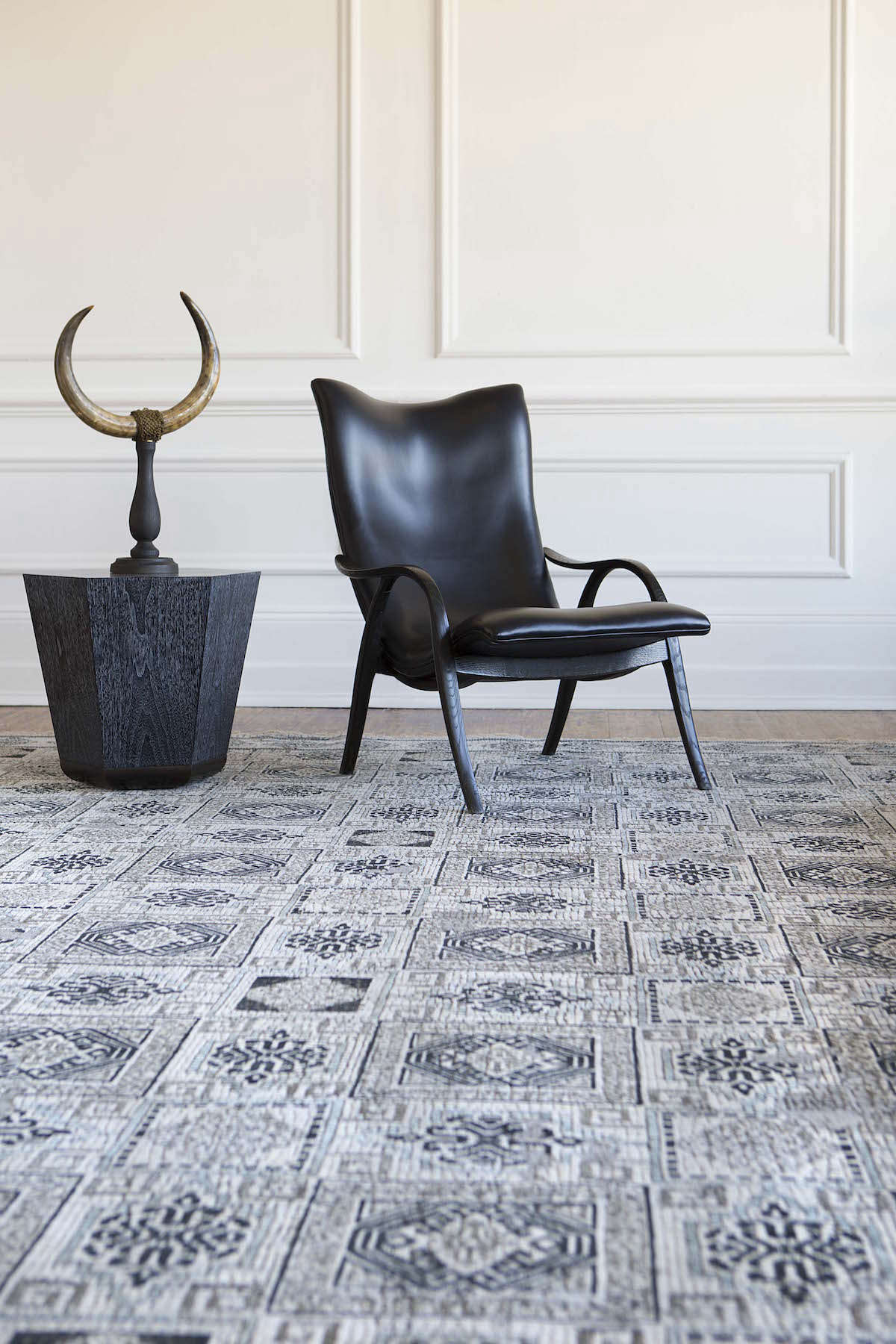
The Vespasian design is known for its repeating circular motif, bordered layout, monochrome structure, and subtly distressed surface. The blue version introduces a cooler palette, making the pattern feel softer, more atmospheric, and easier to place in modern homes. Instead of shouting with color, it hums. That is often the difference between a trendy rug and a rug that still looks intelligent ten years later.
Like many high-end bespoke rugs, The Vespasian Blue Rug is typically described as hand-knotted and made to order, with options involving fine materials such as wool, silk, and sometimes cashmere depending on specification. This matters because the material mix affects sheen, durability, softness, and how the rug responds to light. Wool gives structure and resilience. Silk adds luminosity and detail. Cashmere, when used, brings a level of softness that makes bare feet feel like they have accidentally upgraded their lifestyle.
The Story Behind the Mosaic Collection
The most fascinating part of The Vespasian Blue Rug is its origin story. Many rugs are inspired by “nature,” “travel,” or “heritage,” which can sometimes mean someone looked at a leaf and opened a mood board. This rug has a more specific foundation. The Mosaic Collection was developed after Luke Irwin uncovered a Roman mosaic beneath the ground near his farmhouse. The find was linked to a villa site dating back many centuries, and the discovery gave Irwin a rare opportunity: to turn an archaeological encounter into a living design language.
Roman mosaics were not merely decorative extras. They were architectural surfaces, status symbols, and storytelling devices. In villas, baths, courtyards, and public spaces, mosaics used small pieces called tesserae to form patterns, borders, scenes, and optical effects. Their durability is part of their magic. Paintings fade, fabrics disintegrate, furniture collapses, but stone floors can survive under soil for astonishing lengths of time, waiting patiently like the world’s most elegant time capsule.
The Vespasian Blue Rug borrows from that tradition without becoming a literal replica. Its beauty lies in translation. Stone becomes fiber. Ancient flooring becomes contemporary softness. Weathered geometry becomes pattern underfoot. The rug feels as though it belongs in a room with plaster walls, linen curtains, oak floors, marble tables, bronze lamps, or a very smug cat who has claimed the best chair.
Why the Blue Palette Works So Well
Blue is one of the most versatile colors in interior design. It can feel coastal, classical, modern, moody, peaceful, or crisp depending on the shade and surrounding materials. In The Vespasian Blue Rug, the blue palette helps soften the historic structure of the mosaic pattern. The geometry gives discipline; the color gives ease.
A blue rug can also function as a bridge between warm and cool elements in a room. Pair it with white walls and it becomes fresh. Place it beneath walnut furniture and it becomes rich. Use it with stone, plaster, or aged brass and it begins to look almost archaeological. Add cream upholstery and the rug turns serene. Add charcoal or black accents and it becomes sharper, more gallery-like, and just a little mysterious.
The best thing about a sophisticated blue rug is that it rarely feels seasonal. Bright coral may have a summer personality. Forest green can lean autumnal. But blue, especially a softened or weathered blue, travels well through time. It works in January, July, and that odd week in April when your home cannot decide whether it is cozy or breezy.
Design Details: Pattern, Texture, and the Beauty of Wear
The Vespasian Blue Rug is especially compelling because it celebrates imperfection. Many modern interiors struggle when everything is too new, too polished, and too symmetrical. The room may be expensive, but it can feel like no one has ever laughed there. A rug with a distressed mosaic effect changes that immediately. It introduces age, depth, and a sense of lived-in intelligence.
The repeating circular structure gives the rug rhythm. The border provides containment, which makes it useful for anchoring furniture. The distressed surface prevents the pattern from feeling stiff. This is important because geometric rugs can sometimes become bossy. The Vespasian Blue Rug avoids that problem by looking time-softened, as if the design has been gently edited by centuries of footsteps.
Texture also plays a major role. In hand-knotted rugs, every knot contributes to the final image. When silk and wool are combined, the surface can catch light in different ways, giving the rug a layered, shifting appearance. During the day, the blue tones may appear airy and subtle. At night, under lamps, the silk elements may glow more visibly. This is the interior-design equivalent of good lighting in a restaurant: suddenly everything looks better, including your decision-making.
Where The Vespasian Blue Rug Looks Best
Living Room
In a living room, The Vespasian Blue Rug can serve as the main visual anchor. Because its pattern is structured but not overly loud, it works well beneath a sofa arrangement. A large size allows the front legs of sofas and chairs to rest on the rug, creating a unified seating zone. For a generous room, an 8-by-10 or 9-by-12 layout often feels more balanced than a small rug floating under a coffee table like a nervous island.
Dining Room
In a dining room, the bordered mosaic pattern can beautifully frame a table. The key is scale. The rug should extend far enough beyond the table so chairs remain on the rug when pulled out. This prevents the dreaded chair-leg cliffhanger, a small domestic drama nobody asked for. The blue palette pairs especially well with wood dining tables, stone tops, and upholstered chairs in ivory, taupe, gray, or deep navy.
Bedroom
In a bedroom, The Vespasian Blue Rug can create a calm, grounded atmosphere. Place it under the lower two-thirds of the bed, allowing generous space on both sides for the pattern to show. The blue tones support a restful mood, while the mosaic structure keeps the room from becoming bland. Think crisp bedding, warm wood nightstands, a linen bench, and enough texture to make the room feel designed rather than merely assembled.
Entry or Gallery Space
Because the rug has a historical, architectural quality, it can also work beautifully in a wide hallway, gallery-like entry, or library. In these spaces, it behaves almost like a textile artwork. It draws people inward and gives transitional areas a sense of purpose. After all, hallways deserve beauty too; they are not just indoor roads for carrying laundry.
How to Style The Vespasian Blue Rug
The easiest way to style The Vespasian Blue Rug is to let it lead but not dominate. Because the design already contains pattern, surrounding pieces should complement rather than compete. Sofas in cream, oatmeal, smoke gray, or soft brown are natural partners. Leather chairs add warmth. Black metal or bronze accents bring definition. Marble or travertine tables reinforce the ancient-material connection without becoming too literal.
For walls, warm white, limewash, pale gray-blue, or soft plaster tones work beautifully. If you prefer color, muted ochre, clay, or olive accents can balance the coolness of the blue. The goal is harmony, not a room that looks as if every object was ordered from the same color chart while under supervision.
Pattern mixing is possible, but it should be done carefully. Striped pillows, small-scale checks, or textured solids can work well. Avoid placing another large geometric pattern too close to the rug unless you are intentionally creating a maximalist room. Otherwise, the floor and the furniture may begin arguing, and in interior design, the rug usually wins.
Materials and Craftsmanship Matter
A rug like The Vespasian Blue Rug is not simply printed with a pattern. Its value comes from craftsmanship. Hand-knotting is a slow, skill-heavy process in which artisans build the design knot by knot. Depending on the complexity, size, and material, a hand-knotted rug can take months to complete. That time investment creates durability, nuance, and detail that machine-made rugs often cannot match.
Wool is prized for its resilience and natural comfort. It handles daily use well and has a warmth that works across many interior styles. Silk offers a finer visual effect, allowing delicate details and subtle sheen. When used together, wool and silk create contrast: matte against luminous, sturdy against delicate, practical against poetic. That combination is especially effective for a mosaic-inspired rug because it can mimic the flicker of individual tesserae.
This is also why a bespoke rug should be chosen with the room’s real life in mind. A formal sitting room can accommodate a more delicate composition. A family room with children, pets, snacks, and mysterious crumbs from nowhere may need a more practical material balance. Luxury is wonderful, but even luxury should understand popcorn.
Care Tips for a Hand-Knotted Blue Rug
Proper care helps preserve the beauty of a hand-knotted rug. Vacuum gently with low suction and avoid aggressive beater bars, especially when silk is involved. Rotate the rug every few months to reduce uneven wear and sunlight exposure. Blot spills immediately rather than rubbing them, because rubbing can push liquid deeper into the fibers and make the stain feel much more committed to its new life.
Use a quality rug pad beneath the rug. A pad prevents slipping, reduces friction, improves comfort, and helps the rug lie smoothly. In high-sun rooms, consider window treatments to limit fading. For deep cleaning, professional rug cleaning is usually the safest route, particularly with wool and silk blends. A handmade rug is not the place to test a dramatic cleaning hack from a suspicious video.
Furniture placement also matters. Use protectors beneath heavy legs to avoid crushing the pile. If you rearrange furniture occasionally, you can reduce permanent pressure marks. Small habits like these help a luxury rug age gracefully, which is exactly the point. The Vespasian Blue Rug is designed to look touched by time, not attacked by neglect.
Who Should Choose The Vespasian Blue Rug?
The Vespasian Blue Rug is ideal for people who want a rug with story, structure, and subtle drama. It suits homeowners who appreciate ancient references but do not want a room that feels like a museum gift shop. It also appeals to designers who need a strong anchor piece that can work in both contemporary and traditional interiors.
This rug is especially suitable for interiors that mix old and new: a modern sofa with antique side tables, a minimalist room with architectural plaster walls, or a classic home updated with cleaner lines. It also works well for anyone who loves blue but wants something more sophisticated than a simple navy rectangle.
It may not be the best choice for someone seeking a cheap, washable, no-worry rug for a mudroom. That is not an insult; every rug has its destiny. Some rugs are born to catch muddy sneakers. The Vespasian Blue Rug is born to hold a room together with quiet authority and make guests ask, “Where did you find that?”
Design Analysis: Why It Feels Timeless
The Vespasian Blue Rug feels timeless because it uses three design principles that rarely go out of style: geometry, history, and restrained color. Geometry gives the eye order. History gives the object meaning. Restrained color makes it livable. Together, these elements produce a rug that does not depend on trend cycles.
Its mosaic-inspired surface also gives it emotional texture. Perfectly new objects can look impressive, but imperfect objects often feel more human. The faded, distressed quality suggests memory. It allows a room to feel collected rather than decorated in one frantic weekend. That is the secret of many beautiful interiors: they look as if they evolved, even when every decision was carefully planned.
Another reason the rug works is that blue has enormous range. In this context, blue does not feel playful or nautical unless the surrounding decor pushes it that way. Instead, it feels mineral, architectural, and calm. It suggests stone, shadow, water, and sky. That makes it easier to pair with natural materials, which are central to many high-end interiors today.
Experience Notes: Living With The Vespasian Blue Rug
Imagine placing The Vespasian Blue Rug in a living room with pale walls, a low linen sofa, a walnut coffee table, and one oversized ceramic lamp. At first, the rug may seem like the finishing touch. After a few days, however, it becomes clear that it is actually the foundation. The furniture begins to make more sense around it. The blue tones cool the room, the mosaic rhythm gives the floor movement, and the distressed texture makes the space feel less staged.
The first experience most people notice is visual calm. The rug has pattern, but not the frantic kind. It does not demand that every pillow match it. It simply gives the room a center. In daylight, the blue can feel airy and almost chalky, especially near plaster, stone, or pale oak. In evening light, the texture becomes richer and the pattern more intimate. The rug seems to change mood without changing personality, which is a rare and useful quality in home design.
Walking across a hand-knotted rug also creates a different relationship with a room. It feels substantial. The floor is no longer just the thing beneath the furniture; it becomes part of the design experience. Guests may not immediately know why the room feels more layered, but they will sense it. A rug like this adds a quiet luxury that does not rely on shine, logos, or theatrical gestures. It is confident enough to avoid showing off.
In practical daily life, The Vespasian Blue Rug works best when the rest of the room gives it breathing space. A cluttered arrangement can bury its pattern. Too many competing colors can flatten its elegance. But with thoughtful styling, it becomes surprisingly flexible. It can support a clean modern space, warm up a traditional room, or add historical depth to a transitional interior. It is also forgiving in the way good distressed patterns often are. Minor signs of use do not ruin the look; they become part of the rug’s conversation with time.
One of the most rewarding experiences is how the rug influences the choices around it. You may find yourself choosing better lamps, simpler curtains, more textured pillows, or artwork with quieter confidence. That is the sign of a strong anchor piece: it improves the room’s decision-making. Suddenly, the impulse to buy a random shiny side table at midnight feels less persuasive. The rug has standards.
For families, the experience depends on placement and expectations. In a formal living room, library, bedroom, or adult sitting area, the rug can be enjoyed with relatively low stress. In a high-traffic family room, it needs more attentive care, a good rug pad, regular rotation, and a sensible food policy. Red pasta sauce and pale silk details are not natural friends. Still, a well-made rug is meant to be lived with, not worshipped from behind velvet ropes.
The emotional experience may be the most important. The Vespasian Blue Rug brings a sense of continuity into the home. It reminds us that floors have always mattered. Ancient Romans used mosaic floors to tell stories, display taste, and give architecture beauty underfoot. This rug continues that idea in a softer, modern form. It makes a room feel considered, grounded, and quietly memorable. In a world full of disposable decor, that is no small achievement.
Conclusion
The Vespasian Blue Rug is more than a beautiful blue area rug. It is a carefully designed bridge between ancient Roman mosaic tradition and contemporary luxury interiors. With its hand-knotted craftsmanship, weathered geometric pattern, and sophisticated blue palette, it offers depth, texture, and timeless appeal. It can anchor a living room, calm a bedroom, elevate a dining space, or add architectural character to a hallway or library.
Its greatest strength is balance. It is historic without being old-fashioned, patterned without being noisy, luxurious without being flashy, and blue without feeling cold. For anyone seeking a Roman-inspired rug with personality, craftsmanship, and long-term design value, The Vespasian Blue Rug is a compelling choice. It proves that the right rug does not merely cover a floor. It gives the room a story to stand on.
Note: This article was written for web publication and synthesized from real product, rug-making, Roman mosaic, interior design, and rug-care information. Source links have been intentionally omitted as requested.