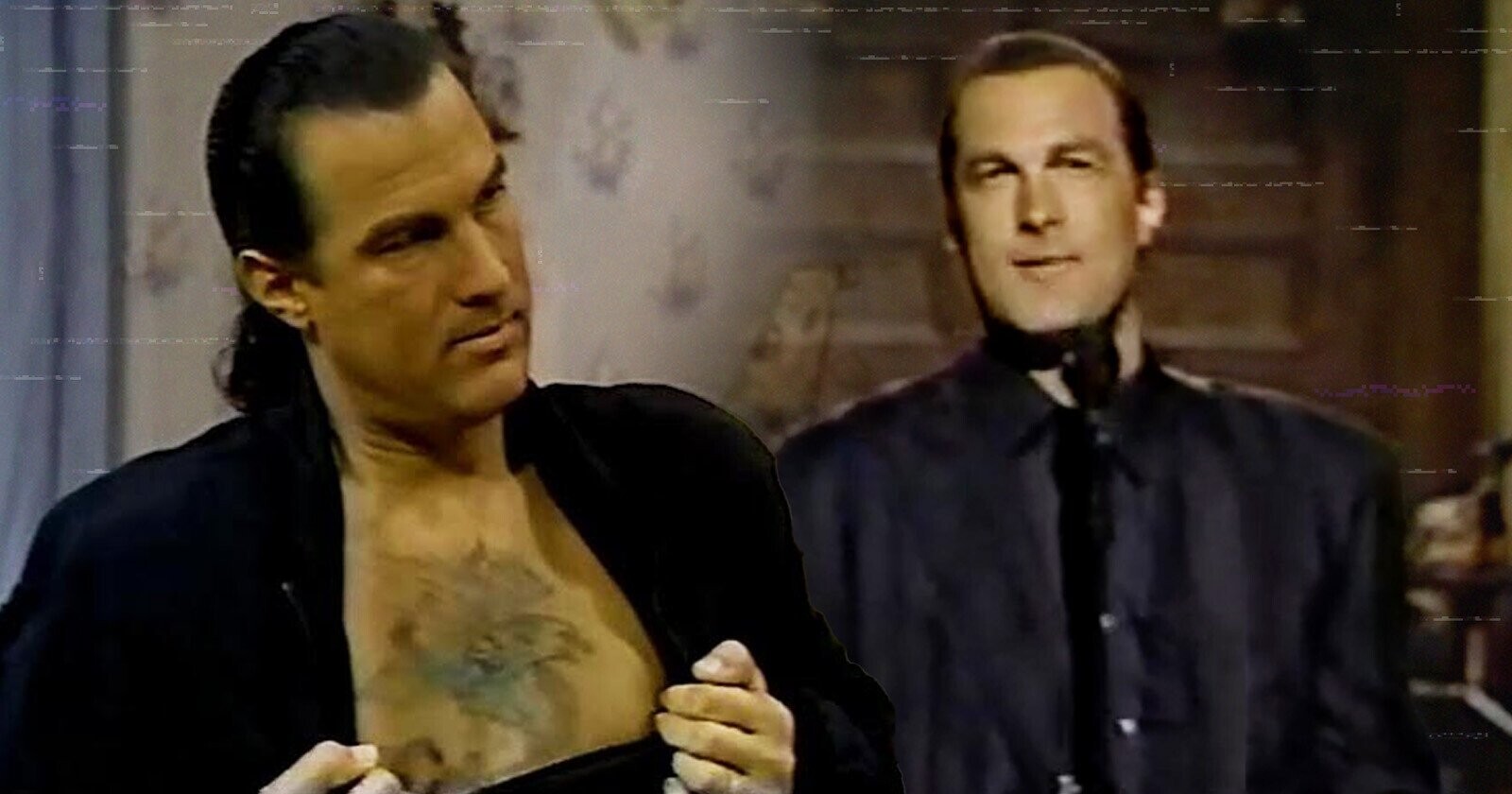
Everything We Know About Steven Seagal Being the Worst ‘Saturday Night Live’ Host Ever

Every long-running TV institution has its legends. Saturday Night Live has the cowbell, the coneheads, the motivational speaker living in a van down by the river, and, somewhere in a locked filing cabinet labeled “Do Not Rebook,” Steven Seagal. His 1991 hosting appearance has become one of the most infamous nights in SNL historynot because it was dangerous live television, not because a sketch broke the internet before the internet had learned to walk, but because so many people involved later seemed to agree on one thing: this was the comedy equivalent of trying to parallel park a tank in a gift shop.
The phrase “worst SNL host ever” gets tossed around whenever a celebrity looks stiff, misses the joke, or reads cue cards like they are decoding an ancient curse. But Seagal’s reputation is different. His episode has been repeatedly discussed by former cast members, writers, critics, and SNL historians as a uniquely rough week. The story includes reported clashes with the writing staff, rejected sketch ideas, a general lack of comic flexibility, and the unforgettable on-air jab from Lorne Michaels during Nicolas Cage’s 1992 monologue: when Cage worried he might be the biggest jerk ever to host, Michaels reassured him that the title belonged elsewhere. That elsewhere, of course, was Steven Seagal.
The Setup: Why SNL Booked Steven Seagal in 1991
To understand the disaster, you have to remember where Steven Seagal stood in early 1991. He was not yet the meme-friendly pop culture figure younger audiences know from internet jokes, odd interviews, and action-movie nostalgia. At the time, he was a bankable action star. His movies, including Above the Law, Hard to Kill, and Marked for Death, had positioned him as Hollywood’s ponytailed aikido answer to the late-’80s and early-’90s action boom.
SNL, meanwhile, has always loved booking celebrities who are “hot right now.” Sometimes that works beautifully. A host with zero sketch background can surprise everyone by being loose, self-aware, and willing to look ridiculous. Other times, the host arrives with the energy of a person who believes comedy is something that happens to other people. According to many later accounts, Seagal fell into the second category, then dug a basement under it.
His episode aired on April 20, 1991, during Season 16. Michael Bolton was the musical guest, which gives the episode a very specific early-’90s aroma: leather jackets, big ballads, and a live comedy show trying to make a humor-resistant action star seem fun for 90 minutes. The cast included heavy hitters such as Dana Carvey, Phil Hartman, Mike Myers, Chris Farley, Chris Rock, Adam Sandler, Kevin Nealon, Tim Meadows, Julia Sweeney, Rob Schneider, and David Spade. In other words, this was not a weak bench. If the night went badly, it was not because Studio 8H had forgotten how jokes worked.
What Went Wrong Behind the Scenes?
He Reportedly Did Not Want to Make Fun of Himself
The best SNL hosts understand the secret handshake: the show is not a red carpet. It is a comedy blender. You enter with dignity, and by Saturday night, you may be wearing a wig, arguing with a puppet, or pretending to be a confused goat farmer with three lines and a mustache. The job is not to look cool. The job is to help the sketch win.
Seagal, according to several accounts from people connected to the show, was not eager to play that game. One famous point of friction involved the “Hans and Franz” characters played by Dana Carvey and Kevin Nealon. The muscle-bound Austrian bodybuilder parody had joked about being able to beat up Steven Seagal. Reportedly, Seagal did not like the idea of appearing in a sketch that made him look weak or silly. That matters because SNL’s comedy often depends on celebrities understanding that a joke at their expense can actually make them more likable.
Think of the hosts who have succeeded on SNL: athletes, movie stars, singers, and politicians who leaned into the absurdity. They let the audience see the human being behind the public image. Seagal’s public image was stoic, lethal, and spiritually serious. Unfortunately, “stoic, lethal, and spiritually serious” is not usually the ideal mood board for a sketch show that might ask you to sing, dance, or get hit with fake mashed potatoes.
The Writing Process Reportedly Became a Tug-of-War
SNL is famously built in a pressure cooker. Hosts arrive Monday. Writers pitch ideas. Scripts are written, rewritten, cut, revived, dressed, rehearsed, wounded, and occasionally rescued by the live audience. A good host does not need to be a professional comedian, but they do need to trust the process. Seagal’s week is remembered as one in which that trust was in short supply.
Former SNL writer Bob Odenkirk has described the experience as a nightmare, and other SNL veterans have echoed the idea that Seagal was unusually difficult. The recurring theme is not merely “he was not funny.” Lots of hosts are not naturally funny. The bigger problem, based on the recollections, was that he was not especially collaborative. Comedy is a team sport wearing a fake mustache. If one player refuses to pass the ball, the whole sketch limps.
There are also reports that Seagal brought in or pushed his own ideas, including concepts the writers found strange, self-serving, or inappropriate. One often-discussed rejected pitch involved a therapy scenario that staff reportedly considered offensive and unsuitable for the show. The details vary depending on the retelling, but the larger point is consistent: the SNL team did not see Seagal as a host who made their job easier. He seemed to want the show to bend around his persona rather than letting his persona be bent into comedy.
The Episode Itself: A Comedy Night With the Parking Brake On
The surviving descriptions of the April 20, 1991 episode read like a tour through a show trying to maneuver around its host. Sketches included a “Pumping Up With Hans and Franz” cold open, Seagal’s monologue, a “Nico Tenelli” action parody, “The Dark Side with Nat X,” “Weekend Update with Dennis Miller,” and a few commercial-style pieces and recurring bits. On paper, that sounds like a normal SNL episode. In practice, it has become notorious for awkward timing, low energy, and a host who did not appear comfortable surrendering to the silliness.
The monologue is a useful symbol of the problem. Rather than instantly telling viewers, “I’m in on the joke,” Seagal’s stage presence was stiff and self-serious. He reportedly sang and played guitar, which could have been charming if framed with irony or warmth. Instead, it has often been remembered as one more piece of evidence that the episode had wandered into a strange valley between action-star vanity project and live sketch comedy.
The “Nico Tenelli” sketch leaned into Seagal’s tough-guy brand. The title alone sounds like a fictional action hero created by someone who has just learned about leather coats. But parody works best when the target is sharpened. If the host resists being mocked, the joke becomes mushy. The audience can sense when a sketch is pulling punches. SNL is live television, and live television has no mercy. If a premise is weak, the silence arrives immediately, sits down in the front row, and orders popcorn.
Why Lorne Michaels’ Comment Became the Final Stamp
The legend of Steven Seagal as SNL’s worst host did not fully harden until the following season, when Nicolas Cage hosted the Season 18 premiere in September 1992. During Cage’s monologue, he joked that the audience might think he was the biggest jerk ever to host the show. Lorne Michaels, appearing beside him, calmly corrected him by naming Steven Seagal.
That moment matters because Lorne Michaels is not known for casually burning bridges on live television without purpose. SNL depends on celebrities, studios, publicists, musicians, and networks. Publicly naming a bad host is not the usual business model. For Michaels to make that joke on the show itself gave the story an official-seeming seal. It transformed backstage gossip into SNL canon.
Since then, Seagal’s name has become shorthand for the host who did not get it. David Spade, Tim Meadows, Bob Odenkirk, and other SNL-adjacent voices have all helped keep the story alive through interviews, podcasts, books, and entertainment coverage. The details differ from one account to another, but the reputation is remarkably consistent. In a show that has had hundreds of hosts across five decades, that kind of consensus is not easy to earn. Congratulations, in the most cursed way possible.
Was Steven Seagal Truly the Worst SNL Host Ever?
“Worst” is subjective, of course. Comedy fans can argue forever. Some viewers point to other infamous hosts, from performers who looked terrified to celebrities who went off-script in disastrous ways. SNL history is full of strange nights. Live TV attracts chaos the way a white shirt attracts spaghetti sauce.
But Seagal’s case remains unusually strong for three reasons. First, the criticism comes from inside the building. This is not just viewers decades later saying the episode aged badly. It is writers and performers who lived through the week describing him as difficult and humorless. Second, the episode is remembered not merely as bad, but as unpleasant to make. A host can bomb and still be beloved by the staff if they try hard, listen, and laugh at themselves. Seagal’s legend suggests the opposite. Third, Lorne Michaels’ public joke gave the story a rare official boost.
In other words, Seagal may not have delivered the single worst individual sketch in SNL history. That competition is crowded, sweaty, and wearing a wig. But as a total hosting packagebehind-the-scenes friction, awkward performance, poor self-parody, and long-term infamyhe remains the heavyweight champion of “please do not make us do this again.”
Why Action Stars Can Struggle on SNL
Seagal’s episode also reveals something broader about celebrity hosting. Action stars often build their brands around control. They are unbeatable, unreadable, and unbothered. They enter rooms slowly, speak in low tones, and defeat villains who have made the tactical error of owning wrists. That can be entertaining in a movie. On SNL, however, control is often the enemy.
Sketch comedy rewards looseness. It rewards the star who knows that looking foolish for three minutes can be better PR than looking cool for 90. Dwayne Johnson became a great SNL host because he understood that his size and charisma were funniest when the show undercut them. Adam Driver works because he commits completely, whether he is playing a villain, a dad, or a man having an emotional crisis over oil. Even hosts with limited comedy backgrounds can shine if they arrive ready to play.
Seagal, by contrast, reportedly treated his image like a museum artifact. Do not touch. Do not tilt. Do not place near jokes. The result was an episode trapped between the show’s need for absurdity and the host’s desire to remain untouchable. That tension is why the story has lasted. It is not just “Steven Seagal was bad on SNL.” It is “Steven Seagal demonstrated the exact personality traits that make someone bad for SNL.”
How the Internet Kept the Legend Alive
For years, the Seagal episode had an almost “forbidden tape” reputation. Fans traded memories, clips, and recaps. Because the full episode was not always easy to find in official circulation, curiosity grew. Nothing makes pop culture fans more interested in a thing than the suggestion that somebody would prefer they not watch it. Tell the internet there is a bad episode hiding in the attic, and the internet will arrive with flashlights, snacks, and a 47-minute video essay.
Modern coverage has turned the episode into a recurring comedy-history topic. Articles, podcasts, SNL retrospectives, and YouTube breakdowns revisit the same question: how bad could it really have been? The answer depends on your tolerance for awkward live television. Some viewers watch it and see a fascinating artifact. Others see a slow-motion workplace meeting where the guest speaker refuses to understand the PowerPoint.
The legend also fits into a larger internet fascination with celebrity ego. Audiences love stories about famous people who could not read the room. Seagal’s SNL appearance is almost too perfect as a cautionary tale: a tough-guy star enters America’s biggest sketch show and apparently discovers, in real time, that the jokes are not there to protect his aura.
What SNL Hosts Can Learn From the Seagal Disaster
The lesson is simple: be game. That is the whole job. You do not have to be the funniest person in the room. In fact, you probably are not. The writers, cast, cue-card team, costume department, directors, and stage managers are all part of a machine designed to make you look better than you would look alone. Fighting that machine is like arguing with a dishwasher. Even if you win, everyone is wet and disappointed.
A great SNL host listens. A great host understands that the writers are not trying to destroy their image; they are trying to find the comic pressure point that makes the audience laugh. A great host also knows the difference between being laughed at and being laughed with. The magic happens when a celebrity lets the audience in on the joke. Seagal’s episode is remembered as the opposite: a host guarding his image so closely that there was no room left for fun.
That is why the “worst host ever” label sticks. It is not just about one bad monologue or one clumsy sketch. It is about a mismatch between personality and format. SNL is a weekly circus. The host is invited to be ringmaster, clown, lion, and occasionally furniture. If someone arrives willing to be only the lion, the circus gets weird fast.
Experience Notes: What This Story Feels Like From the Audience Side
Watching or reading about the Steven Seagal SNL episode is oddly useful for anyone who has ever worked on a creative team. Most people will never host a live NBC sketch show in front of millions of viewers. Most people will, however, experience some version of the Seagal problem: one person enters a collaborative room with a fixed idea of how they must be seen, and suddenly everyone else has to tiptoe around that image.
You see it in offices, school projects, theater rehearsals, video shoots, podcasts, small businesses, and even family events. Someone wants the result to be great, but they also want to control every angle, avoid every joke, and reject every suggestion that makes them look less than heroic. At first, the team tries to adapt. Then the energy drops. Then the best ideas become safer, smaller, and less alive. Eventually, everyone is just trying to survive the meeting without making eye contact with the coffee machine.
That is why Seagal’s SNL story remains entertaining beyond celebrity gossip. It captures a universal creative truth: confidence is useful only when paired with flexibility. A confident performer who can laugh at himself becomes magnetic. A confident performer who cannot laugh at himself becomes a locked door with sunglasses. The audience senses the difference immediately.
There is also a lesson for writers and editors. When you are shaping content around a public figure, brand, or personality, the funniest and most memorable material often comes from honest contrast. The more polished someone’s image is, the more delightful it can be to reveal the human underneath. That does not mean humiliating the person. It means letting them breathe. The best celebrity comedy says, “Yes, this person is famous, but they are also in on the joke.”
Seagal’s episode, by most accounts, lacked that oxygen. The jokes could not fully attack the image, and the image could not relax enough to become funny. So the whole thing got stuck. That stuck feeling is familiar to anyone who has watched a presentation where the speaker refuses to adjust, a group project where one member insists on being the hero, or a dinner toast that somehow becomes a TED Talk about discipline.
The experience also reminds viewers that failure can become more famous than success. Many excellent SNL hosts are warmly remembered by fans, but Seagal’s disastrous reputation has lasted for decades because bad live television has a strange afterlife. A good episode makes people laugh once. A legendarily bad episode makes people ask, “Wait, how did this happen?” That question keeps the story alive.
In a weird way, Seagal gave SNL something valuable: a benchmark. Every future difficult host can be measured against him. Every nervous celebrity can take comfort in knowing the bar is not perfection. The real goal is much easier: show up, play along, trust the writers, and do not make Lorne Michaels say your name as a punchline one year later.
Conclusion: The Worst Host Legend Still Has Legs
More than three decades later, Steven Seagal’s 1991 appearance remains one of the most talked-about disasters in Saturday Night Live history. The episode itself was awkward, but the mythology around it is what made it immortal. Reported backstage tension, stiff on-screen energy, rejected ideas, cast recollections, and Lorne Michaels’ famous joke all combined to create a pop culture cautionary tale.
Was he objectively the worst SNL host ever? Comedy does not come with laboratory results. But if the title were awarded by reputation, staying power, and the number of former insiders willing to say, “Yes, that was rough,” Steven Seagal would not just win. He would slowly walk to the podium, whisper something about discipline, and somehow make the acceptance speech feel longer than the episode.
Note: This article is written as original, web-ready entertainment commentary based on widely reported SNL history, episode records, and public recollections from people associated with the show. No source links are included inside the article body for cleaner publication formatting.