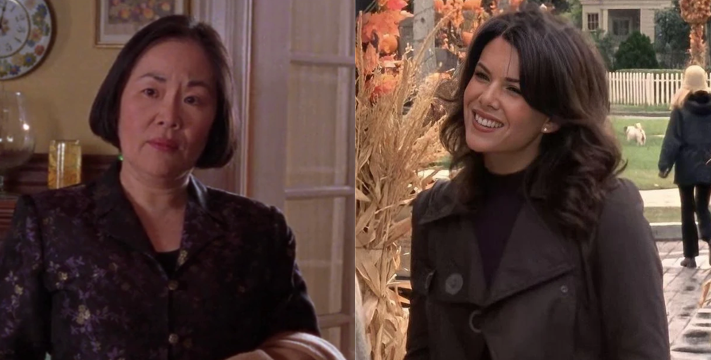
‘Gilmore Girls’ Star Emily Kuroda Reveals the Truth About Working With Lauren Graham

For years, Gilmore Girls fans have wondered what it was really like on that famously fast-talking, coffee-powered set. Was the banter as effortless as it looked? Did the actors need oxygen tanks after every scene? And most importantly, what was it like to share screen space with Lauren Graham, the woman who made Lorelai Gilmore feel less like a TV character and more like your funniest, most caffeinated aunt?
Emily Kuroda, beloved by fans as the formidable Mrs. Kim, recently gave viewers a sweet behind-the-scenes answer. While revisiting the Gilmore Girls pilot on Scott Patterson’s podcast, Kuroda described working with Lauren Graham as natural, quick, intuitive, and full of mutual respect. In other words, the “truth” is not a dramatic Hollywood feud hiding behind an antique cabinet. It is much better: two sharp performers found a rhythm almost instantly, even while navigating a cluttered set that sounds like it was one loose chair away from becoming a slapstick insurance claim.
That small revelation matters because Gilmore Girls has always lived and died by chemistry. The show’s dialogue moved like a marching band on espresso, but the emotions had to feel grounded. When Kuroda says working with Graham felt easy, she is pointing to one of the quiet engines of the series: actors who could keep up with Amy Sherman-Palladino’s language while still making every glance, pause, and raised eyebrow count.
Emily Kuroda’s Honest Take on Lauren Graham
During the podcast conversation, Kuroda looked back on her early scenes with Graham in the pilot episode, especially the moments set inside Kim’s Antiques. Those scenes introduced Mrs. Kim as a strict, watchful mother and business owner who did not exactly roll out the emotional welcome mat for Lorelai Gilmore. On the page, that dynamic could have been stiff. On screen, it became instantly funny because Graham and Kuroda treated the tension like a perfectly timed dance.
Kuroda explained that the two did not need heavy rehearsal for their scene work. Graham was quick, responsive, and easy to play opposite. The set itself was reportedly packed with furniture, chairs, pathways, and camera movement, but the performers found the rhythm anyway. That detail is wonderfully Gilmore Girls: emotional precision happening in the middle of decorative chaos. Very Stars Hollow. Very “please do not trip over that antique table while delivering a joke at 90 miles per hour.”
What makes Kuroda’s comment so meaningful is that she was not praising Graham in a generic, red-carpet way. She was describing practical acting chemistry. A performer who is “easy” to work with gives you something usable in the moment. A performer who is “quick” catches the rhythm before it drops. A performer who is intuitive makes a scene feel alive rather than assembled. That is exactly the kind of partner an actor needs on a show where one missed beat can turn sparkling banter into verbal traffic.
Why Their Scene Chemistry Worked So Well
Lauren Graham’s performance as Lorelai Gilmore required a rare combination of warmth, speed, intelligence, vulnerability, and comic attack. Lorelai could make a joke about coffee, dodge family trauma, comfort Rory, flirt with Luke, and annoy Taylor Doose before most people have found their car keys. Graham made that look easy, but the role was technically demanding.
Kuroda’s Mrs. Kim operated at the opposite temperature. She was stern, controlled, economical with emotion, and capable of ending a conversation with one look. Put Lorelai and Mrs. Kim in the same room and you get contrast: Lorelai bubbles; Mrs. Kim freezes the room. Lorelai jokes; Mrs. Kim evaluates. Lorelai wiggles through discomfort; Mrs. Kim installs discomfort like new flooring.
That contrast is why their scenes worked. Graham’s speed gave Kuroda something to resist. Kuroda’s stillness gave Graham something to bounce against. The comedy came not from both actors trying to be loud, but from both understanding the tension between their characters. Mrs. Kim’s suspicion of Lorelai was part cultural caution, part parental anxiety, and part comedy gold. Lorelai, meanwhile, understood that Mrs. Kim was not easily charmed, which only made her try harder. Naturally, this is the Lorelai Gilmore equivalent of waving a red cape in front of a very organized bull.
The Pilot Set the Tone for a Lasting TV Friendship
The Gilmore Girls pilot first aired in 2000 and introduced viewers to Stars Hollow, Lorelai and Rory’s mother-daughter bond, Luke’s Diner, Kim’s Antiques, and the show’s now-famous verbal rhythm. Emily Kuroda appeared as Mrs. Kim from the beginning, immediately giving Lane Kim’s home life a memorable structure. Lane, played by Keiko Agena, was Rory’s best friend, a music-loving teen hiding CDs, dreams, and teenage rebellion under the watchful eye of her deeply religious mother.
Mrs. Kim could have been written as a one-note “strict parent” stereotype. Instead, Kuroda gave her a specific moral universe. Mrs. Kim was severe, yes, but she was also consistent, protective, and, in her own thundercloud way, loving. Over the series, viewers watched her relationship with Lane evolve from conflict to reluctant understanding. She remained Mrs. Kim, which means she did not suddenly start wearing a leather jacket and managing a punk club, but she grew. That evolution helped make her one of the show’s most memorable recurring characters.
Lauren Graham’s Lorelai often stood as a contrast to Mrs. Kim’s parenting style. Lorelai was casual, permissive, emotionally open, and proudly unconventional. Mrs. Kim was disciplined, traditional, and allergic to nonsense. Their scenes created a miniature parenting debate inside the larger world of the show. Yet because Graham and Kuroda played the tension with respect rather than cruelty, the comedy never felt cheap.
Why Fans Still Care About This Behind-the-Scenes Moment
The reason fans respond so warmly to Kuroda’s comments is simple: Gilmore Girls is a comfort show, and comfort-show fans care deeply about whether the magic was real. When an actor says the chemistry was natural, it reassures viewers that the warmth they felt was not just clever editing. It came from a creative environment where the right actors understood the material.
That does not mean the set was effortless. In fact, the show’s charm often hid how difficult it was to perform. Gilmore Girls scripts were known for their length, speed, pop-culture references, and exact rhythm. Actors had to be precise. They had to land jokes without losing emotional truth. They had to move through busy sets while speaking dialogue that could make a courtroom stenographer reconsider career choices.
Kuroda’s memory of working with Graham highlights the professional skill underneath the cozy surface. Viewers may remember the coffee cups, town meetings, and snow-covered streets, but the performances required concentration and trust. Graham’s ability to make scene partners feel supported helped Lorelai’s world feel spontaneous. Kuroda’s ability to hold her ground made Mrs. Kim unforgettable. Together, they created a dynamic that still feels fresh decades later.
Lauren Graham’s Role in the Gilmore Girls Legacy
Lauren Graham remains central to the legacy of Gilmore Girls. Her performance as Lorelai Gilmore helped define the show’s tone: quick but not shallow, funny but not empty, emotional but rarely syrupy. Lorelai was a single mother, a daughter, an inn manager, a friend, a romantic lead, and a walking coffee commercial without the legal paperwork.
Graham’s chemistry with Alexis Bledel anchored the series, but her work with supporting actors also mattered. Lorelai’s relationships with Luke, Sookie, Emily, Richard, Michel, Lane, Mrs. Kim, and the broader Stars Hollow community gave the show texture. She could be playful in one scene and wounded in the next. She could charm a room, then sabotage herself before the commercial break. That flexibility made Graham a generous scene partner, because Lorelai’s energy could adapt to whoever stood across from her.
In scenes with Mrs. Kim, Graham did not flatten the character into a joke. She played Lorelai as amused, wary, and slightly intimidated. That reaction helped viewers understand Mrs. Kim’s power. If even Lorelai Gilmore had to choose her words carefully, Mrs. Kim was clearly not someone to challenge before breakfast.
Emily Kuroda’s Mrs. Kim Was More Than a Strict Mom
Emily Kuroda’s performance deserves its own spotlight. Mrs. Kim became iconic because Kuroda understood restraint. She did not overplay every line. She let silence do damage. She treated Mrs. Kim’s rules not as random punchlines but as the product of belief, fear, discipline, and love.
That is why Lane’s story had emotional weight. Lane was not simply rebelling against a cartoon villain. She was trying to become herself while still loving a mother who did not always understand her. Mrs. Kim’s eventual efforts to support Lane’s band, marriage, and adulthood mattered because they came from a character who had to travel a long emotional distance. Kuroda made that journey believable.
Her reflections on the cast’s chemistry also line up with what many fans feel when revisiting the series today. The show endures not only because of Lorelai and Rory, but because the supporting characters feel lived-in. Stars Hollow works because everyone seems to have a full life just off camera. Mrs. Kim is a perfect example: she could appear for a few minutes and instantly shift the temperature of an episode.
The Real “Truth” Is Professional Respect
Headlines about actors “revealing the truth” can sound dramatic, as if someone is about to expose a scandal involving stolen coffee mugs and a secret town meeting. But Kuroda’s truth about Lauren Graham is refreshingly positive. She described a colleague who was fast, present, generous, and easy to work with.
That kind of praise carries weight because it comes from an actor who knows the demands of the craft. Kuroda has a long stage and screen career, and stage actors in particular understand timing, listening, and trust. If she says Graham was intuitive, that is not empty flattery. It is an actor recognizing another actor’s ability to make difficult work feel natural.
The best scenes often look effortless because everyone involved is working very hard. Graham and Kuroda’s pilot scenes are a perfect example. The audience sees comedy. The actors are managing pace, blocking, props, emotional tone, and character tension. The result feels light because the foundation is sturdy.
Why Gilmore Girls Still Feels So Rewatchable
Nearly every long-running fan has a personal reason for returning to Gilmore Girls. Some come back for Lorelai and Rory. Some for Luke’s Diner. Some for the Friday night dinners, which are basically Olympic fencing with salad forks. Others return for Lane’s secret music life, Paris Geller’s academic intensity, Sookie’s kitchen chaos, or Kirk’s endless employment experiments.
The show’s rewatch power comes from balance. It is funny, but it is not only a sitcom. It is emotional, but it rarely begs for tears. It is romantic, but romance is not the only engine. It is nostalgic, but the characters are flawed enough to keep discussions alive. Fans still debate Rory’s choices, Lorelai’s pride, Emily’s control, Lane’s ending, Luke’s communication skills, and whether anyone in Stars Hollow should be trusted with a town budget.
Kuroda’s comments add one more reason to appreciate the series: the actors were listening to each other. That may sound basic, but it is the secret ingredient in ensemble television. When actors truly listen, fictional communities feel real. Stars Hollow may be imaginary, but the chemistry was not.
Additional Experiences and Reflections Related to the Topic
Anyone who has worked in a fast-paced creative environment can understand why Emily Kuroda’s praise for Lauren Graham feels so sincere. Whether the setting is a television set, a newsroom, a theater rehearsal, a restaurant kitchen, or a tiny office where the printer has chosen violence, the best collaborators are the people who make difficult work easier. They do not create extra drama. They listen. They respond. They help the whole team move forward without needing a parade in their honor.
That is one of the biggest lessons fans can take from this behind-the-scenes story. Talent is wonderful, but talent plus generosity is what people remember. Lauren Graham’s Lorelai was dazzling because Graham could handle speed, comedy, emotion, and charm. But Kuroda’s memory suggests Graham also brought something quieter to the set: a sense of partnership. In acting, that matters. A scene is not a solo performance unless the other actor has fainted, and even then, someone still has to hit the mark.
The same principle applies far beyond television. Think about the best person you have ever worked with. Chances are, they were not merely skilled. They made you better. They knew when to lead and when to give space. They caught the rhythm of a conversation. They solved problems without turning every hiccup into a five-act tragedy. That is what Kuroda seems to describe in Graham: a performer whose speed did not overwhelm the scene, but energized it.
There is also something inspiring about how Kuroda’s Mrs. Kim became beloved despite limited screen time. That is a useful reminder for writers, actors, and creators: impact is not always about quantity. Sometimes a few precise moments can build a character who lives rent-free in the audience’s mind forever. Mrs. Kim did not need long speeches to be memorable. A firm look, a sharp line, and the unmistakable sense that she had already judged your life choices were enough.
For viewers, the Graham-Kuroda dynamic is a small masterclass in contrast. Lorelai is movement; Mrs. Kim is resistance. Lorelai persuades; Mrs. Kim declares. Lorelai jokes her way through discomfort; Mrs. Kim makes discomfort sit up straight and finish its vegetables. Their scenes work because neither actor tries to win the moment by overpowering the other. Instead, they commit fully to different energies. That is why the comedy still lands years later.
Fans who revisit the pilot today may notice even more than they did the first time. The show is not yet the polished machine it would become, but the essential ingredients are already there: the language, the warmth, the eccentric town, the complicated mothers and daughters, and the performers who understood the assignment before the internet had that phrase. Watching Kuroda and Graham now, with Kuroda’s comments in mind, makes the scenes feel even richer. You can see the trust. You can see the timing. You can see two actors turning a crowded antique shop into a tiny theater of suspicion, wit, and character.
That is the real gift of behind-the-scenes stories. They do not replace the magic; they deepen it. Knowing that Kuroda found Graham easy and intuitive to work with does not make the scene less special. It makes it more impressive. It reminds us that great television is built by professionals who make hard things look like a casual conversation over coffee. In Stars Hollow, that coffee is probably bottomless, served by Luke, and interrupted by Kirk entering with a new business idea no one requested.
Conclusion
Emily Kuroda’s comments about working with Lauren Graham reveal a warm, professional truth behind one of television’s most beloved comfort shows. The chemistry fans saw on Gilmore Girls was not accidental. It came from performers who understood pace, character, timing, and trust. Graham’s quick, intuitive style gave Kuroda room to sharpen Mrs. Kim’s stern comedy, while Kuroda’s grounded performance gave Lorelai a worthy opposite force.
In the end, the story is not about backstage drama. It is about respect. It is about two actors meeting the demands of a difficult script and making the result feel effortless. That is why Gilmore Girls continues to charm new generations, one rewatch, one coffee cup, and one perfectly delivered Mrs. Kim line at a time.