What Happens When Katie From All Bower Power Meets Sherry From Young House Love? This.

Note: This article is based on public information about Katie Bower of All Bower Power, Sherry Petersik of Young House Love, and their well-loved DIY home blogging friendship. No external source links are included in the article body for a clean publishing format.
When Two DIY Home Bloggers Walk Into a Bedroom
Some people meet for coffee. Some people meet for dinner. Katie Bower from All Bower Power and Sherry Petersik from Young House Love met, looked around a bedroom, and apparently thought, “This room is lovely, but what if we moved a dresser, grabbed a forgotten wedding parasol, and turned the whole thing into a zero-dollar decorating adventure?”
That, dear reader, is how the internet got one of those classic home-blogging moments that still feels charming years later: two creative women, one real-life room, a few rearranged pieces, some very patient husbands, and a DIY wall art idea that proved good design does not always require a shopping cart. Sometimes it requires a fresh eye, a bit of nerve, and the willingness to ask, “Could that random thing in the office become art?”
The meeting between Katie and Sherry became memorable because it captured the best part of early DIY blogging culture. It was friendly, practical, funny, imperfect, and full of ideas normal people could actually try. No luxury showroom. No intimidating design jargon. No “simply hire a custom artisan from Milan” nonsense. Just two home bloggers making a room feel better with what was already there.
Who Are Katie Bower and Sherry Petersik?
Katie Bower: The Funny, Thrifty Force Behind All Bower Power
Katie Bower, the voice behind Bower Power, built her blog around family life, home improvement, decorating, photography, humor, and real-world renovation projects. Her style has always had a relatable quality: part DIY confidence, part Southern wit, part “let’s see what happens if we paint this thing.” Along with her husband Jeremy, Katie documented home projects, family milestones, room makeovers, and the daily chaos that comes with raising kids and taking on one more project even when the laundry is already giving side-eye from the corner.
All Bower Power appealed to readers because it did not pretend home improvement was always clean, glamorous, or perfectly staged. Katie’s world included thrifted finds, budget-friendly upgrades, power tools, personal stories, and jokes that made readers feel like they were chatting with a friend rather than reading a corporate design manual.
Sherry Petersik: The Creative Spark of Young House Love
Sherry Petersik, along with her husband John, became widely known through Young House Love, a DIY and home decorating blog that began as a way to document updates to their first home. Over time, Young House Love grew into a major home improvement resource with thousands of projects, books, product lines, a podcast, and a loyal audience of readers who loved the couple’s approachable voice.
Sherry’s decorating style often leaned into fresh paint, cheerful patterns, budget-smart decisions, family-friendly spaces, and the belief that homes should be lived innot preserved like museum exhibits where one crumb on the rug causes a national emergency. Young House Love made DIY feel doable, especially for first-time homeowners, renters, young families, and people who wanted a beautiful home without selling a kidney to buy a lamp.
The Backstory: A Friendship Built Through Blogging
Before social media became a nonstop scroll of reels, short videos, and algorithmic chaos, home blogs were cozy corners of the internet. Readers followed room makeovers in real time. Bloggers commented on each other’s posts. Friendships formed through shared paint colors, thrift-store victories, and the emotional roller coaster of installing tile without crying into the grout bucket.
Katie and Sherry’s connection grew from this world. The two shared overlapping passions: decorating, budget ideas, family life, practical DIY projects, and a sense of humor that kept things from becoming too precious. Their friendship was not just a casual online nod. They became real-life friends, visited each other, collaborated on projects, and appeared in content together.
That matters because the bedroom makeover was not merely a design exercise. It was a snapshot of what made the DIY blogging era special: community. Readers were not just watching a finished room reveal; they were watching creative chemistry happen in real time.
The Famous Bedroom Makeover: Small Changes, Big Personality
The project at the center of the title took place in Katie and Jeremy’s bedroom. The room already had a pretty foundation, including soft colors, a calm mood, and furnishings that worked. But like many real rooms, it had untapped potential. The magic was not in tearing everything apart. The magic was in noticing what could be improved without spending a dime.
That is one of the most useful lessons from the makeover: sometimes the best home decorating ideas begin with rearranging what you already own. Before buying new furniture, new art, new lighting, or one more throw pillow that mysteriously ends up on the floor every night, it helps to ask whether the room simply needs better flow, height, balance, or visual interest.
Move the Furniture, Change the Room
One of the first moves was rearranging furniture. A dresser shifted locations. A chair moved into a new corner. The result was better traffic flow and a more open feel when entering the bedroom. That kind of change sounds almost too simple, but it can dramatically alter how a space functions.
Furniture placement is one of the most underrated tools in decorating. A dresser in the wrong spot can make a room feel crowded. A chair in the right corner can create a reading nook. A mirror placed above a surface can bounce light, add height, and make a room feel more finished. None of this requires a receipt. It just requires two people willing to scoot furniture around while someone else says, “A little to the left. No, your other left.”
The Parasol That Became Wall Art
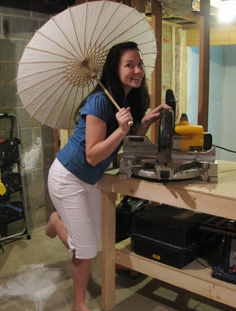
The most memorable part of the makeover was the use of a paper parasol as sculptural wall art. Katie had leftover parasols from her wedding, and instead of letting them sit forgotten, she and Sherry saw a decorative opportunity. By trimming and hanging one on the wall, they turned a sentimental object into a striking three-dimensional focal point.
This was the kind of idea that made readers lean toward the screen and think, “Wait, I might have something like that in a closet.” The parasol was not just pretty; it had a story. That is why it worked. The best DIY wall art often carries personal meaning. A framed print can be lovely, but a repurposed wedding item, travel souvenir, vintage textile, or family object brings depth that cannot be mass-produced.
A Basket as a Lampshade? Why Not?
Another playful detail involved using a wire basket-like piece as an improvised lamp shade. Was it a traditional design move? Not exactly. Was it memorable? Absolutely. It added texture, repeated the linear feel of the parasol, and proved that decorating sometimes rewards experimentation.
Of course, safety matters with lighting. Not every basket belongs near a bulb, and heat should always be considered. But as a creative concept, the idea reflected the broader lesson of the makeover: look at objects for their shape, texture, and possibilitynot just their original purpose.
Why This Makeover Still Works
The reason this meeting between Katie from All Bower Power and Sherry from Young House Love still resonates is not because the room became wildly expensive or magazine-perfect overnight. It works because it is realistic. Most people do not have unlimited decorating budgets. Most people have odd corners, blank walls, sentimental objects in storage, and a strong suspicion that one piece of furniture is secretly ruining the room.
The makeover offered a friendly formula that still applies today: improve the layout, add height, create a focal point, reuse meaningful objects, and let the room breathe. That is timeless decorating advice, whether the year is 2009, 2026, or some future era when robots are helping us argue about beige paint undertones.
SEO-Friendly Lessons From the Katie and Sherry Collaboration
1. Budget Decorating Is Often About Vision, Not Money
One reason readers loved the project was its zero-dollar spirit. Budget decorating does not mean settling for a boring room. It means getting creative before getting spendy. A mirror from the hallway, a lamp from storage, a parasol from a wedding, and a new furniture layout can produce a surprisingly fresh result.
This is a major lesson for anyone searching for affordable bedroom makeover ideas. Before buying new decor, shop your own house. Walk through closets, guest rooms, storage bins, the garage, and that mysterious cabinet nobody opens because it may contain old cables, birthday candles, and emotional baggage. You might already own the missing piece.
2. DIY Wall Art Should Add Texture
Flat art is wonderful, but rooms come alive when they include texture. The parasol worked because it projected from the wall and added shape. It created shadow, dimension, and personality. For anyone trying to create DIY wall art, this is a smart takeaway. Consider baskets, hats, textiles, trays, sculptural objects, vintage frames, or lightweight architectural pieces.
The goal is not to glue random household items to the wall and call it art. Please do not nail a toaster above your bed and blame Katie and Sherry. The goal is to notice beautiful shapes and materials that can serve a new decorative purpose.
3. Blogger Collaborations Feel Powerful When They Are Genuine
What made this collaboration fun was the obvious friendship behind it. Katie and Sherry had a natural rhythm. Their humor, enthusiasm, and shared love of home projects made the content feel less like a staged production and more like a creative playdate. That authenticity is exactly why early home blogs built such loyal audiences.
Today, influencer collaborations can sometimes feel overly polished. The Katie-and-Sherry moment is a reminder that readers connect with real energy. They want to see ideas unfold, laugh at the process, and believe they could do something similar in their own home.
How to Recreate the Spirit of This Makeover at Home
You do not need to be Katie Bower or Sherry Petersik to borrow the best ideas from this project. You just need a room that feels almost right and a willingness to experiment.
Start With a No-Spend Room Audit
Choose one room and remove anything that feels visually noisy. Then look at the bones of the space. Is the furniture helping the room function? Is there a blank wall begging for attention? Is light moving through the room well? Is one corner doing absolutely nothing except collecting dust and silently judging you?
Next, shop your home. Bring in a mirror from another room, swap lamps, move a chair, try a different rug, or stack books under a small object to add height. Take photos as you go. A camera often reveals imbalance that your eyes miss in person.
Use Sentimental Objects in Fresh Ways
The parasol idea works because it turns memory into design. Look for objects tied to weddings, travels, family events, hobbies, or old collections. A scarf can become framed textile art. A straw hat can join a wall display. A vintage tray can sit above a dresser. A child’s drawing can become part of a gallery wall. Sentiment gives a room soul.
Keep Humor in the Process
One underrated ingredient in DIY success is humor. Projects go sideways. Measurements lie. Stud finders behave like haunted devices. Someone will eventually say, “Are we sure this is centered?” and everyone will stare at the wall in silence. That is normal. The Katie and Sherry vibe reminds us that decorating should be fun, not a courtroom trial over curtain height.
What Their Meeting Says About the Golden Age of Home Blogging
The meeting between Katie from All Bower Power and Sherry from Young House Love feels like a time capsule from the golden age of home blogging. Blogs were slower than social media but often deeper. A single post could include a story, photos, process shots, mistakes, comments, reader questions, paint colors, and a full emotional arc from “this could work” to “look what we made.”
Readers returned because they felt invested. They knew the bloggers’ homes, families, dogs, furniture, favorite stores, and recurring jokes. When two bloggers met in person, it felt like a crossover episode. Think less “corporate partnership” and more “DIY cinematic universe, but with more throw pillows.”
That is why this bedroom makeover is more than a small decorating post. It represents a style of online creativity rooted in friendliness, openness, and practical inspiration. It was not about perfection. It was about momentum. Move one thing. Try one idea. Use what you have. Make the room better today.
Design Analysis: Why the Room Changes Worked
From a design perspective, the makeover succeeded because it improved three important elements: flow, focal point, and balance.
First, the furniture rearrangement improved flow. When a room’s entrance feels blocked or awkward, the entire space can feel smaller than it is. By shifting major pieces, the room gained a clearer path and a more intentional layout.
Second, the parasol created a focal point. Bedrooms need a visual destination, especially on blank walls. The parasol added softness, shape, and a little drama without overwhelming the peaceful mood of the room.
Third, the accessories created balance. A mirror added reflective light. A vase added height. The chair and lamp created a useful corner. These small choices helped the room feel layered rather than randomly filled.
The best part is that none of these principles are complicated. They are accessible to anyone. You do not need a design degree to ask: Can I walk easily through this room? Where does my eye land? Does this corner need height? Does this wall need texture? Does this object make me happy, or is it just here because I gave up in 2018?
of Experience: What This Topic Teaches Real DIY Decorators
The most relatable experience connected to the Katie-and-Sherry makeover is that nearly every home has a room that feels “fine,” but not finished. Fine is sneaky. Fine lets you live with awkward furniture placement for years. Fine convinces you that a blank wall is “minimalist” when really you just never decided what to hang there. Fine is the decorative equivalent of eating cereal for dinner and calling it cuisine.
When I think about this kind of makeover from a practical homeowner’s perspective, the biggest lesson is to invite a second set of eyes into the room. You do not necessarily need a professional designer. Sometimes you need a friend who is not emotionally attached to the current layout. A friend can say, “Why is this dresser here?” without carrying the memory of the day you dragged it across the floor and vowed never to move it again.
That is what Katie and Sherry’s collaboration demonstrates so well. Creative people spark ideas in each other. One person notices the awkward corner. The other remembers the parasol. One suggests moving the dresser. The other finds a mirror. Suddenly the room has energy. This is why decorating with a friend can be more productive than decorating alone. It turns hesitation into action.
Another experience many DIY decorators understand is the strange thrill of using something in a way it was never intended. A basket becomes a shade. A parasol becomes wall art. A placemat becomes a pillow cover. A thrifted frame becomes a tray. These little transformations are satisfying because they make you feel clever, and frankly, adults deserve more harmless opportunities to feel clever. We pay bills. We compare insurance plans. Let us have the parasol wall art.
The experience also teaches patience. A no-spend makeover usually involves trial and error. You move something, hate it, move it again, briefly question your entire identity, then discover the right arrangement. That process is not failure. It is decorating. Rooms rarely reveal their best version on the first try. Even experienced bloggers experiment, adjust, laugh, and keep going.
Finally, this topic reminds us that the most memorable homes are personal. The parasol mattered because it had history. The room felt warm because it reflected real people, not a catalog fantasy. In an age when trends move quickly, that lesson still feels fresh. A home should not look like everyone else’s mood board. It should look like the people who live therefunny, layered, practical, sentimental, and maybe just a little weird in the best possible way.
Conclusion: A Small Makeover With Big DIY Energy
So, what happens when Katie from All Bower Power meets Sherry from Young House Love? This: a simple bedroom refresh becomes a reminder that great decorating is not always about buying more. It is about seeing more. It is about recognizing potential in a corner, a dresser, a mirror, a lamp, or a wedding parasol hiding in storage like it is waiting for its big Broadway debut.
Their collaboration still feels engaging because it blends friendship, creativity, budget decorating, and practical DIY lessons. It shows how two home bloggers could turn a casual visit into a room makeover that inspired readers to rethink their own spaces. More importantly, it proves that home design does not have to be stiff, expensive, or intimidating. Sometimes it can be spontaneous, funny, resourceful, and completely free.
If your bedroom, living room, or home office feels stuck, borrow the Katie-and-Sherry method. Move the furniture. Shop your house. Use meaningful objects. Add texture. Laugh when something looks ridiculous. Then keep adjusting until the room feels like you. That is the real power of DIY decoratingand yes, it is much cheaper than therapy, though possibly harder on your lower back.