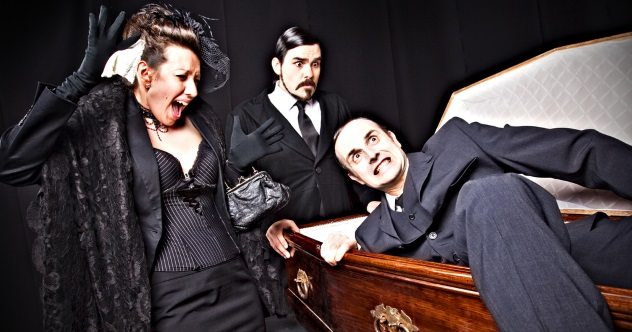

Most people spend their lives wondering who might show up at their funeral. A few people, however, got the answer in the most jaw-dropping way possible: they showed up themselves. Sometimes it happened because of mistaken identity. Sometimes a person was wrongly declared dead. Sometimes the “funeral” was staged on purpose, which is one way to test your popularity, though admittedly more dramatic than checking who likes your birthday post.
These real-life cases of people who attended their own funeral are equal parts eerie, emotional, and darkly funny. They reveal how fragile official certainty can be, how quickly families accept tragic news, and how awkward it gets when the guest of honor walks in breathing. Below are ten shocking funeral stories involving mistaken deaths, coffin surprises, fake funerals, and very confused mourners.
Why Do “Own Funeral” Stories Happen?
Before jumping into the cases, it helps to understand the main causes behind these bizarre stories. Some involve body misidentification, especially when remains are badly damaged or family members are under emotional stress. Others involve medical errors, where faint vital signs are missed. A few are intentional “living funerals,” where people arrange a symbolic ceremony while they are still alive to hear tributes, say goodbye, or satisfy a very human curiosity: “Who actually cares enough to bring flowers?”
Whatever the cause, these stories are unforgettable because funerals are supposed to be final. When someone interrupts their own farewell, the event instantly turns from solemn ceremony into a scene that belongs somewhere between a true-crime documentary and a sitcom with extremely nervous relatives.
10 Shocking Cases Of People Who Attended Their Own Funeral
1. Noela Rukundo: The Woman Who Crashed Her Own Funeral To Confront Her Husband
Noela Rukundo’s story is one of the most dramatic true cases of someone attending her own funeral. Rukundo, a Burundian-Australian woman living in Melbourne, traveled to Burundi in 2015 after the death of her stepmother. While there, she was kidnapped by gunmen who revealed a horrifying secret: her husband, Balenga Kalala, had allegedly paid them to kill her.
The kidnappers, however, refused to carry out the murder. Instead, they released her and gave her evidence of the plot, including recordings and proof of payment. Meanwhile, Kalala returned to Australia and told the community that Rukundo had died in a tragic accident. He even hosted a funeral at their home.
Then came the twist worthy of a courtroom thriller. Rukundo returned to Melbourne and waited outside her own funeral until mourners began leaving. When Kalala appeared, she stepped forward alive. His reaction was reportedly terror, not relief. Her sudden appearance helped expose the murder plot, and Kalala was later sentenced to nine years in prison. If revenge is a dish best served cold, Rukundo served hers with funeral flowers and perfect timing.
2. Gilberto Araújo: The Brazilian Man Who Walked Into His Own Wake
In 2012, Gilberto Araújo, a car washer from Alagoinhas, Brazil, became the star of a wake nobody expected him to attend. His family had identified a body at the morgue as his after a local murder. The dead man reportedly resembled Araújo, and in grief, his relatives accepted the mistaken identification.
Family and friends gathered around the coffin at his mother’s home, mourning what they believed was his death. Then Araújo walked in. According to reports, some mourners screamed, fainted, or ran away. To be fair, when the person in the coffin enters through the door, panic is not an unreasonable first draft of an emotional response.
The explanation was simple but shocking: the body belonged to another man. Araújo had been away from his family for months, which made the confusion easier to believe. His mother, after recovering from the shock, was overjoyed. This case remains one of the most famous examples of mistaken identity turning a funeral into a surprise reunion.
3. P. Yellappa: The Telangana Laborer Who Returned During Burial Preparations
In 2024, a daily wage laborer named P. Yellappa from Telangana, India, was presumed dead after police found an unidentified body near railway tracks. A mobile phone found near the body belonged to Yellappa, and his family identified the remains as his. Because the body was badly damaged, the mistake became tragically believable.
After the postmortem, the family took the body back to their village and began preparing for burial. Then Yellappa appeared alive. It turned out that his phone had reportedly ended up near the unidentified dead person, creating a chain reaction of assumption, grief, and funeral planning.
The case is a reminder that technology can help identify people, but it can also mislead when one object is treated as absolute proof. A phone near a body may be a clue, but it is not a person. In this case, the “dead man” returned before burial, leaving his family shocked, relieved, and probably very interested in keeping better track of his phone.
4. Bella Montoya: The Woman Who Knocked From Inside Her Coffin
In 2023, Bella Montoya, a 76-year-old woman in Ecuador, was declared dead after suffering a suspected stroke and cardiac arrest. Her family placed her in a coffin for her wake. Hours later, mourners heard something terrifying: knocking from inside the coffin.
Montoya was alive. Her relatives opened the coffin and found her breathing. She was rushed back to the hospital, where she remained in intensive care. Sadly, she died about a week later. Even so, her case shocked the world because it touched one of humanity’s oldest fears: being declared dead too soon.
Her story also triggered questions about medical verification and death certification. For families, the emotional whiplash is almost impossible to imagine. One moment, they were saying goodbye; the next, they were calling emergency services. It was not a resurrection in the supernatural sense, but for everyone in that room, it must have felt like reality briefly forgot its own rules.
5. Walter Williams: The Mississippi Man Who Woke Up At The Funeral Home
Walter Williams, a 78-year-old man from Mississippi, was declared dead in 2014 after hospice staff and a coroner could not detect a pulse. His body was placed in a body bag and taken to a funeral home. Staff were preparing for embalming when they noticed movement.
Williams was breathing. He was taken to the hospital, and his family was stunned to learn that the man they had started mourning was still alive. Some relatives believed his pacemaker may have played a role in making his vital signs difficult to detect.
Williams did not stroll into a full funeral service, but his case belongs in this list because he came frighteningly close. He survived for a little more than two weeks before passing away for real. His family’s mixture of joy, confusion, and grief shows how complicated these “back from the dead” cases can be. Sometimes the miracle is real, but temporary.
6. Zhang Deyang: The Chinese Man Who Planned His Own Funeral To See Who Would Come
Not every case involves a medical mistake or morgue confusion. In 2016, Zhang Deyang, a 66-year-old man from Shandong province in China, reportedly staged his own funeral because he wanted to know who would attend when he eventually died.
Zhang had never married and had no children, so he worried about whether anyone would care for his memory. He arranged a ceremony complete with funeral rituals and invited friends and relatives. Dozens of invited guests attended, along with many curious locals. Instead of lying quietly like the traditional guest of honor, Zhang was very much alive and watching the turnout.
His reaction was not entirely happy. He was disappointed that some relatives and friends failed to appear. That may be the downside of conducting your own attendance audit: you get answers, but not always the ones you wanted. Still, Zhang’s case highlights the emotional reason living funerals appeal to some people. They want to know they mattered while they are still around to hear it.
7. The Anhui Man Who Sat On His Coffin And Waved
In 2023, another elderly man in China, reportedly from Anhui province, arranged a fake funeral for himself. The ceremony was not secret. Villagers helped organize the event, and video showed the man sitting on top of his coffin, waving as people gathered around.
Unlike mistaken-death cases, this was closer to a living funeral, though with a theatrical flair that would make most event planners whisper, “Maybe tone it down by 20 percent.” The man said he wanted to experience the scene of his funeral before his real death.
His story went viral because it was both strange and oddly understandable. Many people wonder what others will say about them when they are gone. This man simply skipped the waiting period. While staging a funeral for curiosity is not everyone’s idea of a relaxing weekend, it shows how rituals can be used not only to mourn death, but also to reflect on life.
8. Hamdi Hafez al-Nubi: The Egyptian Waiter Whose Funeral Turned Into A Celebration
In 2012, Hamdi Hafez al-Nubi, a young waiter from Luxor, Egypt, reportedly suffered a heart attack while working and was declared dead. His family prepared his body according to funeral customs and made arrangements for burial.
Then a doctor, sent to sign the final death certificate, noticed something unusual: the body was still warm. After a closer examination, the doctor discovered that al-Nubi was still breathing. His mother, who had fainted from grief, reportedly regained consciousness and learned that her son was alive.
The funeral quickly became a celebration. This case shows why final checks matter. Grief can move fast, especially when families are trying to follow religious and cultural practices correctly. But even in the most emotional moments, careful verification can prevent a tragedy from becoming even worse.
9. Mohammad Furqan: The Young Man Who Woke Before Burial
In 2019, Mohammad Furqan, a 20-year-old man in India, was reportedly declared dead after treatment following an accident. His family brought him home and prepared for burial. During the funeral ceremony, mourners noticed movement.
Furqan was not dead. He was rushed back to the hospital and placed on ventilator support. Reports suggested that his family had been told by a private hospital that he had died, only for the supposed “body” to show signs of life before burial.
The case became a public warning about medical negligence, hospital communication, and the importance of confirming death beyond assumption. For the family, the emotional experience must have been overwhelming: mourning, shock, hope, and fear arriving in one terrifying sequence.
10. Rohitash Kumar: The Man Who Revived Before Cremation
In 2024, Rohitash Kumar, a 25-year-old man in Rajasthan, India, was reportedly declared dead after falling ill. His body was moved to a mortuary freezer and later taken for cremation. Just before the ceremony could proceed, he began breathing and showing signs of life.
He was rushed back to the hospital, and local authorities reportedly investigated the mistake. Several medical staff members faced action after the incident. Like other cases on this list, the shocking part is not only that he survived the declaration of death, but that the error almost reached the point of irreversible consequences.
Funeral rites carry deep cultural meaning, and cremation is often final in the most literal sense. Kumar’s case is a chilling reminder that death verification is not a formality. It is a safeguard between grief and disaster.
What These Shocking Funeral Cases Teach Us
Mistaken Identity Can Happen Faster Than People Think
Several of these stories began with a simple but devastating mistake: someone identified the wrong body. In moments of shock, grief can make people vulnerable to suggestion. If police, hospitals, or relatives believe the deceased is a certain person, others may accept it before every detail is confirmed. Clothing, phones, location, and resemblance can all mislead.
That is why careful identification procedures matter. Modern systems may include documents, hospital bands, dental records, fingerprints, DNA, and multiple confirmations. Yet human emotion still plays a role. When a family is desperate for answers, a partial clue can feel like closure. Unfortunately, as these cases show, closure built on an assumption can collapse the moment the “dead” person walks through the door.
Medical Verification Is More Than Paperwork
Cases involving people waking in coffins, body bags, funeral homes, or near cremation reveal a more serious issue: death must be confirmed with extreme care. In some medical conditions, vital signs may be faint. Low body temperature, certain heart problems, drug effects, or deep coma-like states can complicate assessment.
That does not mean people are commonly buried alive. These cases are rare, which is why they become international news. But rare does not mean impossible. For hospitals, coroners, medical certifiers, and funeral professionals, these stories are uncomfortable reminders that routine procedures must never become careless habits.
Living Funerals Are Strange, But Not Always Morbid
The staged funeral cases may sound absurd at first. Why would someone organize their own funeral while alive? Yet beneath the oddness is a very human need: people want to know they are loved. A living funeral can give someone a chance to hear memories, make peace, laugh with friends, and say what usually remains unsaid until it is too late.
Of course, there is a big difference between a thoughtful living funeral and a fake-death prank that traumatizes relatives. The healthiest version is honest, consensual, and emotionally clear. The chaotic version involves coffins, confusion, and at least one auntie yelling, “I told you this family was dramatic.”
Experiences And Reflections Related To People Attending Their Own Funeral
Stories about people attending their own funeral stay with us because they flip one of life’s most serious rituals upside down. A funeral is supposed to be the room where the story ends. When the person being mourned suddenly appears, the room becomes a stage for every emotion humans can produce: fear, joy, anger, guilt, laughter, disbelief, and sometimes embarrassment so powerful it deserves its own sympathy card.
Imagine being a mourner at one of these events. You arrive dressed in black, ready to comfort the family. You whisper kind words. You look at the coffin. You remember the person’s jokes, habits, and unfinished plans. Then the door opens and that same person walks in asking why everyone is crying. The brain does not have a neat folder for that. First comes fear: “Is this a ghost?” Then logic returns, possibly holding a cup of coffee and apologizing for being late.
For families, the experience can be both joyful and traumatic. Relief does not erase the shock of having already grieved. When someone is declared dead, loved ones begin the painful work of accepting loss. If that person returns alive, the heart celebrates, but the nervous system may remain stuck in panic. Some people laugh. Some faint. Some become angry at the officials or relatives who made the mistake. All of those reactions make sense.
For the person who “attends” their own funeral, the experience can be equally strange. In mistaken-identity cases, they may feel amused at first, then disturbed by how quickly the world moved on without them. In medical-error cases, the experience may be frightening, especially if they regain awareness in a coffin, morgue, or funeral home. In staged living funerals, the emotions are different: people may feel gratitude, disappointment, closure, or awkward pride when they discover who showed up and who apparently had “other plans.”
These stories also reveal something tender about human relationships. Many people wait until a funeral to say the most beautiful things about someone. They praise their kindness, humor, courage, patience, and generosity when the person can no longer hear it. Living funerals challenge that habit. They ask: why not say the good stuff early? Why save the best speech for a room where the guest of honor is unavailable for comments?
The practical lesson is serious: identification and death verification should be handled carefully, patiently, and professionally. The emotional lesson is even simpler: tell people they matter while they can still roll their eyes, cry, hug you, or make a joke about how your speech was too long. You do not need a fake funeral to do that. A phone call works. A letter works. A cup of coffee works. Even a slightly awkward text can work, as long as it does not begin with “I was just thinking about your funeral.” Maybe workshop that one first.
Ultimately, these shocking cases are not just weird news stories. They are reminders that life is fragile, paperwork can be wrong, families can panic, and love should not wait for a coffin. If there is one lesson from people who attended their own funeral, it is this: say what needs saying before the memorial program is printed.
Conclusion
The most shocking cases of people who attended their own funeral prove that truth can be stranger than fiction, and occasionally louder than a coffin lid. From Noela Rukundo’s unforgettable confrontation to Gilberto Araújo’s mistaken-identity wake and Bella Montoya’s terrifying coffin knock, these stories reveal the strange intersection of grief, error, survival, and human curiosity.
Some cases are funny only after everyone is safe. Others are heartbreaking warnings about medical negligence or identification failures. And the staged living funerals? They may be odd, but they point toward something deeply relatable: people want to know they are loved before the final goodbye.
Note: This article is based on widely reported real cases and avoids fictional urban legends where reliable reporting is unclear. Some older stories have been summarized carefully because details vary across reports.