Husband Fed Up With The 30 Dogs His Wife Pets Asks Her To Choose Him Or The Dogs, And Probably Regrets It Afterwards

“`
Every marriage has its tests. Some couples argue over money. Others debate whose turn it is to take out the trash. And then there are the truly advanced-level relationship puzzles, like what happens when one spouse shares the home with 30 rescue dogs and the other finally says, “It’s me or the dogs.” Spoiler alert: the dogs did not pack a suitcase.
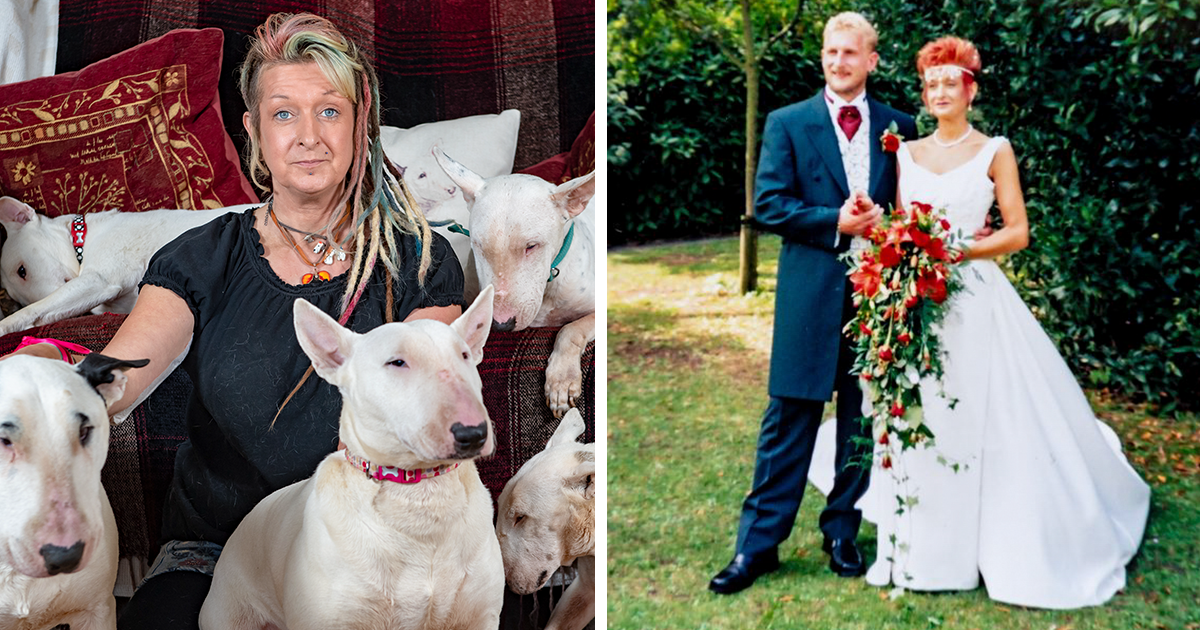
The viral story of Liz Haslam, an animal-loving woman in the United Kingdom, and her husband Mike became internet catnipwell, dog biscuitfor a reason. It had everything: love, loyalty, conflict, adorable rescue dogs, and the kind of ultimatum that usually ends with someone eating cereal alone in a quiet kitchen. After more than two decades of marriage, Mike reportedly asked Liz to choose between him and the many dogs she cared for. Liz chose the dogs.
That choice sounds shocking at first, especially if your idea of pet ownership is one polite Labrador and a decorative bowl of treats by the door. But this story is not just about “wife chooses dogs over husband.” It is about rescue work, responsibility, emotional limits, relationship communication, and what happens when a passion becomes a lifestyle that not everyone in the household can survive.
The Viral Story: When 30 Rescue Dogs Became The Dealbreaker
Liz Haslam and Mike Haslam had a long history before the dog drama took center stage. They met when Liz was young, later married, raised a family, and built a life together. Eventually, the couple moved to a farmhouse with enough space for Liz to start a boarding kennel and deepen her involvement in dog rescue.
That is where the story turned from “nice woman loves animals” into “this household has more paws than a cartoon parade.” Liz founded a rescue effort focused largely on bull terrier-type dogs, many of whom had serious medical, emotional, or behavioral needs. At one point, she was caring for around 30 rescue dogs. Some were deaf. Some had vision issues. Some came from difficult backgrounds. A few needed the kind of patience that cannot be ordered online with free two-day shipping.
According to public reports, Liz spent extremely long days caring for the dogs. Feeding, cleaning, vet visits, medication, behavior management, and constant supervision were not occasional chores; they were the daily operating system of her life. Mike, however, had reached his limit. After years of sharing his marriage with an ever-growing rescue mission, he gave her an ultimatum: choose him or the dogs.
Liz did choose. And the answer had four legs, wagging tails, and probably a few muddy paw prints.
Why The Internet Could Not Look Away
Stories like this travel fast because they sit right on the fault line between romance and responsibility. On one side, many readers saw Liz as a hero: a person who refused to abandon vulnerable animals after promising them safety. On the other side, some people sympathized with Mike, imagining the stress, noise, smell, cost, and emotional fatigue that could come with living beside a rescue operation of that size.
And honestly, both reactions make sense. Loving dogs is easy. Caring for 30 dogs with complex needs is a completely different sport. It is less “cute puppy calendar” and more “full-time unpaid logistics manager with a mop.”
The story also reveals a deeper question: when does compassion become too heavy for a relationship to carry? A person may feel morally responsible for animals they have rescued, especially if those animals would struggle to find homes elsewhere. At the same time, a spouse may feel neglected, overwhelmed, or pushed into a lifestyle they did not choose. That is not a small disagreement. That is a values collision wearing a dog-hair sweater.
Rescue Dogs Are Not A Hobby; They Are A Commitment
Responsible dog care requires money, time, space, planning, veterinary support, training, sanitation, and emotional stamina. The American Veterinary Medical Association emphasizes that pet ownership is a long-term commitment involving preventive health care, exercise, mental stimulation, socialization, and a suitable living environment. Multiply that by 30, and you are no longer “having pets.” You are running a living, breathing rescue ecosystem.
Financially, dogs are not exactly bargain-bin roommates. The ASPCA has estimated annual dog care costs that include food, medical care, supplies, grooming, and other essentials. Those numbers can climb quickly when dogs have disabilities, chronic conditions, trauma histories, or behavioral challenges. A single emergency vet visit can rattle a budget. Thirty dogs can make the budget hide under the bed.
Then there is the health side. The CDC advises routine veterinary care, good hygiene, handwashing after handling dogs or their supplies, and proper cleaning practices to reduce the spread of germs. In a multi-dog home, these basics become even more important. More dogs means more waste, more surfaces to clean, more chances for disease transmission, and more pressure on the person doing the daily care.
The Difference Between Fostering And Collecting
It is important to be fair here: fostering dogs is not the same as hoarding animals. A well-run foster or rescue setting can be organized, sanitary, veterinary-supported, and lifesaving. Groups like Best Friends Animal Society describe fostering as a structured way to give animals temporary homes, help shelters free up space, and prepare pets for adoption.
Animal hoarding, however, is different. The ASPCA explains that hoarding situations often involve more animals than a person can properly care for, with signs such as poor sanitation, under-socialized animals, untreated health problems, and a caregiver who may not recognize the severity of the situation. In Liz’s case, public reports framed her work as rescue and foster care, not as a confirmed hoarding case. Still, the story naturally makes readers ask where the line is between heroic commitment and unsustainable overload.
The answer is not a single number. Ten dogs may be too many for one household and manageable for a staffed facility. Two dogs may be too many for someone with no time, money, or patience. The real question is whether every animal receives proper food, shelter, veterinary care, enrichment, cleanliness, and attentionwithout the humans in the home collapsing emotionally or financially.
The Marriage Problem Was Not Really About Dogs
Yes, the dogs were the loudest part of the story. But the deeper marriage issue was likely about priorities, boundaries, and feeling heard. When one partner says, “Choose me or them,” it usually means the conversation has been failing for a long time. Ultimatums rarely appear out of nowhere. They grow in the cracks where repeated concerns were dismissed, postponed, or turned into arguments that solved nothing.
Healthy relationships depend on communication, regular check-ins, and the ability to work through differences before resentment becomes the third person at the dinner table. The American Psychological Association notes that strong relationships require partners to communicate, make time for each other, and handle stress together. The Gottman Institute also emphasizes compromise as a core part of managing conflict, because a couple cannot function as a team if one person’s needs always erase the other’s.
In this story, Mike may have felt that the dogs had consumed the marriage. Liz may have felt that abandoning the dogs would violate her deepest values. Both positions can be emotionally real. But when the final choice becomes “me or the dogs,” the relationship has already reached emergency mode.
Why Liz’s Choice Made Sense To Many Dog Lovers
For people who rescue animals, a dog is not just a cute companion. A rescue dog may be a promise. Many animals arrive frightened, injured, neglected, or unwanted. Once a caregiver earns their trust, walking away can feel like betrayal. Liz reportedly cared for dogs with complex needs, which means rehoming them would not be as simple as posting a cheerful adoption photo and waiting for the perfect family to arrive with matching sweaters.
Dogs also offer powerful emotional benefits. NIH has reported that pets may help reduce stress, support heart health, and encourage emotional and social development. Cornell’s canine health resources also describe the human-animal bond as a source of purpose, stress relief, and physical activity for many pet owners. For someone like Liz, the dogs were not background decoration. They were her work, her mission, and her emotional world.
Why Mike’s Frustration Also Deserves A Fair Hearing
At the same time, it is too easy to turn Mike into the villain of the story. Living with 30 dogs is not a normal household compromise. It affects sleep, finances, travel, privacy, social life, cleanliness, and daily routines. If one partner wants a peaceful home and the other is running a high-needs rescue operation, love alone may not be enough to bridge that gap.
Imagine wanting to take a weekend trip and hearing, “We can’t, because the dogs need constant care.” Imagine trying to relax while the home runs on feeding schedules, barking, cleaning, medical routines, and emergency planning. Even people who adore animals can become overwhelmed when their entire life is built around them without consent.
That does not mean Mike was right to use an ultimatum. It does mean his exhaustion was probably not imaginary. The lesson is not “always choose pets over people” or “always choose marriage over pets.” The lesson is that shared life requires shared agreement before one person’s calling becomes everyone’s lifestyle.
What Couples Can Learn From The 30-Dog Ultimatum
This viral story may be extreme, but the lesson applies to ordinary homes too. Many couples argue about pets: who walks the dog, who pays the vet bills, whether the pet sleeps in the bed, whether to adopt another animal, or whether a difficult dog needs professional training. These arguments are rarely just about the animal. They are about labor, respect, money, safety, and control.
1. Discuss Pet Limits Before The House Becomes A Kennel
Couples should talk honestly about how many pets they can realistically support. That conversation should include space, budget, time, allergies, rental rules, children, travel, and emergency care. “One more dog” may sound harmless until “one more” becomes “why is there a beagle in the laundry basket?”
2. Share The Work Or Admit It Is Not Shared
If one partner wants more animals but the other partner is expected to live with the mess, cost, and noise, resentment will grow. A pet care plan should be clear. Who feeds? Who cleans? Who schedules vet visits? Who handles training? Who pays? Love is wonderful, but love does not scrub the floor at 6 a.m.
3. Respect The Difference Between A Boundary And A Threat
A boundary sounds like, “I cannot live in a home with more than three dogs.” A threat sounds like, “Get rid of them or I’m gone.” The first opens a serious conversation. The second starts a countdown. Couples do better when they state needs early, calmly, and specificallybefore frustration becomes a dramatic exit scene.
4. Bring In Outside Help Early
Professional dog trainers, veterinarians, rescue coordinators, cleaners, pet sitters, and couples counselors can all help before a situation explodes. If the dogs have behavioral issues, training support matters. If the couple is stuck in repeated fights, relationship counseling may help each person feel heard. Waiting until the ultimatum stage is like waiting until the kitchen is on fire before buying a smoke alarm.
Could This Have Ended Differently?
Possibly. A compromise might have involved reducing the number of dogs over time, recruiting more foster homes, separating the rescue operation from the living space, hiring help, or setting strict capacity limits. But compromise only works when both people still want to solve the problem together.
By the time Mike reportedly asked Liz to choose, the emotional gap may have been too wide. Liz’s identity had become deeply tied to rescue work. Mike’s patience had run out. The dogs were not just pets; they were the symbol of a life path the couple no longer shared.
And that is why the title says he probably regretted it afterward. Not necessarily because he wanted to live with 30 dogs forever, but because ultimatums are risky. When you demand that someone choose, you must be ready for the possibility that they will not choose you.
Experience-Based Reflections: Life Lessons From A 30-Dog-Level Conflict
Anyone who has lived with multiple pets knows that animals change the rhythm of a home. With one dog, the day has a leash, a food bowl, a few toys, and the occasional mystery smell that everyone pretends not to notice. With several dogs, the home becomes a schedule. Feeding times matter. Medication matters. Yard time matters. The vacuum cleaner becomes less of an appliance and more of a family member with a difficult job. In a rescue-heavy environment, the emotional load is even bigger because each dog may come with a story, a fear, or a medical need that requires careful attention.
One common experience among foster families is the tension between love and capacity. A foster parent may start with one dog “just for a week,” then agree to another because the shelter is full, then take in a senior dog because nobody else can. The heart says yes faster than the calendar, the wallet, and the square footage can respond. This is why organized rescue work depends on limits. Good intentions need systems. Without systems, compassion can become exhaustion wearing a superhero cape.
Couples face a special version of this challenge because a pet decision made by one person affects both people. A partner who does not do the rescue work may still hear the barking, smell the cleaning products, lose vacation flexibility, and watch household money go toward food or veterinary care. Meanwhile, the rescue-focused partner may feel misunderstood, even judged, because they see the animals as lives saved rather than inconveniences created. Both experiences are valid, and both need space in the conversation.
Another lesson is that rescue animals often reveal a person’s deepest values. Some people value stability, quiet, and predictability. Others value service, sacrifice, and second chances. Neither value is wrong, but they can clash hard inside one home. A marriage can survive different hobbies. It has a harder time surviving different missions when the mission requires daily sacrifice from both people.
The healthiest approach is to talk before the crisis. Couples should set a pet capacity number, agree on a budget, create backup care options, and revisit the agreement when life changes. They should also admit when love for animals is becoming burnout. Rescue work is beautiful, but nobody helps dogs better by destroying their own health, home, or closest relationships. The goal is not to love less. The goal is to love wisely enough that humans and animals can all breathe, sleep, heal, and live with dignity.
Conclusion: The Dogs Won, But The Real Lesson Is Bigger
The story of the husband fed up with the 30 dogs his wife cared for is funny on the surface because the ending feels almost too internet-perfect: man gives ultimatum, woman chooses dogs, dogs presumably continue being dogs. But beneath the humor is a serious reminder about commitment.
Pets are not accessories. Rescue dogs with complex needs are not casual weekend projects. Marriage is not a place where one person’s passion can expand endlessly while the other person silently adapts. Lovefor a spouse, for animals, for a missionrequires honesty about limits.
Liz’s choice may seem extreme, but it also shows fierce loyalty to animals that depended on her. Mike’s frustration may seem harsh, but it reflects the real strain that can happen when a household becomes unbalanced. The story remains memorable because nobody involved was choosing between something trivial and something important. They were choosing between two important worlds that could no longer fit under the same roof.
So, did Mike regret the ultimatum? Only he can truly know. But the internet learned one thing very clearly: never ask a devoted rescue dog lover to choose unless you are emotionally prepared to lose to a room full of wagging tails.
“`