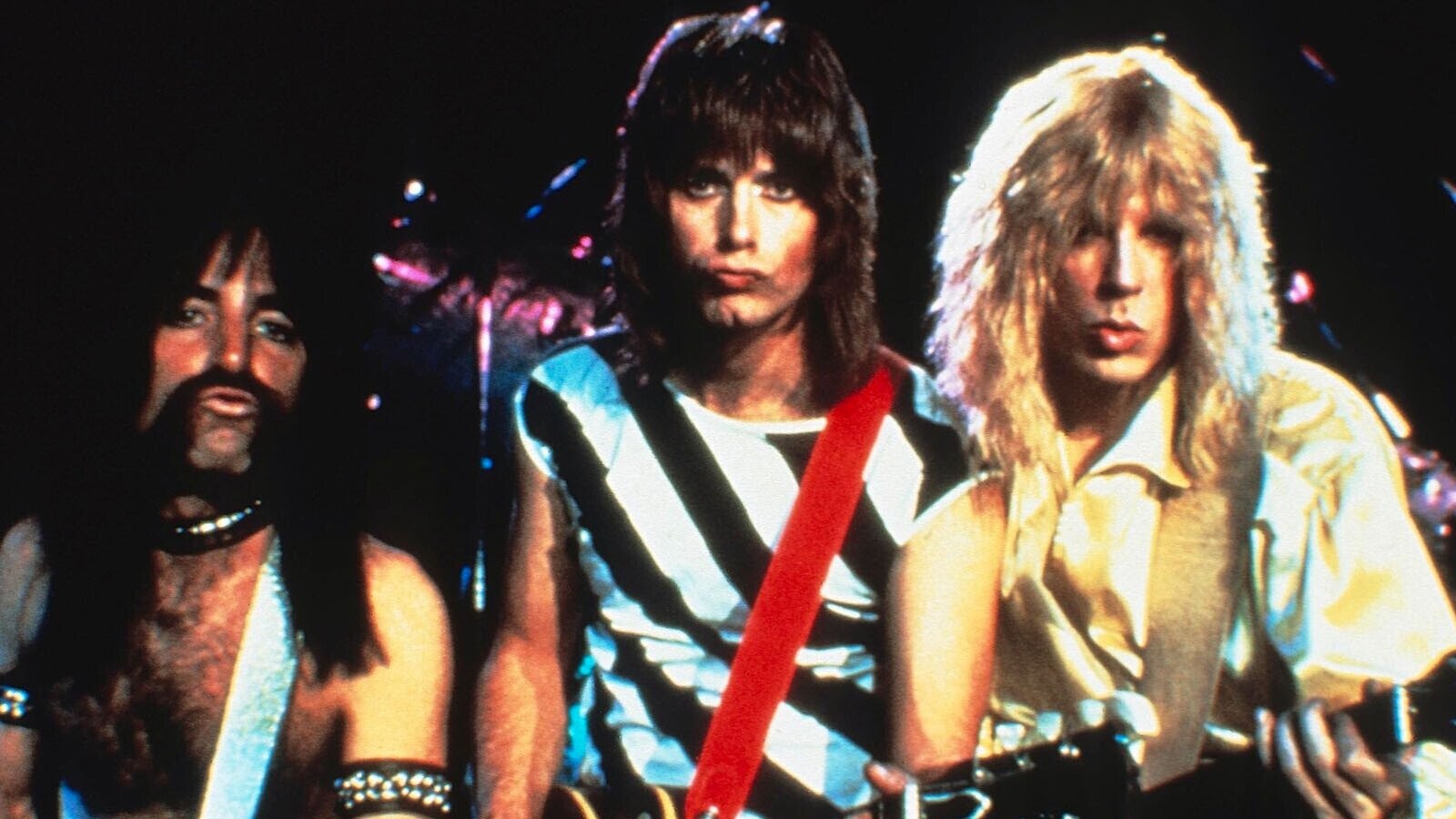

Some bands spend a year planning a tour and still manage to lose a drummer, a truck, and most of their dignity. Spinal Tap, naturally, tried to compress the whole glorious circus into a single day. When Harry Shearer looked back on the fake band’s very real one-day Canadian run, the story sounded less like a normal promotional appearance and more like the kind of scheduling choice made by someone staring directly at a whiteboard full of arrows, coffee stains, and bad ideas. Which, to be fair, is exactly the kind of energy that has always made This Is Spinal Tap so enduring.
The reason this story still hits so hard is simple: Spinal Tap has always lived in that hilarious sweet spot where parody and reality keep swapping jackets. The band may be fictional, but the chaos around it never feels fake. The original 1984 film turned backstage mishaps, artistic ego, logistical disasters, and weaponized overconfidence into one of the great American comedies. So when Shearer recalls a one-day Canadian sprint that had the band bouncing across time zones for multiple performances, it does not feel like an odd footnote. It feels like the most Spinal Tap thing Spinal Tap could possibly do.
The Canadian tour that sounds made up, because of course it does
On paper, the stunt was absurd. On brand, yes. Sensible, absolutely not. That was the point. In 1992, Spinal Tap took part in a Canada Day event tied to MuchMusic’s Great Canadian Party, zipping across the country for three performances in three cities over one wildly overcaffeinated day. The itinerary stretched across five time zones, which is the sort of sentence that should probably come with a free electrolyte packet and a warning label.
And yet that impossible schedule is exactly why the story has stuck around. Real touring musicians know the road can be brutal even when the calendar is behaving itself. Flights run late, gear gets misplaced, soundchecks vanish into thin air, and the phrase “quick turnaround” usually means nobody is eating until midnight. Spinal Tap took that familiar touring misery and inflated it into comedy mythology. The one-day Canadian dash worked because it treated burnout like performance art.
That is also why Harry Shearer’s recollection lands with such charm. He was never just playing Derek Smalls, the gloriously deadpan bassist with the facial expression of a man who has seen every bad decision twice. Shearer helped build the whole joke architecture of Spinal Tap. When he recalls a stunt like this, he is not merely reminiscing about an old gag. He is pointing to the weird magic trick the group always pulled off: making ridiculous behavior feel uncannily plausible.
Why this anecdote perfectly captures the genius of Spinal Tap
Plenty of comedies are funny in the moment. Fewer become cultural shorthand. This Is Spinal Tap did that by understanding something deeper than rock-star vanity. It understood systems. It understood how managers overpromise, how artists insist everything is fine while standing in the middle of a flaming tire pile, and how audiences are often only one missed cue away from witnessing total collapse. The joke was never just “look at these silly metal guys.” The joke was that the machinery around fame is often every bit as clueless as the people onstage.
That is why the Canadian one-day tour story feels so richly Tap-ish. It contains all the franchise essentials: ambition that wildly exceeds practicality, a public-facing aura of confidence, and a logistical concept that should have been laughed out of the planning meeting. Instead, the band did it. Or, more accurately, the people portraying the band committed to doing it, which only made the Spinal Tap universe feel more real.
There is also something deliciously perfect about the setting. Canada Day. Multiple cities. A coast-to-coast media spectacle. The scale is enormous, the concept is cumbersome, and the potential for mishap is basically baked into the pastry. If Spinal Tap had been asked to quietly play one tasteful indoor set and leave without incident, the universe itself would have rebelled.
Harry Shearer’s role in making Derek Smalls feel immortal
Any discussion of this story leads straight back to Shearer, because Derek Smalls is one of the secret engines of the entire Spinal Tap machine. Nigel Tufnel gets the best known absurdities. David St. Hubbins often carries the frontman bluster. Derek, though, is the beautifully grounded center of the madness. He does not chase attention so much as absorb catastrophe with a bass guitar and the emotional posture of a man waiting for another problem to roll in through the loading dock.
That performance style matters. Shearer’s humor in Spinal Tap has always been beautifully dry, almost anti-comic on the surface. He plays Derek as if the character genuinely believes every terrible plan might still work out, which somehow makes everything funnier. A one-day cross-country tour becomes hilarious not because Derek would scream about it, but because Derek would probably accept it with a solemn nod, then sign for a tiny Stonehenge prop like it was standard procedure.
Shearer also helped shape the improvisational DNA that gave This Is Spinal Tap its strange realism. The movie famously emerged from a very lean written framework and a rich understanding of character, allowing scenes to breathe, wander, and develop that documentary-ish awkwardness people now associate with the best mockumentaries. The result was comedy that did not feel “written” in the usual polished sense. It felt discovered, overheard, and occasionally trapped in an elevator with a fog machine.
Spinal Tap was never just spoofing rock. It was spoofing human delusion.
One reason the film remains so beloved is that it is not limited to one era of music. Yes, it skewers hard rock excess, macho posturing, overdesigned stagecraft, and the kind of album packaging decisions that make publicists cry into their sleeves. But its real target is the very human urge to treat every self-created disaster as a misunderstood masterpiece.
The Canadian tour anecdote embodies that impulse beautifully. Nobody with a normal respect for time, weather, traffic, airline timetables, and human spinal alignment would look at three performances across five time zones in one day and think, “Excellent, this seems relaxing.” But in the logic of fame, stunts like that become symbols of commitment. Bigger must be better. Faster must be cooler. More exhausting must be more memorable. Then everyone is shocked when the whole thing looks a little deranged from the outside.
Spinal Tap knew that rhythm before countless modern comedies followed it. The film’s influence can be felt across mockumentary storytelling, from later film satires to television series built around awkward confessionals, deadpan realism, and the comedy of unchecked self-regard. The movie did not merely collect iconic bits. It provided a blueprint.
Why the story feels newly relevant now
The Canadian tour memory would already be a great cult-comedy anecdote on its own, but it gains extra resonance because Spinal Tap has been firmly back in the conversation. The original film was reintroduced in a remastered re-release, and the sequel, Spinal Tap II: The End Continues, brought Rob Reiner, Christopher Guest, Michael McKean, and Harry Shearer back together. That revival made old stories like this feel less like dusty trivia and more like proof that the Tap mythology still has plenty of gas in the tank, even if the van maybe does not.
That renewed attention also highlights how unusual the original achievement remains. Lots of beloved comedies get quoted forever. Fewer become part of everyday language. Fewer still are preserved by the Library of Congress, ranked among America’s funniest films, and discussed as foundational texts in the mockumentary form. Spinal Tap did all of that while pretending to be about a band that could not keep a drummer alive and thought stage props obeyed alternate laws of measurement.
In other words, Harry Shearer recalling a ludicrous Canadian sprint is not just a fun bit of nostalgia. It is a reminder that the Spinal Tap joke has always worked on two levels at once. On the surface, it is hilarious because the premise is absurd. Beneath that, it sticks because anyone who has ever worked in entertainment, media, travel, events, or frankly group projects can recognize the deeper truth: people will absolutely invent a terrible plan, call it visionary, and then act offended when physics gets involved.
The real reason fans love stories like this
Fans do not treasure Spinal Tap because the jokes are random. They treasure it because the world feels complete. Every new anecdote slots neatly into the band’s mythology. A disastrous U.S. tour? Of course. A tiny Stonehenge? Obviously. A one-day Canadian marathon that sounds like it was scheduled by a sleep-deprived raccoon with access to a charter jet? Naturally.
That internal consistency is what turns a comedy into a universe. You hear this story and instantly know the tone, the facial expressions, the backstage confusion, the misplaced certainty, the manager explaining things poorly, the performers pretending not to panic. Even if you were not there, you can practically smell the hairspray, airport coffee, and noble failure.
Shearer’s recollection works because it adds another panel to that mural. It reminds us that Spinal Tap was never built as a single movie with a few famous lines attached. It was built like folklore. The band could wander into interviews, concerts, reunions, television spots, and impossible tours, and the joke still held because the characters were strong enough to survive contact with the real world.
Experiences related to this story: why chaotic tour tales feel weirdly universal
Even if you have never worn leather pants under stage lights or argued about a bass cabinet at an airport, there is something deeply familiar about a story like Spinal Tap’s one-day Canadian tour. It taps into a very modern, very human experience: the moment when a plan looks impressive on a calendar and completely insane in real life. Everybody has lived some version of that. Maybe not three cities in one day. Maybe just two meetings, one delayed train, a dead phone battery, and the sudden realization that lunch is now a memory from another lifetime.
That is a huge part of the charm. The story is about rock stars, but it also is not. It is about overcommitment. It is about people smiling bravely while logistics quietly sharpen a knife in the corner. It is about the emotional roller coaster of thinking, “This is going to be legendary,” followed two hours later by, “We have made a horrible mistake,” followed one hour after that by, “Well, now we have to see it through.” Anyone who has ever traveled for work, chased a tight deadline, or tried to coordinate a group outing with more than four adults knows this feeling on a spiritual level.
There is also a special thrill in surviving chaos after the fact. In the moment, it is miserable. Everyone is tired. Nobody can find the right cable, gate, address, charger, coat, pass, receipt, or functioning piece of optimism. But once the day is over, the disaster starts polishing itself into story form. The missed connection becomes a punchline. The awful sandwich becomes folklore. The schedule that nearly broke everyone becomes the thing people bring up for years because it was just ridiculous enough to earn legend status. Spinal Tap understood that transformation better than almost any comedy.
That may be why Shearer’s recollection feels so satisfying. It is not only a celebrity memory. It is an elevated version of the story every friend group tells after a cursed road trip. “Remember when the plan got more ambitious every hour and somehow less possible?” “Remember when we acted like this was normal?” “Remember when nobody said no because by then it was too funny to stop?” Those are not just entertainment-industry questions. Those are life questions.
And maybe that is the final secret of Spinal Tap. The band is hilarious because it is exaggerated, but it is beloved because the exaggeration is built from recognizable stuff: ego, ambition, confusion, exhaustion, denial, and the stubborn belief that a bad idea can still become a great story. Sometimes it can. Not always, obviously. There are many bad ideas that remain bad ideas. But every now and then, a ridiculous plan survives long enough to become art, memory, or at least a terrific anecdote. Spinal Tap made a career out of living in that tiny, glorious zone.
So yes, Harry Shearer recalling a one-day Canadian tour is funny because it sounds impossible. It is also funny because it sounds familiar. Strip away the amps, the mock-British rock mythology, and the giant comedy legacy, and what you have left is a beautifully human truth: people are forever making absurd plans in the hope that adrenaline, charisma, and momentum will carry them through. Sometimes they do. Sometimes they get a cult classic. And sometimes, if the comedy gods are smiling, they get both.
Final thoughts
Harry Shearer’s memory of Spinal Tap’s bonkers one-day Canadian tour is more than a fun side story from a beloved comedy universe. It is a perfect little case study in why Spinal Tap still matters. The franchise has always thrived on the collision between confidence and collapse, between show-business ambition and real-world absurdity. This story has all of it. It is funny, specific, gloriously impractical, and somehow oddly relatable.
Most of all, it proves that Spinal Tap never needed to choose between parody and authenticity. Its greatest trick was making the fake band feel real enough that every ridiculous chapter sounded like something that absolutely, unquestionably happened. Because once you understand the band’s world, a one-day sprint across Canada does not seem impossible at all. It seems inevitable. Turn the amp up, grab the itinerary, and pray the drummer makes it to the next city.