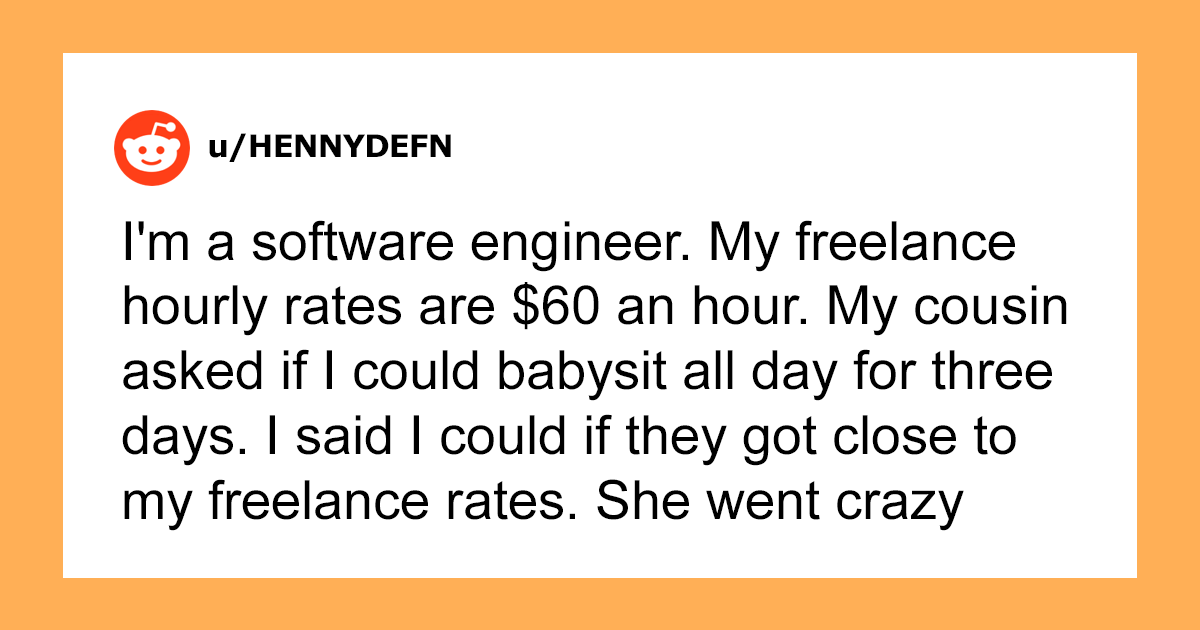

There are few topics that can turn a friendly family chat into a courtroom drama faster than babysitting money. One minute everyone is smiling over juice boxes and bedtime routines. The next, someone says “$35 an hour,” and suddenly the room has the emotional temperature of a canceled flight.
The viral-sounding debate behind “Parents Get Mad At Woman After She Asks $35/Hour To Babysit Their 3 Children” hits a nerve because it sits right at the intersection of modern parenting, rising childcare costs, family expectations, and one very awkward question: how much is someone’s time worth when that time involves keeping three children alive, fed, entertained, emotionally regulated, and ideally not covered in glitter glue?
For many parents, $35 per hour feels steep. For many babysitters, especially experienced ones, it feels fair once the job description expands beyond “watch the kids” into “manage dinner, bedtime, sibling fights, screen-time rules, homework, pets, dishes, and the child who swears there is a monster in the laundry basket.” The truth is more nuanced than a simple “too expensive” or “pay up.” Babysitting rates depend on location, number of children, the sitter’s experience, the time of day, special needs, transportation, and whether the parents expect Mary Poppins with CPR certification and a dishwasher-safe personality.
Why $35/Hour For Babysitting Three Children Sparked Such A Big Reaction
At first glance, $35 an hour sounds like a luxury-service price. Parents already facing grocery bills, rent, school fees, and the mysterious disappearance of every left shoe in the house may hear that number and panic. A four-hour date night would cost $140 before dinner, parking, movie tickets, or the emotional fee of realizing the restaurant no longer gives free bread.
But babysitting three children is not the same as sitting quietly in a room while one angelic toddler naps for three hours. Three kids can mean three personalities, three snack preferences, three bedtime negotiations, and at least one child who believes pajamas are a violation of basic human rights. The sitter is not just “hanging out.” She is responsible for safety, supervision, conflict management, routines, and emergency judgment.
That is why many childcare rate guides suggest adding more money for each additional child. The workload increases quickly. One child may need help with homework, another may need a diaper change, and the third may be trying to feed cereal to the dog “because he looked sad.” In that context, a sitter asking for a higher hourly rate is not necessarily being greedy. She may simply be pricing the job according to the labor involved.
The Real Cost Of Babysitting In The U.S.
Recent U.S. babysitting rate data shows that childcare is no longer the $5-and-a-pizza arrangement many adults remember from the 1990s. In many cities, experienced sitters charge well above minimum wage, especially for multiple children. National averages vary by platform and methodology, but the trend is clear: babysitting rates have climbed, particularly in high-cost areas.
Care marketplaces commonly show higher rates for families with two or three children than for one child. Urban childcare markets, weekend evenings, late-night hours, infants, special needs, and sitters with CPR or first-aid training can all raise the price. Meanwhile, official labor data shows that childcare workers are not exactly bathing in gold coins. Many professional caregivers remain underpaid relative to the responsibility they carry.
This is the uncomfortable middle of the childcare conversation: parents feel squeezed because childcare costs are high, while caregivers feel squeezed because caring for children is demanding and often undervalued. Everyone is tired. Everyone is budgeting. Everyone would like the economy to stop acting like a toddler denied a cookie.
Is $35/Hour Too Much To Babysit Three Kids?
The fairest answer is: it depends. In a low-cost town, $35 per hour may be above the usual local rate. In a major city or wealthy suburb, it may be normal for three children, especially if the sitter is experienced and the job includes more than basic supervision.
When $35/Hour May Be Reasonable
A $35 hourly babysitting rate can make sense if the sitter is watching three young children, handling dinner and bedtime, staying late, driving kids to activities, caring for a baby, managing allergies, helping with homework, or cleaning up after meals. It can also be fair if the sitter has years of childcare experience, strong references, CPR certification, or professional nanny background.
Parents sometimes forget that “just babysitting” often includes invisible labor. A good sitter is scanning for choking hazards, noticing mood shifts, preventing sibling wrestling matches from becoming amateur cage fights, and remembering which child needs the blue cup because the green cup is apparently cursed.
When $35/Hour May Be Too High
On the other hand, $35 per hour may be high if the children are older, self-sufficient, already asleep, and the sitter’s only responsibility is to be present for a short time. It may also be above market if local rates are much lower and the sitter has limited experience.
But even then, the sitter is allowed to name her rate. Parents are allowed to decline. What turns a simple negotiation into drama is when either side treats the other as unreasonable for having a budget or a boundary.
The Number Of Children Matters More Than People Think
Three children can change the entire babysitting equation. With one child, a sitter can usually focus attention in one direction. With two, she is balancing needs. With three, she is running a tiny household shift. There may be different ages, different routines, different safety concerns, and different emotional weather systems moving through the living room.
A toddler may require constant supervision. A preschooler may need help with toileting, snacks, and bedtime. A school-age child may need homework support or conflict mediation. Add dinner, bath time, pajamas, tooth brushing, and one missing stuffed animal named Mr. Pickles, and the job starts to look less like casual sitting and more like live-action project management.
That is why many sitters charge extra for each additional child. It is not a punishment for having a bigger family. It is a recognition that more children usually means more work, more responsibility, and more chances that someone will put a sticker on the cat.
Why Parents May Feel Offended By A High Babysitting Rate
Parents who react angrily to a $35/hour quote may not be angry only at the sitter. They may be reacting to the bigger financial pressure of raising children in the United States. Childcare costs have become a major household expense. Many families spend a large share of income on daycare, after-school care, summer camps, and occasional babysitting. For parents already stretched thin, a high hourly quote can feel like one more reminder that even taking a break costs money.
There is also a generational expectation problem. Some adults grew up when babysitting was done by a neighborhood teen for pocket money. Today, many parents want a sitter who is older, experienced, background-checked, trained, reliable, available on short notice, and willing to manage multiple kids. Those expectations naturally cost more.
It is a little like wanting a gourmet burger at drive-thru prices. Understandable? Yes. Realistic? Not always.
Why The Babysitter Has A Right To Set Her Own Rate
The woman in this scenario did something simple: she named her price. That is not rude. That is business. A babysitter is not obligated to accept a rate that feels too low, just as parents are not obligated to hire a sitter they cannot afford.
Setting a rate is especially important when the job involves three children. If the sitter undercharges, she may end the night exhausted, resentful, and covered in applesauce for less than the value of the work. If she charges clearly upfront, everyone can decide before the first shoe goes missing.
The healthiest version of this conversation sounds like this: “My rate for three children is $35 an hour.” Then the parents can say, “That is outside our budget, but thank you.” No insults. No guilt trips. No dramatic family group chat titled “Can You Believe This?”
Babysitting Is Work, Not A Favor Disguised As Fun
One reason babysitting pay becomes emotional is that caregiving is often treated as natural, easy, or “something women just do.” That mindset undervalues real labor. Keeping children safe is serious work. Feeding them, comforting them, enforcing rules, helping them sleep, and responding calmly in emergencies all require attention and skill.
Even when the kids are adorable, babysitting is still work. Puppies are adorable too, but nobody expects a dog trainer to accept payment in compliments and leftover cupcakes.
Good childcare is valuable because parents are trusting someone with the most important people in their lives. That trust deserves respect, and often, fair pay.
What Parents Should Consider Before Calling A Rate “Too Expensive”
Before getting upset about a babysitting quote, parents should compare it with local rates, the number of children, the sitter’s experience, and the actual tasks involved. A sitter who watches three kids from 6 p.m. to midnight, prepares dinner, handles bedtime, and cleans up the kitchen is doing a different job from someone who arrives after the kids are asleep and watches television while checking the baby monitor.
Parents should also ask whether they are paying for reliability. A cheaper sitter who cancels often, ignores rules, or lacks emergency judgment may not be a bargain. A dependable sitter who communicates well and keeps children safe may be worth more than the lowest available rate.
How Babysitters Can Communicate Rates Without Drama
Babysitters can avoid misunderstandings by being clear and confident. A simple message works best: “For three children, my rate is $35 per hour. That includes dinner, bedtime, and basic cleanup after the kids.” This tells parents what they are paying for and reduces the chance of awkward surprises.
Sitters should also clarify overtime, late-night fees, transportation, cancellations, and whether they are expected to do chores beyond childcare. “Light cleanup” means wiping the dinner table, not reorganizing the garage while a toddler sings into a banana.
How Parents Can Negotiate Respectfully
If parents cannot afford $35 per hour, they can negotiate politely. They might ask whether the sitter has a lower rate if the children are already asleep, if the job is shorter, or if another parent joins for a babysitting share. They can also offer a flat rate for a predictable evening, though the sitter should never feel pressured to accept less than she wants.
Another option is adjusting expectations. If parents want a lower rate, they can simplify the job: feed the kids beforehand, handle baths before leaving, prepare pajamas, write down routines, and make the home easier to manage. The less chaos the sitter inherits, the more flexible the arrangement may become.
The Bigger Issue: America’s Childcare Crunch
This story resonates because it reflects a national problem. Parents need breaks, date nights, work coverage, and emergency help. Caregivers need fair wages. But the private childcare market often leaves both sides frustrated. Parents feel like they are paying a fortune, while caregivers still may not earn enough to feel secure.
That tension explains why a single babysitting quote can explode online. It is not really just about $35. It is about the rising cost of raising children, the undervaluing of care work, and the awkward social pressure that appears when money enters relationships.
Who Was Right In This Situation?
If the woman clearly stated her rate before accepting the job, she was not wrong. She offered a service at a price. The parents were free to decline. Getting mad at the quote does not make the quote unfair; it only means the quote did not fit their budget or expectations.
The parents are not villains for feeling surprised. Childcare is expensive, and many families are stretched thin. But anger is misplaced when directed at an individual sitter who is simply valuing her time. The more productive response is to compare local rates, adjust the job, find another sitter, or build a childcare plan that works financially.
In short: nobody has to hire the $35/hour babysitter. But nobody gets to demand champagne childcare on a juice-box budget, either.
Practical Takeaways For Parents And Babysitters
For Parents
Research local babysitting rates before asking someone to watch your children. Be honest about the number of kids, their ages, routines, allergies, behavior challenges, pets, transportation needs, and expected chores. If the rate is too high, decline kindly. A polite “That is outside our budget, but thank you for being upfront” keeps relationships intact.
For Babysitters
Set your rate before the job begins. Explain what is included and what costs extra. If three children require more energy, charge accordingly. Your time, attention, and responsibility have value. A family that respects your rate is more likely to respect your boundaries, too.
Experience Section: What This Babysitting Debate Teaches In Real Life
Anyone who has babysat multiple children knows that the job can change in five minutes. You arrive to a calm house, the parents say, “They’re usually easy,” and then the youngest starts crying because her sandwich was cut into squares instead of triangles. The oldest wants to negotiate bedtime like a tiny lawyer. The middle child has vanished, only to be found under the dining table making “soup” out of crackers and water. This is not passive work. This is childcare jazz: you improvise, stay calm, and hope nobody eats a crayon.
One common experience among sitters is that parents often underestimate the mental load. The sitter must remember emergency contacts, food rules, screen-time limits, bedtime routines, favorite stuffed animals, medicine instructions, and which child is allowed to brush their own teeth without turning the bathroom into a foam party. Even when everything goes well, the sitter is constantly alert. That alertness is part of what parents are paying for.
Parents, meanwhile, experience the other side. They may desperately need one night out, only to realize the babysitter costs as much as the dinner. That can feel discouraging. Some parents feel guilty spending money on themselves. Others worry that if occasional care is this expensive, long-term childcare will be impossible. Their frustration is real, even when the sitter is not the right target for it.
The best real-life arrangements usually happen when both sides communicate early. Parents who write down routines, prepare meals in advance, and come home on time tend to build loyalty with sitters. Babysitters who are clear about rates, availability, and comfort levels avoid resentment. Everyone wins when expectations are boringly specific.
A helpful example: instead of saying, “Can you watch the kids Saturday?” a parent can say, “We need care from 6 to 10 p.m. for three children ages 2, 5, and 8. Dinner will be prepared. We need help with bedtime and basic cleanup from dinner. What is your rate?” That message gives the sitter enough information to quote fairly. It also avoids the dreaded surprise chore list that appears after the parents are already wearing coats.
For babysitters, the lesson is to stop apologizing for fair rates. A confident quote is not rude. It is professional. For parents, the lesson is that sticker shock does not justify disrespect. If the rate is too high, move on kindly. There may be a teen sitter, family member, babysitting co-op, drop-in care option, or another arrangement that fits better.
Ultimately, the $35/hour debate is not just about one woman and one set of angry parents. It is about how society values care. Children are precious, unpredictable, hilarious, sticky little humans. Watching three of them at once is a responsibility. Paying fairly for that responsibility should not be scandalous. It should be normal.
Conclusion
The story of parents getting mad after a woman asks $35/hour to babysit their three children is more than internet drama. It is a snapshot of modern childcare tension in America. Parents are under financial pressure, sitters are trying to earn fair pay, and everyone is navigating a market where care is essential but often undervalued.
For three children, $35 per hour may be high in some areas and completely reasonable in others. The real issue is not whether every family should pay that rate. The real issue is whether caregivers have the right to set prices based on labor, responsibility, and experience. They do. Parents also have the right to decline. The magic is doing both without turning a babysitting quote into a family feud with snacks.
Fair childcare begins with honest expectations. If parents want quality, reliability, and safety, they should expect to pay accordingly. If sitters want respect, they should communicate clearly. And if three children are involved, everyone should budget for at least one unexpected crisis involving pajamas, toothpaste, or a suspiciously quiet playroom.