
A sloping lawn can feel like your yard is trying to escape the property line. One minute you are imagining a patio, a fire pit, maybe a quiet corner for morning coffee; the next, you are watching rainwater race downhill like it is late for a meeting. But here is the good news: a slope is not a landscaping curse. It is an invitation to create depth, drama, privacy, and outdoor rooms that a flat lawn could only dream about.
Turning a sloping lawn into a backyard oasis is not about fighting gravity. Gravity has been around longer than your fence and, frankly, it has excellent lawyers. The smarter approach is to work with the grade: slow water down, stabilize soil, create usable levels, plant strategically, and design spaces that feel intentional rather than improvised. With the right plan, a tricky hillside can become the most interesting part of your home’s outdoor living space.
Why a Sloping Lawn Has So Much Potential
Flat yards are easy, but they can also be visually predictable. A sloped backyard naturally creates layers, sightlines, and opportunities for destination spaces. The upper level can become a dining terrace, the middle slope can hold flowering beds or native grasses, and the lower area can turn into a fire pit, play lawn, plunge pool, garden room, or shaded retreat.
The secret is to stop seeing the slope as wasted space. A sloped yard can support terraced gardens, stone steps, retaining walls, water features, outdoor kitchens, seating nooks, and winding paths. It can also offer better privacy because plantings and walls can be staggered at different heights. Instead of staring at one big patch of grass, you get a landscape that unfolds like a little backyard adventure.
Start With Drainage Before You Start Dreaming
Every successful sloped backyard makeover begins with one deeply unglamorous question: where does the water go? This is not the exciting part. Nobody posts photos of “proper runoff management” with heart emojis. But drainage is the foundation of the entire project. Ignore it, and your beautiful patio may become a seasonal slip-and-slide, minus the childhood joy.
Walk the yard during or right after a heavy rain. Notice where water enters, where it speeds up, where it pools, and where soil washes away. Downspouts, compacted soil, bare slopes, and poorly placed hardscape can all increase runoff. A sloping lawn needs a safe route for water, whether that means a swale, French drain, dry creek bed, rain garden, permeable pavers, or a combination of methods.
Smart Drainage Options for a Sloped Backyard
A dry creek bed can guide water through the landscape while looking like a natural design feature. French drains can move subsurface water away from structures or soggy areas. Swales can gently direct runoff toward a planted basin. Rain gardens can collect water in shallow depressions and allow it to soak into the soil. Rain barrels can capture roof runoff for ornamental plantings, reducing the amount of water rushing across the lawn.
For many homes, the best solution is layered. For example, a downspout may feed into a buried drain, the drain may daylight into a rock-lined swale, and the swale may lead to a rain garden planted with moisture-tolerant perennials. Suddenly, the yard is not flooding; it is hydrating with purpose. Very fancy. Very responsible.
Create Terraces for Usable Outdoor Living
Terracing is one of the most effective ways to transform a sloping lawn into a backyard oasis. Instead of one awkward incline, terraces create flat or gently sloped zones. These zones can serve different functions: dining, lounging, gardening, grilling, playing, or simply sitting with a drink and admiring the fact that you no longer own a backyard ski hill.
Terraces do not have to be enormous. Even a modest slope can benefit from two or three levels connected by steps. A small upper patio near the house can hold a table and chairs. A middle terrace can feature shrubs, grasses, and a path. A lower terrace can become a fire pit area with gravel, stone, or pavers. The result feels bigger than the original yard because each level has a clear job.
Retaining Walls: Structure With Style
Retaining walls help hold soil in place, reduce erosion, and create level areas. They can be built from natural stone, concrete block, timber, brick, boulders, poured concrete, or gabion baskets filled with rock. The material should match the home’s style and the landscape’s personality. A rustic house may look fantastic with boulder walls and native plantings. A modern home may pair well with clean concrete blocks, steel edging, and architectural grasses.
Short retaining walls may be manageable for experienced DIY homeowners, but taller or load-bearing walls should involve a professional. Soil pressure, drainage behind the wall, footing depth, frost conditions, and local code requirements matter. A wall that leans forward after one rainy season is not “settling in.” It is sending a resignation letter.
Use Steps, Paths, and Landings to Make the Yard Feel Welcoming
A backyard oasis should be easy to move through. If guests need hiking poles to reach the seating area, the design needs work. Steps, landings, and pathways make a sloped lawn safer, more comfortable, and more inviting.
Stone steps offer a natural look and blend well with planting beds. Brick steps feel classic and warm. Timber steps can suit casual gardens, while poured concrete gives a clean contemporary effect. Gravel paths are budget-friendly, but they need edging and proper compaction on slopes. Stepping stones can work beautifully on gentle grades, especially when surrounded by creeping ground cover.
Landings are just as important as steps. A small landing halfway down the slope gives people a place to pause and changes the rhythm of the landscape. Add a bench, a planter, or a sculpture, and the landing becomes a feature rather than just a practical interruption.
Choose Plants That Hold the Soil and Earn Their Keep
Plants are not just decoration on a slope. They are living erosion control. Roots help bind soil, foliage slows rainfall, and dense ground covers reduce bare patches where runoff can carve channels. The best planting plan mixes trees, shrubs, perennials, ornamental grasses, and ground covers so the slope is protected at multiple levels.
Native plants are often a smart choice because they are adapted to local climate, rainfall patterns, and wildlife. Deep-rooted native grasses, flowering perennials, and shrubs can stabilize the slope while supporting pollinators and birds. Fine fescues, clover mixes, sedges, creeping phlox, switchgrass, little bluestem, black-eyed Susan, coneflower, creeping juniper, and woodland ground covers may all be useful depending on region, sun exposure, and soil type.
Planting by Slope Zone
At the top of the slope, use plants that can tolerate drier soil because water drains away faster. In the middle, combine shrubs and perennials to slow runoff and create visual rhythm. At the bottom, select plants that can handle temporary moisture, especially near rain gardens or drainage outlets. This approach respects how water naturally behaves instead of pretending the whole yard has one personality.
Mulch also matters. Shredded hardwood mulch can wash down steep slopes if applied too thickly or loosely. Pine straw, erosion-control blankets, jute netting, gravel mulch, or tightly planted ground covers may work better in specific areas. The goal is simple: keep soil covered until roots take over the job.
Design Outdoor Rooms Instead of Random Features
The difference between a backyard oasis and a backyard collection of expensive objects is planning. A fire pit, pergola, patio, and water feature can be wonderful, but if they are scattered around without flow, the yard feels confused. Think in outdoor rooms.
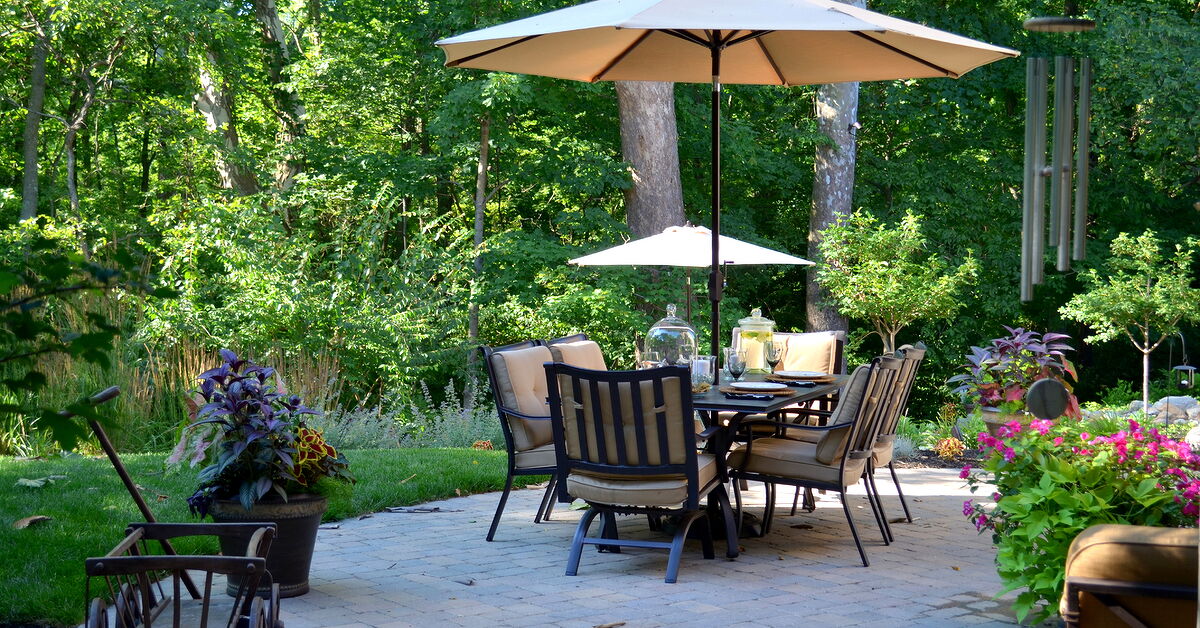
An upper dining terrace near the kitchen is convenient for meals. A shaded lounge area can sit slightly lower, surrounded by shrubs for privacy. A garden path can lead to a lower fire pit. A small deck can bridge a grade change. A water feature can sit where the natural slope already suggests movement. The best sloped backyard designs feel like the land wanted to become this all along.
Example Layout: The Three-Level Oasis
Imagine a backyard that drops six feet from the back door to the rear fence. The first level becomes a paver patio with a grill, dining table, and container herbs. Three wide stone steps lead to a middle terrace planted with ornamental grasses, hydrangeas, and native perennials. A curving path continues to the lower level, where a gravel fire pit area sits under string lights. A dry creek bed runs along one side, carrying stormwater into a small rain garden at the bottom. The slope is still there, but now it feels like architecture.
Add Water, Fire, Shade, and Lighting
Once the structure is right, the oasis details can shine. Water features are especially effective on sloped yards because the grade naturally supports movement. A small recirculating waterfall, stream, or wall fountain can add sound and cooling atmosphere. Just keep maintenance realistic. A water feature should soothe your soul, not become a second job with algae.
Fire features create a destination, especially on a lower terrace. A built-in fire pit, portable fire bowl, or outdoor fireplace can anchor the space. Always follow local fire codes, keep safe clearances from structures and trees, and choose nonflammable surfaces beneath and around the feature.
Shade is another key ingredient. Pergolas, shade sails, umbrellas, trees, and tall shrubs can make the yard usable during hot afternoons. Lighting completes the design. Step lights, path lights, uplights on trees, and soft string lighting help people move safely while creating evening atmosphere. On a slope, lighting is not just pretty; it prevents dramatic ankle plot twists.
Budget-Friendly Ways to Improve a Sloped Backyard
A full backyard transformation can be expensive, but not every improvement requires a major construction crew and a budget that sounds like a luxury car. Start with drainage and safety. Then phase the project.
Begin by removing bare, eroding patches and planting ground covers. Add a simple gravel path with sturdy edging. Use existing rocks or boulders as natural accents. Create one small seating area instead of building the entire dreamscape at once. Install shrubs in groups rather than scattering single plants around the slope. Use mulch, compost, and native perennials to fill space affordably over time.
Phasing also helps you learn how the yard behaves. After the first season, you may discover where the sun is strongest, where water lingers, where guests naturally walk, and where you actually want to sit. This knowledge is worth more than any impulse purchase from the garden center, including that ceramic frog wearing sunglasses. Though, admittedly, he has charisma.
Common Mistakes to Avoid
The biggest mistake is building before planning drainage. The second is clearing too much vegetation at once. Plants help hold slopes together, so stripping a hillside bare can trigger erosion quickly. Another mistake is creating walls without proper drainage behind them. Water pressure can damage retaining walls and shorten their life.
Homeowners also underestimate access. If your dream patio is at the bottom of a steep yard, think about how people, furniture, firewood, cushions, food, and maintenance tools will get there. A beautiful destination that is annoying to reach will not be used as often as you think.
Finally, avoid overcomplicating the design. A sloped backyard already has visual movement. Too many materials, colors, patterns, and focal points can make it feel busy. Choose a limited palette and repeat it throughout the space. Stone steps, gravel paths, native grasses, warm wood, and simple lighting can look more elegant than a dozen competing features shouting for attention.
Maintenance: Keeping the Oasis Beautiful
A sloped backyard needs seasonal maintenance. Check drainage channels after heavy storms. Remove debris from swales and drains. Watch for new erosion lines, leaning walls, loose steps, or mulch movement. Replace failed plants quickly so bare soil does not spread. Prune shrubs to maintain airflow and visibility along paths.
Water new plantings deeply during establishment, then reduce irrigation as roots mature. Add compost where appropriate, but do not overfertilize native or drought-tolerant plantings. Keep weeds under control during the first two years, when desirable plants are still filling in. Once established, a well-planted slope usually becomes easier to maintain than a steep lawn that has to be mowed with the courage of a mountain goat.
Experience Section: Lessons From Turning a Sloping Lawn Into a Backyard Oasis
The most important lesson from any sloped backyard project is that the yard will tell you what it needs if you pay attention. Before sketching patios and choosing furniture, spend time outside. Watch where the morning sun lands. Notice where the afternoon heat becomes uncomfortable. See where rainwater runs, where soil collects, where grass struggles, and where you naturally want to pause. A good backyard oasis does not begin with a shopping list. It begins with observation.
Many homeowners start with a simple frustration: the lawn is hard to mow, the lower corner is muddy, the slope feels unsafe, and no one uses the space. The first instinct may be to flatten everything, but that can be expensive and unnecessary. Often, the better experience is to shape the yard in smaller moves. Add one terrace. Improve one path. Plant one difficult bank. Create one seating destination. Each improvement makes the next decision clearer.
One practical experience is learning that outdoor rooms do not need walls to feel like rooms. A curved planting bed can define a lounge area. A change from pavers to gravel can signal a fire pit zone. A row of shrubs can create privacy. A pair of planters can frame a path. On a slope, these transitions feel especially natural because the grade already separates spaces. The designer’s job is to make those separations comfortable and beautiful.
Another lesson is that plants are more patient than people. Homeowners often want instant fullness, but a slope planted with young shrubs, grasses, and perennials may need two or three growing seasons to look mature. During that awkward middle stage, mulch, temporary annuals, stepping stones, and garden edging can keep the area looking intentional. Think of it as the landscape’s teenage phase: a little uneven, occasionally dramatic, but full of promise.
Comfort also matters more than perfection. A backyard oasis is not just a magazine photo. It is a place where someone drinks coffee in slippers, kids chase bubbles, friends eat too many chips, and the dog chooses the most expensive planting bed for a nap. Include practical comforts: a place to set a drink, shade at the right time of day, lighting near steps, storage for cushions, and a path wide enough to carry a tray without performing acrobatics.
Finally, the best sloped backyard transformations feel personal. Maybe your oasis includes a small herb garden near the kitchen, a hammock under a tree, a quiet reading bench halfway down the slope, or a lower patio where everyone gathers around a fire. The slope becomes part of the story. What once felt like a problem becomes the reason the yard has character. And when the evening lights come on, the plants move in the breeze, and water drains exactly where it should, you may find yourself admiring that old troublesome hill with genuine affection. Gravity, it turns out, was not the villain. It was the design consultant.
Conclusion
Going from sloping lawn to backyard oasis takes planning, patience, and respect for the land’s natural movement. Start with drainage, stabilize the soil, create usable terraces, choose plants that protect and beautify, and connect each area with safe steps and paths. Then add the comforts that make the space yours: shade, lighting, seating, water, fire, color, and texture.
A sloped backyard does not have to be the awkward part of the property. With thoughtful design, it can become the most memorable outdoor space you own: layered, comfortable, functional, and full of personality. The hill is not in the way. The hill is the opportunity.
Note: This article is fully rewritten for web publication and synthesizes real landscaping, stormwater, gardening, and outdoor-living guidance from reputable U.S. extension, environmental, and home-improvement resources without including raw source links or citation placeholders.