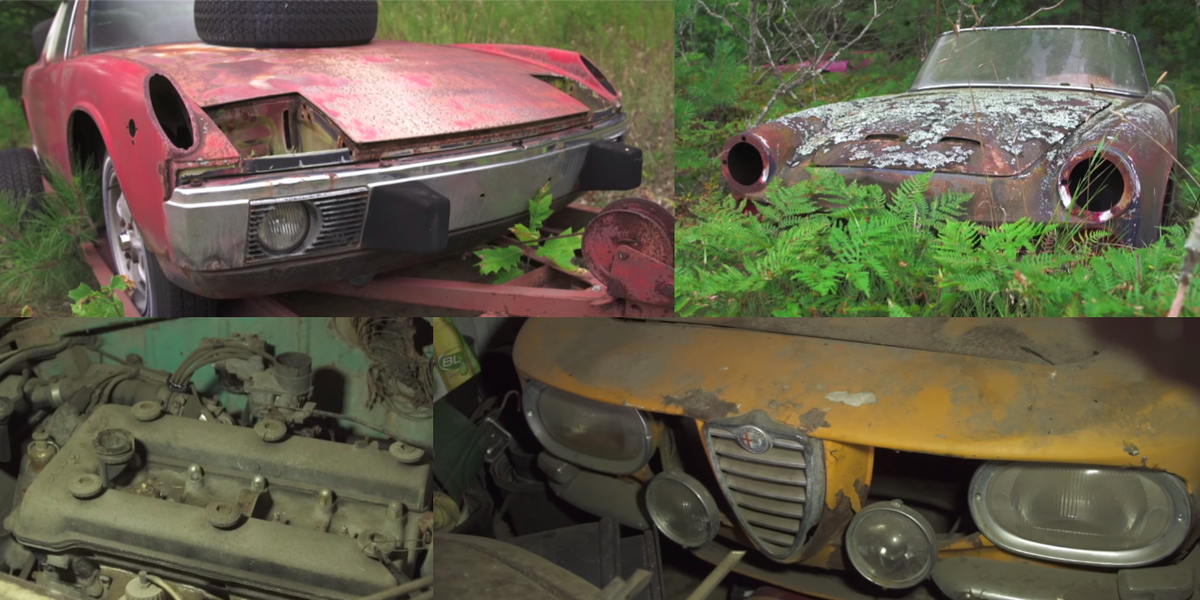

Some barns hold hay. Some hold tools, tractor parts, and that one mysterious coffee can full of bolts nobody dares throw away. But every now and then, an old barn in Michigan opens its doors and reveals something far more exciting: a lineup of neglected classic cars sitting in dusty silence like retired movie stars waiting for one last close-up.
For classic car lovers, few phrases spark the imagination like “barn find.” It suggests mystery, history, and the delicious possibility that beneath a layer of dust there might be chrome, fins, straight-eight engines, V8 muscle, rare badges, or a forgotten dashboard that still smells faintly of gasoline, vinyl, and 1960s optimism. Michigan, of all places, is a perfect setting for such a discovery. This is the state that helped put America on wheels, where Detroit became the Motor City and where car culture is not just a hobby but practically a regional dialect.
The story of an old Michigan barn packed with neglected classics is more than a simple tale of abandoned metal. It is about memory, preservation, value, and the strange emotional pull of cars that should have been forgotten but somehow refused to disappear. These vehicles may be rusty, dusty, mouse-approved, and stubborn as a frozen lug nut in February, but they still matter. In fact, their neglect may be part of what makes them so fascinating.
Why Michigan Is the Perfect Place for a Classic Car Barn Find
Michigan and automobiles go together like chrome and sunlight. Long before modern crossovers filled suburban driveways, the state was home to the innovators, factories, suppliers, designers, and workers who shaped the American auto industry. Detroit’s rise as the Motor City was driven by industrial talent, access to materials, a skilled workforce, and the kind of mechanical ambition that made people look at a horse and say, “Nice, but what if it had an engine?”
That history explains why Michigan barns, garages, sheds, pole buildings, and rural properties can still hide remarkable cars. Families held onto vehicles for sentimental reasons. Mechanics saved projects for “someday.” Collectors bought cars when prices were low and parked them when space, money, or energy ran out. Farmers kept old trucks because they were useful, then parked them behind the barn when they were not. Decades later, those same vehicles become artifacts.
In Northern Michigan and the Upper Peninsula, the barn-find dream gets an extra layer of atmosphere. Long winters, wooded roads, remote towns, and old family properties create the perfect setting for hidden automotive time capsules. Of course, Michigan weather is not always kind. Moisture, snow, temperature swings, and road salt can turn lower body panels into lace doilies. Still, a car stored indoors has a fighting chance, especially if the barn roof did its job and the floor was dry enough to keep rust from throwing a party.
What Makes a Barn Full of Neglected Classic Cars So Exciting?
A neglected classic car is not automatically valuable, and a barn find is not automatically a gold mine. That is part of the fun. Every vehicle is a puzzle. One car may be a rare model with original parts and documentation. Another may be a rusty parts donor wearing a heroic badge but hiding a tragic frame. A third might look terrible but have a complete interior, matching numbers, and a story that makes collectors lean forward.
The magic comes from possibility. A dusty Cadillac hearse, an old Buick Special with a straight-eight engine, a Hudson Hornet, a Chrysler Windsor, a DeVille, an Eldorado convertible, a Chevrolet Suburban, or a pair of AMC Rambler Marlins each tells a different story. Some represent mainstream American luxury. Others are reminders of brands that disappeared or merged into history. A few are oddballs, and oddballs are often the life of the party. Nobody forgets the person who brings a Rambler Marlin to a car meet.
Classic car fans love these discoveries because they feel unscripted. A concours restoration is beautiful, but a barn-find car has suspense. Why was it parked? Who owned it? Did it run when stored? Is the original engine still there? Is the title clean? Did squirrels eat the wiring harness like spaghetti? These questions turn a dusty vehicle into a detective story with whitewall tires.
The Cars: From Dusty Relics to Potential Showstoppers
A Michigan barn packed with neglected classics can contain a wild mix of makes and models. That variety is important because not every collector wants the same thing. Some chase muscle cars. Others prefer prewar sedans, finned 1950s cruisers, luxury Cadillacs, orphan brands, wagons, trucks, or unusual body styles that make younger people ask, “Wait, that was a real car?”
Cadillac: Big Chrome, Big Personality
Cadillac models from the 1950s through the 1970s remain some of the most dramatic American classics. A 1958 Cadillac DeVille, for example, carries the visual confidence of an era when tailfins seemed to be competing with actual aircraft. A 1972 Cadillac Eldorado convertible offers a different appeal: front-wheel-drive luxury, a massive hood, soft-top cruising, and the unmistakable feeling that the car was designed for people who considered parking spaces more of a suggestion than a rule.
A Cadillac hearse is even more unusual. It may not be everyone’s dream cruiser, but professional cars have a loyal following. They were coachbuilt, expensive when new, and often based on heavy-duty luxury platforms. Restored correctly, they can be dramatic, rare, and historically interesting. Park one at a local show and watch people walk past five red Camaros to ask about it.
Buick, Hudson, and Chrysler: The Forgotten Royalty
A 1941 Buick Special with a straight-eight engine is a beautiful reminder of prewar and immediate postwar engineering. Straight-eight engines have a smooth, dignified character that feels completely different from later V8 power. They do not shout. They glide into the room wearing a hat.
The Hudson Hornet brings another kind of magic. Hudson earned a strong reputation in early stock car racing, and the Hornet name carries genuine performance history. Even neglected, a Hudson can attract collectors who appreciate engineering outside the Big Three mainstream. Meanwhile, a Chrysler Windsor speaks to the quiet elegance of midcentury American sedansless flashy than some rivals, but full of period charm.
AMC Rambler Marlin: The Oddball Hero
The AMC Rambler Marlin is exactly the kind of car that makes barn finds interesting. It was not a conventional sales superstar, but today its fastback roofline and unusual proportions give it serious conversation value. Collectors increasingly appreciate cars that stand apart from the predictable. In a sea of Mustangs and Chevelles, a Rambler Marlin feels like a plot twist.
That is one of the biggest lessons from neglected classic car collections: rarity is not always about price. Sometimes it is about character. A car can be historically important, visually memorable, or culturally fascinating even if it is not the most valuable machine in the building.
The Barn-Find Reality Check: Dust Is Free, Restoration Is Not
The romance of a barn find usually lasts until the first inspection. Then reality taps you on the shoulder and hands you a flashlight. Cars that sit for decades may suffer from seized engines, contaminated fuel systems, collapsed brake hoses, dry-rotted tires, corroded electrical connections, rodent damage, stuck clutches, rusty tanks, and interiors that smell like a raccoon once considered signing a lease.
Long-term storage is especially tough on rubber and fluids. Brake systems can look acceptable but fail after the first few uses. Fuel turns stale and can become varnish. Carburetors gum up. Cooling systems corrode. Belts and hoses crack. Wiring insulation becomes brittle. Tires may hold air but still be unsafe at speed. A car that “ran when parked” may technically have run during the Clinton administration, which is not a mechanical guarantee.
That does not mean the cars are hopeless. It means buyers and restorers need a plan. The smartest approach is to inspect before attempting to start the engine. Check the oil, coolant, fuel, wiring, brakes, and underbody. Look for signs of animal nests near the engine bay and heater box. Verify that the car rolls, steers, and stops before moving it. And never assume a barn-find car can be driven home just because the seller says, “It should be fine.” Those five words have launched many tow-truck friendships.
Original, Restored, or Preserved?
One of the biggest debates around neglected classics is whether to restore them fully or preserve their worn originality. Years ago, many old cars were immediately stripped, painted, reupholstered, and rebuilt until they looked better than new. Today, collectors often value originality, especially when a car has factory paint, original trim, matching components, and documentation.
A barn-find car can have a kind of authenticity that a polished restoration cannot recreate. Faded paint, worn seats, old dealership stickers, handwritten maintenance notes, and period accessories can tell a story. That does not mean rust should be ignored or brakes should remain unsafe in the name of “character.” Safety matters. But preservation-minded owners may choose to clean, stabilize, and mechanically revive a vehicle rather than erase every mark of its past.
The best decision depends on the car. A rare, complete, historically significant vehicle may deserve careful preservation. A common model with severe rust may be a better candidate for full restoration or parts use. A family car with sentimental history may not need to impress judges at all; it may simply need to run well enough to bring three generations together on a summer evening.
Documentation: The Paperwork Is Part of the Treasure
Classic cars are not just machines; they are identities on wheels. Before buying any neglected classic, documentation matters. Titles, registrations, bills of sale, old insurance cards, maintenance receipts, factory build sheets, owner’s manuals, and previous-owner stories can all affect value and confidence.
VIN checks can be tricky for older cars because vehicle identification numbers were not standardized in the United States until 1981. Earlier cars may use manufacturer-specific serial numbers, body tags, engine numbers, or frame numbers. That means a buyer must compare the paperwork with the car carefully. A clean title that does not match the body tag is not a small detail. It is a flashing red warning light, and unlike the one on an old dashboard, it probably still works.
For Michigan buyers, it is also important to understand historical plates, ownership rules, and registration requirements. A vehicle may qualify as a historic or collector vehicle, but that does not eliminate the need for proper paperwork. Before pouring money into restoration, make sure the car can legally become yours. Nothing ruins barn-find excitement faster than discovering you restored someone else’s paperwork problem.
Why These Neglected Cars Still Matter
Some people see a barn full of old cars and wonder why anyone would care. After all, modern cars are safer, faster, cleaner, and more comfortable. They start in winter, connect to phones, and do not require drivers to understand choke cables or carburetor moods. But classic cars matter because they preserve design, engineering, craftsmanship, and social history.
Each neglected car shows what Americans once valued in transportation. A Cadillac shows luxury and status. A Hudson shows independent engineering. A Buick straight-eight shows smooth mechanical refinement. An AMC fastback shows a smaller company trying something bold. A Suburban shows utility long before SUVs became suburban fashion accessories. Together, they form a rolling archive.
Michigan adds another layer. In a state shaped by the auto industry, saving an old car is not just a private hobby. It is a small act of cultural preservation. The people who built these cars, sold them, repaired them, drove them, and handed them down were part of a larger story. A dusty barn-find vehicle may look asleep, but it carries the fingerprints of workers, families, towns, and road trips.
The Market Appeal of Barn Finds
Classic car values depend on condition, rarity, originality, desirability, documentation, and market timing. A neglected car may be worth a few thousand dollars or a small fortune, depending on what it is and how complete it remains. The most valuable barn finds are usually rare, original, and historically significant. But even less glamorous cars can attract buyers if they are complete and restorable.
Buyers should be realistic. Restoration costs can easily exceed the finished value of the vehicle. Paint, chrome, upholstery, engine work, transmission rebuilding, brake systems, tires, glass, trim, and electrical repairs add up quickly. The cheapest classic car is often the one someone else already restored correctly. But that misses the emotional side. Many enthusiasts do not buy barn finds because it is the most rational financial decision. They buy them because bringing a forgotten car back to life feels like winning an argument against time.
The smartest buyers calculate before bidding. They inspect the frame and floors, check parts availability, research recent sales, confirm paperwork, and estimate transport costs. They also decide their goal early: preservation, driver-quality revival, full restoration, custom build, or parts donor. A clear goal keeps a dream project from becoming a garage-shaped money vacuum.
How to Approach a Neglected Classic Car in a Barn
When encountering a long-stored classic, patience is everything. First, document the car as found. Take photos of the exterior, interior, engine bay, VIN or serial tags, trim, wheels, and any paperwork. Do not throw away old parts until you know what they are. That strange bracket in the trunk may be impossible to replace.
Second, clean gently. Dust can hide damage, but aggressive washing can harm fragile paint or decals. Vacuum interiors carefully and wear protection if rodent evidence is present. Third, inspect safety systems before chasing horsepower. Brakes, tires, steering, suspension, and fuel lines matter more than making the engine bark for a video. A car that starts but cannot stop is not a success story; it is a physics demonstration.
Fourth, revive systems methodically. Drain old fuel. Replace filters and rubber hoses. Check the tank. Pre-lubricate the engine before turning it over. Inspect wiring. Test compression. Replace fluids. Then, and only then, think about a cautious first start. The first drive should be short, slow, and close to home. Classic cars like to reveal problems gradually, usually at the least convenient intersection.
Experiences and Lessons from the Michigan Barn-Find Dream
The appeal of “This Old Barn in Michigan Is a Treasure Trove of Neglected Classic Cars” is not only about the vehicles themselves. It is about the experience of discovery. Anyone who has walked into an old barn, garage, or storage building knows the feeling. The light comes through cracks in the boards. Dust hangs in the air. There is a smell of wood, oil, old tires, and time. Then your eyes adjust, and shapes begin to appear: a chrome bumper, a curved fender, a hood ornament, a steering wheel, maybe the edge of a whitewall tire. Suddenly, the building is not just storage. It is a museum that forgot to sell tickets.
One lesson from these experiences is that every neglected classic deserves a slow look. A car may seem rough at first glance, but details can change the story. Original trim, factory paint, complete glass, matching hubcaps, intact dashboards, rare options, and period accessories can make a car more interesting. Even paperwork tucked into a glovebox can transform a dusty shell into a traceable piece of history. Old registrations, service receipts, and handwritten notes help connect the machine to real people.
Another lesson is that excitement should never outrun inspection. Barn-find fever is real. It makes grown adults say things like, “Surface rust only,” while standing next to a car whose floorboards are communicating with the earth. A smart enthusiast brings a flashlight, gloves, a magnet, a notepad, and a skeptical friend. The skeptical friend is important. They are the person who says, “Yes, it is cool, but where is the engine?”
Michigan adds practical challenges. Cold winters, damp storage, and decades of seasonal temperature changes can be hard on metal, rubber, and upholstery. A car stored in a dry barn may survive beautifully, while one sitting near a leaky wall may rust from underneath. Always check floors, rockers, trunk pans, lower fenders, frame rails, and suspension mounting points. Shiny chrome does not cancel structural rust. Chrome is charming, but it does not hold the car together.
Talking to locals can also be part of the experience. In small towns, people often remember the car. Someone may know who drove it, when it was parked, why it was stored, or whether the original engine was removed. These stories matter. They may not always increase market value, but they increase meaning. A classic car with a story becomes more than a project; it becomes a rescued chapter.
The most rewarding barn-find experiences often come from realistic goals. Not every car needs a six-figure restoration. Some should be cleaned, made safe, and driven with their scars intact. A faded Cadillac convertible cruising on a summer evening can be more enjoyable than a flawless trailer queen that terrifies its owner every time a cloud appears. A Hudson that runs smoothly after years of silence can feel like a miracle even if the paint still looks like an old chalkboard.
There is also a community side. Michigan’s car culture includes museums, cruises, shows, swap meets, restoration shops, and informal networks of people who know where to find parts that have not been manufactured since disco was considered a good idea. Bringing a neglected classic back to life often requires help: an older mechanic who understands carburetors, a club member with a parts manual, a neighbor with a trailer, or a retired body worker who can identify a panel by squinting at it from twenty feet away.
Finally, barn finds teach patience. Modern life rewards speed, but old cars refuse to hurry. Bolts break. Parts hide. Fuel tanks need cleaning. Brakes demand rebuilding. Electrical gremlins appear, disappear, then return wearing tiny sunglasses. But when the engine finally catches, when the car rolls under its own power, or when it arrives at its first local show, the effort feels worthwhile. The car is no longer just neglected. It is remembered.
Conclusion
An old barn in Michigan filled with neglected classic cars is more than a curiosity. It is a reminder that automotive history often survives in unlikely places. Behind weathered doors and dusty windows, forgotten vehicles wait with stories still attached: luxury cars, orphan brands, family cruisers, oddball fastbacks, workhorses, and machines that once represented pride, freedom, and ambition.
For collectors, restorers, and casual dreamers, the lesson is simple: look closely, research carefully, respect the paperwork, and never underestimate the emotional power of an old car. Some barn finds are valuable because of rarity. Others are valuable because they connect us to people, places, and eras that shaped American life. In Michigan, where the automobile helped define a state and influence the world, even a dusty fender in a quiet barn can feel like buried treasure.
Note: This original article was written from synthesized public information about Michigan automotive heritage, barn-find discoveries, classic-car restoration practices, historic vehicle documentation, and collector-market considerations. It is designed for web publication in standard American English and does not include source links in the body copy.