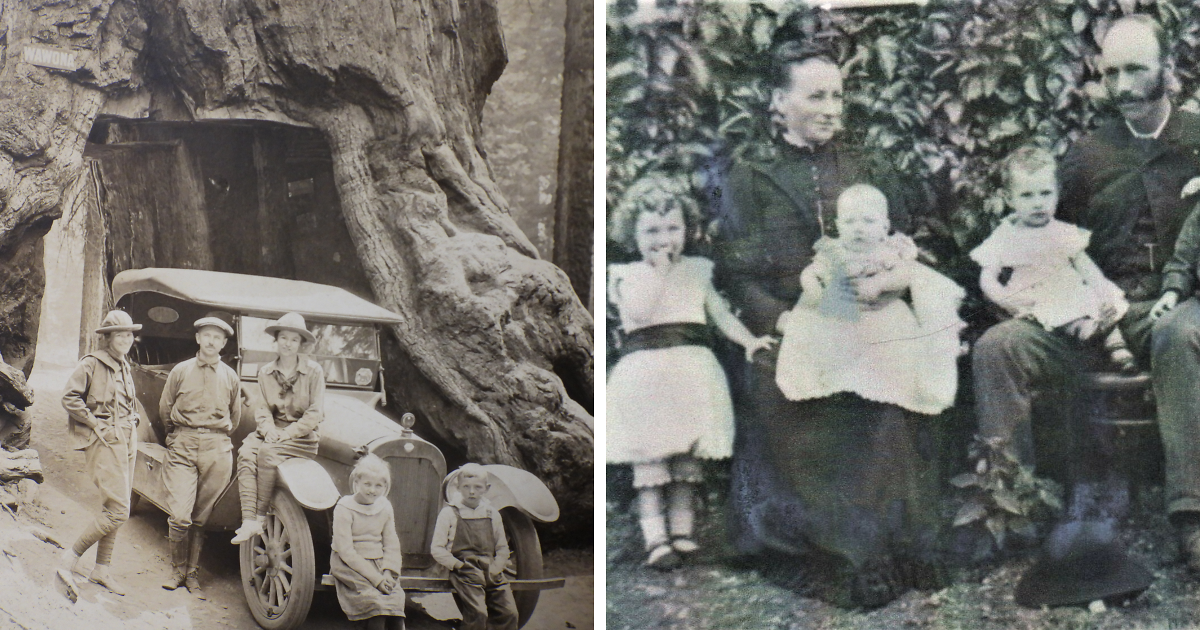

Somewhere in your home, there may be a photograph that has survived more drama than a soap opera finale: basement floods, family moves, questionable scrapbooks, sticky photo corners, and that one cousin who “borrowed” the album in 1998 and returned it with barbecue sauce on the cover. The prompt “Hey Pandas, share the oldest photo you have” is more than a cute internet challenge. It is an invitation to open the shoebox, scan the attic, message your aunt, and rediscover the tiny paper time machines hiding in plain sight.
Old photos have a strange superpower. A blurry porch portrait from 1920 can make strangers lean closer. A faded wedding picture can make descendants say, “Wait, I have her nose.” A cracked school photo can reveal hairstyles that should have required a building permit. Unlike modern photos, which often live in phone galleries so crowded they need traffic control, old photographs feel rare. They were harder to take, harder to print, and easier to lose. That makes each surviving image feel like a small miracle with a paper border.
This article explores why the oldest photo you own matters, how to identify clues about its age, how to preserve it, and why sharing it online can turn one family memory into a conversation about history, identity, fashion, technology, and, occasionally, spectacularly stiff Victorian posture.
Why Old Photos Fascinate Us So Much
The oldest surviving camera photograph, Joseph Nicéphore Niépce’s “View from the Window at Le Gras,” dates to the 1820s and required an exposure long enough that the sun appears to have wandered across both sides of the scene like it got bored and changed teams. Early photography was not instant, casual, or convenient. It was science, chemistry, patience, and a little bit of wizard energy.
By the late 1830s, the daguerreotype process made photography more practical, though still not exactly “smile and say cheese.” People often had to sit still for long exposures, which explains why so many early portraits look like everyone had just heard disappointing news about soup. Later, innovations such as Kodak’s roll-film cameras helped make personal snapshots available to ordinary families. That shift changed history. Suddenly, everyday people could document birthdays, vacations, work clothes, living rooms, pets, cars, and babies who clearly had no interest in cooperating.
That is why a simple old photo can feel bigger than itself. It is not just an image. It is evidence that someone stood there, wore that outfit, loved that person, built that porch, drove that car, or owned that deeply aggressive wallpaper. A photo may not explain everything, but it gives the past a faceand sometimes a truly heroic mustache.
What Counts as “The Oldest Photo You Have”?
When people hear “oldest photo,” they often think of sepia portraits from the 1800s or black-and-white images with scalloped edges. But your oldest photo does not need to be museum-worthy to be meaningful. It might be:
- a tintype or daguerreotype passed down through generations;
- a cabinet card portrait from the late 19th century;
- a wedding photo from the 1920s;
- a World War II-era military portrait;
- a Polaroid from the 1970s;
- a printed baby photo from the 1990s;
- or even an early digital photo burned onto a CD with a marker label that says “IMPORTANT PICS DO NOT DELETE.”
The fun of the “Hey Pandas” style prompt is that it welcomes all kinds of answers. One person might share a great-great-grandparent in a formal studio portrait. Another might post a blurry 1984 Christmas morning scene where half the family is blinking and the carpet deserves its own documentary. Both are valuable. One preserves genealogy. The other preserves the sacred historical truth that every family once owned a couch the color of mushroom soup.
How to Date an Old Photo Without Becoming a Full-Time Detective
You do not need a degree in archival science to estimate when a photo was taken. You just need curiosity, patience, and the willingness to zoom in on sleeves like they contain national secrets.
Look at the Photo Format
The physical format is often your first clue. Daguerreotypes and ambrotypes were commonly housed in small protective cases. Tintypes were printed on thin metal and became popular in the mid-to-late 1800s. Cabinet cards, usually mounted on thick card stock, were common from the late 1800s into the early 20th century. Small square prints might suggest mid-century consumer cameras, while glossy color snapshots often point to the second half of the 20th century.
Study Clothing and Hairstyles
Fashion is a surprisingly helpful calendar, even when it is also a crime scene. High collars, long skirts, corseted silhouettes, wide lapels, flapper dresses, victory rolls, beehives, bell-bottoms, shoulder pads, and frosted tips can all narrow the era. Hair alone can sometimes whisper, “This was 1987, and everyone involved knew exactly what they were doing.”
Check the Background
Old photos often reveal technology and lifestyle details. Look for cars, telephones, kitchen appliances, street signs, military uniforms, school buildings, gas station logos, or product packaging. A porch railing, wallpaper pattern, or type of baby stroller can also provide clues. The background is rarely just background. It is the supporting cast.
Read the Back Carefully
If there is writing on the back, do not ignore it. Names, dates, studio stamps, addresses, and short notes can transform a mystery photo into a family-history jackpot. A portrait stamped with a photographer’s studio name can sometimes be dated by researching when that studio operated. Just avoid writing directly on the photo with ink or marker. Future generations deserve information, not a Sharpie tragedy.
Why Sharing Old Photos Online Feels So Personal
Online communities love old photos because they combine mystery, nostalgia, and human connection. A single image can invite hundreds of reactions: “Your grandmother was stunning,” “That looks like my hometown,” “My dad had that same truck,” or “Please tell me the dog’s name was Sir Biscuit.”
Old photos also make history feel less like a textbook and more like a neighborhood. Famous historical images matter, of course, but personal photos show the details that big narratives often miss: how people decorated kitchens, what children wore to school, how families posed in front yards, what weddings looked like before balloon arches became a national industry, and how much dignity people managed to maintain while wearing wool in July.
The best shared old photos usually come with a caption. A simple line like “My great-grandmother, Chicago, 1912” is good. A richer caption is even better: “My great-grandmother Anna outside her first apartment in Chicago, 1912. She worked as a seamstress and apparently had better posture than our entire family combined.” Context turns an image into a story.
Great Caption Ideas for “Hey Pandas, Share The Oldest Photo You Have”
If you are posting your oldest photo, try giving readers enough detail to care. You do not need to write a biography the size of a refrigerator manual, but a few specifics make the image more memorable.
Use the “Who, Where, When, Why” Formula
A strong caption might include who is in the photo, where it was taken, approximately when it was taken, and why it matters. For example:
“This is my great-grandfather in rural Pennsylvania around 1918. He was 19, had just bought his first suit, and according to family legend, refused to smile because he thought smiling made him look ‘financially irresponsible.’”
That one caption tells us the person, place, time period, family lore, and personality. It also proves that ancestors were unintentionally hilarious.
Invite the Community to Help
If you do not know the date, say so. Online readers often love solving visual puzzles. You can ask, “Can anyone help identify the uniform?” or “Does this car look like a 1940s model?” Crowd knowledge can be surprisingly useful, as long as you verify major claims before turning them into family gospel.
Respect Privacy
Old does not always mean public. Before sharing a photo, consider whether it includes sensitive family history, living people, addresses, medical situations, or private grief. A photo can be beautiful and still deserve discretion. When in doubt, ask relatives, crop carefully, or share a description instead of the full image.
How to Preserve Your Oldest Photo
Once you find your oldest photo, resist the urge to tape it into a scrapbook with the enthusiasm of a caffeinated raccoon. Preservation matters. Old photographs can be damaged by light, heat, humidity, dust, fingerprints, adhesives, and dramatic storage choices like “garage box next to paint cans.”
Store It in a Cool, Dry, Stable Place
Avoid attics, basements, garages, and places near vents, fireplaces, radiators, or exterior walls. Temperature and humidity swings are rough on photos. A closet inside the main living area is often better than a heroic but hostile attic.
Use Photo-Safe Materials
Place photographs in archival sleeves, folders, or boxes made for photo storage. Look for materials labeled photo-safe or PAT-tested. Avoid magnetic albums, cheap plastic sleeves, rubber bands, paper clips, glue, and tape. Many older albums used adhesives that seemed helpful at the time but now behave like tiny chemical villains.
Digitize, But Keep the Original
Scanning old photos is a smart way to share them without repeatedly handling the original. Use a flatbed scanner for loose prints that can lie safely flat. Fragile albums, bound books, or curled photos may need a camera setup or professional help. Save files with clear names, such as “Johnson-family-wedding-1936-front.jpg,” instead of “IMG_0007_FINAL_realfinal2.jpg,” which is how chaos wins.
When digitizing, include metadata whenever possible: names, dates, places, and stories. A scanned image without context is still useful, but a scanned image with names becomes a bridge for future generations.
What Old Photos Teach Us About Family History
Family photos do not simply show what people looked like. They reveal what people valued. A formal portrait might show social aspiration. A military photo might carry pride, fear, duty, or loss. A backyard snapshot might show the ordinary happiness that rarely makes official records. A school photo might reveal migration, class, fashion, and community. Even a photo of a kitchen can say, “This was where everyone gathered, argued, laughed, and burned at least one casserole beyond recognition.”
Old photos also correct memory. Families repeat stories for decades, and sometimes the photo quietly disagrees. Maybe the house was not as big as everyone remembered. Maybe Grandma was not shy; she was standing front and center like she owned the century. Maybe that “formal wedding portrait” was actually taken beside a car because the photographer liked natural light and the groom liked showing off the tires.
That tension between memory and evidence is part of the magic. Photos do not tell the whole truth, but they give us a place to begin asking better questions.
The Best Types of Old Photos to Share
If you want your post to attract comments, choose an image with a strong story or visual detail. Here are a few categories that usually spark conversation:
- Ancestor portraits: Great for genealogy, facial resemblance, and dramatic collars.
- Everyday life photos: Kitchens, porches, farms, shops, classrooms, and street scenes show how people actually lived.
- Military photos: Uniforms, locations, and dates can invite helpful historical insight.
- Wedding photos: Dresses, flowers, suits, and family groupings often reveal cultural traditions.
- Childhood photos: Toys, school clothes, bicycles, and holiday decorations are nostalgia magnets.
- Then-and-now comparisons: Pairing an old photo with a modern recreation can show how places and people change.
Why the Oldest Photo You Have May Be More Valuable Than You Think
Most old family photos will not sell for museum-level money, and that is perfectly fine. Their real value is emotional, historical, and relational. They can reconnect branches of a family, help younger people understand where they came from, and preserve names that might otherwise vanish into “some guy with a hat” territory.
They can also make family history feel less intimidating. Not everyone wants to build a 900-person genealogy chart with color-coded folders and the intensity of a detective in a rainstorm. But almost everyone can look at one photo and ask, “Who is this?” That one question can lead to stories, records, phone calls, reunions, and discoveries.
The oldest photo you have may be a formal portrait, a candid mess, or an image so faded it looks like a ghost borrowed a camera. Share it anyway. The imperfections are part of its charm. A crease says it was handled. Fading says it survived. A handwritten name says someone cared enough to leave a clue.
Experiences Related to “Hey Pandas, Share The Oldest Photo You Have”
The experience of finding an old photo usually begins with confidence and ends with sitting cross-legged on the floor surrounded by envelopes, muttering, “I was only going to look for one thing.” That is the universal law of family-photo exploration. You open a box, and suddenly the afternoon has been replaced by 63 mystery relatives, a receipt from 1974, and a picture of someone’s dog wearing sunglasses before Instagram was even a sparkle in technology’s eye.
One of the best parts of searching for the oldest photo is how quickly it becomes a group activity. You may start alone, but soon you are texting relatives: “Who is the woman in the blue dress?” “Was Grandpa ever in Kansas?” “Why is there a goat in this Christmas picture?” Every answer leads to another question. Sometimes relatives disagree, which is how you learn that family history is part archive, part oral tradition, and part courtroom drama with snacks.
Sharing the photo can be emotional, too. People often expect old pictures to feel cute or funny, but they can also feel surprisingly tender. A young version of a grandparent can make you realize they had dreams, nerves, bad hair days, and awkward phases long before they became the wise adult in your memory. A photo of parents before children can be especially strange, like seeing the pilot episode of your own existence. There they are, young and stylish, completely unaware that one day someone would use their picture for an online prompt and judge their wallpaper.
The oldest photo in a family collection can also change how you see yourself. Maybe you notice your smile in a great-aunt’s face, your hands in a grandfather’s pose, or your stubborn expression on a child from 1910 who absolutely did not want to stand still. These moments create a feeling of continuity. You are not floating alone in time. You are part of a long, complicated, occasionally badly dressed human chain.
There is also a practical lesson: document the photos now. Ask names. Write dates. Record stories. Scan the images. Save backups. The people who know the answers may not always be available, and future generations should not have to identify everyone as “Possible Uncle? Maybe Frank? Tall.” A few minutes of labeling today can save decades of confusion later.
Finally, the “Hey Pandas” spirit works because it turns private memory into shared wonder. Your oldest photo may show a person no one else knows, but readers can still recognize the emotion: pride, love, awkwardness, celebration, survival. That is the beauty of old photographs. They begin as family keepsakes and become tiny windows into the human experience. Also, if your oldest photo includes a suspiciously elegant cat, please understand that the internet has a legal and moral obligation to see it.
Conclusion
“Hey Pandas, Share The Oldest Photo You Have” is more than a nostalgic prompt. It is a reminder that history is not only stored in museums, archives, and famous portraits. It is also tucked into shoeboxes, albums, drawers, closets, and forgotten folders labeled “misc.” Every old photo has the potential to reveal a person, a place, a mood, a mystery, or a family joke that somehow survived three generations.
Whether your oldest photo is from the 1800s or the early 2000s, it deserves attention. Look closely. Ask questions. Preserve it properly. Scan it. Caption it with care. And if you decide to share it, give people the story behind the image. The past becomes more vivid when we stop treating old photos like dusty objects and start treating them like conversations waiting to happen.
Note: This article is written as original web-publishing content and synthesized from reputable information about photography history, family photo preservation, archival care, nostalgia, and online community storytelling.