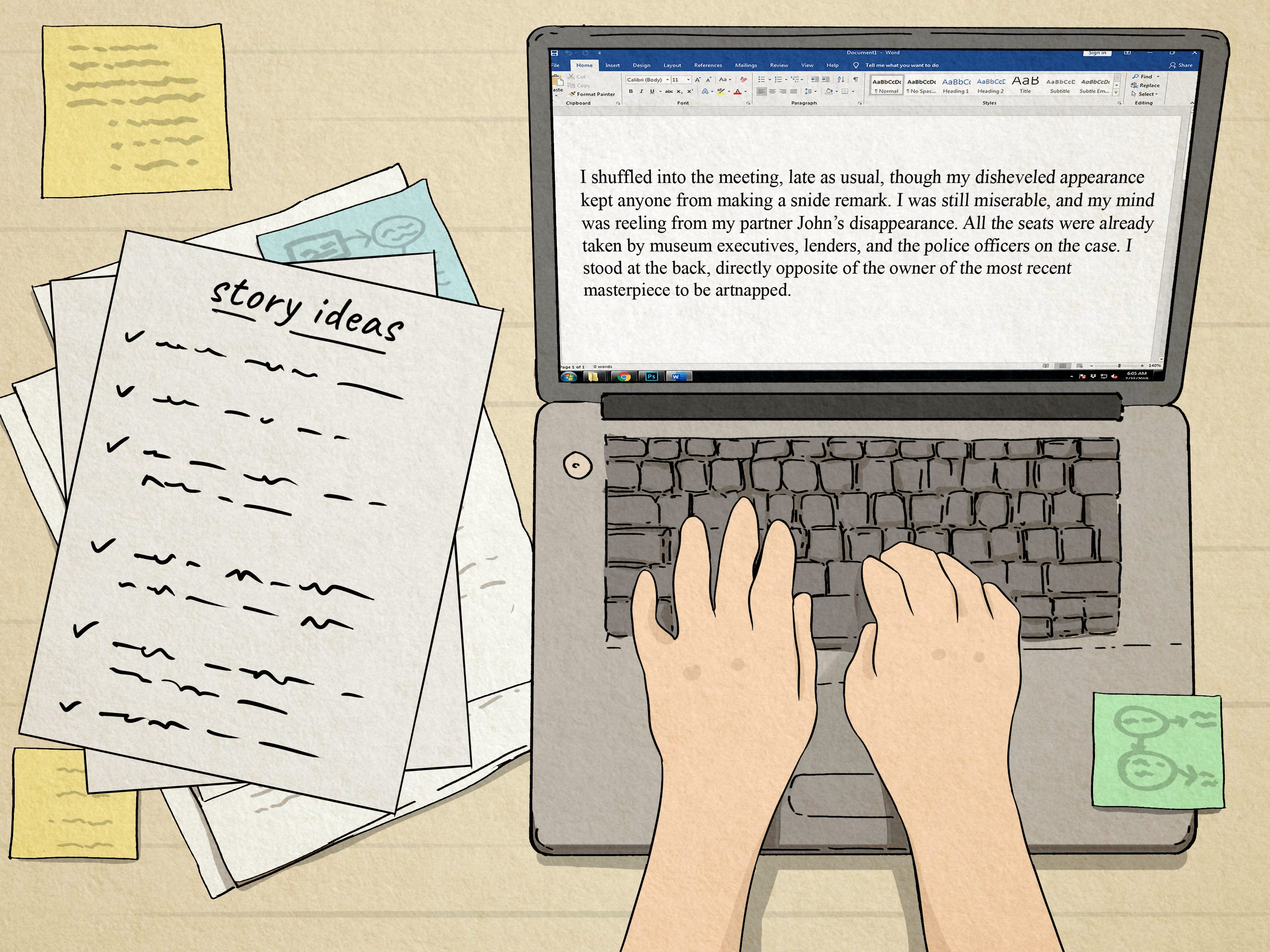

Every writer knows the feeling: you sit down, open a blank document, crack your knuckles like a concert pianist, and suddenly your brain becomes a very quiet refrigerator. No plot. No characters. No dramatic opening line. Just a blinking cursor, patiently judging you.
The good news is that story ideas are not rare jewels buried under a dragon’s mattress. They are everywhere: in overheard conversations, family legends, weird dreams, news headlines, old photographs, awkward first dates, broken appliances, and that one neighbor who brings in the trash cans at exactly 6:03 p.m. every Tuesday. The challenge is not whether ideas exist. The challenge is training yourself to notice them, capture them, and turn them into something worth writing.
This guide explores 4 ways to find story ideas that work for fiction writers, bloggers, screenwriters, memoirists, and anyone who wants to write but keeps whispering, “I have nothing to say.” You do. You just need a better net.
Why Finding Story Ideas Feels Hard
Before we jump into the four methods, let’s clear up one myth: good story ideas rarely arrive as complete novels wearing tiny tuxedos. Most arrive as fragments. A line of dialogue. A strange setting. A moral problem. A character who wants something ridiculous. A question that will not leave you alone.
New writers often reject these fragments because they do not look “big enough.” But stories are not born big. They grow. A tiny idea becomes interesting when you add conflict, stakes, character desire, and consequences. “A woman misses a train” is not much yet. “A woman misses a train and sees someone on the platform who died ten years ago” is suddenly wearing a mystery hat and asking for a chapter one.
The best way to find story ideas is to stop waiting for inspiration to knock politely. Inspiration is more like a raccoon: it shows up unexpectedly, makes noise in the dark, and disappears if you do not pay attention.
1. Use Your Own Life, But Give It a Twist
Your life is one of the richest sources of story ideas. Not because every lunch appointment deserves a trilogy, but because personal experience gives you emotional truth. You already know what embarrassment feels like. You know jealousy, relief, regret, hope, fear, pride, confusion, and the tiny heartbreak of realizing you forgot to save your document.
However, writing directly from life can become tricky. Real life is messy, slow, and full of people checking their phones. Fiction needs shape. That is where the twist comes in.
Start With a Real Memory
Choose a memory that still has emotional heat. It does not have to be dramatic. In fact, small memories often work better because they leave room for invention. Think about:
- A time you lied and were almost caught
- A childhood fear that seems funny now
- A family argument nobody fully explained
- A friendship that changed after one conversation
- A place you visited once but never forgot
Now ask: What if this had gone further? What if the lie had protected someone dangerous? What if the childhood fear was actually real? What if the family argument hid a secret inheritance, a missing person, or a crime nobody wanted to discuss?
This is how personal experience becomes fiction. You borrow the feeling, not necessarily the facts.
Turn “What Happened” Into “What Could Happen”
Let’s say you once got lost in a museum. The real version might be: you wandered for ten minutes, found the gift shop, and bought a magnet shaped like a dinosaur. Fine for a diary. Not quite a story.
Now twist it:
- A child gets lost in a museum and finds a room that is not on the map.
- A security guard notices that one visitor appears in a 1920s painting.
- A woman follows the sound of someone crying and discovers an exhibit from her own future.
Same seed, better garden. The emotional core remains familiar: confusion, curiosity, isolation. But the fictional twist gives readers a reason to keep turning pages.
2. Ask Better “What If?” Questions
The phrase “what if” is the writer’s Swiss Army knife. It can cut open a dull idea, tighten a loose premise, or rescue you when your plot has collapsed in the middle like a cheap lawn chair.
A strong “what if” question usually combines something ordinary with something disruptive. The ordinary part makes the story relatable. The disruptive part creates tension.
Use the Ordinary + Strange Formula
Try this simple formula:
What if [ordinary situation] + [unexpected problem]?
- What if a substitute teacher discovers every student knows her real name, though she never introduced herself?
- What if a delivery driver keeps delivering packages to a house that burned down years ago?
- What if a man adopts a dog that recognizes every criminal in town?
- What if a wedding photographer notices the bride appears in every photo taken at the venue since 1955?
These ideas work because they create immediate questions. Who is involved? Why is this happening? What is at stake? What will the character do next?
Push the Question Three Steps Further
The first “what if” often gives you a situation. The second and third give you a story.
For example:
- What if a teenager finds a phone that receives texts from the future?
- What if the texts warn her about disasters before they happen?
- What if preventing each disaster causes something worse?
Now you have more than a gimmick. You have a moral problem, escalating stakes, and a character who must make difficult choices. That is where story lives.
Look for Conflict Inside the Question
Not every strange idea becomes a story. “What if clouds were made of soup?” is weird, yes. But unless someone wants something, loses something, or risks something, it may remain a comedy sketch performed by weather.
When testing a story idea, ask:
- Who wants something badly?
- Who or what stands in the way?
- What happens if the character fails?
- Why does this problem matter now?
A good idea becomes a stronger premise when it contains pressure. Readers do not simply want unusual events. They want unusual events that force people to reveal who they really are.
3. Collect Prompts, Headlines, Images, and Odd Details
Writers who regularly find story ideas usually have a habit: they collect sparks before they need a fire. They save prompts, headlines, images, overheard dialogue, dreams, historical facts, strange objects, and questions. Then, when the blank page arrives in its dramatic cape, they have material ready.
Create an Idea Bank
An idea bank is a simple place where you store creative fragments. It can be a notebook, phone app, spreadsheet, voice memo folder, or a stack of napkins if you enjoy living dangerously.
Divide your idea bank into categories such as:
- Characters
- Settings
- Conflicts
- Opening lines
- Objects
- Images
- Questions
- Real-life moments
The point is not to judge every idea immediately. The point is to gather raw material. Many excellent stories begin as two unrelated notes that accidentally collide. “Old woman who never leaves her porch” plus “town where nobody dreams” might become a haunting literary mystery. “Broken vending machine” plus “lonely astronaut” might become surprisingly emotional science fiction. Never underestimate the dramatic potential of snacks in space.
Use Writing Prompts Without Copying Them
Writing prompts are useful because they lower the pressure of invention. They give you a starting point, not a cage. If a prompt says, “Write about a locked door,” you do not have to write about a literal door. You can write about a relationship, a forbidden memory, a secret account, a locked phone, or a city that closes at sunset.
The trick is to personalize the prompt. Ask:
- What genre would make this unexpected?
- What character would suffer most in this situation?
- What setting would make the idea more intense?
- What emotion do I want the reader to feel?
A generic prompt becomes original when it passes through your voice, your fears, your humor, and your obsessions. Two writers can begin with the same prompt and produce completely different stories. One writes a ghost story. One writes a romantic comedy. One writes a 900-page fantasy epic featuring tax law and dragons. Art is mysterious.
Read Headlines Like a Fiction Writer
News headlines, science discoveries, local events, and historical oddities can all become story material. You are not looking to copy real people’s pain or exploit tragedy. You are looking for patterns, questions, and situations that reveal human conflict.
For example, a headline about a town losing power for a week could inspire:
- A thriller about neighbors discovering who among them prepared too well
- A romance about two rival shop owners sharing one generator
- A speculative story where the darkness reveals messages in the sky
- A family drama about secrets exposed when technology disappears
Research adds texture. Specific details make fiction feel alive. A story about “a scientist” is vague. A story about a marine biologist who studies whale songs and hears her dead mother’s voice inside one recording? Much better. Specificity is where readers start leaning forward.
4. Build Stories Around Characters With Problems
Sometimes the fastest way to find story ideas is not to start with plot at all. Start with a person. Give them a desire, a flaw, a fear, and a problem they cannot avoid. Then watch the trouble multiply, as trouble loves company.
Ask Who Wants What
Every strong story needs desire. A character wants something: love, revenge, safety, freedom, money, forgiveness, recognition, a sandwich before the meeting starts. The size of the desire matters less than the intensity.
Try this character-first exercise:
- Write down a person: “A retired magician.”
- Give them a desire: “He wants to reconnect with his estranged daughter.”
- Add an obstacle: “She believes he caused her mother’s disappearance.”
- Add a twist: “He suspects his final magic trick actually worked.”
Now you have a story idea with emotional stakes, mystery, and character conflict. The plot grows naturally because the character’s goal is difficult and meaningful.
Give the Character a Contradiction
Flat characters produce flat stories. Contradictions make characters interesting. A shy stand-up comedian. A detective afraid of the dark. A divorce lawyer who still writes love letters to an ex. A horror novelist who cannot sleep without a night-light shaped like a duck.
Contradictions create tension before the plot even begins. They suggest inner conflict, and inner conflict often generates outer conflict.
Ask:
- What does this character pretend not to want?
- What secret would ruin their life if revealed?
- What do they believe that the story will challenge?
- What are they good at, and how can that strength become a weakness?
Once you know the character’s contradiction, place them in the worst possible situation for that contradiction. Put the people-pleaser in charge of firing employees. Put the control freak on a road trip with no map. Put the skeptic in a haunted house. Then take notes while they suffer artistically.
Use Setting as a Pressure Cooker
A setting is not just scenery. It can generate story ideas by limiting choices, creating atmosphere, and forcing characters together. A small town, a remote island, a hospital night shift, a failing restaurant, a luxury cruise, a desert research station, or a family reunion in a snowstorm can all become engines of conflict.
To make setting work harder, ask:
- What can happen here that cannot happen anywhere else?
- Who has power in this place?
- What rule does everyone follow?
- What happens when someone breaks that rule?
For example, “a library” is a place. “A library where every book contains one reader’s future death” is a premise. Add a character who finds their own name in the catalog, and now the shelves are suddenly much less relaxing.
How to Know Which Story Idea Is Worth Writing
Once you start collecting ideas, you may face the opposite problem: too many options. This is a wonderful problem, like having too many cookies, except some of the cookies are secretly plot holes.
To choose the best idea, test it with five questions:
- Does it create curiosity? A reader should want to know what happens next.
- Does it contain conflict? Someone must face pressure, danger, opposition, or change.
- Does it have emotional energy? You should feel something when you think about it.
- Can it grow? A good idea can support scenes, turns, and consequences.
- Do you want to spend time with it? Writing takes effort. Pick an idea that keeps whispering to you.
Do not demand perfection too early. Some ideas reveal their value only after you write a page or two. Draft a scene. Write a character monologue. Describe the setting. Create a fake ending. If the idea keeps opening doors, follow it. If it collapses after three paragraphs, thank it politely and steal its best sentence.
Common Mistakes When Searching for Story Ideas
Waiting for a Perfect Idea
Perfect ideas are rare, and they are usually lying about being perfect. A simple idea written with energy, specificity, and emotional truth is better than a dazzling idea you never start. Write the imperfect version. You can revise a messy page. You cannot revise a fantasy about being brilliant someday.
Copying Instead of Transforming
It is normal to be inspired by books, films, myths, fairy tales, and real events. But inspiration should be transformed. Change the setting, point of view, genre, stakes, theme, and emotional center. Do not simply repaint someone else’s house and call it architecture.
Confusing Concept With Story
A concept is the hook. A story is what happens when a character struggles inside that concept. “A world where nobody can lie” is a concept. “A professional liar wakes up in a world where nobody can lie and must confess the truth that destroyed his brother” is closer to a story.
Personal Experience: What Finding Story Ideas Teaches You
One of the most useful experiences a writer can have is learning that ideas often arrive when you are not trying too hard. Many writers discover this by accident. They sit at the desk for an hour and produce nothing but dramatic sighs. Then, while washing dishes, walking to the store, or waiting in line behind someone buying seventeen cans of soup, a story idea appears like it has been hiding behind the cereal boxes.
The lesson is not that desks are cursed. The lesson is that creativity needs input, motion, and space. When you move through the world, your mind collects details. You notice the man in the coffee shop carefully polishing one coin. You hear a child ask why the moon follows the car. You see an abandoned glove on a park bench and wonder who lost it, who found it, and why it looks like it is pointing toward the river. These small observations become valuable when you train yourself to ask questions.
A helpful habit is to carry an idea notebook for one week and write down ten details per day. Not ten brilliant ideas. Just ten details. The smell of rain on hot pavement. A cashier humming a Christmas song in July. A cracked phone screen shaped like a lightning bolt. A couple arguing in whispers. A sign that says “Do Not Open” on a door everyone ignores. At first, the list may feel random. By day four, patterns begin to appear. You may notice you are drawn to secrets, loneliness, strange rules, hidden rooms, or people pretending to be fine. Congratulations: you have met your creative obsessions. They are weird, but they are yours.
Another experience that changes writers is revisiting old ideas. An idea that seemed useless six months ago may suddenly make sense after you gain a new skill or experience. Maybe you wrote down “girl receives letters from a house” and dismissed it. Later, after learning more about grief, inheritance, or family history, the idea grows teeth. This is why an idea bank matters. It lets your imagination compost. Today’s terrible note can become tomorrow’s opening chapter. Creativity is basically recycling with better lighting.
Writers also learn that sharing ideas too early can sometimes drain them. If you explain a story idea to five friends before writing it, your brain may feel as if the story has already been completed. The applause, confusion, or unsolicited casting suggestions can replace the private urgency that made you want to write. That does not mean you should never discuss ideas. It means you should protect the fragile ones. Some ideas need a few pages before they can survive other people’s opinions.
Finally, experience teaches that the best story ideas are not always the loudest. Some arrive quietly and stay. They bother you while you are doing other things. They return in different forms. They make you ask the same question again and again. Pay attention to those. A sticky idea is often more valuable than a flashy one. Flash fades. Curiosity endures.
Conclusion
Learning how to find story ideas is less about chasing lightning and more about building a habit of attention. Use your life, but twist it. Ask sharper “what if” questions. Collect prompts, headlines, images, and odd details. Build stories around characters with urgent problems. Then test your ideas for conflict, curiosity, and emotional energy.
The blank page may always look intimidating at first. That is part of its annoying charm. But once you understand where ideas come from, the page becomes less like a wall and more like an open door. Step through it. Bring a notebook. And if a raccoon of inspiration appears in the alley of your mind, follow it carefully. It probably knows where the story is buried.
Note: This article is an original, fully rewritten synthesis based on reputable writing guidance, creative writing practices, brainstorming methods, and story development principles from established writing education resources.