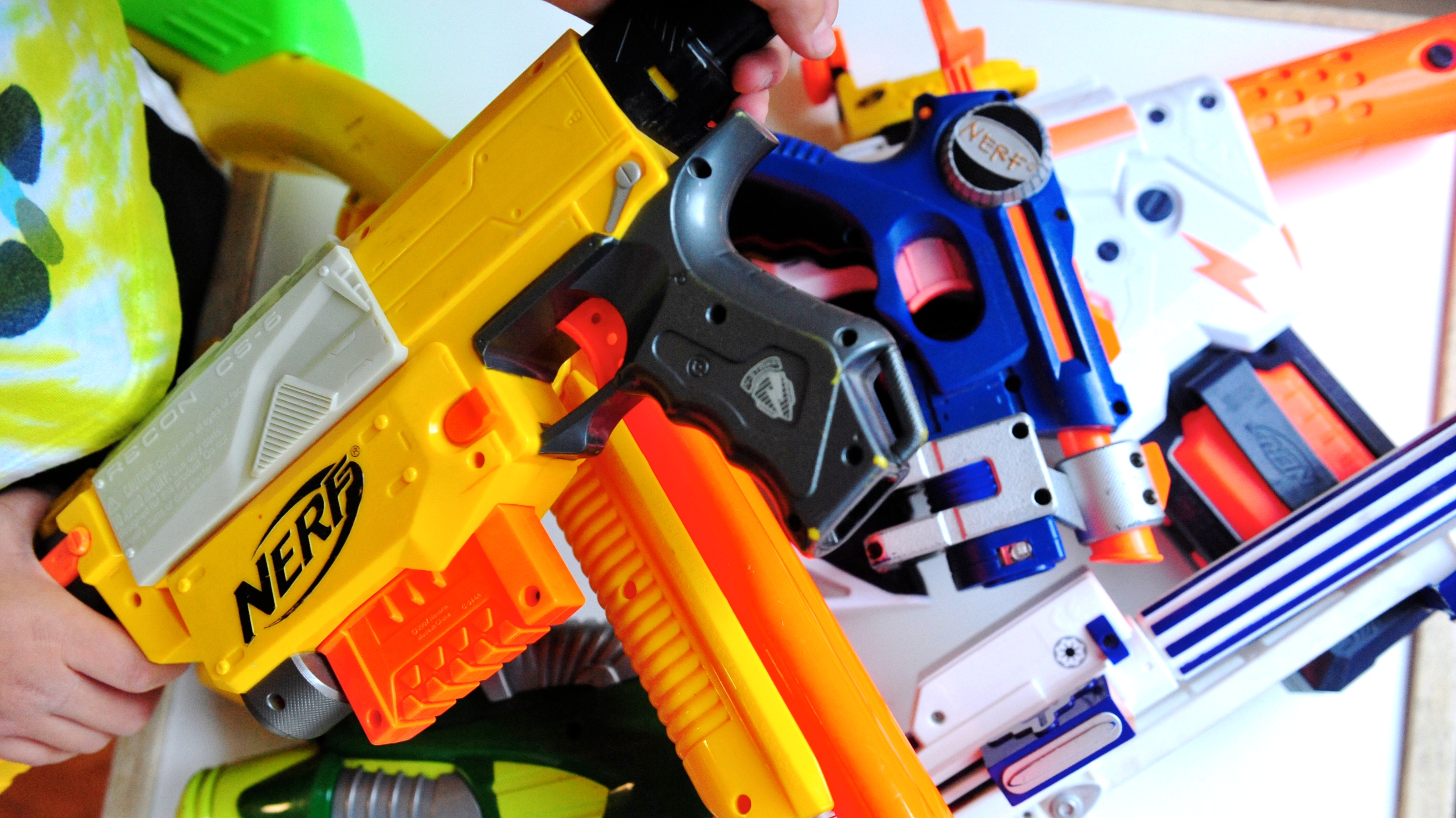

Learning how to shoot a Nerf gun accurately is one of those skills that looks simple until your dart performs a dramatic left turn and lands behind the couch like it has a secret mission. Nerf blasters are fun, safe when used responsibly, and wonderfully chaoticbut accuracy does not happen by accident. It comes from the right stance, steady hands, smart aiming, good darts, and a little practice that does not involve blaming the dog for every missed shot.
Whether you are preparing for a backyard Nerf battle, setting up a target range in the hallway, or simply trying to stop your foam darts from decorating the ceiling fan, this guide breaks down easy aiming techniques that beginners and casual players can use right away. The goal is not to turn playtime into a military drill. The goal is to help you hit your target more often, waste fewer darts, and look slightly less surprised when your shot actually lands.
Important safety note: Never aim a Nerf blaster at anyone’s eyes, face, animals, strangers, or people who are not playing. Wear protective eyewear during battles, use only compatible foam darts or rounds, follow age recommendations, and avoid modifying blasters or darts to shoot harder. Accuracy is fun. Eye injuries are not fun. That is the entire TED Talk.
Why Nerf Gun Accuracy Is Tricky
A Nerf dart is not a laser beam. It is a lightweight piece of foam with a soft tip, which means it is affected by air, distance, dart condition, blaster power, and even the way you pull the trigger. Unlike heavier projectiles, foam darts slow down quickly and begin to drop after leaving the barrel. That is why a shot that looks perfect at six feet may become a tiny orange comet of disappointment at twenty feet.
Accuracy also depends on the type of Nerf blaster. A single-shot spring-powered blaster usually rewards slow, careful aiming. A motorized flywheel blaster may fire quickly, but it needs a moment for the flywheels to reach full speed. A pump-action blaster can be stable if held correctly, but rushed priming may throw off your aim. Each style has its own rhythm, and good aim starts with understanding what your blaster wants from you. Spoiler: it wants fresh darts and fewer panic shots.
Choose the Right Blaster for Accurate Shooting
Not every Nerf blaster is built for pinpoint accuracy. Some are made for speed, some for capacity, some for dramatic hallway entrances, and some for “I have 40 darts and no plan.” If your main goal is accuracy, look for a blaster that feels comfortable, has a stable grip, and fires consistently. A blaster with a shoulder stock, sight rail, or longer body can be easier to hold steady than a tiny pocket blaster, especially for longer shots.
Spring-Powered Blasters
Spring-powered Nerf blasters are often good for beginners because they teach patience. You prime, aim, fire, and reset. Since each shot takes a little effort, you naturally become more selective. These blasters are great for practicing form, sight alignment, and trigger control.
Flywheel Blasters
Motorized flywheel blasters can be accurate, but only if you let them spin up before firing. If you pull the trigger the instant the motor starts, the dart may launch weakly or wobble. Press the rev trigger, listen for the motor to reach a steady sound, then fire. It is like letting a blender get up to speedexcept the smoothie is your opponent’s dramatic defeat.
Accuracy-Focused Darts and Blasters
Some Nerf dart lines are designed with accuracy in mind. Darts made for precision usually have improved tip shape, better weight distribution, or more consistent flight. If your blaster supports accuracy-focused darts, they can make a noticeable difference. However, even the best dart will not save a shot if your stance looks like you are sneezing on roller skates.
Use Fresh, Straight, Compatible Darts
Dart quality matters more than many players realize. Bent foam, torn tips, flattened tails, and dirty darts all reduce accuracy. If a dart has been stepped on, chewed by a pet, soaked in juice, or found under a couch after three presidential administrations, retire it with honor.
Before a target session or Nerf battle, inspect your darts. Roll them gently on a flat surface. A good dart should roll fairly straight without wobbling like a shopping cart wheel. Make sure the tip is firmly attached and the foam body is not crushed. Use darts made for your specific Nerf blaster or series, because incompatible darts can jam, misfire, or fly unpredictably.
Master Your Stance First
Accurate Nerf shooting starts from the ground up. Your feet are the tripod. Your arms are the aiming system. Your blaster is the foam-powered messenger. If your feet are unstable, everything above them has to work harder.
Stand with your feet about shoulder-width apart. Put one foot slightly ahead of the other, with your knees relaxed. If you are right-handed, your left foot will usually go forward. If you are left-handed, your right foot may feel better forward. Keep your weight balanced, not leaning wildly backward like the blaster just insulted your family.
Your body should face the target at a slight angle rather than perfectly square. This gives you better balance and makes it easier to bring the blaster up naturally. For younger players or beginners, a simple athletic stance works best: feet steady, knees soft, shoulders relaxed, eyes on the target.
Grip the Blaster Without Crushing It
A common mistake is gripping the blaster too tightly. When your hands squeeze like you are trying to extract orange juice from plastic, your arms tense up and your aim shakes. Hold the grip firmly enough to control the blaster, but not so tightly that your knuckles turn white.
Use your dominant hand on the main grip and your support hand under the front of the blaster if the design allows it. Keep the blaster level and close enough to your body to control it. If the blaster has a stock, place it gently against your shoulder. Do not jam it into yourself. This is Nerf, not a wrestling match.
Find Your Dominant Eye
Most people have one eye that naturally takes the lead when aiming. This is called the dominant eye. Knowing your dominant eye can help you line up shots more consistently.
Here is a quick test: choose a small object across the room. Make a small triangle with your hands by overlapping your thumbs and index fingers. With both eyes open, center the object inside the triangle. Now close one eye, then the other. The eye that keeps the object centered is usually your dominant eye.
If your dominant eye is on the same side as your dominant hand, aiming will feel natural. If not, do not panic. You can either adjust your head slightly, practice with both eyes open, or use the eye that gives you the clearest view. Nerf accuracy is forgiving. It is not a moon landing, though some darts do attempt orbit.
Line Up the Sights Correctly
Many Nerf blasters include decorative sights or rails for accessories. Some sights are more useful than others, but they can still help you create a consistent aiming reference. The key is to line up the front of the blaster with the center of your target the same way every time.
If your blaster has front and rear sights, place the front sight in the center of the rear sight and point it at the target. If it has only a top rail or a raised shape, use that as a guide. If it has no sight at all, use the barrel line as a rough reference. Do not press your face too close to the blaster. Keep your head upright, eyes open, and sight picture relaxed.
Aim Slightly Higher at Longer Distances
Foam darts drop as they travel. At close range, you can aim directly at the target’s center. At medium range, aim slightly above the center. At longer Nerf distances, you may need to aim higher than expected. This is called compensating for dart drop.
For example, if you are shooting at a paper cup from 10 feet away, aim at the center. From 20 feet away, aim near the top edge of the cup. From 30 feet away, aim above the cup and let the dart arc down. Every blaster behaves differently, so the best solution is to test your dart path. After a few shots, you will learn whether your blaster flies flat, dips early, or has the aerodynamic confidence of a sleepy moth.
Control Your Breathing
You do not need advanced breathing techniques to shoot a Nerf gun accurately, but you should avoid firing while bouncing, laughing, shouting, or sprinting sideways like a cartoon burglar. Take a breath, settle your body, and fire during a calm moment.
A simple method is to inhale, exhale halfway, pause briefly, and pull the trigger smoothly. Do not hold your breath so long that you turn into a tomato. Just give yourself a steady second to aim.
Pull the Trigger Smoothly
Trigger control is one of the easiest ways to improve Nerf accuracy. Many players line up a perfect shot and then yank the trigger, causing the blaster to dip or shift right before firing. Instead, press the trigger straight back with smooth pressure.
Try this drill: aim at a small target and slowly squeeze the trigger until the dart fires. The shot should surprise you slightly. If the blaster jerks, slow down. If your dart dives low every time, you may be pulling the trigger too hard. Your trigger finger should move; your whole hand should not join the performance.
Follow Through After Each Shot
Follow-through means staying aimed for a split second after the dart leaves the blaster. Beginners often drop the blaster immediately to see where the dart went. That movement can start before the dart fully exits, especially on some blasters, and it can ruin the shot.
After firing, keep the blaster pointed at the target briefly. Watch the dart path, learn from it, then adjust. This habit helps you become more consistent and teaches you how your blaster behaves at different distances.
Practice With Simple Nerf Aiming Drills
You do not need a fancy training course to improve. A few cups, sticky notes, cardboard boxes, or paper plates can become a safe and useful Nerf target range. Always choose a safe backstop, such as a wall with nothing fragile nearby. Remove lamps, picture frames, drinks, pets, and younger siblings who wander through the battlefield holding snacks.
The Five-Shot Group Drill
Place a paper plate on a wall or cardboard box. Stand 10 feet away and fire five darts slowly. Do not worry about hitting the bullseye at first. Look at how close the darts land to one another. A tight group means your technique is consistent. Once your group is tight, adjust your aim to move the group toward the center.
The Distance Ladder Drill
Start at 8 feet, fire three darts, then move back to 12 feet, 16 feet, and 20 feet. Notice when the darts begin to drop. Write down where you need to aim at each distance. This turns guessing into knowledge, which is much more useful than yelling “physics!” after every miss.
The One-Dart Challenge
Load only one dart. Pick one target. Take your time. Fire. This drill teaches patience because you cannot rely on rapid follow-up shots. It is especially helpful for spring-powered blasters and players who tend to rush.
The Moving Target Drill
For safe group play, have a participant walk slowly across a wide open area while wearing eye protection. Aim at the torso, never the head. Try leading the target slightly by aiming a little ahead of their movement. Foam darts travel slowly enough that moving targets require prediction, not just aim.
Understand Indoor vs. Outdoor Accuracy
Indoor Nerf shooting is usually more predictable because there is no wind. Outdoor shooting adds a new villain: breeze. Even a light wind can push foam darts sideways. If you are playing outside, pay attention to wind direction. Shooting into the wind shortens range and increases wobble. Shooting with the wind may help distance but can also make darts drift.
Sunlight, shadows, grass, and uneven ground also change the game. Bright light can make it harder to track darts. Grass can hide missed shots like it is being paid by the dart industry. Outdoor accuracy improves when you shorten your range, use fresh darts, and fire from a balanced position instead of sprinting full speed while making heroic sound effects.
Use Cover Without Ruining Your Aim
In Nerf battles, accuracy is not just about standing still and shooting at a target. You also need to aim while moving around furniture, trees, walls, or cardboard forts built with questionable engineering standards.
When using cover, do not lean your whole body out. Keep most of yourself protected and bring the blaster out just enough to aim safely. Plant your feet before firing when possible. Peek, aim, shoot, and return to cover. Avoid blind firing around corners. It may seem dramatic, but it is unsafe and usually inaccurate.
Common Nerf Accuracy Mistakes
Rushing Every Shot
Speed is exciting, but wild rapid fire wastes darts. Take an extra half-second to aim, especially beyond close range.
Using Damaged Darts
A crushed dart will not fly straight. Keep good darts in rotation and retire damaged ones.
Aiming Too Low
Foam darts drop. If your shots always land short, aim a little higher or move closer.
Ignoring the Blaster’s Rhythm
Flywheel blasters need spin-up time. Spring blasters need clean priming. Pump-action blasters need steady handling. Learn the rhythm before expecting perfect shots.
Forgetting Safety
Accuracy should never come at the expense of safe play. Use eyewear, aim below the face, and set clear rules before the first dart flies.
How to Get Better Over Time
The secret to accurate Nerf shooting is repeatable technique. Use the same stance, grip, sight picture, trigger pull, and follow-through every time. Change only one thing at a time when practicing. If you switch darts, distance, stance, and blaster all at once, you will not know what helped or hurt your accuracy.
Track your progress with simple targets. Draw circles on cardboard and mark where your darts hit. Try to shrink your group size over several sessions. Practice from different distances and positions. Over time, you will develop a feel for how much your darts drop, how your blaster handles, and when a shot is worth taking.
Experience-Based Tips: What Actually Helps in Real Nerf Play
In real Nerf games, perfect target-range accuracy only gets you so far. The living room battlefield is not a quiet practice lane. Someone is hiding behind the sofa, someone else is reloading behind a laundry basket, and at least one player is making sound effects that deserve an award or a warning. That is why the best Nerf accuracy comes from combining technique with practical experience.
One of the most useful lessons is to slow down before firing. Many players miss because they shoot the instant they see a target. A better habit is to stop your feet, raise the blaster, confirm the target area, and then fire. Even a tiny pause can turn a wild shot into a clean hit. In fast games, this pause may last less than a second, but it still matters.
Another real-world tip is to aim for larger safe target zones. In friendly Nerf battles, the torso is usually the best target because it is larger and safer than the head. Trying to hit hands, feet, or moving elbows may look impressive, but it lowers your success rate. Aiming center mass in safe play gives your dart the best chance of landing, especially when your opponent is moving.
Reloading habits also affect accuracy. If you rush reloads, jam darts into the blaster, or load bent darts without checking them, your next shots may suffer. Keep your darts organized. Store them in a pouch, pocket, or container where they will not be crushed. During longer games, rotate fresh darts into your main supply and leave questionable darts for casual target practice.
Cover discipline is another major difference-maker. Players often pop out from cover too far, panic, and fire from an awkward angle. Instead, practice stepping out just enough to see the target, planting your lead foot, and taking one controlled shot. After firing, move back into cover and reload or reposition. You will hit more often and avoid becoming the easiest target in the room.
Distance judgment improves with experience. After enough practice, you begin to recognize when a target is too far away for your blaster. This saves darts and keeps you from giving away your position. If your blaster is reliable at 15 feet but unpredictable at 30 feet, do not force long shots unless you are just having fun. Move closer, use cover, or wait for the opponent to enter your effective range.
Finally, accuracy improves when players stay relaxed. Tension makes hands shake, shoulders rise, and trigger pulls become jerky. Smile, breathe, and remember that it is foam. The best Nerf players are not always the ones with the biggest blasters. They are the ones who know their equipment, choose smart shots, and keep cool when the room turns into a colorful storm of darts.
Conclusion
Shooting a Nerf gun accurately is a mix of simple fundamentals and playful experimentation. Start with safety, use good darts, choose a comfortable blaster, stand balanced, grip smoothly, aim with your dominant eye, and pull the trigger without jerking the blaster. Practice at different distances so you understand dart drop, wind, and your blaster’s real range.
The good news is that Nerf accuracy does not require complicated training. A few minutes of focused practice can make a big difference. Once you learn how your blaster behaves, every shot becomes more intentional. You will miss less, reload less frantically, and maybe even earn a reputation as the player who somehow hits the cup on the first try. Enjoy the game, protect everyone’s eyes, and let the foam fly responsibly.
Note: This article is intended for safe recreational toy-blaster play only. Always follow manufacturer instructions, use protective eyewear, and never aim at the eyes or face.