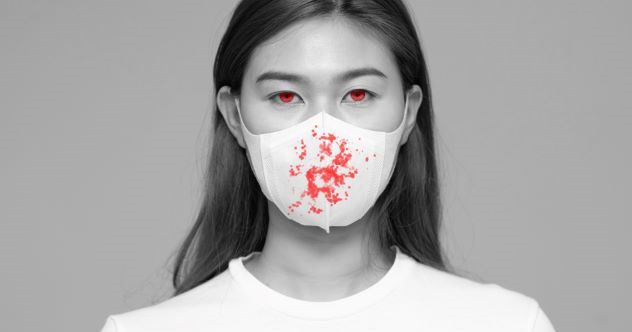

Fictional plagues are the entertainment world’s favorite way of saying, “Congratulations, humanity, you touched the wrong test tube.” From rage-inducing viruses to brain-hijacking fungi, pop culture has imagined outbreaks so nasty that ordinary flu season suddenly looks like a polite email reminder to wash your hands.
The best fictional diseases are scary because they exaggerate real anxieties: bad science, corporate greed, weak public health systems, misinformation, and the timeless human habit of ignoring giant warning signs until something starts screaming in the hallway. Thankfully, these plagues are not real. Unfortunately for fictional characters, they usually discover this after the airports close, the labs explode, and someone says, “I’m sure it’s contained.” It is never contained.
Below are ten fictional plagues from movies, TV shows, books, comics, and video games that make us deeply grateful for soap, vaccines, epidemiologists, and the fact that mushrooms do not currently want to organize our brains into a homeowners association.
1. Captain Trips from The Stand
Stephen King’s Captain Trips is one of the most terrifying fictional plagues because it does not need claws, tentacles, or dramatic background music. It is a weaponized superflu that spreads quickly and wipes out most of humanity before the story shifts into a massive battle between good and evil.
Why it is terrifying
Captain Trips feels frighteningly simple. It spreads like a respiratory illness, moves through ordinary human contact, and turns civilization into a clearance-sale version of itself in a matter of weeks. There are no zombie rules to memorize. No “aim for the head” survival shortcut. Just coughing, chaos, and the sudden realization that the office hand sanitizer station was never emotionally prepared for this.
What makes it especially effective as horror is the aftermath. King is not only interested in the disease; he is interested in what people become when the systems around them disappear. Captain Trips is the match. Humanity is the pile of dry leaves wearing a name tag that says “We had this under control.”
2. Cordyceps Brain Infection from The Last of Us
The Cordyceps Brain Infection in The Last of Us turns one of nature’s weirdest real-world inspirations into a nightmare of abandoned cities, infected humans, and survivors who have understandably stopped trusting strangers with backpacks.
Why it is terrifying
The concept is unforgettable: a fungal infection takes over human hosts and transforms them into stages of infected, from runners to the infamous clickers. The horror is not just that people become dangerous. It is that the body becomes a delivery system for something patient, biological, and deeply impolite.
As fictional plagues go, Cordyceps is brilliant because it makes the environment feel hostile. A dark hallway is not just a hallway. It is a possible buffet line for spores, tendrils, and whatever horrible noise is coming from around the corner. Also, any plague that makes “don’t breathe” a survival strategy deserves a top spot on the “no thank you” list.
3. The Rage Virus from 28 Days Later
The Rage Virus from 28 Days Later is not subtle. It does not slowly build tension over several polite chapters. It kicks the door open, flips the table, and turns infection into a countdown measured in seconds.
Why it is terrifying
Unlike slow zombie outbreaks, the Rage Virus is horrifying because of its speed. Exposure can lead to near-immediate violent aggression, making containment almost impossible once panic begins. The infected are not shambling metaphors. They are fast, furious, and apparently late for the worst appointment in human history.
The plague also has a strong social-horror edge. 28 Days Later shows that the infected are terrifying, but desperate uninfected people can be just as dangerous. The virus ruins bodies, but fear ruins communities. That is a cheerful little message to enjoy with popcorn.
4. The T-Virus from Resident Evil
The T-virus is the fictional plague that launched a thousand laboratory security meetings. In the Resident Evil universe, Umbrella Corporation’s experiments lead to outbreaks, mutations, and Raccoon City becoming the sort of place real estate agents would describe as “full of character.”
Why it is terrifying
The T-virus is dangerous because it does not stop at ordinary infection. It creates zombies, mutated animals, and bio-organic weapons that make “corporate misconduct” sound far too gentle. This is not just a disease; it is a business plan with teeth.
As horror, the T-virus works because it combines disease anxiety with mistrust of powerful institutions. The outbreak is not a natural disaster. It is the result of secrecy, profit, and people in lab coats making decisions that should have required at least one adult in the room.
5. Simian Flu from Planet of the Apes
The Simian Flu in the modern Planet of the Apes films begins with medical research intended to help humans, then becomes a world-changing disaster. For humans, it is devastating. For apes, it helps create intelligence, language, and a very understandable interest in not taking orders from us anymore.
Why it is terrifying
Simian Flu is scary because it flips the usual plague story. The disease does not simply kill; it rearranges the planet’s power structure. Humanity does not just lose population. It loses its position as the species that gets to name everything, pave everything, and act surprised when nature files a complaint.
The plague also raises a sharp ethical question: what happens when a cure, experiment, or breakthrough creates consequences nobody planned for? In fiction, the answer is usually “ruined cities and emotionally complex apes.” In real life, we prefer peer review.
6. The Green Flu from Left 4 Dead
The Green Flu from Left 4 Dead is a gamer’s nightmare: a fast-moving infection that creates hordes of aggressive infected and special variants with abilities designed to ruin teamwork, friendships, and your last clean pair of pants.
Why it is terrifying
The Green Flu stands out because it mutates constantly. In the game world, survivors may not always be as safe as they appear, and asymptomatic carriers complicate every rescue plan. That means the person you just saved might accidentally doom the safe zone. Awkward.
Its real genius is how it turns public spaces into pressure cookers. Hospitals, airports, highways, apartments, and shopping areas become frantic routes between danger and temporary relief. The Green Flu does not just ask, “Can you survive?” It asks, “Can you survive while three strangers shout different plans at once?”
7. Solanum from World War Z
In Max Brooks’ zombie universe, Solanum is the virus behind the global zombie catastrophe. World War Z treats the outbreak less like a monster movie and more like a geopolitical disaster report, which somehow makes the zombies feel even worse.
Why it is terrifying
Solanum is horrifying because it turns infection into a worldwide systems failure. Governments deny, markets panic, militaries adapt badly, and ordinary people are forced to make impossible choices. The zombies are scary, yes, but the bureaucracy has a respectable jump scare count too.
The book’s oral-history style makes the plague feel huge. Every country, city, and survivor has a different angle on the same catastrophe. Solanum is less about one hero saving the day and more about humanity learning, painfully and late, that preparedness is not boring when the alternative is being lunch.
8. The Flare from The Maze Runner
The Flare from The Maze Runner series is a man-made disease in a world already wrecked by environmental catastrophe. Because apparently one apocalypse was not enough; humanity wanted a combo meal.
Why it is terrifying
The Flare attacks the brain and gradually changes behavior, creating victims known as Cranks. What makes it disturbing is the slow loss of self. A plague that affects memory, emotion, judgment, and identity hits a deeper fear than simple infection. It turns the question from “Will I survive?” into “Will I still be me?”
The story also adds institutional cruelty. Young people are tested, manipulated, and sacrificed in the name of finding a cure. The disease is awful, but the response to it may be even worse. Nothing says dystopia like adults building a giant maze and calling it a research strategy.
9. MEV-1 from Contagion
MEV-1 from Steven Soderbergh’s Contagion may be fictional, but it is scary because it is played with documentary-like seriousness. No undead armies. No supervillain monologue. Just travel, surfaces, droplets, fear, misinformation, and the uncomfortable reminder that people touch their faces approximately every seven seconds when told not to.
Why it is terrifying
MEV-1 is frightening because it feels plausible. The movie focuses on contact tracing, laboratories, public health communication, vaccine development, and social panic. The horror is not exaggerated monsters; it is the speed of modern life. A virus can travel farther than rumors, and rumors are already Olympic-level sprinters.
Unlike flashier fictional plagues, MEV-1 turns everyday life into suspense. A handshake, a subway pole, a credit card, a school hallwaysuddenly everything feels like a plot device. It is the rare fictional plague that makes you want to watch the credits and then clean your phone.
10. Greyscale from Game of Thrones
Greyscale in Game of Thrones is a dreaded disease that hardens and scars the skin, carries intense stigma, and can lead victims into exile. In a world already full of dragons, assassins, poison, and questionable weddings, greyscale still manages to be uniquely unsettling.
Why it is terrifying
Greyscale is scary because it combines illness with social isolation. People fear the infected, avoid them, and often treat them as lost before they are gone. That emotional cruelty gives the disease its real bite. It is not only about symptoms; it is about being turned into a warning sign.
The disease also works well in fantasy because it feels ancient, mysterious, and only partly understood. Medicine in Westeros is not exactly known for comforting bedside manner. If your treatment plan involves secrecy, knives, and a maester looking nervous, you are allowed to ask for a second opinion.
Why Fictional Plagues Fascinate Us
Fictional plagues are not popular because audiences enjoy sickness. They are popular because outbreaks reveal character fast. In a normal story, it may take ten chapters to learn who is selfish, brave, foolish, generous, or secretly hoarding snacks. In a plague story, you find out by page three.
These stories also let us explore big fears at a safe distance. We worry about scientific overreach, fragile supply chains, misinformation, environmental damage, and leaders who say “remain calm” while standing in front of a burning laboratory. Fiction turns those anxieties into memorable symbols: a fungus, a virus, a scar, a horde, a sealed city.
At their best, fictional plague stories are not just disaster fantasies. They are tests of empathy. Do people protect the vulnerable? Do they tell the truth? Do they sacrifice others to save themselves? Do they still make jokes when the lights go out? The answer, in most good stories, is “yes, no, sometimes, and absolutely, because humor is load-bearing.”
Experience Section: What These Fictional Plagues Teach Us as Viewers, Readers, and Gamers
Spending time with fictional plagues is a weirdly useful experience. You sit down expecting monsters, mayhem, and maybe a heroic speech delivered under emergency lighting. Then, somewhere between the abandoned hospital and the suspicious government facility, you realize the story is quietly asking practical questions about trust, community, and responsibility.
Watching Contagion, for example, feels different from watching a zombie sprint across a field. The fear is quieter and more familiar. You notice how quickly confusion spreads when information is incomplete. You also notice how badly people want simple answers, even when the truth is complicated. That experience makes the movie stick in your brain long after the credits, like a tiny public-health professor with dramatic lighting.
Playing Left 4 Dead offers another kind of lesson: survival is easier when people communicate. A player who runs ahead alone usually becomes a cautionary tale with sneakers. The game turns teamwork into a survival mechanic, which is why it remains such a strong plague story. It understands that panic is contagious too. So is bad planning. So is yelling “I got this” two seconds before absolutely not having it.
Reading The Stand or World War Z creates a broader experience. These stories are less about one frightening infection and more about what happens after the first wave of fear. Who rebuilds? Who exploits the crisis? Who tells the truth when truth is inconvenient? The fictional disease becomes a spotlight, and every institution has to stand under it with no makeup and no public relations filter.
The Last of Us adds emotional weight by showing how a plague can change relationships. It is not simply about avoiding infected creatures. It is about grief, loyalty, suspicion, and the cost of caring in a world where caring can make you vulnerable. The Cordyceps infection is the monster, but the real experience is watching people decide whether love is still worth the risk. Spoiler: it usually is, though it may involve hiking, trauma, and terrible sleeping arrangements.
These fictional plagues also remind us that prevention is rarely glamorous. Nobody writes a blockbuster scene about someone calmly funding a public health department, maintaining transparent communication, and updating ventilation systems. Yet many of these stories become disasters because boring, responsible work was ignored. Fiction makes neglect exciting; real life would prefer fewer explosions and more competence.
Finally, fictional plagues are memorable because they let us feel relief. We can close the book, turn off the show, exit the game, and return to a world where the T-virus is not in the water supply and Cordyceps is not filing paperwork to occupy our skulls. That relief is part of the fun. Horror gives us a controlled scare, then hands us back our ordinary life looking slightly shinier than before.
So yes, we are glad these fictional plagues are not real. We are grateful that Captain Trips is safely on the page, the Rage Virus is stuck on-screen, and greyscale remains a Westeros problem. Still, these stories are not just nightmares. They are reminders to value science, honesty, cooperation, and the humble miracle of people washing their hands without needing a dragon to supervise.
Conclusion
The scariest fictional plagues are not always the most explosive. Some frighten us because they spread fast. Others disturb us because they change identity, society, or trust. Captain Trips shows how fragile civilization can be. Cordyceps turns nature into body horror. The Rage Virus makes time itself feel dangerous. MEV-1 reminds us that realism can be more chilling than monsters. Greyscale proves stigma can be as cruel as disease.
Thankfully, these outbreaks remain fictional. They live in novels, films, games, comics, and TV shows where they can entertain us, warn us, and occasionally make us side-eye a cough in a crowded elevator. The real lesson is simple: when plague fiction is good, it is never only about infection. It is about choices. And if pop culture has taught us anything, it is this: do not open the mysterious canister, do not ignore the scientist, and never trust a corporation whose logo looks expensive in a disaster zone.