
Give the internet a famous painting, three household objects, and a bored dog, and it will somehow produce art history with better comic timing. The viral museum challenge proved that recreating masterpieces does not require an Italian studio, a wealthy patron, or even clean laundry. Sometimes all you need is a blanket, a fruit bowl, dramatic window light, and one family member willing to pose like a mildly offended Renaissance noble.
What began as a lockdown-era art recreation challenge quickly became a worldwide creative game. Participants studied paintings, photographs, sculptures, and illustrations before rebuilding them with pets, food, towels, toys, gardening supplies, and whatever else had not escaped into the garage. These 30 museum challenge photos show why the idea endured: every entry is part tribute, part visual puzzle, and part evidence that toilet paper has an unexpectedly broad artistic range.
How the Viral Museum Challenge Became an Internet Classic
The movement gained momentum in March 2020 through the Amsterdam-based Instagram project Between Art and Quarantine, also known by its Dutch name, Tussen Kunst & Quarantaine. The Rijksmuseum encouraged the idea, and the J. Paul Getty Museum soon invited its followers to select an artwork, find three objects at home, and create their own version.
The instructions were simple enough for anyone to join. That low barrier mattered. Participants did not need formal training, professional cameras, expensive costumes, or a suspiciously convenient spare suit of armor. The challenge rewarded observation and imagination rather than technical perfection.
At its height, the Getty team reportedly received hundreds of submissions each day. The project became so popular that selected recreations were collected in the book Off the Walls: Inspired Re-Creations of Iconic Artworks. More importantly, it changed the way many people interacted with museum collections. Viewers stopped merely scrolling past a painting and began examining the angle of a wrist, the direction of a shadow, the folds in a sleeve, and the exact expression of someone who had apparently been waiting since 1634 for lunch.
30 New Museum Challenge Pictures Full of Improvised Genius
1. A Toddler, a Fruit Bowl, and the Most Patient Dog Alive
The original interior scene includes a small child reaching toward a lavish display while a large dog rests in the foreground. The recreation carefully matches the furniture, fabrics, fruit, and poses. Getting a toddler and a dog to cooperate simultaneously may be the true masterpiece here.
2. The Home Office Becomes an Old Master Study
A dark scholarly portrait is rebuilt with a globe, books, a candle, and brooding side lighting. The result captures the original atmosphere so convincingly that the modern participant appears ready to discover a new planet or send an extremely serious email about quarterly expenses.
3. A Bag of Flour Gets Promoted to Priceless Artifact
In one of the funniest prop substitutions, an elegantly posed woman holds an ordinary bag of flour where the original figure carries an ornate object. The hair, hand position, draped fabric, and solemn expression remain faithful, while the grocery-store packaging quietly steals the scene.
4. Modernist Glamour Meets Quarantine Practicality
A sleek reclining portrait receives a deliberately domestic update using bedding, beauty accessories, and a few medical-era details. The recreation preserves the sharp makeup and sculptural pose while reminding viewers that even glamorous subjects occasionally have to check the laundry basket.
5. Caravaggio Lighting, Backyard Bouquet
A dramatic composition associated with rich fruit and deep shadows is recreated with a floral arrangement. The substitution works because the participant studies the important visual ingredients: bare shoulder, tilted chin, heavy fabric, controlled lighting, and the confidence of someone carrying an entire garden indoors.
6. A Dog Becomes the Face on Saint Veronica’s Veil
The original religious scene shows a sacred image displayed on cloth. In the homemade version, a black-and-white dog pokes its head through a carefully arranged blanket. The dog looks delighted with its unexpected promotion and considerably less solemn than the role traditionally requires.
7. Blue Rubber Gloves Become a Decorative Fan
One participant recreates a poised portrait by turning disposable gloves into an elaborate folding fan. It is a perfect example of the challenge’s visual logic: match the shape and color first, then allow the absurdity of the material to provide the punchline.
8. The Facial Expression Does Nearly All the Work
A colorful painted portrait with wide eyes and puckered lips is copied through makeup, a bright collar, and an impressively committed expression. The resemblance demonstrates that an accurate face can carry an entire art recreation, even when the surrounding costume is assembled in minutes.
9. Headphones and a Beer Bottle Build a Royal Headdress
A stately historical portrait is reimagined with headphones positioned like ornamental ear coverings and a bottle balanced above the head. The pose remains dignified. The materials do not. Somehow, the contrast makes the modern subject look like the patron saint of weekend playlists.
10. A Picnic Painting Returns to the Park
A relaxed outdoor scene featuring two figures, drinks, and a picnic basket is recreated almost literally. Careful clothing choices and body language preserve the composition, while modern bottles and casual details give the image the energy of an art-history field trip that became unexpectedly festive.
11. A Child Recreates a Tiny Beauty Ritual
A young model copies a painted girl applying lipstick in front of a mirror. The handmade reflective prop and exaggerated makeup make the recreation playful, but the posture and sideways concentration are remarkably close. Apparently, serious cosmetic work begins before snack time.
12. The Backyard Becomes a Victorian Flower Garden
A woman in a flowing white dress leans over a garden, carefully echoing the original figure’s elegant curve. Real plants, a watering can, and natural daylight do most of the set-design work. The only visible modern obstacle is persuading the lawn to look nineteenth-century.
13. A Few Branches Create a Pre-Raphaelite Mood
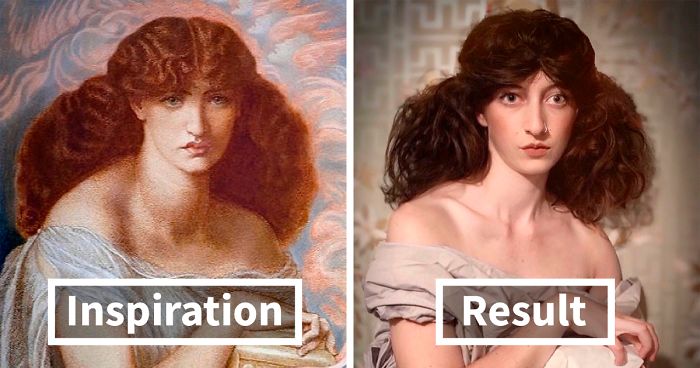
Holding fresh greenery in both hands, the participant matches a dreamy portrait set against a distant landscape. The recreation succeeds through restrained color, soft lighting, and a slightly melancholy gazethe universal expression of someone who has brought outdoor plants inside and noticed several insects.
14. Dry Noodles Become Renaissance Curls
Long spirals of uncooked pasta replace the elaborate golden hair in a richly dressed historical portrait. A homemade jeweled headpiece, white fabric, leaves, and an improvised cross complete the transformation. This may be the only hairstyle that can become dinner immediately after the photo shoot.
15. A Remarkably Convincing Frida Kahlo Tribute
Flower crown, strong brows, jewelry, warm makeup, and a patterned green background combine in a close recreation of Frida Kahlo’s unmistakable image. The participant understands that similarity is not only about costume; it comes from expression, framing, and direct eye contact.
16. A Fruit Stand Replaces an Aristocratic Basket
A male participant recreates a graceful woman in a broad hat carrying fruit. A tiered kitchen basket replaces the original woven container, while scarves and clothing imitate the silhouette. The proudly raised chin suggests complete confidence that bananas are historically accurate.
17. Stuffed Animals Stand In for Guinea Pigs
A child seated in bed mirrors a sweet painting of a young girl surrounded by small pets. The recreation swaps real guinea pigs for plush toys, preserving the crowded composition without requiring several live animals to understand the artistic direction.
18. Egon Schiele’s Lines Come to Life
An orange sweater, angular hands, patterned fabric, pale makeup, and a carefully styled updo turn a seated figure into an impressively accurate Schiele recreation. The pose looks simple until you try holding it and discover that expressionist art is unexpectedly hard on the wrists.
19. A Modern Badge Replaces a Renaissance Medallion
A dark green costume, red cap, long curls, and formal hand placement reproduce a historic male portrait. Instead of the original round object, the subject holds a modern health-service emblem, transforming an old symbol of status into a salute to contemporary public service.
20. The Creation of Adam, Now With an ATV
Michelangelo’s nearly touching fingers are reinterpreted outdoors between two casually dressed people, one seated on an all-terrain vehicle. A beverage can enters the sacred gap. It is less Sistine Chapel and more “Sistine campsite,” but the composition is instantly recognizable.
21. David and Goliath With Household Weapons
A dramatic biblical scene is reconstructed with sheets, theatrical makeup, a homemade severed head, and a tool standing in for a weapon. Strong directional light sells the illusion. The hardware department may not have intended this use, but art history rarely asks permission.
22. Picasso Gets Pajamas and a Very Confused Dog
A seated Picasso figure is rebuilt with boldly patterned clothing, a red cushion, graphic face paint, and a real dog occupying the animal’s position. The pet’s expression suggests it has serious concerns about Cubism and would like its regular human back.
23. Another Goliath Loses His Head
This recreation favors realism, matching the original male figure’s bare shoulder, white drapery, shadowed background, and heroic gaze. A prop head and sword complete the image. It is both technically impressive and a powerful argument for knocking before entering someone’s home studio.
24. A Blanket Creates Instant Biblical Drapery
A bearded participant looks upward while holding a long staff and wearing layers of mustard and green fabric. The lighting and pose elevate ordinary textiles into old-master clothing. Somewhere, a sofa is wondering where its favorite throw went.
25. The Pomegranate Becomes an Everyday Apple
A Pre-Raphaelite woman in deep green velvet holds a piece of fruit against her chest. The recreation preserves the rich fabric, dark hair, intertwined hands, and intense sideways gaze, proving that the right posture can make a supermarket apple look mythologically significant.
26. Toilet Paper Replaces a Wall of Calla Lilies
A glamorous reclining portrait surrounded by white flowers receives the ultimate household makeover. Rolls of toilet paper rise behind the modern model, who wears a towel as both gown and turban. It is elegant, ridiculous, and historically specific to a very strange year.
27. Ophelia Is Recast as a Doll
Instead of asking a person to lie in cold water among flowers, one creator builds a miniature outdoor setting and uses a doll as Ophelia. The tiny stream, plants, blossoms, and blue fabric recreate the famous composition with charmingly practical risk management.
28. Girl With a Pearl Earring Needs Only Three Colors
Blue fabric, a yellow scarf, dark clothing, a pearl-like earring, and soft side lighting are enough to evoke Vermeer’s famous portrait. The recreation shows why this painting became a challenge favorite: the costume is simple, but the turned head and luminous expression demand precision.
29. A Victorian Cycling Outfit Rides Again
A historical fashion illustration featuring puffed sleeves, a narrow waist, gloves, hat, and bicycle is recreated almost stitch for stitch. The clothing silhouette is so accurate that the participant appears prepared to campaign for safer bicycle lanes in 1896.
30. Lady With an Ermine Becomes Lady With a Dog
Leonardo da Vinci’s elegant portrait is reimagined with a small tan dog replacing the white ermine. The dark background, red dress, headband, necklace, hand position, and sideways glance remain recognizable. The dog contributes the relaxed confidence of an animal certain the painting was always about it.
Why Famous Paintings Recreated at Home Are So Satisfying
The best museum challenge pictures operate on two levels at once. First, they reveal how much attention the creator has paid to the original. Successful entries reproduce the structure of an image: where the subject sits, where the light falls, which colors dominate, and how hands or faces direct the viewer’s eye.
Then comes the transformation. A fan becomes a cluster of rubber gloves. Golden curls become pasta. Calla lilies become toilet paper. A sacred face becomes a dog looking through a blanket. The viewer recognizes both the original object and its improvised substitute, producing the small mental spark that makes visual jokes satisfying.
The challenge also makes museum art feel approachable. A centuries-old portrait can seem remote when viewed behind glass or on a textbook page. Rebuilding it at home turns it into a practical problem. Suddenly, the person posing notices how dramatically the sitter tilts a shoulder or how carefully the artist arranged a hand. Looking becomes active rather than passive.
What It Is Like to Try the Museum Challenge Yourself
Choosing the Artwork Is Harder Than Expected
The experience usually begins with overconfidence. You scroll through museum collections and think, “That portrait has one person and a chair. Easy.” Five minutes later, you notice the embroidered robe, carved furniture, metallic crown, complicated hand gesture, and a background containing what appears to be an entire naval battle.
The smartest choice is not always the simplest painting. A strong silhouette, recognizable color scheme, or memorable expression can make a complicated work easier to imitate than a quiet portrait with subtle lighting. The goal is to identify the visual features that make the original instantly recognizable.
Your Home Becomes a Prop Warehouse
Once an artwork is selected, ordinary possessions start changing identities. A laundry basket becomes a throne. A colander becomes armor. A towel becomes a turban, cape, veil, tablecloth, or all four if the painting is ambitious. Fruit is particularly useful because art history contains enough apples, grapes, pears, and pomegranates to stock a respectable produce department.
This stage is often the most creative. An exact replacement is rarely available, so participants search for objects with the correct shape, texture, or color. A pair of headphones may resemble a headdress. A floor lamp can imitate a staff. Dry pasta can reproduce ringlets more accurately than an expensive wig.
Lighting Makes a Bigger Difference Than Costumes
A detailed outfit photographed under flat ceiling lights may look less convincing than a bathrobe illuminated from the correct side. Many classical portraits use strong directional light, dark backgrounds, and carefully controlled shadows. Moving the subject beside a window or using one lamp can immediately make a recreation feel more painterly.
Phone cameras often brighten dark scenes automatically, so reducing exposure before taking the picture helps preserve dramatic shadows. A plain blanket, curtain, or unlit wall can hide modern clutter and prevent a Renaissance saint from appearing to pose beside a wireless router.
Expressions Matter More Than Perfect Resemblance
The funniest failures happen when the costume is accurate but the face is not. Historical portraits contain surprisingly specific emotions: suspicion, boredom, devotion, exhaustion, pride, grief, or the quiet irritation of someone wearing twelve pounds of velvet.
Matching the direction of the eyes, tilt of the chin, and tension around the mouth can transform a rough costume into a recognizable recreation. It helps to take several photographs. What feels exaggerated while posing often looks correct in the final side-by-side comparison.
Pets and Children Improve the Result by Ignoring Instructions
Animals are popular in the viral museum challenge because they introduce glorious uncertainty. A dog may sit perfectly for three seconds, leave during the fourth, and return carrying a prop that was not approved by the art director. Cats generally participate under the assumption that the entire production is a new form of worship.
Children bring similar unpredictability, but they also imitate poses with an uninhibited seriousness adults sometimes struggle to achieve. The resulting picture may not be technically perfect, yet it often captures the humor and warmth that made the challenge successful.
The Finished Picture Changes How You See the Original
After arranging fabrics, adjusting fingers, moving lamps, and taking twenty-seven nearly identical photographs, you understand the chosen artwork differently. Details that once seemed decorative become structural. A wrist angle controls the whole pose. A patch of red balances the composition. A shadow separates one figure from another.
That close looking is the challenge’s lasting value. The final image may be funny, but the process teaches composition, color, lighting, storytelling, and visual interpretation. It also creates a memory attached to the artwork. You may never again see Girl With a Pearl Earring without remembering the afternoon someone wore two dish towels and spent an hour searching for one oversized earring.
The Museum Challenge Still Deserves a Place on the Internet
Many viral trends age like milk left beside a sunny window. The museum challenge aged more like a favorite comedy sketch. Its premise remains accessible, creative, educational, and endlessly adaptable. It invites people to explore art without insisting that they speak fluent curator first.
These 30 recreations prove that the most memorable entries are not necessarily the most expensive or polished. They succeed because their creators looked carefully, solved visual problems, and embraced the comedy of making grand art from ordinary life. A dog can become an ermine, noodles can become noble hair, and toilet paper can finally achieve the cultural importance it always suspected it deserved.
SEO Metadata