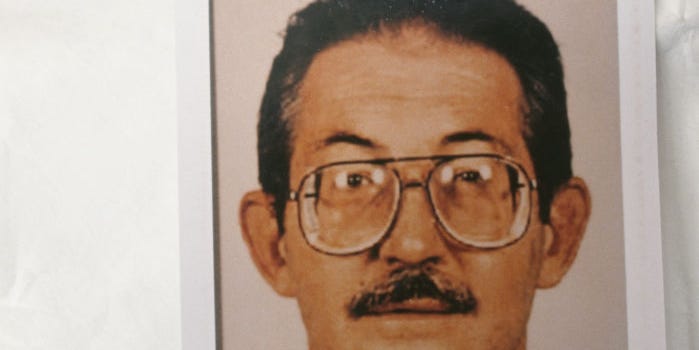

If your office has ever had a gossip problem, congratulations: you are still doing much better than America’s intelligence and defense agencies did during some very uncomfortable stretches of the Cold War and its aftermath. In the world of espionage, a “mole” is the nightmare scenarioan insider with a badge, a desk, a clearance, and just enough patience to smile in meetings while quietly handing secrets to a foreign power.
The United States has seen plenty of spies, but a handful stand apart for the same ugly reasons: access, longevity, betrayal, and damage. Some leaked identities of human sources. Some exposed cryptographic secrets. Some didn’t just sell informationthey sold trust, and that is always the costliest item in the building. Ask ten historians or counterintelligence veterans for a top-five list and you may hear a few different names, but the five below appear again and again because their cases changed how America thinks about insider threats.
This list focuses on the insider spies whose stories were especially notorious in public life and especially damaging inside government. In other words, these were not random leakers, not one-off thieves, and not movie villains with suspicious accents. These were Americans on the inside, often admired, often promoted, and very often underestimated.
What Counts as a “Mole” in This Article?
Purists sometimes argue over the word mole. In the strictest tradecraft sense, a mole may be someone planted or recruited before entering an organization. In popular American writing, though, the word is used more broadly for insider spies who secretly work for a foreign intelligence service while holding trusted positions inside U.S. institutions. That is the sense used here.
With that out of the way, let’s open the hall of infamy.
1. John Anthony Walker Jr.
The Navy traitor who turned espionage into a family business
If betrayal had a punch card, John Walker would have filled it. A U.S. Navy warrant officer and communications specialist, Walker began spying in 1967, when he approached the Soviets with material that helped them read encrypted American naval messages. That alone would have earned him a dark place in espionage history. Instead, he kept going for years.
What made Walker especially notorious was not just the duration of his spying but the scale and audacity of it. He provided cryptographic material and other highly sensitive naval information for more than 17 years. Even worse, he recruited other people into the scheme, including his own family members and a close friend. At that point, this was less “one bad apple” and more “the entire fruit basket is compromised.”
The Walker spy ring became one of the signature espionage scandals of the 1980s. It helped cement 1985 as the so-called “Year of the Spy,” a label that sounds almost playful until you remember it involved real national-security damage. Analysts have long argued that Walker’s betrayal gave Soviet intelligence a deep look into U.S. naval communications and operations. Had the Cold War turned hot, the consequences could have been catastrophic.
Walker is first on this list because his espionage was long-running, operationally devastating, and weirdly domestic in its mechanics. He did not merely break trust; he franchised it.
2. Aldrich Ames
The CIA insider who sold out America’s Soviet sources
Aldrich Ames remains one of the most infamous names in American intelligence history, and for good reason. He was a CIA case officer specializing in Soviet intelligenceexactly the sort of person you would expect to help catch Russian spies, not become one. Yet in 1985, while working in the CIA’s Soviet and East European Division, he volunteered himself to the KGB and began passing highly classified information.
This was not a small breach. Ames exposed human sources, technical operations, and sensitive CIA and FBI efforts directed at the Soviet Union. The most horrifying part of the story is the human cost. His betrayals contributed to the compromise of U.S. assets inside the Soviet system, and multiple sources were executed after being identified. In espionage history, that is not just a scandal. It is a bloodstain.
Ames also became a symbol of an awkward truth that bureaucracies hate: sometimes the danger is not the underperformer in the corner; it is the seasoned insider who knows exactly how the system works. He used his position, his subject-matter expertise, and the assumptions of colleagues to stay ahead of suspicion. Money played a major role, and his lavish lifestyle eventually drew attention, but not quickly enough to prevent extensive damage.
His case rocked the CIA because it exposed failures in internal monitoring, financial scrutiny, and basic institutional imagination. Ames was not just a spy. He was a devastating reminder that counterintelligence collapses when an agency cannot imagine that one of its own stars might be working for the other side.
3. Robert Hanssen
The FBI agent who became the Bureau’s worst internal spy
If Ames humiliated the CIA, Robert Hanssen did the same for the FBI. A veteran special agent who held key counterintelligence positions, Hanssen used his access to pass highly classified information to Soviet and later Russian intelligence. He worked under the alias “Ramon Garcia,” which sounds like a decent name for a thriller character and a terrible name for an FBI employee secretly wrecking American operations.
Hanssen’s case was horrifying because of where he sat in the system. This was not an outsider who tricked his way in. This was an FBI agent assigned to sensitive national-security work, someone who understood investigative methods, internal weaknesses, and the psychology of mole hunts. He used dead drops, encrypted communications, and old-fashioned tradecraft to stay concealed while feeding major secrets to Moscow.
Like Ames, Hanssen compromised human sources and counterintelligence operations. He also disclosed information that helped the Russians identify agents working secretly for the United States. Public accounts and official histories have described him as the most damaging spy ever to penetrate the FBI, and that label is not an exaggeration tossed around for dramatic flair. It reflects the scope of the breach and the institutional shock that followed.
What makes Hanssen especially notorious is the layered betrayal. He swore to enforce the law, worked in the very world designed to stop hostile intelligence activity, and still managed to become one of Russia’s most valuable assets. If Ames was the CIA’s nightmare, Hanssen was the FBI’s recurring night terror with a briefcase.
4. Ana Montes
The quiet analyst who became Cuba’s prized asset
Ana Montes does not always get the same level of pop-culture notoriety as Ames or Hanssen, but within national-security history she absolutely belongs on this list. A senior analyst at the Defense Intelligence Agency and the U.S. government’s leading Cuba specialist, Montes spied for Cuba for years while building a reputation for expertise inside the intelligence community.
That is part of what makes her case so chilling. She was not remembered as a reckless personality or a sloppy operator. She was respected. She was credible. She was the person others listened to on Cuba. And according to the government’s case, while occupying that influential perch, she passed classified information, helped Cuba understand U.S. military capabilities, and distorted Washington’s understanding of Cuban issues.
Montes was arrested on September 21, 2001, just days after the 9/11 attacks. Timing mattered. Officials feared that if she remained in place any longer, she would gain access to additional classified information about imminent U.S. military plans, including operations connected to Afghanistan. That detail turned an already serious spy case into an urgent national-security emergency.
Her case also expanded the public conversation about what espionage motivation can look like. While money drives many famous spy stories, Montes has often been portrayed as someone motivated in significant part by ideology. That did not make her less dangerous. If anything, it made her more disciplined. She represented the kind of insider who does not just sell secrets but believes she is morally justified in doing so. Those are often the hardest spies to spot because they do not always look compromised. Sometimes they look committed.
5. Harold “Jim” Nicholson
The CIA officer who betrayed colleaguesand kept scheming from prison
Harold Nicholson may be less famous at the dinner table than Hanssen or Ames, but in the intelligence world his name carries serious weight. A career CIA officer, Nicholson volunteered to spy for Russia in the mid-1990s and passed a wide range of intelligence documents. More disturbingly, he compromised the identities of CIA colleagues working under cover, including many trainees and younger officers whose careers were only beginning.
That detail matters. Nicholson had served in training roles, which meant his betrayal struck at a particularly vulnerable part of the intelligence system: the next generation. It is one thing to steal secrets. It is another to expose officers before they have even fully entered the field. That kind of damage does not simply ruin operations in the short term. It can poison trust for years.
Then came the sequel nobody wanted. Nicholson was convicted and imprisoned, but the story did not end there. From prison, he later used his son as an intermediary to contact Russian agents, pass information, and collect money tied to his past espionage. At that point, the case crossed from shocking to almost grotesque. He was not just a convicted spy; he was a convicted spy still trying to invoice the Russians.
Nicholson’s notoriety comes from both status and persistence. The Justice Department described him as one of the highest-ranking CIA officials ever convicted of espionage. He also embodied a harsh counterintelligence lesson: some insider threats do not disappear when handcuffs appear. They mutate, adapt, and keep trying.
Why These Five Stand Above the Rest
There are other infamous espionage names in U.S. history, including Alger Hiss, Jonathan Pollard, Larry Wu-Tai Chin, and the Rosenberg network. But these five stand out in one especially ugly category: insider betrayal tied directly to long-term access, operational knowledge, and durable strategic harm.
Walker endangered naval communications. Ames gutted critical Soviet-era human intelligence. Hanssen penetrated the FBI from the inside. Montes quietly reshaped what officials thought they knew. Nicholson exposed officers and kept plotting even after conviction. Different methods, different agencies, same brutal pattern: each one used trust as a weapon.
That is why these cases still matter. They changed security protocols, financial monitoring, internal auditing, information compartmentalization, and the way agencies think about suspicious behavior. In plain English, they forced Washington to admit that the person carrying the secret might also be the person selling it.
The Human Experience Behind America’s Most Notorious Moles
Reading about moles in U.S. history can feel like flipping through a stack of dramatic case files: dates, aliases, arrests, plea deals, life sentences, maybe a dead drop under a bridge if the screenplay needs texture. But the real experience of these cases is much messier and far more human. For the institutions involved, a mole case is not just a security failure. It is an identity crisis.
Imagine showing up to work and learning that the colleague who complained about coffee quality, asked smart questions in meetings, and nodded along during security briefings had actually been feeding secrets to a foreign government. That is part of what makes these cases so psychologically powerful. They do not simply prove that information was stolen. They prove that people are often terrible at detecting betrayal when it wears a familiar face and knows the office printer code.
For investigators, the experience is often slow, frustrating, and full of doubt. Mole hunts can drag on for years because the very nature of the crime distorts the evidence. Bad operations may look like routine setbacks. A blown source may seem like bad luck. Internal suspicion spreads quietly, and once it does, morale can drop through the floor. Careers stall. Innocent people get scrutinized. Teams begin second-guessing one another. Counterintelligence veterans have long understood that a mole can damage an agency even before the mole is identified, because fear itself becomes operational friction.
For the colleagues and families around these spies, the experience is more intimate and often more painful. The public sees headlines. The people close to the spy see double lives. They replay old conversations, strange expenses, secretive habits, unexplained trips, sudden mood changes, and moments that only make sense in hindsight. The betrayal becomes retroactive. Even ordinary memories start to feel counterfeit. In that way, espionage is not just theft of information; it is theft of reality.
There is also the grim professional experience of realizing how little motive can resemble stereotype. Some spies act for money. Some for ego. Some for grievance. Some for ideology. Some for a cocktail of all four with a splash of self-pity. That is one reason these stories remain relevant. They warn against cartoon thinking. The dangerous insider is not always the loud radical or the flashy schemer. Sometimes it is the disciplined analyst, the veteran officer, the trusted specialist, or the person everyone assumes is too smart to do something so self-destructive.
And yet there is one more experience worth mentioning: the institutional memory these cases leave behind. Every major mole scandal reshapes training, security culture, and hiring practices. Agencies become more skeptical, more data-driven, more alert to financial anomalies and behavioral warning signs. That does not erase the damage, but it does turn betrayal into instruction. History, in this corner of American life, is not just remembered. It is audited.
That is why the most notorious moles in U.S. history still fascinate readers. Their stories are not only about espionage. They are about trust under pressure, ambition without conscience, and the uncomfortable truth that the greatest threat to a guarded system sometimes already has a keycard. It is a harsh lesson, but a durable one: walls matter, locks matter, and classified stamps matterbut character matters most.
Conclusion
The five names on this listJohn Walker, Aldrich Ames, Robert Hanssen, Ana Montes, and Harold Nicholsondid more than steal secrets. They exposed the vulnerabilities of giant institutions that assumed loyalty could be read off a résumé, a promotion history, or a security badge. It cannot. That is the enduring lesson of America’s most notorious moles.
For readers interested in U.S. history, Cold War espionage, and insider threats, these cases remain gripping because they sit at the intersection of politics, psychology, and betrayal. They are suspense stories, yes, but they are also cautionary tales. And unlike in the movies, the most unsettling part is not the coded message or the dead drop. It is how ordinary these people often appeared until the moment everything collapsed.