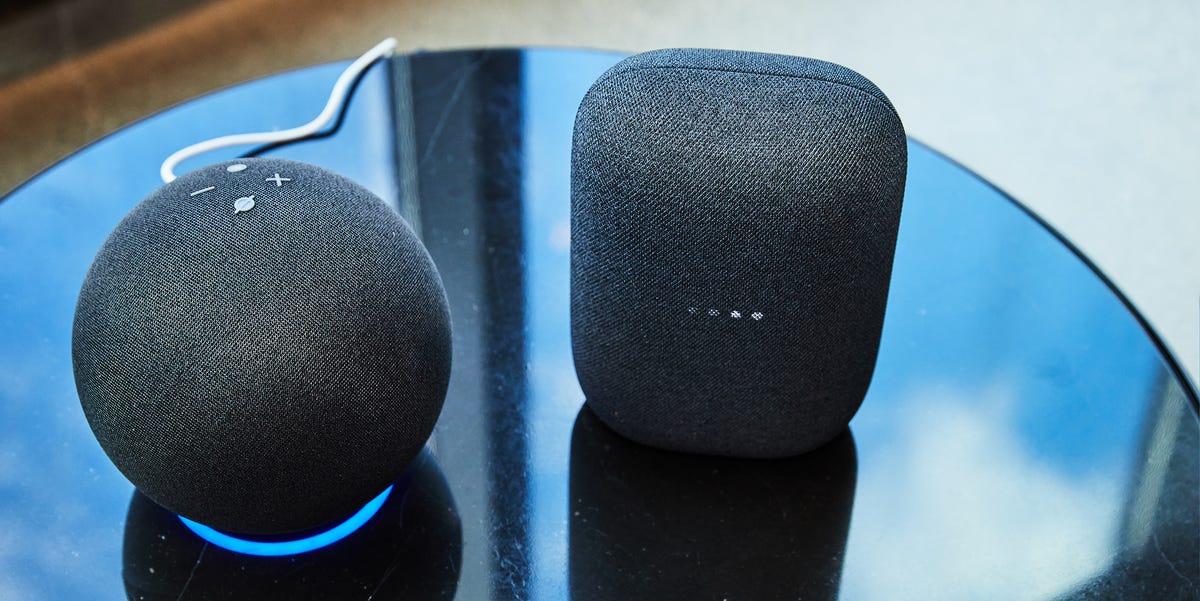

If you are shopping for a smart speaker in 2026, the real question is not just “Which one sounds better?” It is “Which one will fit into your home without turning your life into a compatibility scavenger hunt?” Amazon’s Echo family has grown into a broad lineup that includes compact speakers and large smart displays, while Google’s Nest ecosystem now centers on Google Home devices powered by Gemini for Home. Both platforms support modern smart home standards like Matter, both can control a lot of connected gear, and both have gotten smarter than the first wave of voice assistants ever was. The winner depends less on brand loyalty and more on which digital universe you already live in.
Quick verdict
Buy Amazon Echo if you want the broadest range of device choices, especially if your home already runs on Prime, Fire TV, Ring, or Alexa routines. Buy Google Nest if you rely heavily on Android, Gmail, Google Calendar, Google Photos, or YouTube, and you prefer a cleaner Google Home app experience with Gemini-powered help. If you are undecided and just want the most future-proof ecosystem, Echo is the safer all-purpose pick for mixed households, while Nest is the more natural fit for Google-first households.
The short version of the difference
Amazon has built Echo into a family of products that stretches from small bedside speakers to big kitchen displays like the Echo Show 21. Google has kept Nest and Google Home tightly tied to its own services and the Google Home app. In practice, that means Echo tends to feel like the more retail-friendly platform, while Nest feels like the more “my life already runs on Google Docs and Calendar” platform. Neither camp is wrong; they are just different flavors of organized chaos.
Sound quality: the part people argue about in group chats
If your main use case is music, podcasts, or radio, sound matters more than voice-control trivia. Recent reviews still suggest that Amazon’s larger Echo speakers are the more room-filling choice, while Google’s Nest Audio often wins on vocal clarity and a more focused listening profile. Wired noted that the Nest Audio projects sound more directly in front of the speaker, while the Echo spreads sound more evenly through the room. Tom’s Guide has similarly described the Nest Audio as a strong, well-priced speaker with good clarity, while older face-offs gave the Nest Mini a slight edge over the Echo Dot for certain listening tasks.
Amazon’s newest Echo Dot models lean hard into “small speaker, bigger bass,” and the company now markets the Echo Dot Max with nearly 3x the bass of the 2022 Echo Dot. That makes Echo the more aggressive all-rounder if you want a compact speaker that still feels alive. Google’s newer Google Home Speaker with Gemini is aimed at a more helpful smart-home experience, but early reporting suggested that the assistant side still had some rough edges compared with Alexa’s smoother conversational handling.
Voice assistants: Alexa+ vs. Gemini for Home
This is where the two brands now feel less like speaker companies and more like AI platforms in disguise. Amazon has rolled out Alexa+, which is positioned as a smarter, more conversational version of Alexa and is included free with Prime on compatible devices, with a paid plan available for others. Google has answered with Gemini for Home, bringing Gemini into speakers and displays so the assistant can handle more natural conversation, better home control, and more flexible help across everyday tasks. The big promise is similar: fewer robotic commands, more back-and-forth conversation. The big reality is also similar: the assistant that best serves you will be the one tied to the services you already use.
Independent reviewers have been blunt that Alexa currently feels smoother in some natural-language tasks, while Gemini is improving fast. The Verge’s recent comparison said Alexa handled conversational queries more smoothly and remembered context better in that test, even though Gemini’s voice quality was preferred. That is a useful reminder that “newer AI” does not automatically mean “better for your everyday household.”
Smart home control: where the ecosystem battle gets real
Google says Google Home can control over 50,000 smart home devices, and its broader ecosystem works with thousands of compatible products, including Matter devices. Amazon says Alexa and Echo devices work with thousands of connected cameras, lights, locks, plugs, thermostats, and more, and the Alexa+ ecosystem is being expanded across tens of thousands of devices and services. In real life, both platforms are good enough for most homes. The difference is that Google leans harder into a unified app and account experience, while Amazon leans harder into device breadth and Alexa-first accessories.
Google Home’s current pitch is almost soothing: one app, one home, one place to manage devices, automations, and Gemini-powered help. Amazon’s pitch is more like a power tool set: more device options, more Echo variants, more display sizes, more ways to build out a voice-first home. If you already own Nest Cams, a Nest Doorbell, or other Google smart home gear, Nest feels coordinated. If your house already has Ring, Fire TV, or Amazon shopping habits baked into it, Echo feels less like a gadget and more like a shortcut to everything you already do.
Displays matter more than people think
Once you add a screen, the comparison changes. Amazon’s Echo Show family now ranges from the compact Echo Show 5 to the Echo Show 8, Echo Show 11, and Echo Show 21. Google’s smart display side is led by Nest Hub and Nest Hub Max, with Google continuing to position its display devices around photos, smart home controls, and Google services. For kitchens, nightstands, and family rooms, the screen can be the difference between a device that feels useful and one that just sits there looking decorative.
Wired’s smart-display guidance is a good shorthand: Google Nest Hub Max is a strong pick for Google users, while the Echo Show 11 is the standout Alexa+ display for people who want a larger, more feature-rich Amazon hub. Amazon’s own materials also frame the Echo Show line as a place to view news, weather, video calls, camera feeds, and streaming content. In other words, if you want a screen, buy the ecosystem that matches the apps you already use every day.
Privacy, controls, and the “please mute the thing” moment
Both companies have leaned harder into privacy controls over time. Amazon says Alexa gives you transparency and control over voice recordings, microphone controls, and device settings. Google emphasizes account security and gives users a single Google account framework for managing services, while Nest accounts have also been folded into Google’s account ecosystem over time. In plain English: both brands know consumers are nervous about being listened to, so both give you mute buttons, settings pages, and more controls than the first-generation devices ever had.
Setup and daily use
Echo setup starts in the Amazon Alexa app, which you use to add devices, create routines, manage lists, and control smart home gear. Google uses the Google Home app for setup and control, and it is designed to manage speakers, displays, lights, plugs, thermostats, cameras, and other compatible devices from one place. Both platforms are pretty easy to set up. The difference is not difficulty. It is whether your home already feels like an Amazon household or a Google household.
Who should buy Amazon Echo
Choose Echo if you want more hardware choices, if you already use Prime, Fire TV, or Ring, or if you want a smart speaker that feels especially strong for shopping reminders, timers, multi-room music, and voice-first convenience. Echo is also the safer bet if you like a platform that seems to be getting a lot of attention from Amazon right now, especially with the push toward Alexa+ and the newer Echo Dot Max and Echo Show lineup.
Who should buy Google Nest
Choose Google Nest if your life already runs through Google Photos, Gmail, Calendar, Android, YouTube, and Google Home. Nest is especially attractive if you prefer a cleaner app experience and want a smart home that feels organized rather than noisy. It is also a strong pick if you care more about natural search-style help, good vocal clarity, and a smart-home dashboard that is tightly tied to your Google account.
Who should skip both and buy something else
If you only want music and do not care about voice assistants, routines, or cameras, a simple Bluetooth speaker may be the sanest purchase in the room. Smart speakers are useful when they solve a real household problem. When they do not, they become expensive alarm clocks with opinions. That is not a flaw of Echo or Nest. It is just the reality of buying a device that tries to be the center of your home.
My experience with the Echo vs. Nest decision
The easiest way to think about this choice is to imagine your busiest room. In the kitchen, the Echo often wins because it feels built for quick, low-friction tasks: set a timer, add something to a shopping list, check the weather, start music, control a light, and move on with your life. Amazon’s Echo devices and Alexa app are clearly optimized for that kind of “say it and forget it” rhythm, and the larger Echo Show models make the experience feel even more like a family command center. If your home already uses Amazon services, Echo tends to slide into place without drama.
Google Nest, by contrast, feels more composed when the home is already full of Google habits. You can picture it in a bedroom, office, or living room where Calendar reminders, YouTube music, family photos, and Android phones are already part of the routine. Google Home’s app-first approach makes the whole system feel a little more like a dashboard and a little less like a sales funnel. That can be refreshing. It is the difference between a home assistant that says, “What do you need?” and one that says, “Let me organize your entire digital life while you make coffee.”
Sound quality also shapes the experience more than spec sheets suggest. In smaller spaces, a Nest Mini or Echo Dot may be all you need, and the difference often comes down to how loudly you want the speaker to fill the room. In medium-sized rooms, the Echo’s fuller sound can make music feel more alive, while Nest Audio’s clarity can make podcasts and voices feel easier to listen to for long stretches. That is why reviews tend to split the difference: Echo often feels more expansive, Nest often feels more precise. Your ears will probably decide before your spreadsheet does.
There is also the little matter of habit. After a week with either platform, the best features stop being “voice assistant tricks” and start becoming tiny household shortcuts. One person uses timers while cooking. Another checks a camera feed before answering the door. Someone else asks for a playlist, then a recipe, then the commute time, then the calendar, all without touching a phone. In that sense, the real winner is the one that lowers the number of times you have to reach for a screen. Echo usually excels when you are living in Amazon mode. Nest usually excels when you are living in Google mode. Both can feel almost invisible when they are doing their job well, which is exactly what a good smart speaker should do.
Final recommendation
Buy Amazon Echo if you want the broadest hardware selection, the most obvious smart-home and media integrations, and the better bet for households that already rely on Amazon services. Buy Google Nest if your daily life already revolves around Google accounts, Android devices, YouTube, Photos, and Calendar, and you prefer a more streamlined home-control experience. If I had to pick one for the average buyer who is starting fresh, I would lean Echo for flexibility and product variety, but I would lean Nest for anyone already deep in Google’s ecosystem. In smart speakers, convenience is king, and the best assistant is the one that wastes the least of your time.
Note: This article is formatted for direct web publishing, with SEO tags included in JSON at the end.