
Some endings arrive with fireworks, farewell speeches, and a dramatic violin. Others sneak in wearing sweatpants. One day you notice fewer bees in the garden, fewer local reporters at city hall, fewer handwritten letters in the mailbox, and fewer people who remember how to fix a toaster without turning it into modern art.
That is why the phrase “things that are dangerously close to ending” hits such a nerve. It is not only about doom. It is about recognition. People are looking around and saying, “Wait, wasn’t this normal yesterday?” From endangered ecosystems to fading habits, public services, cultural rituals, and everyday conveniences, many familiar parts of life are under pressure.
This list is not a countdown to panic. Nobody needs to run outside and hug a newspaper box, although honestly, it has had a rough few years. Instead, it is a thoughtful look at 30 things that feel frighteningly close to disappearing, based on real environmental, social, cultural, health, and economic trends in the United States and beyond.
Why Do People Feel Like Everything Is Ending?
Because many things are changing at once. Climate change is reshaping coastlines, reefs, forests, and weather patterns. Digital technology is transforming attention, privacy, money, work, and entertainment. Economic pressure is weakening local institutions. Public trust is thinner than the paper menu at a restaurant that wants you to scan a QR code. Meanwhile, old habits are quietly becoming niche hobbies.
Not every item on this list will vanish completely. Some may survive in smaller, stranger, more expensive, or more specialized forms. The movie theater may not disappear, but the casual Friday-night “let’s just see what’s playing” habit is struggling. Cash is not gone, but it is losing daily relevance. Local newspapers still exist, but many communities have already lost theirs. The danger is not always extinction. Sometimes the danger is becoming rare enough that people stop noticing the loss.
30 Things That Are Dangerously Close To Ending
1. Coral Reefs
Coral reefs are among the most beautiful ecosystems on Earth, which makes it especially rude that we are treating them like disposable aquarium decorations. Rising ocean temperatures, pollution, acidification, disease, and overfishing are pushing reefs toward severe decline. Reefs support marine life, protect coastlines, and attract tourism, but mass bleaching events are becoming more intense and widespread.
2. Reliable Winters
For many regions, winter used to mean dependable snow, frozen ponds, ski seasons, and the emotional certainty that your car door would betray you at least once. Warmer temperatures are making snowpack less predictable. That affects recreation, water supplies, ecosystems, farming, and local economies built around cold weather.
3. Glaciers and Long-Term Ice
Melting glaciers are not just sad postcards from the mountains. They are freshwater storage systems, climate indicators, and landscape-shaping forces. As global temperatures rise, glaciers and ice sheets continue losing mass, contributing to sea level rise and altering river systems that people and wildlife depend on.
4. Coastal Wetlands
Wetlands do unglamorous but heroic work. They filter water, absorb floodwaters, provide wildlife habitat, and protect communities from storm surge. Yet more than half of wetlands in the lower 48 states have already been lost, and development, drainage, sea level rise, and pollution continue to threaten what remains.
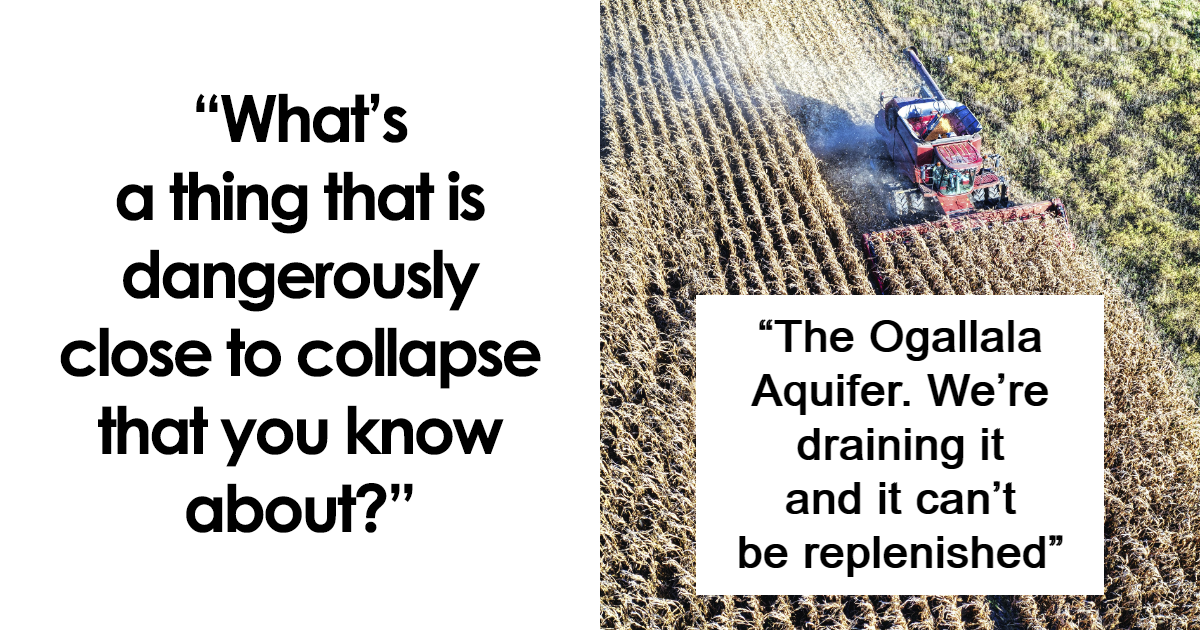
5. Groundwater Security
Groundwater is the water stored beneath our feet, which sounds comforting until you realize we have been treating some aquifers like bottomless vending machines. Over-pumping, drought, pollution, and population growth are stressing groundwater supplies in many regions. When groundwater runs low, wells deepen, costs rise, land can sink, and farming becomes harder.
6. Native Pollinators
Bees, butterflies, moths, bats, and other pollinators help keep food systems running. They are tiny workers with no LinkedIn profiles and terrible labor protections. Habitat loss, pesticides, disease, parasites, invasive species, and climate change are contributing to pollinator decline. Without pollinators, food gets less diverse, ecosystems weaken, and grocery stores become much less cheerful.
7. Old-Growth Forests
Old-growth forests are not just “big trees with senior discounts.” They store carbon, protect watersheds, shelter wildlife, and preserve ecological history. Wildfire, insects, disease, logging pressures, drought, and climate stress all threaten mature and old-growth forests. Once lost, they cannot be replaced on a human timeline. A sapling is lovely, but it is not a 300-year-old forest wearing a tiny green costume.
8. Endangered Species
Species extinction is natural over geological time, but today’s rate of loss is accelerated by habitat destruction, pollution, invasive species, overuse, disease, and climate change. The tragedy is not only losing iconic animals. It is losing relationships within ecosystems. Remove one species, and the entire web can wobble.
9. Natural Night Skies
The Milky Way used to be a normal sight for many people. Now, in much of the United States, light pollution has made stars disappear behind a permanent artificial glow. Dark skies matter for astronomy, wildlife, sleep cycles, migration, and human wonder. Also, they are free, which may explain why we forgot to value them.
10. Quiet Places
True quiet is becoming rare. Traffic, aircraft, construction, leaf blowers, notifications, televisions in waiting rooms, and the general human commitment to unnecessary beeping have made silence feel like a luxury product. Natural quiet matters for wildlife communication and human mental health. Unfortunately, modern life seems determined to make every object scream when its battery is low.
11. Antibiotic Effectiveness
Antibiotics changed medicine. They made once-deadly infections treatable and allowed surgeries, cancer care, organ transplants, and childbirth to become safer. But antimicrobial resistance is growing. When bacteria and fungi evolve to defeat medicines, infections become harder and sometimes impossible to treat. This is one ending we should take extremely seriously, because “just take antibiotics” is not a backup plan if the drugs stop working.
12. The Assumption That Social Security Will Stay the Same
Social Security is not ending tomorrow, despite the internet’s talent for turning every fiscal projection into a haunted house. But the program’s trust fund outlook is under pressure. Without legislative action, future retirees could face reduced scheduled benefits after reserve depletion dates. The scary part is not that benefits vanish; it is that delay makes solutions harder and more painful.
13. Local Newspapers
Local newspapers are closing across the country, especially in rural communities. When a town loses its paper, it loses more than obituaries, high school sports scores, and passionate letters about potholes. It loses watchdog reporting on school boards, county budgets, courts, zoning, and public officials. Democracy needs local news the way soup needs salt: not flashy, but deeply missed when absent.
14. Trust in News
Even where news still exists, trust is fragile. Americans’ confidence in national and local news organizations has declined, while social media often fills the gap with faster, louder, and less verified information. A society can survive disagreement. It struggles when people cannot even agree on what happened.
15. Following Local News Closely
People increasingly say they are less attentive to local news. That sounds harmless until nobody knows who is running for school board, why the water bill doubled, or which bridge is being held together by optimism and three tired bolts. Civic attention is a muscle. When it weakens, accountability weakens too.
16. Reading for Pleasure
Reading for fun has been declining over the long term. People still read text constantly, but much of it is captions, alerts, comments, headlines, and arguments with strangers who have sunglasses in their profile pictures. Deep reading requires patience, focus, and time. Those are three things modern life keeps stuffing into a blender.
17. Unrestricted Library Shelves
Libraries have become battlegrounds over access to books. Record numbers of titles have been challenged, restricted, or removed in recent years. A healthy library should be a buffet of ideas, not a menu approved by whoever is loudest at the microphone. The freedom to read depends on defending access even to books that make someone uncomfortable.
18. Privacy
Digital privacy is not dead, but it has definitely been seen coughing dramatically in the corner. Smartphones, apps, cameras, location data, ad tracking, facial recognition, smart devices, and data brokers have made privacy harder to maintain. Convenience often comes with a tiny invisible contract that says, “We will remember this forever.”
19. Cash as an Everyday Tool
Cash still matters, especially for privacy, budgeting, tipping, emergencies, and people without easy access to banking. But digital payments are becoming dominant. Cards, mobile wallets, and apps are faster, cleaner, and more trackable. The danger is not that cash disappears overnight; it is that fewer places accept it, making financial life harder for people who still depend on it.
20. Paper Checks
Checks are not glamorous. They are rectangular financial fossils with cursive ambition. Still, many households, small businesses, landlords, churches, and community groups use them. As digital transfers take over, checks are fading. That may be efficient, but it also leaves behind people who are not comfortable with payment apps or online banking.
21. First-Class Mail Volume
Personal mail has become rare enough that an actual letter can feel like a museum artifact with postage. First-Class Mail volume continues to decline as bills, invitations, notices, and personal messages move online. The postal system still matters enormously, especially for rural communities, medicine delivery, ballots, legal notices, and small businesses. But the old rhythm of daily personal mail is fading.
22. Movie Theater Habits
Movie theaters are still alive, but the casual moviegoing habit is under pressure. Streaming, shorter theatrical windows, higher ticket prices, and at-home convenience have changed audience behavior. Big blockbusters still pull crowds, but smaller films often struggle. The smell of popcorn remains undefeated, but even popcorn cannot single-handedly rescue a business model.
23. Affordable Small-Town Housing
Small towns were once seen as affordable alternatives to expensive cities. In many places, that bargain is disappearing. Remote work, investor activity, limited construction, short-term rentals, insurance costs, and rising demand have pushed prices up. When teachers, nurses, firefighters, restaurant workers, and young families cannot afford to live where they work, the town’s character begins to fray.
24. Family-Owned Farms
Farming has always been difficult, but today’s family farms face high land prices, equipment costs, volatile markets, climate stress, debt, consolidation, and labor shortages. The family farm is not just a sentimental image on a jam label. It is part of food security, rural identity, and local economy. When farms consolidate, communities often lose more than acreage.
25. Repair Culture
There was a time when people fixed radios, shoes, chairs, appliances, and clothing because replacement was expensive. Today, many products are sealed, glued, software-locked, or cheaper to replace than repair. Repair culture is fighting back through right-to-repair movements, maker spaces, and online tutorials. Still, the default setting of modern consumer life is often “throw it away and buy the next slightly shinier rectangle.”
26. Handwriting
Handwriting is not extinct, but it is losing daily purpose. Keyboards, touchscreens, voice notes, and digital forms have taken over. Cursive is especially endangered in everyday use. That may not sound catastrophic until you realize handwriting supports memory, personal expression, historical literacy, and the joy of receiving a note that does not begin with “Dear valued customer.”
27. Childhood Without Constant Screens
Childhood has changed. Screens are now school tools, entertainment centers, babysitters, social spaces, and boredom erasers. Technology can educate and connect, but constant screen exposure can crowd out free play, outdoor time, sleep, face-to-face conversation, and imagination. Boredom used to build forts. Now it opens six apps before breakfast.
28. Third Places
Third places are the social spaces outside home and work: diners, libraries, parks, churches, barbershops, cafés, community centers, bowling alleys, and corner stores. Many are struggling because of rent, staffing costs, digital substitution, car-centered planning, and social fragmentation. Without third places, communities become lonelier and more transactional. You cannot build neighborhood trust entirely through group chats named “HOA Complaints.”
29. Patience
Patience may be the most endangered soft skill. Same-day delivery, instant streaming, AI summaries, fast food, GPS, and endless scrolling have trained people to expect immediate results. Waiting now feels like a system failure. But patience is essential for relationships, learning, craftsmanship, democracy, science, parenting, cooking beans properly, and reading Terms of Service before clicking “accept,” although let’s not pretend anyone does that last one.
30. The Feeling That the Future Will Be Better
Perhaps the most serious thing close to ending is optimism. Many people feel overwhelmed by climate anxiety, economic pressure, political conflict, loneliness, misinformation, and rapid technological change. Optimism does not mean pretending everything is fine. It means believing effort matters. If that disappears, the rest of the list becomes much harder to save.
What These Endings Have in Common
The 30 things above may seem unrelated. Coral reefs do not usually hang out with paper checks. Bees rarely attend school board meetings. Social Security does not care whether you still write in cursive. But many of these endangered things share a pattern: they were once maintained by habits, institutions, ecosystems, or trust. When those supports weaken, the thing itself begins to fade.
Some endings are caused by neglect. Wetlands are drained, local papers go unfunded, repair shops disappear, and libraries become political punching bags. Some endings are caused by speed. Digital life moves faster than human attention, privacy law, or social norms can adapt. Some are caused by invisible damage. Groundwater depletion, antibiotic resistance, and biodiversity loss can worsen for years before the average person notices.
The good news is that many endings are not inevitable. Pollinator gardens help. Supporting local journalism helps. Voting in local elections helps. Using libraries helps. Repairing instead of replacing helps. Reducing light pollution helps. Protecting habitats helps. Teaching kids to read, wait, write, explore, and sit quietly with their own thoughts helps. None of these actions are glamorous. That is their charm. Most civilization-saving work looks suspiciously like chores.
Experiences Related to “People Share 30 Things That Are Dangerously Close To Ending”
One reason this topic spreads online is that almost everyone has a personal example. The big trends become real through small moments. Someone visits their hometown and realizes the local newspaper office is now a vape shop. Someone drives through a neighborhood where every porch used to have people sitting outside, but now the only thing waving is a delivery bag in the wind. Someone remembers catching fireflies as a child and then wonders why their own kids have barely seen any.
The experience is often not dramatic. It is a quiet double take. You go to pay with cash and the cashier points to a sign that says “card only.” You mail a birthday card and realize you do not know where the nearest mailbox is anymore. You ask a teenager to sign their name and they print it like a legal confession. You open a streaming app and spend 38 minutes choosing a movie, then miss the old theater experience where the decision was made by whoever had the car keys.
These little encounters can feel funny at first. There is comedy in realizing that paper checks now seem ancient enough to be displayed next to dinosaur bones. There is comedy in watching a smart refrigerator ask for a software update before letting you be cold and hungry in peace. But underneath the humor is a question: what do we lose when convenience replaces texture?
Many people miss things they once complained about. They hated slow mail until every message became instant and disposable. They rolled their eyes at local newspapers until nobody was covering city council meetings. They disliked waiting in line at bookstores until algorithms started recommending the same three bestsellers wearing different jackets. They wanted everything faster, cheaper, smoother, and easier. Then they discovered that friction sometimes creates memory.
Nature offers the clearest emotional examples. A person who grew up near the coast may notice stronger flooding. A gardener may see fewer bees. A hiker may visit a forest after wildfire and understand that “recovery” is not a two-week project with a motivational playlist. Parents may take children camping and realize the night sky they remember is now dimmed by distant city glow. These moments are not abstract data points. They are grief with mosquitoes.
Social changes are similar. Third places disappear slowly. First the diner reduces hours. Then the bowling alley closes. Then the library loses staff. Then people wonder why everyone feels isolated. Culture rarely vanishes in one dramatic scene. It fades through rent hikes, unpaid labor, algorithmic replacement, understaffing, convenience, exhaustion, and the phrase “we’ll do it online.” Sometimes online works beautifully. Sometimes it turns community into a calendar invite nobody opens.
The most useful response is not nostalgia for a perfect past. The past was not perfect. Some old systems excluded people, wasted resources, polluted heavily, or depended on unfair labor. The goal is not to freeze time. The goal is to protect what still serves human life: clean water, functioning ecosystems, trustworthy information, accessible books, public spaces, privacy, patience, repair skills, and hope.
In that sense, “things dangerously close to ending” is less a funeral notice than a reminder. Endings are not always final when people notice them early enough. A dying language can be taught. A local paper can be supported. A dark sky can be restored with better lighting. A pollinator habitat can be planted. A child can be handed a book. A broken lamp can be fixed. A neighbor can be invited to sit on the porch. These are small acts, but small acts are how many valuable things survive without making a big dramatic speech about it.
Conclusion
The things dangerously close to ending reveal what people value when they realize it might disappear. Coral reefs, newspapers, cash, handwriting, local shops, libraries, pollinators, privacy, patience, and optimism all point to the same truth: what feels ordinary today can become rare tomorrow.
That does not mean the future is doomed. It means the future is being negotiated right now, in choices made by governments, companies, communities, families, and individuals. Some endings are already underway. Others are warnings. The best time to care about a disappearing thing is before it becomes a museum exhibit, a memory, or a sentence that begins, “Back when I was young…”
Note: This article is original editorial content written in standard American English and synthesized from reputable U.S. government, research, academic, and nonprofit sources, including environmental, public health, media, library, postal, demographic, and cultural trend data. It contains no copied passages, source-code references, or unnecessary citation placeholders.