Hilary Swank Apologizes For Berating Mom Of Terminally Ill Kids, But Many Turn On The Mom Instead

Note: This article is written for publication and is based on publicly reported information, health resources, parenting guidance, and social media reaction analysis. It avoids source-link clutter inside the article body while keeping the facts cautious and clearly framed.
When a Make-A-Wish Trip Began With an Airport Misunderstanding
Airports are already emotionally chaotic places. Add tired parents, young children, luggage that appears only when it feels spiritually ready, and celebrity recognition into the mix, and you have the perfect recipe for a misunderstanding with a boarding pass attached.
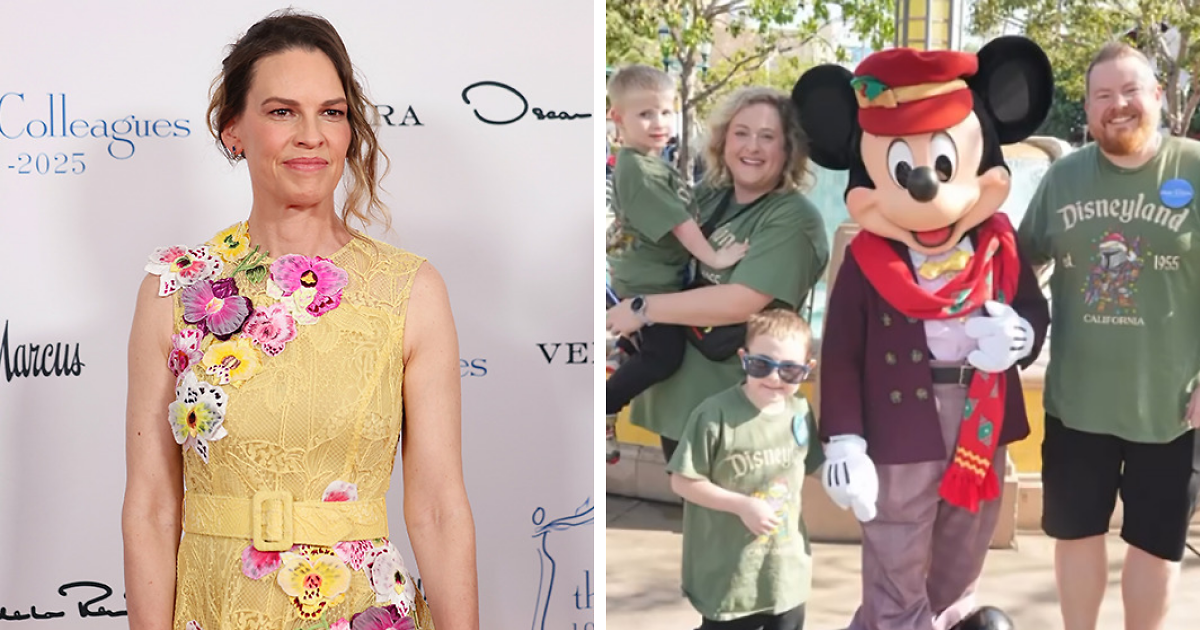
That is what reportedly happened when actress Hilary Swank crossed paths with Jada Bafus, a mother traveling with her family at Los Angeles International Airport. Bafus was on the way to Disneyland with her husband and two young sons, Mason and Jack, for a Make-A-Wish trip. According to multiple reports, both boys have Duchenne muscular dystrophy, a serious progressive genetic condition that affects muscle strength and can shorten life expectancy.
The moment should have been about magic, Mickey ears, and the kind of joy families hold onto when life has asked far too much of them. Instead, it briefly turned into a viral celebrity controversy after Bafus said Swank believed she was trying to photograph the actress and her children without permission.
Swank, a two-time Academy Award winner and mother of twins, reportedly reacted sharply. Bafus later said she had not been trying to take a picture at all. She was using her phone while trying to locate her husband and sons in the airport crowd. The situation hurt, Bafus said, especially because the family was beginning an emotional Make-A-Wish journey.
Then came the twist: Swank reportedly reached out privately to apologize. That could have been the end of the story. Two mothers, one tense public moment, one apology, lesson learned. Internet packs up its folding chair and goes home.
But this is the internet, where folding chairs are often thrown before anyone reads the second paragraph.
Why Hilary Swank’s Apology Changed the Tone of the Story
According to follow-up reporting, Swank apologized after learning more about Bafus and her sons. The actress reportedly explained that she had been worried about her own young children being photographed. Swank has generally kept her twins’ faces private, a choice many public figures make because fame does not automatically enroll their children in the Celebrity Photo Consent Program. Spoiler: that program should not exist.
The apology mattered because it reframed the incident. Instead of a simple “celebrity versus fan” story, it became a collision between two very understandable forms of parental protection.
On one side was Bafus, a mother navigating an emotionally loaded trip for her sons. Make-A-Wish experiences are not ordinary vacations. They are built to give children with critical illnesses and their families a break from hospitals, routines, medical stress, and the quiet heaviness that often follows them around. For many families, a wish trip becomes a bright emotional landmark.
On the other side was Swank, a mother who has chosen to protect her toddlers’ privacy. Public figures may be used to cameras, but their children are not public property. A parent seeing a stranger’s phone pointed in their direction might react before the full picture becomes clear. That does not make a harsh response ideal, but it does make the fear easier to understand.
This is why the apology turned the story into something more human. It suggested that Swank did not double down, dismiss the mother, or hide behind a wall of celebrity silence. She reportedly contacted Bafus, expressed regret, and learned more about the family’s situation.
Why Some People Turned On the Mom Instead
The strangest part of the viral response was not that people criticized Swank. That was predictable. The internet sees a celebrity misstep and immediately starts stretching like it is preparing for Olympic-level judgment.
The more complicated part was that many commenters turned on Bafus. Some accused her of exaggerating. Others questioned why she posted about the encounter. Some suggested she should have kept the apology private. A few argued that if she recognized Swank, then Swank had a reason to be suspicious.
This reaction says a lot about modern online culture. When a story involves illness, celebrity, parenting, children’s privacy, and social media, people do not simply choose sides. They build entire courtroom dramas in the comment section, usually with less evidence than a lost-sock investigation.
Some people sympathized with Bafus because she was beginning a deeply meaningful trip with her sons and felt wrongly accused. Others sympathized with Swank because parents are increasingly worried about strangers photographing children, especially in airports. Both responses can exist at the same time. The problem begins when empathy becomes a competition.
The Bigger Issue: Parents, Phones, and Public Spaces
This incident touched a nerve because nearly everyone now lives around phones. A person holding up a phone may be texting, checking a gate number, calling a spouse, scanning a QR code, recording a video, or trying to remember where they parked while their brain quietly leaves the building.
But in public spaces, phones can feel intrusive. Parents are especially alert when strangers seem to be filming or photographing children. For celebrities, the concern is multiplied. A casual image of their child can end up online, copied, reshared, and discussed by strangers before anyone has time to say, “Please delete that.”
At the same time, assuming the worst can wound people who are already under pressure. Bafus said she was not taking photos. She was trying to manage her family’s travel situation. Any parent who has ever navigated baggage claim with children knows the experience can feel like a live-action puzzle created by someone who has never met a suitcase.
The lesson is not that Swank was evil or that Bafus was wrong to feel hurt. The lesson is that public life has become a minefield of assumptions. A phone becomes evidence. A glance becomes intent. A tired parent becomes a suspect. A celebrity becomes a villain. A private apology becomes public debate.
What Duchenne Muscular Dystrophy Adds to the Story
The boys’ reported diagnosis, Duchenne muscular dystrophy, is not a side detail. It explains why the trip carried such emotional weight. Duchenne muscular dystrophy, often shortened to DMD, is a progressive condition that primarily affects boys and causes increasing muscle weakness over time. Medical care has improved, and many people with DMD are living longer than previous generations, but the condition remains serious and life-changing.
That context matters because families dealing with critical illness often carry invisible stress. From the outside, a parent at an airport may look distracted, impatient, or overly emotional. From the inside, that parent may be coordinating travel, medications, accessibility needs, schedules, siblings, financial worries, and the emotional responsibility of making one special trip feel perfect.
This does not mean a parent’s pain gives them automatic ownership of every public reaction. It means observers should slow down before treating a viral post like a personality test with only two answer choices: saint or villain.
Why Make-A-Wish Trips Are So Emotionally Powerful
Make-A-Wish exists to create meaningful experiences for children with critical illnesses. These trips are often described by families as more than vacations. They are moments of hope, control, and joy during seasons when families may feel that medical uncertainty controls everything else.
For a child, a wish can mean meeting a favorite character, visiting a dream destination, becoming a firefighter for a day, or simply having a moment where the illness is not the main character. For parents, the experience can feel like a rare chance to say yes without calculating the next appointment, the next form, or the next worry.
That is why the airport moment landed so painfully for Bafus. She was not simply beginning a family getaway. She was beginning a carefully planned emotional milestone. When something upsetting happens at the start of such a trip, it can feel larger than the moment itself.
Thankfully, follow-up reports suggest the family still had a joyful time at Disneyland. That matters. The boys’ experience should not be reduced to an airport misunderstanding. Their trip was bigger than one tense exchange, and the public conversation should remember that.
Hilary Swank’s Side: A Mother Protecting Her Children
Hilary Swank has spent decades in the public eye, but motherhood brought a different kind of visibility. Since welcoming twins Aya and Ohm with her husband, Philip Schneider, she has shared pieces of her parenting life while also keeping boundaries around her children’s privacy.
That boundary is reasonable. Celebrity children do not choose fame. They do not sign press contracts. They do not owe strangers cute airport content. A parent who has seen how quickly images travel online may become highly sensitive to any phone pointed near their kids.
Still, good intentions can come out sideways. A protective instinct can sound like an accusation. A stressful travel moment can become a public embarrassment. A sentence said in frustration can grow legs, sprint across social media, and return wearing a headline.
Swank’s reported apology is important because it shows the better option after a mistake: acknowledge it, reach out, and treat the other person as human. Nobody wins when a misunderstanding turns into a permanent character judgment.
The Internet’s Favorite Hobby: Judging Parents
Nothing activates online opinion quite like parenting. Parents are criticized for posting too much, not posting enough, being too protective, not protective enough, disciplining too much, disciplining too little, packing the wrong snacks, or breathing in a tone someone on Facebook finds suspicious.
In this case, Bafus was criticized by some for sharing the encounter. Swank was criticized by others for allegedly snapping. Commenters debated whether the mother wanted attention, whether the actress overreacted, and whether the apology should have ended the matter.
The deeper issue is that online audiences often punish emotion after asking people to “be real.” A mother shares that she was hurt, and suddenly strangers demand courtroom-grade evidence. A celebrity apologizes, and others treat the apology as either perfect redemption or proof of guilt. Real life is messier than that.
It is possible Bafus posted because she was upset in the moment. It is possible Swank reacted because she feared for her children’s privacy. It is possible both women later understood each other better. That kind of nuance will never trend as fast as outrage, but it ages much better.
What This Story Teaches About Public Apologies
A public apology works best when it does three things: recognizes harm, explains without excusing, and moves toward repair. From the reporting available, Swank’s apology appears to have done at least some of that privately. Bafus also seemed willing to accept the gesture and emphasize that she did not want the situation twisted into something uglier.
That is a healthier ending than most viral scandals get. No dramatic press conference. No twelve-slide Notes app statement. No “I’m sorry if anyone was offended,” the apology equivalent of stepping on someone’s foot and blaming the shoe.
Instead, the reported resolution sounded personal. Two mothers had a bad moment, then talked. The internet, unfortunately, kept arguing long after the people involved seemed ready to move forward.
Experience-Based Takeaways: What Ordinary People Can Learn From This
Anyone who has traveled with kids knows that airports remove about 40 percent of a person’s patience before they even reach security. Families dealing with illness, disability, medical equipment, or accessibility needs often carry even more pressure. A parent may be watching one child, calling another adult, checking bags, tracking medications, and trying to keep the whole day from tipping into chaos.
In that kind of environment, small misunderstandings can feel huge. A stranger’s comment may land harder than intended. A celebrity sighting may distract someone for a second. A protective parent may misread a phone. A tired traveler may post about something before the full emotional dust settles.
The first takeaway is simple: ask before assuming. If someone seems to be taking a photo of your child, a calm question can prevent a public confrontation. Something as direct as “Hey, are you filming?” may feel awkward, but it is better than launching into accusation mode like a courtroom drama with carry-on luggage.
The second takeaway is for anyone who recognizes a celebrity in public. Admiration is fine; entitlement is not. Public figures deserve basic space, and their children deserve even more. If you want a photo, ask. If the answer is no, accept it. Nobody’s toddler needs to become a souvenir.
The third takeaway is for social media users. Before turning a stranger’s story into a battlefield, pause. A viral post is usually a keyhole view of a much larger room. It may contain truth, pain, confusion, missing context, and emotion all at once. Commenting with cruelty does not make anyone a defender of justice. It usually just adds more smoke to a room that already needs air.
The fourth takeaway is for families going through hard seasons. You are allowed to feel hurt when someone misjudges you. You are also allowed to accept an apology without giving the internet a final vote. Not every painful moment needs to become a permanent feud. Sometimes repair is quieter than outrage, and that is a good thing.
Finally, this story reminds us that two parents can both be protective for different reasons. Bafus was focused on her sons and a once-in-a-lifetime trip. Swank was focused on the privacy of her young children. Their priorities collided for a moment, but the apology suggests they later found common ground. That is the part worth keeping.
Conclusion: A Viral Clash With a Human Ending
The story of Hilary Swank apologizing to a Make-A-Wish mom became viral because it had every ingredient the internet loves: a famous actress, a protective mother, critically ill children, an airport misunderstanding, and a comment section ready to lift weights.
But beneath the noise, the incident seems less like a scandal and more like a human collision. A mother under emotional strain felt wrongly accused. Another mother, worried about her children’s privacy, appears to have reacted too quickly. Then came an apology, a conversation, and a chance for people to remember that compassion should not require choosing a villain.
The better takeaway is not “cancel her” or “attack the mom.” It is this: public spaces are stressful, children deserve privacy, families dealing with illness deserve grace, and apologies still matter. In a culture that often rewards the loudest reaction, this story quietly argues for something rarerassuming less, asking more, and letting people repair what they can.