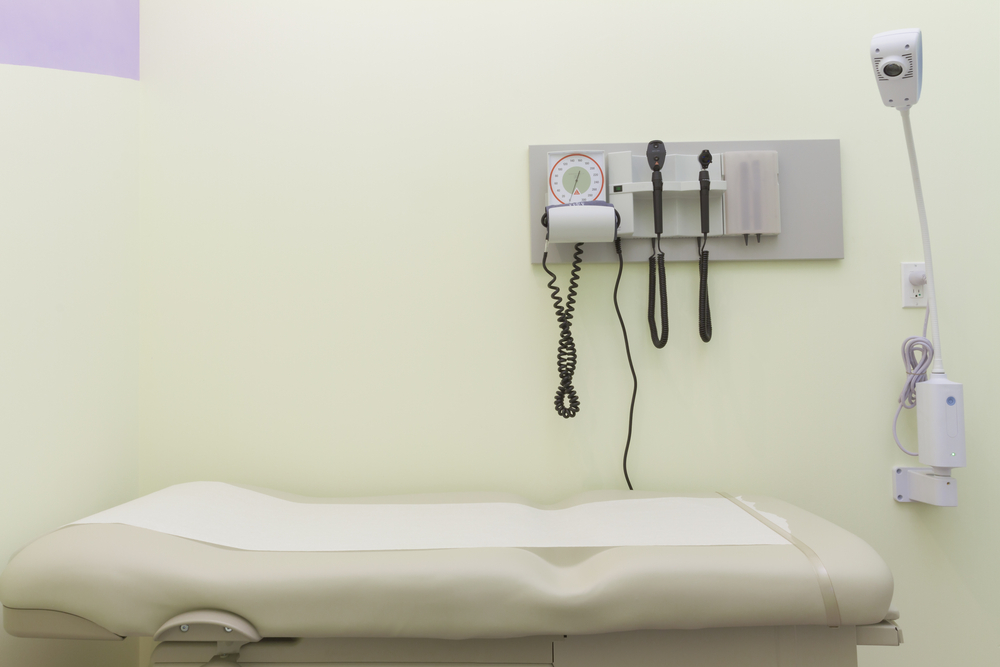

The traditional office visit has a certain timeless charm: the crackly paper on the exam table, the blood pressure cuff that sounds like it’s
inflating a pool float, and a waiting-room TV quietly explaining something called “the importance of fiber” to no one in particular.
But in 2026, it’s fair to ask: if we can order groceries, attend college, and argue with strangers online without leaving the couch… do we still
need to physically go see a clinician?
The honest answer is delightfully unsatisfying (and therefore medically accurate): yes, sometimesand no, not always.
What we’re really debating isn’t “office vs. video.” It’s whether care should default to the old-school, in-person ritual, or whether the office
visit becomes one tool in a bigger, smarter toolbox.
The office visit’s superpowers (that your webcam simply doesn’t have)
Let’s give the traditional visit its flowers. There are things that happen in a clinic room that can’t be replicated by even the fanciest camera
angle and best ring light in the world.
1) Hands-on diagnosis and the “something’s off” factor
Medicine isn’t just a checklistit’s pattern recognition. In-person visits allow clinicians to pick up subtle clues: how you walk into the room,
how you breathe while you talk, whether your skin looks clammy, or whether your “mild discomfort” is actually “I’m trying not to pass out.”
A video visit can capture some of that, but not alland it can miss the quiet red flags that prompt a clinician to act fast.
2) The physical exam and vital signs that actually mean something
A blood pressure reading taken in a clinic isn’t perfect (white-coat anxiety is real), but it’s standardized. In contrast, home measurements can be
excellentor wildly unhelpfuldepending on cuff size, technique, calibration, and whether your dog just barked mid-reading.
For many conditions, the in-person exam is still the quickest path to clarity.
3) Stuff that requires… actual stuff
Vaccines, stitches, throat swabs, EKGs, Pap tests, ear cleanouts, biopsies, splintsmedicine is sometimes a contact sport (a gentle one, but still).
If a visit needs a procedure, imaging, labs, or a hands-on treatment plan, the office isn’t optional; it’s the stage.
4) Complex conversations are often easier face-to-face
Some conversations land better in person: a new cancer diagnosis, a serious medication change, end-of-life planning, or when someone is scared and
needs a calm, focused roomnot a choppy connection and a toddler doing parkour behind the camera.
What virtual visits do better (and why people keep choosing them)
Now for the part where telehealth gets its flowers, too. Even after pandemic-era restrictions eased, a lot of Americans continued to use telemedicine.
In a nationally representative analysis of U.S. adults with a health care visit in 2022, 43% reported using telemedicine (with a mix
of video and audio-only) when in-person care was available. That’s not a fadthat’s a preference.
1) Convenience that translates into real access
“Convenient” sounds like a luxury word, but in health care it often means “I can actually get care.” Virtual visits can eliminate transportation barriers,
time off work, childcare juggling, mobility challenges, and the problem known as “my specialist is two hours away and my car hates me.”
Major health systems and clinicians have emphasized that telehealth can be especially helpful when travel is difficult or when you’re sick and should stay home.
2) Follow-ups, stable chronic care, and medication management
Many office visits aren’t physical-exam-heavythey’re check-ins: “How’s your blood pressure?” “Any side effects?” “Let’s go over your labs.”
When the question is information and decision-making (not a hands-on exam), virtual can work beautifullyespecially when paired with home monitoring
like blood pressure cuffs, glucose meters, and scales.
3) Behavioral health and counseling
Mental health care is a prime example of where virtual can be highly effective for many patients, because the “procedure” is the conversation itself.
Many people are more comfortable talking from home, and the reduced friction can improve consistency (which matters a lot for therapy).
Policy has also been evolving around how behavioral telehealth is delivered and reimbursed, underscoring its ongoing role in care delivery.
4) Triage: figuring out who needs in-person (and who doesn’t)
One of the most underrated uses of telehealth is smart sorting. A quick virtual visit can determine whether symptoms can be managed at home,
need a prescription, require urgent imaging, or warrant an ER trip. This is not “telehealth replacing clinics” so much as “telehealth preventing
unnecessary trips”and sometimes, preventing dangerous delays.
What the evidence says: telehealth works… and also, it’s not magic
The research story is refreshingly nuanced. Telemedicine can meet patient needs in many contexts, but it’s not a universal substitute.
Telemedicine can deliver solid careespecially when it’s integrated
Studies in large integrated systems suggest that using telemedicine alongside in-person primary care can maintain quality standards.
Research on primary care quality performance measures has found low risk of telemedicine exposure negatively affecting quality performance,
supporting telemedicine as a capacity-augmenting tool rather than a quality compromise.
Patient experience matters, too. Safety-focused reviews highlight that patient satisfaction with telehealth is often similar to (and sometimes higher than)
in-person care when patients are seeing clinicians from their existing practice. In other words: telehealth tends to shine when it’s part of a
relationship, not a random one-off.
But telehealth can create “bounce-back” visits for some problems
A consistent finding across multiple settings is that some telemedicine visits are more likely to be followed by an in-person visit soon afterespecially
for certain conditions where a physical exam or testing ends up being necessary. For example, large observational studies have found higher short-term
in-person return rates after telemedicine compared with office visits, varying by clinical issue. Translation: sometimes telehealth is the first chapter,
not the whole book.
Pediatrics offers a useful example of “helpful, not universal”
In a large pediatric primary care cohort (Kaiser Permanente Northern California, 2022), telemedicine visits were associated with less prescribing and
ordering than in-person visits, modestly higher subsequent in-person visits, and slightly higher emergency department visits, with no significant
difference in hospitalizations. That pattern suggests telemedicine can meet many needs while still prompting appropriate in-person evaluation when required.
The real question: “Which visit type matches the clinical need?”
Instead of asking whether the traditional office visit is obsolete, the better question is: When is an in-person visit the best tool?
Here’s a practical framework that clinicians and patients often useminus the medical jargon and plus a little common sense.
Choose an in-person visit when…
- Symptoms are new, severe, or changing fast (new chest pain, shortness of breath, fainting, neurologic symptoms, significant swelling).
- You need a hands-on exam (abdominal pain, a concerning lump, ear pain that might require an otoscope exam, joint instability).
- You need tests or procedures (labs, imaging, vaccines, wound care, injections, IUD placement, EKG, stitches).
- It’s a high-stakes decision and you’d benefit from face-to-face discussion (new serious diagnosis, major medication changes).
- The situation feels “off” and you can’t quite explain why (clinicians take this seriously for a reason).
Virtual visits are often a great fit when…
- You’re following up on a known issue (reviewing lab results, adjusting a stable medication dose, tracking symptoms over time).
- You need a refill or care plan check-in and no exam is necessary.
- Behavioral health is the main focus (therapy, medication management, coping strategies).
- You have reliable home data (blood pressure logs, glucose readings, symptom tracking) that can guide decisions.
- You need quick triage to decide whether you should come in, go urgent, or manage at home.
One patient-facing rule of thumb often echoed by clinicians: if something is new or worsening, lean in-person.
If it’s stable, familiar, and mostly about discussion or monitoring, virtual can be a strong option.
The hidden deal-breaker: the digital divide
The future of virtual care isn’t just about medicine. It’s about bandwidthliterally.
Pew Research Center data show high adoption of smartphones and home broadband overall, but real gaps remain by age and income.
That matters because video visits require stable internet, decent devices, and basic comfort with technologynone of which should be assumed.
And in some places, the issue is bigger than “my Wi-Fi is moody.” Reporting on rural areas has identified millions of Americans living in counties
that lack both adequate health care access and reliable high-speed internet, meaning telehealth can’t fully fill the gap.
If virtual care becomes the default without infrastructure, it risks widening disparities instead of shrinking them.
Policy whiplash: reimbursement rules shape what “counts” as care
Here’s the part nobody wants to talk about at dinner, but everyone in health care thinks about daily: coverage rules can determine whether telehealth
is available at all. For Medicare, federal policy has repeatedly extended many telehealth flexibilities that expanded during the COVID-era period.
CMS guidance has clarified that broad access has been extended through January 30, 2026, with significant location-related restrictions
generally returning January 31, 2026 (with important exceptions, such as behavioral health policies).
This isn’t abstract. When reimbursement is uncertain, clinics may limit virtual slots, invest less in telehealth support, or push patients back into
the office even when a virtual visit would be clinically appropriate.
Professional groups have been actively advocating to keep telehealth options available, including efforts to reduce location restrictions and ease certain
requirements tied to behavioral health telemedicine. Meanwhile, Medicare’s behavioral health rules include specific in-person visit timing requirements in
some contextsanother example of how policy can define the boundaries of virtual care.
So… do we still need the traditional office visit?
Yes. We still need it for diagnosis that requires touch and tools, procedures, urgent evaluation, and complex, high-emotion conversations that benefit
from being in the same room.
But we don’t need it for everything. Treating every follow-up, refill, or routine check-in as “must happen in a clinic building” is like insisting
every meeting be an in-person conference when half of them could have been an email. (And yes, medicine is more serious than emailbut the time and
access math is real.)
The future isn’t “telehealth replaces the office.” It’s hybrid care: the right visit type for the right problem, supported by good
policy, good technology, and a commitment to equity. The traditional office visit isn’t dyingit’s being promoted from “default setting” to “high-value tool.”
Which, honestly, is a pretty flattering career arc.
Real-world experiences: what hybrid care feels like (500-word add-on)
If you want to understand why this question won’t die, you don’t need a white paperyou need the everyday stories that play out in kitchens,
break rooms, and parking lots.
Experience #1: The “I just need the refill” victory lap.
A patient with well-controlled high blood pressure gets the dreaded “you’re due for an appointment” message. In the old model, that meant arranging
transportation, missing work, and sitting in a waiting room to say, “Yep, I’m still taking the pill.” In the hybrid model, they upload two weeks of
home blood pressure readings, hop on a 7-minute video call, confirm there are no side effects, and the refill is sent. Nobody is neglected; nobody
is trapped in fluorescent lighting longer than necessary. It’s not lazy medicineit’s efficient medicine.
Experience #2: The rash that looked harmless… until it didn’t.
A parent books a virtual visit for a child’s “weird spot” on the skin. The clinician asks for better lighting, zoom, a few angles, and hears the
symptom timeline. For many rashes, that’s enough. But sometimes the clinician hears one detailfever, rapid spread, pain out of proportionand the
plan changes instantly: “I want you seen in person today.” The virtual visit didn’t replace the office visit; it prevented delay. This is telehealth
at its best: a fast front door that escalates care appropriately.
Experience #3: The audio-only call that saved the day.
Not everyone has stable internet. Some people don’t have the right device. Some are older and don’t want to troubleshoot microphones like it’s their
new hobby. But an audio call can still be meaningful. Picture an older adult with diabetes who can’t reliably do video. They can still describe
symptoms, review medications, and get coaching on what readings mean. In a hybrid system, the clinic uses audio visits to maintain continuityand
schedules in-person care strategically for the moments that truly need hands-on evaluation.
Experience #4: Clinicians learning the “camera exam.”
On the clinician side, hybrid care changes the skill set. Great telehealth clinicians learn to give surprisingly specific instructions:
“Press theredoes it hurt?” “Point the camera at your ankle from the side.” “Take a deep breath and count to ten.” They also learn when to stop
pretending the camera can do everything: “I can’t safely answer this without listening to your lungs.” The best virtual care isn’t about doing less;
it’s about doing the right amount, and knowing when the office visit is the safest next step.
Put all of these together and a pattern emerges: people don’t want less care; they want less friction. The traditional office visit
is still essentialbut it works best as the place we go when the body needs a closer look, not as the place we go by default because “that’s how it’s
always been.”