
War is one of humanity’s worst inventions, but wartime engineering has often pushed people to solve impossible problems under impossible deadlines. When roads vanish, bridges collapse, ports are destroyed, fuel runs short, and armies need supplies yesterday, engineers become the quiet heroes holding the whole operation together. They do not always get movie-star treatment. Nobody makes slow-motion posters of a steel truss or a concrete batching plant. Still, without them, many famous campaigns would have looked less like strategy and more like a very expensive traffic jam.
This article looks at 10 awesome feats of wartime engineering that changed history through design, logistics, construction, manufacturing, and scientific problem-solving. These examples are not about glorifying war. They are about understanding how pressure, creativity, and technical skill shaped real-world infrastructure, transportation, communications, and modern engineering practice.
1. The Mulberry Harbors: Building Ports Where None Existed
The D-Day invasion faced one brutal engineering problem: landing soldiers was only the beginning. Armies need fuel, vehicles, food, ammunition, medical equipment, replacement parts, and enough coffee to keep half a continent awake. The Allies could not count on capturing a major French port immediately, so they brought their own.
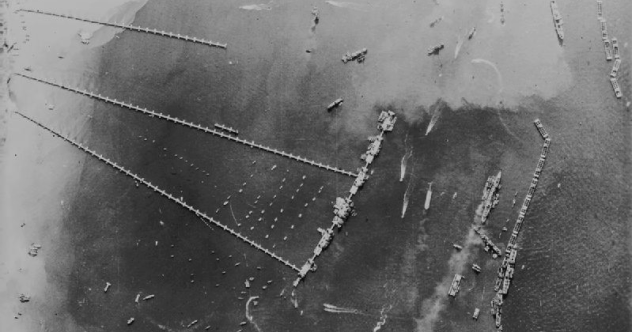
The result was the Mulberry harbors, temporary artificial ports assembled off the coast of Normandy after June 6, 1944. These floating harbor systems included concrete caissons, floating roadways, pier heads, breakwaters, and anchoring systems. In plain English, engineers designed a giant maritime Lego set and then installed it in rough coastal conditions while history was yelling at them to hurry up.
Why It Was Brilliant
The Mulberry concept turned open beaches into supply gateways. The structures had to survive tides, waves, storms, and constant heavy traffic. One harbor was badly damaged by a storm, but the surviving system at Arromanches helped move vast quantities of supplies into France. The lesson was clear: logistics is not just paperwork. Sometimes, logistics is made of floating steel, concrete, and nerves of titanium.
2. The Bailey Bridge: The Portable Bridge That Kept Armies Moving
Retreating armies often destroyed bridges to slow their enemies. That created a nightmare for advancing forces: tanks, trucks, and troops could win a battle, reach a river, and then just stare at the water like it was a very rude wall.
The Bailey bridge solved that problem with prefabricated steel panels that could be carried by trucks, lifted by hand, and assembled without heavy cranes. It was strong enough for military vehicles, modular enough for different spans, and simple enough to be built quickly by trained engineering units in difficult conditions.
Why It Was Brilliant
The genius of the Bailey bridge was not only strength; it was repeatability. Its parts were standardized, transportable, and adaptable. Engineers could push the bridge forward from one bank using rollers, which meant they did not always need workers on the far side. That is the kind of practical design that makes engineers smile and rivers feel personally offended.
3. Liberty Ships: Mass Production Goes to Sea
During World War II, shipping was life. The Allies needed cargo ships faster than submarines and combat losses could remove them from service. The answer was the Liberty ship, a standardized cargo vessel built in huge numbers by American shipyards.
Liberty ships were not glamorous. They were not sleek ocean celebrities. They were practical, rugged, and built for speed of production. Their design used welded construction and prefabricated sections, allowing shipyards to move toward assembly-line methods. Thousands of workers, including many women entering industrial jobs, helped turn shipbuilding into one of the great manufacturing achievements of the war.
Why It Was Brilliant
The Liberty ship program showed that engineering is not just about inventing one impressive object. It is also about designing a process that can produce thousands of useful objects reliably. The achievement was part naval architecture, part industrial engineering, part workforce coordination, and part “we need another ship by Tuesday.”
4. Radar And The Cavity Magnetron: Seeing The Invisible
Radar changed wartime detection by using radio waves to locate aircraft and ships beyond normal sight. Early radar systems were already valuable, but the development and sharing of the cavity magnetron made compact microwave radar far more practical.
The magnetron helped produce high-power microwaves, allowing radar equipment to become smaller and more precise. This mattered for aircraft, ships, coastal defense, navigation, and anti-submarine operations. It was one of those engineering breakthroughs that sounds boring until you realize it helped people “see” through darkness, clouds, distance, and bad weather.
Why It Was Brilliant
Radar blended physics, electronics, materials science, manufacturing, and military operations. It also proved that international scientific cooperation could accelerate innovation. The device was small, but its impact was enormous. It was basically the wartime engineering version of a tiny key that opens a very large door.
5. The Higgins Boat: A Small Craft With A Huge Job
Amphibious landings are engineering nightmares wearing life jackets. Troops and vehicles need to move from ship to shore quickly, often without docks or calm water. The Higgins boat, officially known as the Landing Craft, Vehicle, Personnel, became one of the most important landing craft of World War II.
Designed by Andrew Higgins and his company, the boat combined shallow-water performance with a front ramp that allowed troops to disembark more quickly. That front ramp seems obvious now, but obvious ideas are often only obvious after someone has already solved the problem.
Why It Was Brilliant
The Higgins boat was a triumph of practical naval engineering. It could approach beaches, unload quickly, and support large-scale amphibious operations. It was not fancy. It was useful. In wartime engineering, useful often beats fancy by a mile, then builds a road back to prove the point.
6. The Seabees: Building Bases In The Middle Of Nowhere
The U.S. Navy’s Construction Battalions, better known as the Seabees, became famous for their “Can Do” spirit. Their job was simple to describe and extremely hard to perform: build what the military needed, where it was needed, often under dangerous or remote conditions.
During World War II, Seabees built airfields, roads, piers, fuel tanks, hospitals, warehouses, barracks, and advance bases across multiple theaters. In the Pacific, they helped transform islands into operational hubs. A coral island could become an airfield, supply base, repair depot, or staging point. That is a remarkable sentence, especially when you remember that coral islands do not come with hardware stores.
Why It Was Brilliant
The Seabees were not defined by a single invention. Their achievement was mobile construction at scale. They combined trade skills, military discipline, field improvisation, and brutal work schedules. Modern expeditionary engineering owes a great deal to this model of construction units that could deploy, adapt, and build under pressure.
7. The Ledo Road: A Highway Through Mountains, Jungle, And Mud
After Japan cut the Burma Road in 1942, the Allies needed another route to supply China. The answer was the Ledo Road, later called the Stilwell Road, running from India through Burma toward China. Building it meant carving a route through mountains, jungle, monsoon conditions, disease, landslides, and terrain that seemed personally committed to ruining everyone’s day.
The project required roadbuilding, bridge construction, drainage, surveying, earthmoving, and constant maintenance. Engineers had to learn the land while building through it. That meant practical decisions were often made in real time, with limited information and enormous pressure.
Why It Was Brilliant
The Ledo Road was more than a road. It was a supply strategy poured into mud and cut through jungle. The project showed how civil engineering, military logistics, and human endurance can intersect. It also reminds us that infrastructure is never just concrete and gravel; it is geography, labor, weather, risk, and purpose.
8. Operation PLUTO: Fuel Pipelines Under The Sea
After D-Day, Allied forces needed fuel to keep moving across Europe. Trucks and ships could carry fuel, but demand was massive and constant. Operation PLUTO, short for Pipeline Under the Ocean, aimed to move fuel through pipelines laid beneath the English Channel.
The project involved flexible pipe designs, giant floating spools, pumping stations, and underwater installation methods. Engineers had to think like oil-field workers, naval planners, and magicians with very large toolboxes. The goal was to make fuel flow invisibly beneath the sea while armies advanced on land.
Why It Was Brilliant
PLUTO was not the only fuel solution used by the Allies, but it remains one of the most fascinating examples of wartime infrastructure. It treated fuel as a strategic system, not just a commodity. Modern readers might see echoes of pipeline engineering, offshore construction, and energy logistics in this ambitious wartime experiment.
9. The Pentagon: A Headquarters Built At Wartime Speed
Before the United States entered World War II, the War Department needed a massive headquarters to manage expanding military operations. The result was the Pentagon, built in Arlington, Virginia, at astonishing speed. Construction began in September 1941, and the building was completed in January 1943.
The Pentagon required huge amounts of concrete, steel, labor, planning, and coordination. It had to centralize offices, support thousands of workers, and be built quickly during a period when materials and manpower were under wartime pressure. Designing and constructing a gigantic office complex is hard enough. Doing it while the world is on fire is a whole different spreadsheet.
Why It Was Brilliant
The Pentagon was an achievement in architecture, construction management, logistics, and organizational engineering. Its five-sided design, ring corridors, and enormous scale made it a symbol of wartime administration. It also showed that engineering supports not only battlefields, but the command systems behind them.
10. Manhattan Project Infrastructure: Science Built At City Scale
The Manhattan Project is often discussed as a scientific project, but it was also an enormous engineering and construction effort. Sites such as Oak Ridge, Tennessee; Hanford, Washington; and Los Alamos, New Mexico required rapid development of laboratories, production facilities, housing, roads, utilities, and security systems.
Oak Ridge, for example, became a secret city built to support complex industrial processes and tens of thousands of workers. Hanford required massive facilities and infrastructure in a remote area. The project demanded coordination among scientists, engineers, construction crews, military administrators, and industrial firms.
Why It Was Brilliant
Without going into technical weapon details, the engineering significance is clear: the Manhattan Project demonstrated how science, construction, industrial production, and project management could be combined at unprecedented scale. It helped shape later models for large national laboratories, high-security research sites, and big-science engineering programs.
What These Wartime Engineering Feats Have In Common
At first glance, these projects look wildly different. One is a bridge. One is a shipbuilding program. One is a floating harbor. One is a radar breakthrough. One is a headquarters building. Yet they share several important engineering principles.
They Solved Real Bottlenecks
Great engineering starts with a problem that matters. The Mulberry harbors solved the lack of ports. Bailey bridges solved destroyed crossings. Liberty ships solved shipping shortages. Radar solved the problem of hidden threats. These were not “nice to have” projects. They were pressure-cooker solutions to urgent bottlenecks.
They Favored Practicality Over Perfection
Many wartime systems were not beautiful in the showroom sense. They were optimized for speed, repairability, transport, and function. The Bailey bridge did not need to be elegant; it needed to carry vehicles across gaps. Liberty ships did not need to win yacht-club compliments; they needed to deliver cargo. Engineering under pressure is often the art of choosing the best workable answer fast.
They Depended On Systems, Not Lone Geniuses
Popular history loves lone inventors, but these feats depended on teams. Designers, welders, surveyors, electricians, machine operators, architects, drivers, sailors, clerks, mathematicians, and construction workers all mattered. Wartime engineering is rarely one person shouting “Eureka!” It is usually thousands of people saying, “Pass the wrench, we have a deadline.”
Experiences And Lessons From Wartime Engineering
One of the most powerful experiences connected to studying wartime engineering is realizing how much of history depends on ordinary systems working under extraordinary pressure. Battles may get the headlines, but behind every major operation is a long chain of bridges, roads, fuel lines, shipyards, workshops, airfields, warehouses, communications systems, and repair crews. When those systems fail, strategy becomes wishful thinking wearing a uniform.
For modern readers, the first lesson is that engineering is deeply human. A bridge is not just steel; it is a promise that people and supplies can cross. A road is not just dirt and gravel; it is a lifeline. A landing craft is not just a hull; it is a solution to fear, distance, water, and time. Wartime engineering compresses these truths into dramatic form because the consequences are immediate and visible.
The second lesson is that constraints can sharpen creativity. Engineers in wartime rarely enjoy perfect conditions. They face limited materials, incomplete maps, bad weather, dangerous surroundings, and deadlines that do not care about anyone’s feelings. The Bailey bridge worked because it accepted those constraints and turned them into design requirements. The Seabees succeeded because they adapted construction methods to remote places. Liberty shipyards improved because production itself became an engineering problem.
The third lesson is that standardization can be revolutionary. That sounds less exciting than a secret gadget, but it may be even more important. Standard parts, repeatable processes, modular designs, and simplified maintenance made many of these feats possible. When a system can be manufactured, transported, assembled, repaired, and taught quickly, it becomes more than an invention. It becomes a capability.
The fourth lesson is that logistics deserves more respect. People often treat logistics as background noise, but logistics is the skeleton of large-scale action. Fuel, food, spare parts, transportation, and shelter determine what is possible. Operation PLUTO, the Mulberry harbors, and the Ledo Road all show that supplying an operation can be as difficult as the operation itself. The glamorous plan is useless if no one can keep the trucks moving.
The final lesson is humility. Many of these projects came with flaws, trade-offs, failures, and human costs. Some worked better than expected; others worked only partially or required constant adjustment. That does not make them less impressive. It makes them more real. Engineering is not magic. It is disciplined problem-solving under constraints, with math in one hand and a backup plan in the other.
Today, wartime engineering can inform disaster response, emergency infrastructure, humanitarian logistics, temporary bridges, modular housing, rapid medical facilities, and resilient communications. The goal should not be to admire conflict, but to learn how technical skill can protect lives, restore movement, and solve urgent problems when normal systems break. That is the best legacy of these feats: not the war around them, but the reminder that smart design can help people endure the unthinkable and rebuild afterward.
Conclusion
The story of 10 awesome feats of wartime engineering is really the story of people refusing to let geography, distance, weather, damaged infrastructure, or limited time have the final word. From artificial harbors and portable bridges to radar, shipyards, secret cities, and underwater fuel lines, these projects show how engineering can reshape what is possible.
They also remind us that innovation is not always shiny. Sometimes it is muddy, welded, bolted, floated, buried, or poured in concrete at 3 a.m. The greatest engineering achievements often do not shout. They simply work when everything depends on them.
Note: This article is written for educational and historical publishing purposes. It focuses on engineering, logistics, infrastructure, and technology history rather than instructions for building or using harmful devices.