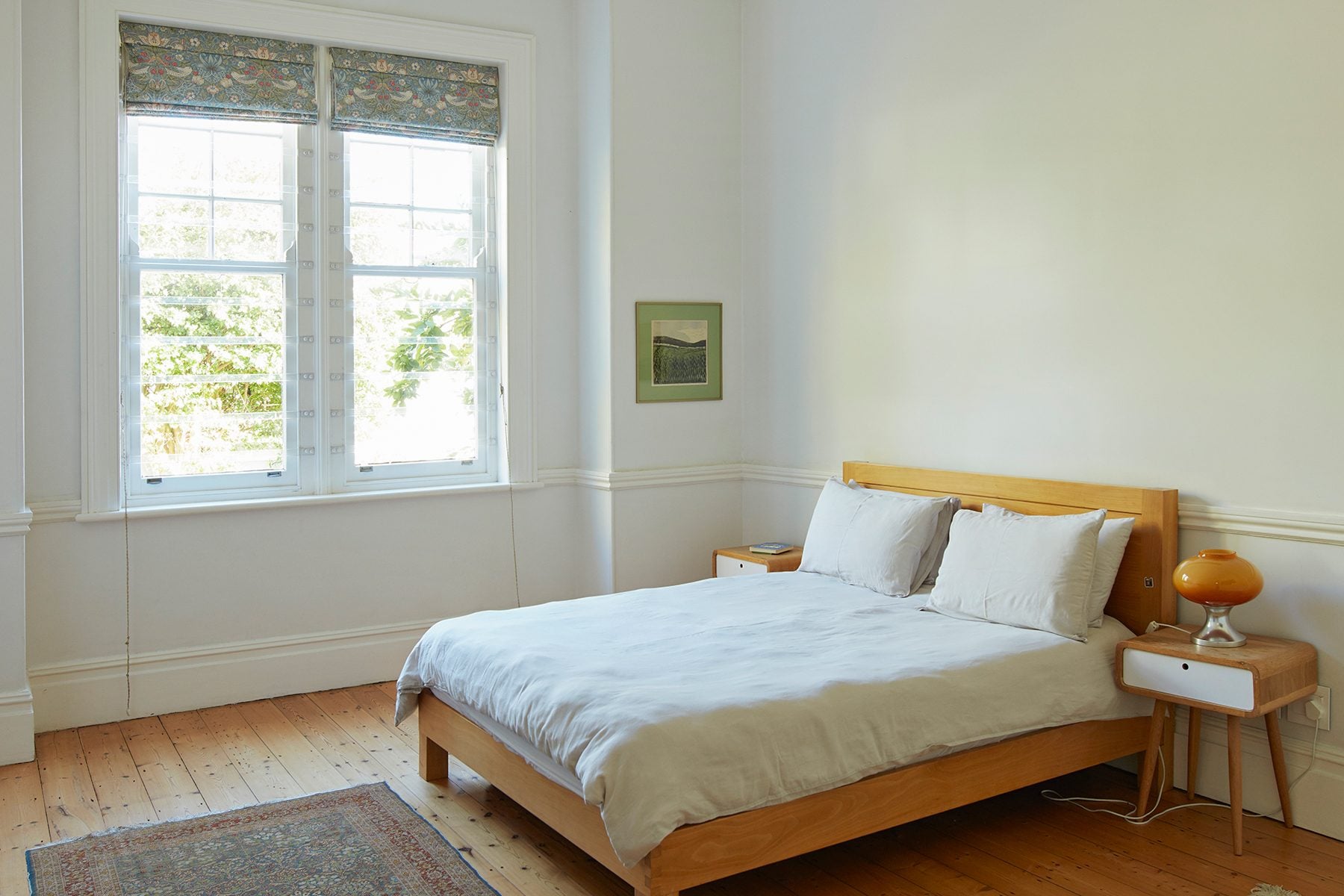

Putting a bed in front of a window can feel like breaking one of those mysterious decorating rules that everyone seems to know but nobody remembers agreeing to. Yet in small bedrooms, oddly shaped rooms, apartments, and older homes with doors and windows on nearly every wall, the window wall may be the only placndow can look stylish, balanced, and completely intentional. The trick is to treat the bed, window, headboard, and window coverings as one coordinated composition rather than four objects awkwardly competing for attention.
You also need to think beyond appearance. Privacy, morning light, drafts, window access, condensation, curtain cords, and emergency escape considerations all matter. Get those details right, and the layout can solve a difficult floor plan while creating one of the most memorable features in the room.
Is It Okay to Put a Bed in Front of a Window?
Yes, in many bedrooms it is perfectly practical to place a bed in front of a window. Interior designers frequently use the arrangement when another wall would interfere with doors, closets, traffic flow, or furniture placement.
The question is less about whether you can do it and more about whether the particular window can still function safely and comfortably.
Before moving the bed, consider the following:
- Does the window need to open regularly for ventilation?
- Would the headboard block the latch, sash, or crank?
- Does cold or hot air make the area uncomfortable?
- Is there condensation or moisture around the glass?
- Can you operate the curtains or shades easily?
- Is the window needed as an emergency escape opening?
- Are there accessible window-covering cords, especially in a child’s room?
If the arrangement creates a safety issue or makes an important window impossible to use, choose another layout. Otherwise, a thoughtful design can turn the supposedly “wrong” wall into the best one in the room.
How to Put a Bed in Front of a Window Step by Step
1. Measure the Window, Bed, and Wall
Begin with a tape measure rather than optimism. Measure the entire window wall, the width and height of the window, the height of the sill, and the dimensions of the bed frame and headboard.
Then mark the proposed bed position on the floor with painter’s tape. This simple step helps you see how much room will remain for nightstands, walking paths, closet doors, and other furniture.
A queen-size mattress is roughly 60 inches wide, while a king is approximately 76 inches wide. The frame may add several more inches. A bed that appears to fit on paper can suddenly become a very enthusiastic roommate once its full frame, bedding, and nightstands enter the picture.
Also measure vertically. A tall headboard may cover most of a low window, while a low-profile bed can preserve the view and allow more natural light into the bedroom.
2. Decide Whether to Center the Bed on the Window
Centering the bed beneath a window is usually the easiest way to create symmetry. The window naturally becomes part of the bed’s backdrop, and matching nightstands or lamps can reinforce the balanced appearance.
However, the bed does not always need to sit directly beneath the center of the glass. An off-center arrangement may work better when:
- The window itself is asymmetrical.
- A closet or doorway limits available space.
- You need a wider walking path on one side.
- Multiple windows make perfect symmetry impossible.
In those situations, use curtains to visually correct the architecture. A wide curtain rod extending beyond the actual window can create the appearance of a larger, more centered backdrop. The eye reads the entire fabric arrangement as a feature wall rather than obsessively checking whether the mattress is exactly 3.75 inches off-center.
3. Choose the Right Headboard
The headboard is one of the most important decisions when putting a bed against a window.
A low headboard works well when you want to preserve light and the view. This is especially effective with tall windows or windows positioned well above the mattress.
A solid upholstered or wood headboard creates a stronger visual anchor and can make the bed feel more protected from the glass behind it. It also gives pillows something substantial to lean against.
A headboard-free platform bed can be useful in a very small room or beneath a particularly low window. Pillows and layered curtains can provide visual softness without physically covering the glass.
Avoid choosing a headboard solely because it looks attractive in an online photo. Check whether it blocks window locks, handles, or blinds. The world’s most beautiful headboard becomes slightly less charming when opening the window requires gymnastics and a screwdriver.
4. Leave a Small Gap When Practical
You do not necessarily have to push the bed tightly against the window wall. Floating it a few inches forward can provide room for curtains to hang naturally and make the window easier to clean or operate.
The ideal amount of space depends on the room. Even a small gap can prevent fabric from becoming crushed between the headboard and wall. Larger gaps may allow access to a window sill or accommodate deeper drapery folds.
However, do not create a narrow, useless space that collects pillows, dust, charging cables, and one sock that disappears until you move houses. Either leave enough room for a practical purpose or keep the arrangement reasonably close.
5. Frame the Bed With Curtains
Curtains are one of the easiest ways to make a bed in front of a window look intentional.
Mount the curtain rod high and, when space allows, extend it beyond the window frame. Long curtain panels can visually increase the height of the room and create a soft architectural frame around the bed.
You can choose one of several approaches:
- Matching wall and curtain colors: Creates a calm, seamless backdrop.
- Contrasting curtains: Turns the window wall into a dramatic focal point.
- Sheers plus blackout panels: Provides flexible light control.
- Roman or roller shades: Saves wall space and keeps the look streamlined.
When the curtains are closed, consider how the entire wall will look. Behind a bed, closed drapes effectively become a large decorative surface. A wildly busy pattern may be delightfulor may make bedtime feel like sleeping inside gift wrap.
6. Control Light for Better Sleep
A bed positioned directly in front of a window may receive more early-morning light than one placed elsewhere. That can be wonderful for people who enjoy waking naturally with the sunrise and considerably less wonderful for anyone who considers 6:03 a.m. an act of aggression.
Blackout curtains, lined draperies, cellular shades, Roman shades, or layered treatments can reduce unwanted exterior light. A combination of a fitted shade and decorative curtains often provides the greatest flexibility.
During the day, open the treatments to enjoy natural light. At night, close them for privacy and a darker sleeping environment.
7. Address Drafts and Temperature Changes
Windows can be one of the more temperature-sensitive parts of a room. Older or poorly sealed windows may create noticeable drafts, while strong direct sunlight can heat the bed during part of the day.
Before committing to the layout, spend time near the window during different weather conditions. Check for:
- Cold air leaks.
- Excessive summer heat.
- Strong morning or afternoon sun.
- Condensation around the glass or frame.
Weatherstripping, appropriate window repairs, insulating shades, and lined curtains can improve comfort. Persistent moisture or condensation should be addressed rather than hidden behind a headboard, where it could go unnoticed.
Best Design Ideas for a Bed Under a Window
Create a Curtain Wall Behind the Bed
Instead of dressing only the exact width of the window, run curtains across a much larger portion of the wall. This can disguise awkward window placement and give the bed a luxurious, hotel-like backdrop.
The technique is particularly useful when a window is slightly off-center. Once the curtains span the wall, the bed can be centered within the overall composition rather than directly beneath the actual glass.
Use a Low Platform Bed
A low bed allows more of the window to remain visible. This makes the room feel lighter and can be especially effective in modern, minimalist, Scandinavian-inspired, or casual interiors.
Keep the bedding relatively streamlined so the bed does not visually climb halfway up the window.
Add Matching Nightstands and Lighting
Symmetry can make an unconventional layout feel deliberate. Matching nightstands, lamps, or wall sconces on either side of the bed create visual order even when the architecture is imperfect.
In a small bedroom, floating nightstands and wall-mounted sconces can save valuable floor space. They also keep lamp cords and tabletop clutter from competing with the window treatment.
Turn a Bay Window Into a Sleeping Nook
A bay window can create a particularly cozy setting for a bed. Rather than forcing every piece of furniture against a flat wall, the bed can float slightly in front of the window area, allowing the architecture to wrap around the sleeping zone.
Use soft curtains, Roman shades, or carefully fitted blinds to control privacy and sunlight without hiding the character of the bay.
Make the Window the Focal Point
Sometimes the best solution is not to disguise the window at all. A beautiful view, arched window, or dramatic group of windows can become the centerpiece of the bedroom.
Choose a simple bed frame, restrained bedding, and window treatments that complement the architecture. Instead of apologizing for putting the bed there, make the entire room say, “Yes, this was absolutely the plan.”
Common Mistakes to Avoid
Blocking a Window That Needs to Remain Accessible
Do not position a heavy bed where it prevents necessary access to a window. This is especially important when the window serves an emergency escape function or must be opened regularly.
Local building and fire-safety requirements vary, so the room’s specific conditions should guide the layout.
Ignoring Window-Covering Cords
Accessible cords can create serious hazards for young children. In children’s rooms, cordless window treatments are the safest approach, and furniture placement should be considered carefully.
Do not allow cords or chains to hang behind the headboard where they are difficult to see but still reachable.
Using a Headboard That Is Too Tall
A tall headboard can unintentionally block most of the natural light and make the room feel heavy. Measure before buying, and think about how much of the window you actually want to preserve.
Trapping Curtains Behind the Bed
If full-length drapes are part of the design, leave enough room for them to fall properly. Crushed fabric tends to look accidental and can make opening and closing the curtains frustrating.
Forgetting About Cleaning
Windows still need cleaning. So do sills, shades, and the mysterious strip of floor behind the headboard. Plan enough access to maintain the area without dismantling the entire bedroom twice a year.
What About Feng Shui?
Traditional feng shui guidance often prefers a bed against a solid wall rather than directly beneath a window because a solid wall is associated with greater support and stability. A commanding position that allows the sleeper to see the bedroom door is also commonly favored.
Real rooms, however, do not always arrive with perfect furniture-placement geometry. If the window wall is the most functional location, a substantial headboard, curtains or shades, visual symmetry, and a calm sleeping environment can help the arrangement feel more grounded.
Even for people who do not follow feng shui principles, the practical idea is useful: a bed should feel secure, comfortable, and intentional rather than exposed or temporary.
Experiences and Lessons From Putting a Bed in Front of a Window
One of the biggest lessons from working with this type of bedroom layout is that the first arrangement rarely tells the whole story. On moving day, a bed under a window may look awkward simply because the curtains are too short, the nightstands are missing, and the mattress is surrounded by half-open boxes. Once the entire wall is styled as a composition, the result can change dramatically.
A common experience in small bedrooms is discovering that the supposedly “correct” solid wall creates more problems than the window wall. The bed may block a closet door, narrow the path into the room, or leave no practical location for a dresser. Moving the bed beneath the window can suddenly create a clear traffic pattern and make the room feel larger. In other words, textbook furniture placement sometimes loses to the radical concept of being able to walk across your own bedroom.
Another lesson is that window treatments matter more than many people expect. A bed placed in front of bare blinds can look temporary, almost as though the furniture was pushed there while someone cleaned the floor. Add a high curtain rod, well-proportioned panels, and a coordinated headboard, and the same placement begins to look architectural.
Light control is another issue that often becomes obvious only after the first night. A beautiful east-facing window may deliver a cinematic sunriseand an extremely enthusiastic wake-up call. Layered window treatments solve this more effectively than decoration alone. A fitted shade can handle privacy and darkness, while curtains soften the wall and give the bed a finished backdrop.
Temperature is similarly personal. In a well-insulated home, sleeping near a window may feel no different from sleeping against an interior wall. In an older building with drafty windows, the experience can be noticeably cooler in winter. The practical lesson is to test the location before investing in a custom headboard or elaborate drapery. A temporary furniture arrangement for several nights can reveal problems that a floor plan cannot.
Leaving a small gap between the bed and window wall can also be surprisingly useful. It gives curtain fabric room to fall, makes cleaning easier, and prevents the headboard from pressing against trim or window hardware. The exact gap does not need to follow a universal formula; it simply needs to support the way the window and curtains operate.
One mistake people frequently make is trying too hard to hide the window. They use an oversized headboard, heavy fabric, or decorative panels until the room loses the very natural light that made the window valuable. Often, the more successful approach is to cooperate with the architecture. A low bed, simple headboard, or visually balanced curtain arrangement can allow the window to remain part of the design.
Off-center windows provide another useful lesson: visual balance does not always require mathematical symmetry. Suppose a bed cannot be centered beneath the actual window because a closet door occupies part of the wall. Extending a curtain rod beyond the frame and arranging the furniture around the broader curtain composition can make the bed appear centered within the design. The architecture stays asymmetrical, but the room feels balanced.
Bedrooms with beautiful views can benefit from an even simpler strategy. Instead of using elaborate curtains or a dramatic headboard, keep the furniture quiet and let the landscape do the decorating. A low-profile bed beneath a large window can create the feeling of waking up inside the view rather than merely looking at it from across the room.
The most important experience-based takeaway is that function should come before decorating rules. A room should support comfortable movement, good sleep, privacy, window operation, and safety. Once those basics work, style becomes much easier.
A bed in front of a window is not automatically a compromise. In the right room, it can improve furniture flow, create a stronger focal point, and make awkward architecture feel intentional. The best arrangements succeed because the bed and window are designed together rather than treated as rivals fighting for the same wall.
Conclusion
Learning how to put a bed in front of a window is largely about replacing a rigid decorating rule with thoughtful planning. Measure the room, confirm that the window can still function safely, choose a headboard that suits the window height, and use curtains or shades to manage light, privacy, and visual balance.
For many small or awkward bedrooms, the window wall may actually be the most practical location for the bed. A low headboard can preserve natural light, a solid headboard can create a stronger sense of structure, and full-length curtains can turn an ordinary window into a polished backdrop.
The final test is simple: Can you move comfortably through the room, sleep well, use the necessary window functions, and enjoy the way the space looks? When the answer is yes, the placement worksregardless of what an imaginary decorating rulebook says.
Note: Before blocking or limiting access to a bedroom window, consider the window’s ventilation and emergency-escape function and follow applicable local safety requirements. Use special caution with window-covering cords in rooms used by young children.