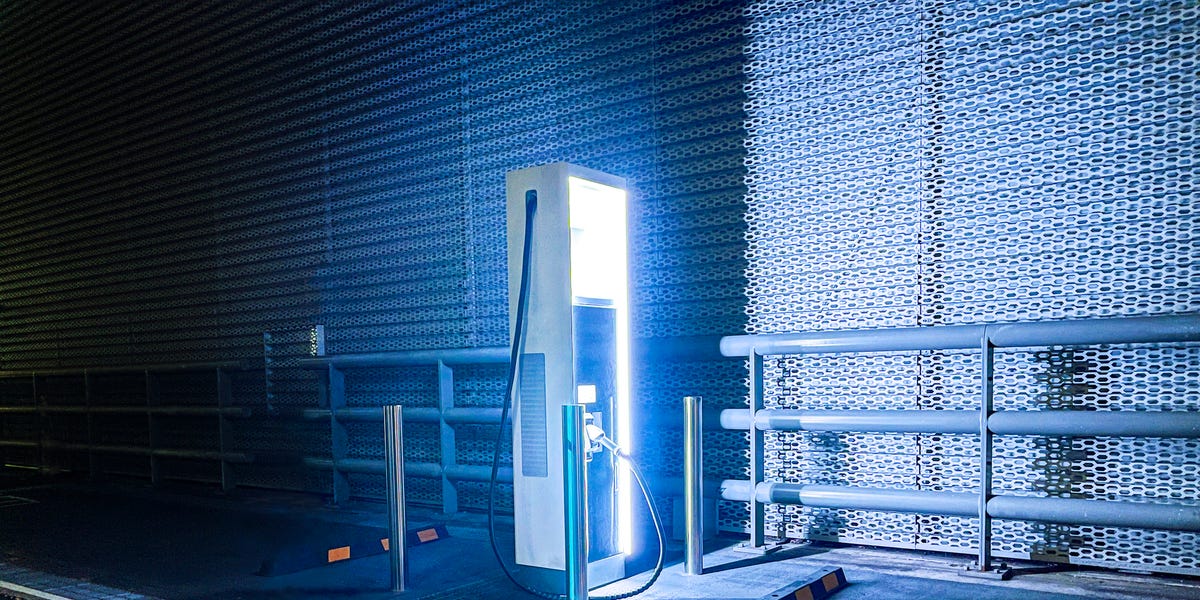

For years, Tesla Supercharging was the electric-car world’s cheat code. Buy the car, type in a destination, follow the navigation, plug in, grab a coffee, and drive away before your sandwich could develop an emotional attachment to the napkin. Then BYD arrived with a charging claim that sounded almost rude: up to 1,500 kilowatts, potentially adding hundreds of miles of driving range in roughly five minutes.
That kind of headline naturally raises a spicy question: Has a Chinese automaker defeated Tesla’s Supercharging? The honest answer is more interesting than a simple yes or no. BYD has clearly surpassed Tesla in peak passenger-car charging power and has demonstrated an unusually aggressive rollout of megawatt-class chargers in China. But Tesla still has an enormous advantage in charging-network scale, software integration, route planning, convenience, and real-world familiarity across North America and many other markets.
In other words, BYD may have won the charging-speed drag race, but Tesla is still very much in the marathon.
BYD’s Flash Charging Is Not Just Fast. It Is Borderline Absurd.
BYD introduced its original “Megawatt Flash Charging” technology with a 1,000-volt electrical architecture capable of delivering up to 1,000 kW of charging power. The company said compatible Han L and Tang L models could add roughly 400 kilometers, or about 249 miles, of range in five minutes under China’s CLTC testing cycle.
That was already a major leap over the charging speeds most drivers recognize. A typical public DC fast charger in the United States delivers 150 kW to 350 kW. Even many premium EVs with 800-volt architecture generally peak between 250 kW and 350 kW under ideal conditions.
BYD then raised the stakes again with second-generation Flash Charging hardware capable of reaching 1.5 megawatts, or 1,500 kW. With a compatible Blade Battery 2.0 pack, BYD says certain models can charge from 10% to 70% in about five minutes and from 10% to 97% in around nine minutes.
Yes, nine minutes to nearly full. That is not “I should stretch my legs.” That is “I barely had time to decide whether I wanted sparkling water.”
Why BYD Can Charge So Quickly
Extreme charging speed is not simply a matter of installing a larger charger and yelling “go faster” at the battery. The car, battery pack, cooling system, power electronics, cable, charging connector, and local grid connection all have to cooperate.
BYD’s approach combines several ingredients:
- A 1,000-volt electrical platform designed to reduce electrical losses at high power.
- High-current charging hardware capable of handling enormous energy flow.
- Silicon carbide power electronics, which can operate more efficiently at high voltage.
- Advanced battery thermal management to keep cells within safe temperature ranges.
- Specialized lithium iron phosphate Blade Battery technology engineered for rapid charging.
- Energy-storage support at charging sites to reduce sudden strain on the local grid.
The important caveat is that a 1,500-kW charger does not magically turn every EV into a five-minute charging champion. A vehicle must be designed to accept that power. Plugging a conventional EV into a megawatt charger is a little like bringing a garden hose to a fire hydrant: the hydrant may be impressive, but the hose still has opinions.
How Does Tesla Supercharging Compare?
Tesla’s newest V4 Supercharger hardware is built for significantly higher power than the familiar 250-kW Superchargers that made Tesla road trips so easy. Tesla says its V4 system can support up to 500 kW for passenger vehicles and up to 1.2 MW for the Tesla Semi.
That is serious charging hardware. However, the charging rate a driver sees depends on the vehicle, battery temperature, state of charge, battery chemistry, station configuration, and whether the vehicle can actually accept the available power.
For Tesla’s mainstream Model 3, Model Y, Model S, and Model X vehicles in North America, charging rates generally remain far below 500 kW. Tesla says many of those vehicles can charge at up to 250 kW, while the Cybertruck can charge at higher rates on compatible V4 equipment.
That means BYD’s Flash Charging system has a decisive advantage in raw peak power for compatible passenger EVs. A 1.5-MW charger is three times Tesla’s advertised 500-kW passenger-car ceiling and dramatically beyond the charging capability of most EVs on American roads.
| Category | BYD Flash Charging | Tesla V4 Supercharging |
|---|---|---|
| Maximum passenger-car power | Up to 1,500 kW on select systems | Up to 500 kW hardware capability |
| Compatible vehicle requirement | Latest BYD high-voltage models with advanced Blade batteries | Depends on Tesla model and battery architecture |
| Claimed quick-charge performance | 10% to 70% in about 5 minutes on select vehicles | Up to 200 miles added in about 15 minutes for many Tesla vehicles |
| Network strength | Rapidly expanding, especially in China | Extremely mature global charging network |
| U.S. consumer access | Not currently a mainstream option for U.S. passenger-car buyers | Widely available and increasingly open to other EV brands |
Peak Charging Power Is Not the Same as a Better Charging Experience
This is where the Tesla-versus-BYD debate gets more nuanced. Charging power matters, but it is not the whole story. Drivers do not buy kilowatts the way they buy potatoes. They buy confidence that a road trip will not turn into a low-battery scavenger hunt.
Tesla’s real advantage has never been only charger speed. It has been the entire charging experience.
Tesla’s Software Advantage
A Tesla can calculate a route, estimate battery use, direct the driver to Superchargers, show available stalls, prepare the battery before arrival, and automatically begin charging after the cable is connected. That level of integration removes much of the friction that traditionally made public EV charging feel like setting up a printer during a thunderstorm.
Tesla also operates more than 80,000 Superchargers globally, with charging locations positioned along major travel corridors. Its network has increasingly opened to non-Tesla EVs through North American Charging Standard adapters, native NACS ports, and select stations with built-in adapters.
That matters because drivers value reliability, easy payment, clear navigation, and the confidence that a charger will actually work when they arrive. A 1,500-kW charger is remarkable, but a broken 1,500-kW charger remains an extremely expensive lawn ornament.
BYD’s Network Challenge
BYD’s charging rollout in China is moving at startling speed. The company has announced thousands of Flash Charging stations and aggressive plans to expand the network across Chinese cities and highway corridors. That is a significant development because BYD historically relied more heavily on third-party charging infrastructure than Tesla did.
BYD is now trying to build a more vertically integrated ownership experience: sell the car, make the battery, design the power electronics, install the charger, manage energy storage, and create a faster charging ecosystem around the driver.
It is a strategy Tesla fans will recognize immediately. Tesla did not become a charging giant by waiting politely for someone else to solve the infrastructure problem. BYD appears to be applying a similar playbook, just with much more electrical horsepower.
Why Megawatt Charging Is Harder Than It Looks
When a single EV charger can pull one megawatt or more, the challenge stops being only automotive engineering and becomes an infrastructure problem. A site with several megawatt-class chargers may need enormous grid capacity, upgraded transformers, sophisticated load management, battery storage, and careful coordination with utilities.
The U.S. Department of Energy has noted that clusters of high-power chargers can sharply increase local electricity demand. Even a relatively modest fast-charging station can require hundreds of kilowatts of power. A large hub designed for heavy-duty trucks or megawatt passenger-car charging can need several megawatts of capacity.
That is why battery-buffered charging stations are important. Instead of asking the local grid to deliver the full power spike instantly, a site can store electricity in stationary batteries and discharge that stored energy during high-demand charging sessions.
Think of it as keeping a giant energy thermos nearby. The grid fills it more steadily, and the charger pours very quickly when an EV arrives thirsty.
Heat, Battery Life, and the Charging Curve
Another reason not to obsess over a single peak number is that batteries do not charge at maximum speed from empty to full. They usually charge fastest at lower state of charge, then slow down as they approach higher percentages to protect battery health and manage heat.
A great charging system is not simply one that hits a spectacular peak for a few seconds. It is one that maintains a strong charging curve, handles repeated use, protects battery longevity, works in hot and cold weather, and remains dependable when several cars arrive at once.
BYD’s five-minute claims are impressive, but they should be understood as best-case performance with compatible vehicles, compatible chargers, favorable battery conditions, and specific testing standards. Chinese CLTC range estimates are generally more optimistic than U.S. EPA figures, so a quoted 249 miles of added range should not be treated as a direct U.S. highway equivalent.
Has BYD Actually Beaten Tesla?
On charging power, yes. BYD has moved beyond Tesla’s passenger-car charging ceiling with 1,000-kW and 1,500-kW Flash Charging technology. In raw electrical output, BYD is currently operating in a different league.
On charging time for compatible vehicles, probably yes. A five-minute stop that adds enough range for several hours of driving is much closer to gasoline refueling behavior than the traditional 20- to 40-minute EV fast-charge stop.
On charging-network maturity, not yet. Tesla still has a major lead in global scale, brand familiarity, route integration, payment simplicity, and long-distance travel confidence. Tesla’s network has also become increasingly useful to drivers of Ford, GM, Rivian, Hyundai, and other brands that can access compatible Superchargers.
For American buyers, definitely not yet. BYD’s most advanced Flash Charging vehicles and China-focused charging stations are not a practical replacement for Tesla Supercharging in the United States today. Even if BYD expands into Europe, Canada, and other markets, building a truly Tesla-sized network outside China will take time, utility partnerships, permits, capital, and lots of very patient electricians.
The Bigger Story: Tesla No Longer Owns the Charging Future
The real takeaway is not that Tesla has suddenly become irrelevant. Tesla remains one of the most influential companies in EV charging history, and its Supercharger network helped make modern electric road trips normal rather than experimental.
But BYD’s Flash Charging system proves that the next era of EV charging may be faster, more competitive, and less centered on a single company. Chinese automakers are no longer merely chasing Tesla’s old benchmark. In some areas, they are setting new ones.
That competition is good news for drivers. Tesla may accelerate V4 deployment, other automakers may adopt higher-voltage platforms, charging companies may invest in more reliable equipment, and utilities may modernize infrastructure to support rapid charging hubs.
The future winner may not be the company with the biggest number on a charger. It may be the company that combines fast charging, dependable stations, easy payment, excellent software, affordable vehicles, and a network drivers trust at 11:47 p.m. in the middle of a rainy road trip.
What a Five-Minute EV Charging Experience Could Feel Like
Imagine driving a compatible BYD EV on a long highway trip in China. You are not planning your day around charging stops. You are not looking at the battery percentage every six minutes as though it is a suspiciously quiet toddler. Instead, the navigation system directs you to a Flash Charging hub near a highway exit.
The station does not look like an old-fashioned row of isolated chargers behind a grocery store. It looks more like a modern fueling station built for electric cars. Several vehicles can pull through, chargers are positioned for easy access, and the site may use large battery storage systems to support the sudden electrical demand.
You arrive with roughly 15% battery remaining. The vehicle has already warmed or cooled its battery pack into the ideal charging range. You connect the cable, authentication happens through the car or mobile app, and the charger begins delivering electricity at a rate that would make many American public chargers blush.
For the first minute, the charge percentage climbs fast enough to make you double-check the screen. It feels strange because EV owners are accustomed to watching numbers rise patiently. At a typical 150-kW charger, a road-trip stop can be enough time to use the restroom, buy snacks, answer messages, and debate whether gas-station trail mix is food or merely an engineering material.
At a megawatt-class station, that routine changes. You may still have time to stretch, but you do not have much time to wander. The car could be ready before the cashier finishes asking whether you want a receipt.
That creates a new type of EV behavior. Instead of charging to 80% because you expect a long stop anyway, drivers may make shorter, more frequent top-ups. A five-minute session could become a practical way to add enough energy for the next major destination without waiting for the battery to climb toward full.
There are trade-offs, of course. High-speed charging will likely cost more to install, may involve higher peak electricity costs, and will require grid upgrades in many regions. Not every driver needs this level of speed, especially people who charge at home overnight. But for apartment residents, taxi fleets, ride-hailing drivers, highway travelers, and people who dislike sitting in parking lots, the impact could be enormous.
The most interesting part is psychological. EV charging anxiety is not always about range. Often, it is about uncertainty: Will the charger work? Will it be occupied? How long will this take? Can I pay easily? A reliable five-minute charging experience could remove much of that uncertainty.
Tesla helped make EV road trips practical. BYD’s Flash Charging points toward a future where EV road trips could feel almost boringly normal. And in transportation, boringly normal is often the highest compliment.
Final Verdict
BYD has not completely defeated Tesla Supercharging, but it has unquestionably challenged Tesla’s position as the unquestioned charging technology leader. BYD now leads in headline-grabbing passenger-car charging power, and its megawatt Flash Charging strategy could redefine what drivers expect from a public EV charging stop.
Tesla still leads where it matters most for many drivers: network scale, ecosystem integration, global availability, navigation, and a decade of road-trip experience. But the competition has changed. Tesla is no longer racing alone, and BYD has brought a very large charger to the starting line.
Note: Charging speeds, available stations, vehicle compatibility, and real-world range vary by country, weather, battery condition, charging equipment, and local grid capacity. Peak charging numbers should be treated as capability figures, not guaranteed everyday results.
Research basis: Tesla, BYD, Reuters, Associated Press, The Verge, InsideEVs, MotorTrend, Car and Driver, U.S. Department of Energy, NREL, and the Alternative Fuels Data Center.