
Finding the right words after a coworker experiences a loss can feel surprisingly difficult. You want to acknowledge their pain without sounding intrusive, overly formal, or like you borrowed your message from a greeting card written by a committee.
The good news is that a meaningful condolence message does not need to be long or poetic. A few sincere sentences can remind a grieving colleague that they are seen, supported, and not expected to handle everything alone.
Below are 48 original condolence messages for coworkers, organized by type of loss. You will also find guidance on personalizing your words, avoiding common mistakes, and providing practical workplace support after the initial sympathy card has been signed.
How to Write a Thoughtful Condolence Message to a Coworker
A good workplace condolence message usually includes three simple elements: acknowledgment of the loss, genuine sympathy, and an appropriate offer of support. You do not need to explain grief, search for a silver lining, or produce a sentence worthy of a marble monument.
Keep the focus on your coworker. Unless you knew the person who died, avoid making assumptions about the relationship, the circumstances of the death, or what your colleague must be feeling. Grief can include sadness, anger, exhaustion, numbness, confusion, and many other reactions.
U.S. etiquette and grief-support organizations generally recommend being sincere, acknowledging the loss directly, listening without judgment, and allowing the bereaved person to determine how much they want to discuss. Workplace guidance also emphasizes that grief does not follow a convenient schedule simply because an employee has returned to the office.
Personalize the Message When Possible
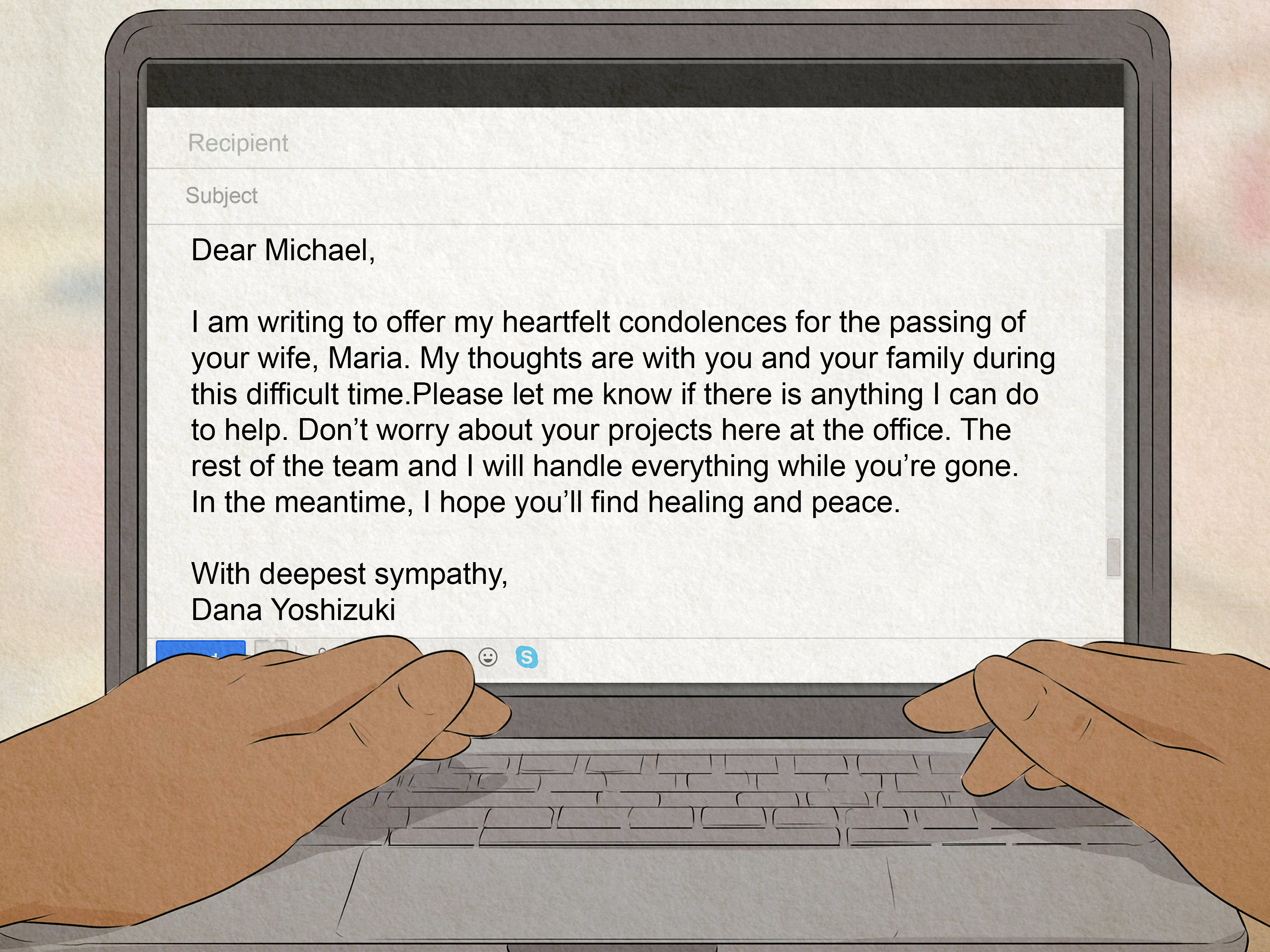
Use the deceased person’s name if your coworker has shared it. If you knew that person, include a brief, positive memory or quality. Saying, “I will always remember Maria’s warm welcome at the company picnic” is more personal than a generic paragraph about memories lasting forever.
Offer Specific Help Instead of a Vague Promise
“Let me know if you need anything” is kind, but a grieving person may not have the energy to identify a task and request assistance. A specific offer is easier to accept: “I can handle Thursday’s client report,” “I will take notes during the meeting,” or “I can cover your afternoon calls.” Practical support is often as meaningful as carefully chosen words.
General Condolence Messages for a Coworker
These messages are suitable when you do not know many details or when you need respectful wording for a card, email, text, or team message.
-
I am deeply sorry for your loss. Please know that you and your loved ones are in my thoughts during this difficult time.
-
Sending you my heartfelt condolences. I hope the care of those around you brings comfort in the days ahead.
-
I was saddened to hear about your loss. Please take all the time and space you need, and know that our team supports you.
-
Thinking of you and your family. I am wishing you strength, peace, and moments of comfort as you grieve.
-
Please accept my sincere sympathy. There are no perfect words for a loss like this, but I want you to know that I care.
-
My heart goes out to you during this painful time. We are here to support you in whatever way feels most helpful.
-
I am so sorry you are going through this. May the love and memories you shared provide comfort over time.
-
Sending caring thoughts to you today and in the weeks ahead. Please do not feel any pressure to respond to this message.
Condolence Messages for the Loss of a Parent
Losing a mother, father, stepparent, or parental figure can affect a person in deeply personal ways. Avoid comments about age or statements suggesting that the loss was somehow expected.
-
I am very sorry to hear about the loss of your mother. I hope her love and the memories you created together remain a source of comfort.
-
Please accept my deepest condolences on the passing of your father. I am thinking of you and your family.
-
I know how important your mom was to you. May the lessons, laughter, and love she shared continue to stay with you.
-
I was saddened to hear about your dad’s passing. Wishing you strength as you remember and honor his life.
-
The bond with a parent is truly special. I am so sorry for your loss and am holding you close in my thoughts.
-
Your stories always made it clear how much your parent meant to you. I hope those memories bring comfort when you need it most.
-
Please know that I am thinking of you as you mourn your mother’s passing. I can cover your scheduled calls this week if that would help.
-
My sincere sympathy to you and your family following the loss of your father. May you feel surrounded by patience, kindness, and support.
Condolence Messages for the Loss of a Spouse or Partner
The death of a spouse or partner can reshape nearly every part of daily life. Keep your message gentle and avoid offering advice about healing, dating, moving forward, or “staying strong.”
-
I am heartbroken to hear about the passing of your spouse. Please accept my deepest sympathy as you face this profound loss.
-
Thinking of you with care as you remember your partner. May the love you shared remain close to your heart.
-
I am so sorry for your loss. Please know that there is no expectation for you to return messages or think about work right now.
-
Your love for your spouse was clear whenever you spoke about them. I am wishing you comfort and strength during this painful time.
-
Please accept my sincere condolences. I will be glad to handle the weekly report while you focus on yourself and your family.
-
I cannot imagine everything you are carrying, but I want you to know that you do not have to carry your work responsibilities alone.
-
I am deeply sorry about the loss of your partner. You are in my thoughts today and will remain in my thoughts in the weeks ahead.
-
May your memories of the life you built together provide moments of peace. Our team is here beside you.
Condolence Messages for the Loss of a Child or Pregnancy
The loss of a child, miscarriage, stillbirth, or other pregnancy loss deserves direct and compassionate acknowledgment. Do not minimize the loss, search for a reason, or suggest that another pregnancy will make things better.
-
I am deeply sorry for the loss of your child. I am holding you and your family in my thoughts with love and compassion.
-
There are no words large enough for this loss. Please know that I care deeply and am here to support you.
-
I am so sorry for your pregnancy loss. Your grief is real, and you deserve all the time, care, and understanding you need.
-
Your child’s life and memory matter. I am thinking of you and sending my heartfelt condolences.
-
Please do not worry about work or responding. I will take care of your current project updates and keep everything organized for you.
-
I am grieving with you and your family. May you be surrounded by people who listen, remember, and support you without expectation.
Messages for the Loss of a Sibling, Relative, or Close Friend
A sibling, grandparent, extended family member, or lifelong friend may have played an essential role in your coworker’s life. Do not rank losses according to a family tree; acknowledge the relationship as your colleague describes it.
-
I am very sorry about the loss of your sibling. I hope your shared memories bring comfort and keep their spirit close.
-
Please accept my sincere condolences on the passing of your grandparent. I am thinking of you and your family.
-
I know your friend was like family to you. Their loss matters, and I am so sorry you are experiencing this pain.
-
Sending you sympathy as you mourn someone who held such an important place in your life.
-
I am sorry for the loss of your beloved family member. May the stories, traditions, and memories you shared continue to bring connection.
-
Thinking of you during this difficult time. I can take responsibility for tomorrow’s meeting so you have one less thing to manage.
Condolence Messages for the Loss of a Pet
For many people, a pet is a family member, daily companion, and reliable source of comfort. Use the pet’s name when possible, and never dismiss the loss with phrases such as “It was only a dog” or “You can get another one.” Pet-loss guidance recommends acknowledging the animal’s personality, routines, and unique place in the family.
-
I am so sorry about the loss of your beloved pet. They were clearly a treasured member of your family.
-
Thinking of you as you remember the love, companionship, and happiness your pet brought into your life.
-
I know how much you loved Max and how much joy he brought to your home. He will be deeply missed.
-
Losing a faithful companion is incredibly painful. I am sending you comfort as you grieve.
-
Your pet had a wonderful life because of the care you gave them. I hope that knowledge brings some peace.
-
I am sorry your home feels quieter now. May your favorite memories of your pet eventually bring more smiles than tears.
Condolence Messages After the Death of a Coworker
When a team member dies, colleagues may experience both individual and shared grief. A workplace can acknowledge the loss through respectful communication, memorial activities, counseling resources, schedule flexibility, or time for employees to gather and remember the person.
-
We are deeply saddened by the loss of our colleague. Their kindness, dedication, and presence made a lasting difference to our team.
-
Please accept our sincere condolences. It was a privilege to work with someone who gave so much to the people around them.
-
Our workplace will not feel the same without them. We will remember their warmth, professionalism, and generous spirit.
-
We are thinking of the entire family and sending our deepest sympathy. Your loved one was respected and valued by everyone here.
-
The contributions they made will remain part of our team’s story. We are grateful for the time we had with them.
-
We share in your sadness and honor the life of a wonderful colleague, mentor, and friend. They will be greatly missed.
What Not to Say to a Grieving Coworker
Even well-intentioned words can create pressure or make a grieving person feel misunderstood. Avoid telling someone that everything happens for a reason, that their loved one is in a better place, or that they should be grateful for the time they had.
Do not compare losses by immediately describing your own experience. A brief reference may sometimes create connection, but the conversation should remain centered on your coworker. Also avoid asking for medical details, funeral details, or information about the circumstances unless your colleague chooses to share them.
Religious language can be comforting when you know it matches the person’s beliefs. When you are uncertain, neutral expressions such as “thinking of you,” “wishing you peace,” and “sending my deepest sympathy” are safer and more inclusive.
Experience-Based Lessons for Supporting a Grieving Coworker
1. The Smallest Message Is Often Better Than Silence
In many workplaces, people say nothing because they are afraid of choosing the wrong words. The result can be an uncomfortable bubble around the grieving employee. Colleagues may lower their voices, avoid eye contact, or suddenly become fascinated by the office printer whenever the person walks into the room.
A short acknowledgment is usually kinder than avoidance. “I was sorry to hear about your loss” gives the coworker control over what happens next. They can say thank you and change the subject, or they can share more. Your job is not to create a deep conversation; it is to open a respectful door.
2. Returning to Work Does Not Mean Grief Has Ended
A coworker may return because their leave has ended, because routine feels stabilizing, or because they need the income. Their presence at a desk does not necessarily mean they are ready for a full workload or cheerful small talk.
They may have difficulty concentrating, remembering details, or making decisions. A patient teammate can help by sending written summaries, confirming priorities, and avoiding unnecessary urgency. One practical sentence“I will email the three action items so you do not have to remember them”can reduce stress without making the person feel incapable.
3. Specific Offers Are More Useful Than Open-Ended Help
Consider two messages. The first says, “Let me know if you need anything.” The second says, “I can cover the 2 p.m. client call and send you the notes afterward.” Both are caring, but the second removes a decision from someone whose mental energy may already be depleted.
Useful offers might include postponing a nonessential deadline, updating a shared document, answering routine emails, arranging meal delivery, collecting signatures for a team card, or quietly informing others that the employee does not want to discuss the loss.
4. Follow-Up Support Matters
Support is often abundant during the first few days and much quieter several weeks later. That is when a simple follow-up can be especially meaningful. A message such as, “I have been thinking about you. There is no need to reply,” acknowledges that grief continues after flowers fade and coworkers return to their normal schedules.
Anniversaries, birthdays, holidays, and ordinary reminders can cause difficult emotions to return. There is no universal timeline, so take your cues from your colleague. Some people appreciate hearing their loved one’s name. Others prefer privacy at work. Respect both responses without taking either personally.
5. Managers Set the Emotional Tone
A compassionate manager combines human concern with practical clarity. Instead of immediately asking when an employee will be “back to normal,” a manager can explain available leave, flexible scheduling, employee assistance resources, and temporary workload adjustments.
Privacy also matters. A supervisor should ask what information may be shared and with whom. One grieving employee may welcome a team card and public acknowledgment, while another may want only essential colleagues informed. Support should not become an office announcement the employee never authorized.
6. Ordinary Conversation Can Also Be Supportive
Once condolences have been expressed, it is acceptable to talk about lunch, deadlines, movies, or weekend plans. Grieving people do not always want every conversation to become a formal ceremony. Let your coworker lead. If they mention their loved one, listen. If they discuss a project, engage with the project. Compassion includes allowing room for sadness without making sadness the person’s only identity.
Choosing the Right Format for Your Condolences
A handwritten card works well for a personal message that your coworker can read privately. An email is appropriate when you work remotely, need to respond promptly, or want to include information about covering responsibilities. A text message may be suitable when you already communicate personally by text.
For a group card, write one or two sincere sentences rather than filling every available inch of space. When sending flowers, food, or a memorial donation, check the family’s wishes and consider cultural or religious customs. When uncertain, a private message and a respectful offer of practical help are dependable choices.
Final Thoughts
The best condolence messages for coworkers are not the most elaborate. They are sincere, respectful, and centered on the grieving person. Acknowledge the loss, avoid trying to fix the pain, and offer help that is practical and easy to accept.
Your message may take only a minute to write, but it can remind a colleague that their workplace contains real peoplenot merely calendars, spreadsheets, and meetings that somehow could have been emails.
SEO Information
Editorial note: The messages in this article are original and were developed using established guidance from reputable U.S. workplace, etiquette, mental-health, bereavement, and grief-support resources. They are intended as adaptable examples rather than substitutes for personal judgment, cultural awareness, or professional grief counseling.