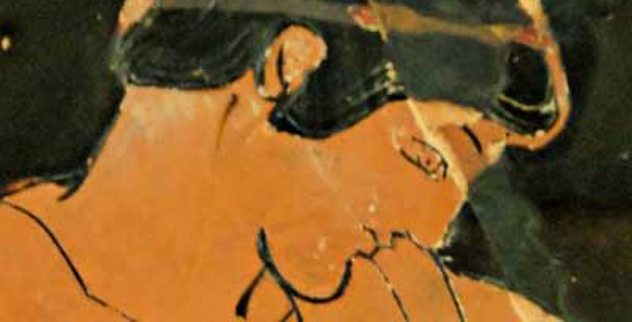

The ancient Greeks have one of the best publicists in world history. Say the words Ancient Greece, and most people instantly picture gleaming white statues, wise philosophers in tasteful robes, brave Spartan warriors yelling dramatically on cliffs, and a democracy so noble it practically glows. It is a very flattering image. It is also, in many ways, a creative remix.
The real ancient Greeks were more interesting than the myth. They lived in many different city-states, argued constantly, worshipped many gods, relied heavily on enslaved labor, painted their statues in bright colors, and disagreed with one another the way human beings always do. In other words, they were not marble action figures. They were complicated people living in a messy, vibrant, unequal, inventive world.
This matters because misconceptions about the ancient Greeks still shape how people talk about politics, beauty, war, education, gender, and even “Western civilization” today. So let’s take a friendly hammer to ten of the biggest myths and see what survives the dust cloud.
1. Misconception: Ancient Greece Was One Unified Country
Not really. The phrase Ancient Greece makes it sound like one neat nation with one government, one identity, and one official vibe. In reality, the Greek world was made up of many independent poleis, or city-states, along with colonies and settlements spread across the Mediterranean and beyond.
Athens, Sparta, Corinth, Thebes, Miletus, and many others were not branches of the same corporate office. They were separate political communities with different laws, priorities, economies, and habits. Some were democracies for a time, some were oligarchies, some were ruled by tyrants, and some changed systems more often than a stressed-out person changes passwords.
Yes, Greeks shared language, myths, sanctuaries, and festivals. But shared culture did not erase local rivalry. The Greeks often saw themselves as connected and divided, which is one reason their history is so dramatic. If you imagine all Greeks thinking alike, you miss the chaos that made Greek history Greek.
2. Misconception: Athens Represented All of Greek Civilization
Athens gets the movie deals, the philosophy quotes, and the architecture posters. It deserves attention, but it does not deserve to swallow the rest of the Greek world whole.
Athens was one powerful and culturally influential city-state, especially in the fifth century BCE. But it was not “standard Greece.” Sparta had a radically different social system. Gortyn on Crete had legal traditions that treated women and property differently from Athens. Greek communities in Asia Minor, Sicily, Egypt, and the Black Sea lived in still other ways.
When people treat Athens as the default template, they start making claims like “the Greeks believed X” or “Greek society worked like Y.” Usually, what they mean is “some Athenians at a particular time did.” That is a much smaller claim, and a much more honest one.
3. Misconception: Greek Democracy Included Everyone
The word democracy is one of Greece’s most famous exports, but ancient Athenian democracy was not a modern universal system. It was direct, influential, and historically important, but it was also sharply limited.
Adult male citizens could participate in the Assembly, serve on juries, and hold office. Women could not. Enslaved people could not. Foreign residents, often called metics, could not. Children could not. That means a huge portion of the population had no political voice in the democratic system that later generations praised so enthusiastically.
This does not make Athenian democracy meaningless. It makes it human. It was innovative in some ways and exclusionary in others. Treating it as a fully egalitarian paradise is like calling a treehouse a skyscraper because both have walls. The family resemblance is real, but the scale is wildly different.
4. Misconception: Sparta Was a Perfect Society of Super Warriors
Sparta has enjoyed an absurdly successful rebrand. Modern pop culture often turns Spartans into flawless combat machines who lived on discipline, courage, and the tears of their enemies. The reality is less cinematic and much more revealing.
Spartan society depended on the labor of helots, an unfree population forced to work the land and support the warrior elite. That means the famous Spartan military lifestyle was not powered by pure virtue. It was powered by coercion, hierarchy, and fear of revolt. That detail tends to disappear when people start making motivational posters.
Spartans also were not invincible. They could blunder, surrender, and lose. Some Spartan men became famous for military skill, but Sparta was not one endless action montage. It also had music, poetry, dance, and a public culture richer than the “grim men shouting in slow motion” stereotype suggests. Sparta was real, not a brand extension for toughness podcasts.
5. Misconception: Greek Art Was Pure White Marble
This is one of the most stubborn myths in all of ancient history. People still look at Greek statues in museums and imagine that the ancient world loved clean white stone the way a minimalist influencer loves a beige kitchen.
But ancient Greek sculpture was often painted. Bright pigments, gilding, added details, and decorative surfaces were part of the original visual effect. Temples were colored too. Clothing, as shown in vase painting and traces on sculpture, could be richly patterned and vividly dyed.
The white-marble fantasy mostly reflects later taste, especially from the Renaissance and neoclassical periods, when surviving sculpture had already lost much of its paint. In short, ancient Greek art did not look like a giant luxury bathroom showroom. It was bolder, louder, and much more colorful.
6. Misconception: Ancient Greeks Were Purely Rational and Barely Religious
Because Greece gave later cultures philosophers like Socrates, Plato, and Aristotle, people sometimes imagine the ancient Greeks as early secular intellectuals who spent their days calmly inventing logic under olive trees. Nice image. Incomplete image.
Religion was woven into daily life. Greeks worshipped many gods, made offerings, visited sanctuaries, consulted oracles, held festivals, honored the dead, and structured public life around sacred customs. There was no single holy book or centralized church, but that does not mean religion was weak. It means religion worked differently.
Politics, war, sport, theater, and family life all touched religious practice. If you remove religion from the ancient Greek world, you are not cleaning up the picture. You are deleting half the furniture and pretending the room still makes sense.
7. Misconception: Greek Women Had No Role at All
This myth usually starts from a true observation and then sprints too far. In many Greek societies, especially classical Athens, women were excluded from formal politics and faced serious restrictions. But “restricted” is not the same as “absent.”
Women participated in important religious festivals, including rites central to civic life. Some served in sanctuaries and cults. In Sparta, women had more freedom of movement, received physical training, and could own or manage property. In Gortyn, legal evidence shows women could inherit and control property under certain conditions.
So the better rule is this: women’s lives in the Greek world varied dramatically depending on place, status, and circumstance. Any article that says “Greek women were all hidden indoors all the time” is telling you more about lazy generalization than about the ancient world.
8. Misconception: Slavery Was Minor or Peripheral in Greek Life
It was not minor. It was central.
Classical Athens depended heavily on enslaved labor in households, workshops, agriculture, and especially mining. Some estimates put enslaved people at roughly a third of the population in classical Athens. In Sparta, helots supported the entire citizen system by producing the agricultural surplus that allowed Spartan men to focus on military and political life.
This is an uncomfortable fact, which is probably why people sometimes glide past it when praising Greek achievement. But if philosophy, politics, art, and leisure flourished partly because other people were denied freedom and forced to work, then that contradiction belongs inside the story, not in a footnote hiding behind a vase.
9. Misconception: The Ancient Olympics Were Just About Sports
The Olympics were athletic, yes, but they were also religious, social, theatrical, and political. They were held in honor of Zeus at Olympia, a sacred site. Sacrifices and rituals were part of the event. So were prestige, display, networking, and public performance.
Modern people often imagine the ancient games as a tidy celebration of amateur excellence. In reality, the festival was noisy, crowded, deeply sacred, and far from squeaky clean. It included spectacle, ambition, and celebrity. Victors could become legends back home.
And while the main Olympic contests were male, women were not absent from Greek athletic culture altogether. Evidence for the Heraia, a footrace for maidens in honor of Hera, reminds us that the relationship between women and sport in ancient Greece was more complicated than the phrase “women were banned” suggests.
10. Misconception: Greek Culture Developed in Isolation
Another favorite myth says Greece sprang into greatness almost by magic, as though the Greeks woke up one morning, stretched, invented philosophy, and then immediately began influencing everyone else. History is ruder than that.
Greek art and culture developed through trade, colonization, migration, and contact with neighboring civilizations. The Greeks borrowed and adapted the alphabet from Phoenician models. Greek art in the Archaic period shows important influence from Egypt and the Near East. Greek communities around the Mediterranean were deeply connected to wider networks of exchange.
This does not make Greek achievement less impressive. It makes it more believable. Civilizations do not grow in sealed jars. They grow through contact, conflict, imitation, experimentation, and theft of good ideas. Ancient Greece was brilliant, but it was not self-created out of pure genius and sea breeze.
Why These Myths Refuse to Die
Misconceptions about the ancient Greeks survive because they are useful. White statues flatter later ideas about beauty. Simplified democracy flatters modern politics. Spartan toughness flatters military fantasies. A “rational Greece” flatters people who want a clean origin story for modern Western thought.
But the real Greeks do not need flattering edits. Their world was already fascinating: colorful, argumentative, unequal, creative, devout, experimental, and often contradictory. The mess is the point. Once you stop demanding a perfect origin myth, ancient Greece becomes much more fun to study.
Related Experiences: What It Feels Like to Unlearn the Myths About Ancient Greece
One of the strangest experiences people have with this topic happens in museums. You walk into a gallery expecting calm white marble and tasteful silence, then discover that experts believe many of those statues were once painted in blues, reds, yellows, and gold. That moment can feel almost rude, like history has interrupted your aesthetic preferences and said, “Actually, I was never decorating for your Pinterest board.” It is funny, but it is also powerful. You realize how much of what feels “ancient” is really just what survived.
Another common experience comes from school. A lot of people first meet the Greeks through a greatest-hits package: democracy, philosophy, theater, the Olympics, and a few dramatic myths involving gods behaving like unstable relatives at a holiday dinner. Later, when they read more deeply, the picture changes. Suddenly Athens looks less like a universal ideal and more like one city-state with brilliant ideas and sharp exclusions. Sparta stops looking like a fitness slogan and starts looking like a harsh, fragile society built on domination. The change can be unsettling, but also oddly refreshing. Real history has texture.
There is also the experience of recognizing how modern arguments borrow Greek labels without always understanding Greek reality. People still invoke Sparta to praise discipline. They still invoke Athens to celebrate democracy. They still use “classical” as a synonym for balanced, white, noble, and pure. Once you know more, you start hearing those references differently. You notice what gets left out: women, enslaved people, foreigners, color, religion, trade, and the influence of neighboring cultures. Learning about ancient Greece becomes less about memorizing facts and more about catching selective storytelling in the wild.
For travelers and readers, the experience can be even more personal. Visiting ruins or looking at photographs of sites like the Acropolis and Olympia often creates a sense of distance, as if the people there belonged to a totally different species called The Ancients. But the closer you get to everyday realities, the more familiar they become. People worried about status, family, property, work, competition, public image, and divine favor. They argued, boasted, prayed, admired beauty, spread gossip, and built systems that benefited some while excluding others. The details are ancient. The behavior is alarmingly current.
And perhaps the most satisfying experience of all is realizing that losing the myths does not reduce the wonder. It increases it. A colorful statue is more vivid than a blank one. A flawed democracy is more interesting than a fantasy democracy. A society with contradictions tells us more than a polished legend ever could. When people move past the postcard version of ancient Greece, they do not lose the story they loved. They finally get the fuller one.
Conclusion
The ancient Greeks were not one people with one mind, one politics, one style, or one moral code. They were a collection of communities spread across a wide world, producing extraordinary art and ideas while also practicing exclusion, hierarchy, and slavery. Their statues were colorful. Their religion mattered. Their women’s lives varied. Their democracy was limited. Their culture was connected to other civilizations. Their Olympics were sacred spectacle, not just sport.
That may sound less tidy than the standard legend, but it is far more rewarding. Once you stop treating the ancient Greeks as a mythic origin story and start seeing them as real human beings, the past becomes less polished, more surprising, and a whole lot more alive.
SEO Tags