
Fresh basil is the dramatic friend of the herb world. One minute it is standing tall, smelling like summer vacation in Italy; thht a beautiful bunch of basil for pasta, caprese salad, pesto, or pizza night and watched it collapse before dinner, you are not alone. Basil is fragrant, delicate, and surprisingly picky about where it sleeps.
The good news? Learning how to store fresh basil is simple once you stop treating it like lettuce. Basil does not love the refrigerator, hates being crushed, and prefers a little water, a little airflow, and a comfortable room-temperature spot away from direct sun. In other words, basil wants to be treated less like a grocery item and more like a tiny green bouquet with culinary ambitions.
This guide explains the best ways to keep basil fresh, when to wash it, how to store cut basil, how to freeze basil for later, and what mistakes make those gorgeous leaves turn sad and spotted. Grab a jar, a loose bag, and your inner herb whisperer. We are about to save your basil from an early retirement.
Why Fresh Basil Goes Bad So Quickly
Basil has tender leaves, soft stems, and a high moisture content. That makes it wonderfully aromatic but also easy to bruise, dry out, or damage with cold temperatures. Unlike sturdy herbs such as rosemary or thyme, basil is not built like a tiny evergreen tree. It is more like a leafy diva in a silk robe.
The most common problems are cold damage, too much moisture, not enough moisture, and physical bruising. Cold can cause basil leaves to darken. Excess water on the leaves can encourage sliminess. Dry air can make the leaves wilt. Rough handling can crush the cells in the leaves, causing browning and flavor loss.
That is why the best basil storage method usually involves keeping the stems in water at room temperature, loosely covering the leaves, and storing the bunch away from direct sunlight and heat. Done right, this method can help fresh basil last several days, sometimes close to a week, depending on how fresh it was when you bought or harvested it.
The Best Way to Store Fresh Basil: The Countertop Bouquet Method
If your basil still has stems attached, the countertop bouquet method is the best place to start. It is simple, cheap, and surprisingly effective. Think of it as giving your basil a small spa day, minus the cucumber slices.
Step 1: Trim the Stems
Use clean kitchen scissors or a sharp knife to trim about half an inch from the bottom of the stems. This helps the basil take up water more easily. A fresh cut is especially helpful if the stems look dry, sealed, or slightly brown at the ends.
Step 2: Remove Low Leaves
Pull off any leaves that would sit below the waterline. Leaves submerged in water can break down quickly and make the water cloudy. Cloudy water is not a luxury basil bath; it is the beginning of herb soup, and not the kind anyone ordered.
Step 3: Place Basil in a Jar of Water
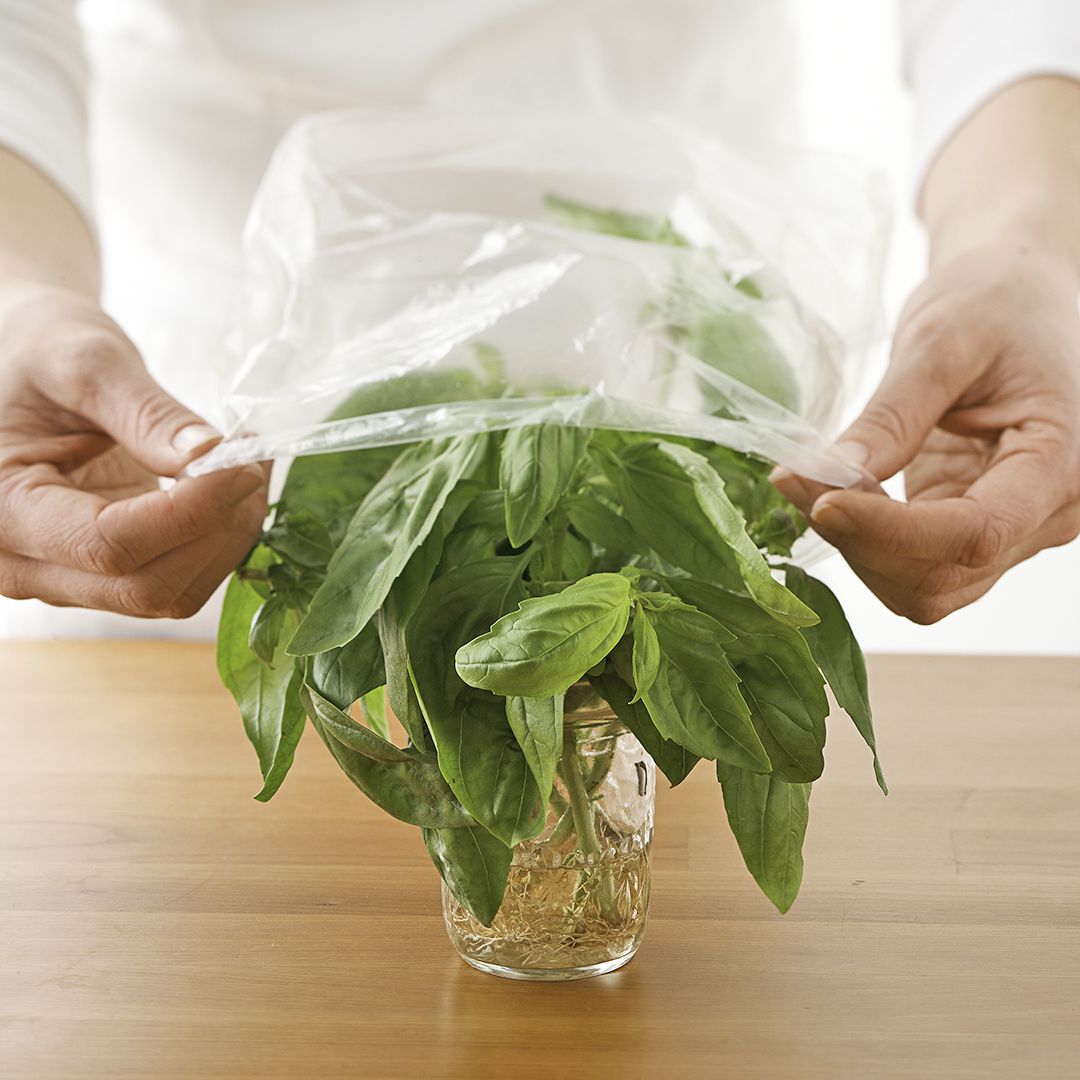
Fill a glass, jar, or small vase with an inch or two of cool or room-temperature water. Place the basil stems upright in the jar, just like flowers. Make sure the stems are in water but the leaves are not soaking.
Step 4: Cover Loosely
Place a loose plastic produce bag, reusable storage bag, or lightweight food-safe cover over the basil leaves. Do not seal it tightly. Basil needs humidity, but it also needs airflow. A sealed bag can trap too much moisture and speed up decay.
Step 5: Keep It on the Counter
Store the jar at room temperature, away from direct sunlight, hot appliances, and cold drafts. A shaded corner of the kitchen counter is perfect. Do not place it on top of the refrigerator, beside the stove, or in a sunny window where the leaves can overheat.
Step 6: Change the Water
Change the water every day or two, especially if it becomes cloudy. Re-trim the stems if they look tired. With fresh basil, small maintenance moves can make a big difference.
Should You Refrigerate Fresh Basil?
Usually, no. Basil is more cold-sensitive than many other fresh herbs, so the refrigerator can make the leaves turn dark, limp, or spotted. While parsley and cilantro often do well in the fridge, basil prefers a warmer environment.
That said, real kitchens are not always perfect laboratories. If your kitchen is very hot, the counter may not be ideal either. In that case, you can try a short-term refrigerator method, but understand that it is a backup plan, not the gold medal winner.
Emergency Refrigerator Method
If you must refrigerate basil, place dry leaves or sprigs between paper towels, tuck them into a container or loose bag, and store them in the warmest part of the fridge, such as the door or upper shelf. Use the basil as soon as possible. This method may buy you a little time, but it often cannot prevent darkening completely.
For the freshest flavor and best appearance, keep whole stemmed basil on the counter in water and save the refrigerator for herbs that actually appreciate it.
Should You Wash Basil Before Storing It?
In most cases, wait to wash basil until right before you use it. Wet leaves can bruise, wilt, and become slimy faster in storage. If the basil is dirty from the garden or farmers market, rinse it gently, then dry it extremely well before storing. A salad spinner can help, but use a gentle hand. Basil is not training for a spin class.
When you are ready to cook, rinse the leaves under cool running water and pat them dry with a clean towel. Dry basil is better for pesto, salads, sandwiches, and garnishes because extra water can dilute flavor and make sauces thin.
How to Store Basil Leaves Without Stems
Loose basil leaves are trickier because they cannot drink water through stems. If you have already removed the leaves, use them quickly. For short storage, place the clean, fully dry leaves in a single layer or loose stack between dry paper towels. Put them in a breathable container or partly open bag and keep them in a cool spot. If you use the refrigerator, check them often and use them within a day or two.
Avoid crushing the leaves into a tight container. Basil bruises easily, and bruised leaves darken faster. If the leaves already look soft, turn them into pesto, basil oil, compound butter, or frozen basil cubes instead of trying to make them survive another week.
How to Freeze Fresh Basil
Freezing is one of the best ways to preserve basil when you have more than you can use fresh. Frozen basil will not thaw into perfect salad leaves, so do not expect it to decorate a caprese salad like a fresh summer superstar. But it is excellent in soups, sauces, stews, pasta dishes, marinades, and pesto-style recipes.
Option 1: Freeze Basil Leaves Whole
Rinse the basil gently and dry it very well. Spread the leaves on a baking sheet in a single layer and freeze until firm. Then transfer them to a freezer-safe bag or container. Press out excess air, label the container, and store it in the freezer. Whole frozen basil leaves are convenient, but they may darken and become fragile.
Option 2: Freeze Basil in Olive Oil
Chop or blend basil with a small amount of olive oil, then spoon the mixture into ice cube trays. Freeze until solid, then move the cubes to a freezer-safe bag. These basil cubes are perfect for pasta sauce, tomato soup, roasted vegetables, scrambled eggs, and quick skillet meals. One cube can make a Tuesday dinner taste like you tried harder than you did.
Option 3: Freeze Basil in Water
Chop basil and place it in ice cube trays with a little water. Freeze, then transfer the cubes to a freezer bag. Water-based basil cubes work well in soups and brothy dishes. Oil-based cubes are better for sautéing, sauces, and richer recipes.
How to Store Potted Basil
If you bought a living basil plant, congratulations: you now own a tiny edible houseplant with strong opinions. Potted basil likes bright light, warmth, and consistent moisture. Keep it near a sunny window, but avoid scorching heat. Water when the top of the soil feels dry, and make sure the pot drains well.
To harvest potted basil, snip stems just above a pair of leaves rather than plucking random leaves one by one. This encourages the plant to grow bushier. Remove flower buds when they appear, because flowering can make the leaves taste stronger or slightly bitter. Regular trimming keeps basil productive and prevents it from becoming a tall, woody stick with a few leaves waving from the top like a sad flag.
How to Tell If Basil Has Gone Bad
Fresh basil should smell sweet, peppery, and herbal. The leaves should look lively, not slimy or moldy. Discard basil if it has a sour odor, visible mold, black slimy spots, or leaves that have collapsed into wet mush. A few dry or dark edges can be trimmed away, but once the bunch smells unpleasant or feels slippery, it is time to say goodbye.
Food safety matters with fresh herbs. Keep basil away from raw meat, poultry, seafood, and their juices. Use clean cutting boards and utensils, and rinse the herb before eating. Basil may look delicate and innocent, but it still grows in the real world, not in a magical dirt-free fairy garden.
Best Uses for Basil Before It Wilts
If your basil is still fresh but starting to soften, use it quickly in recipes where appearance matters less. Pesto is the classic rescue plan. You can also blend basil into salad dressing, stir it into softened butter, chop it into marinades, layer it into sandwiches, or add it to tomato sauce at the end of cooking.
Fresh basil is especially good with tomatoes, mozzarella, chicken, fish, pasta, eggs, peaches, strawberries, lemon, garlic, and olive oil. Add it near the end of cooking to preserve its aroma. Long cooking can flatten basil’s bright flavor, turning its fresh sparkle into a quiet background hum.
Common Mistakes When Storing Fresh Basil
Mistake 1: Putting Basil Straight Into the Fridge
This is the fastest way to turn beautiful basil into a science experiment. Cold temperatures can cause dark spots and limp leaves.
Mistake 2: Washing Before Storage
Unless the basil is dirty, wait to wash it. Wet leaves spoil faster, especially when packed tightly.
Mistake 3: Sealing It in an Airtight Bag
Basil needs humidity, but too much trapped moisture can lead to slime. Loose coverage is better.
Mistake 4: Leaving It in Direct Sun
A sunny counter may look cute, but direct heat can wilt basil quickly. Choose bright indirect light or a shaded counter spot.
Mistake 5: Forgetting to Change the Water
Fresh water keeps stems healthier. If the jar water looks cloudy, change it.
Quick Basil Storage Cheat Sheet
- Best short-term method: Store stemmed basil upright in a jar of water on the counter.
- Best cover: A loose plastic bag or light food-safe cover.
- Best location: Room temperature, away from direct sun and heat.
- Best washing rule: Wash right before using, then dry well.
- Best long-term method: Freeze chopped basil in olive oil or water cubes.
- Best use for tired basil: Pesto, sauce, dressing, basil butter, or freezer cubes.
Experience-Based Tips for Storing Fresh Basil
After dealing with many bunches of basil in home kitchens, the biggest lesson is this: basil rewards attention but punishes overthinking. The countertop jar method works because it solves the two biggest problems at once. The stems stay hydrated, and the leaves avoid refrigerator chill. It is not fancy, but it works. Sometimes the best kitchen trick is just pretending your herb is a bouquet and giving it a nice little drinking glass.
One practical habit is to fix the basil as soon as you get home from the store. Do not toss the clamshell into the fridge while you unload everything else and promise yourself you will “deal with it later.” Later is when basil begins its dramatic decline. Open the package, inspect the leaves, remove anything slimy or crushed, trim the stems, and place the bunch in water. This takes about two minutes and can save the whole bunch.
Another helpful experience: do not crowd the jar. If the basil bunch is large, split it into two jars. A packed bunch traps moisture between the leaves, and the inner leaves can rot before the outer leaves look bad. More space means better airflow. Basil enjoys personal space, which is relatable.
If you harvest basil from a garden, pick it in the morning after the dew has dried but before the strongest heat of the day. The leaves are usually fresher and less stressed. Use clean scissors and avoid tearing the stems. Once indoors, remove damaged leaves and store the stems in water. Garden basil often lasts beautifully because it has not spent days traveling, but it still needs gentle handling.
For store-bought basil in a plastic clamshell, check for condensation before buying. A package with lots of trapped moisture often spoils faster. Look for bright green leaves, fresh-looking stems, and no black wet spots. If the basil already looks tired at the store, no storage trick will turn it into a superstar. You can improve a decent bunch, but you cannot fully revive one that has already given up on life.
When basil starts to soften, make a decision quickly. Do not wait for perfection. Turn it into pesto, blend it with olive oil, or chop it into a sauce. Many people lose basil because they keep saving it for the “right recipe.” The right recipe is often whatever you are cooking tonight. Add basil to scrambled eggs, grilled cheese, tomato soup, rice bowls, chicken salad, pasta, or roasted vegetables. Fresh basil makes ordinary food feel intentional.
Freezer cubes are also a lifesaver. When basil is abundant in summer, blend it with olive oil and freeze it in small portions. Later, those cubes can go straight into a hot pan with garlic, tomatoes, or vegetables. They will not replace fresh leaves on a salad, but they bring real basil flavor to cooked dishes. Label the bag with the date, because frozen green cubes can look suspiciously similar after a few months. Mystery cubes are not a meal-planning strategy.
Finally, keep your expectations realistic. Fresh basil is not meant to last forever. The goal is not immortality; it is buying enough time to enjoy the herb at its best. With a jar of water, a loose cover, and a little common sense, you can keep basil fresh longer and waste less. That means more pesto, better pasta, brighter salads, and fewer tragic discoveries in the back of the fridge.
Conclusion
Knowing how to store fresh basil comes down to understanding the herb’s personality. Basil likes room temperature, gentle handling, clean water, and breathable coverage. It does not like cold refrigerators, wet leaves, direct sun, or being crushed under a bag of carrots. Store stemmed basil upright in water on the counter, wash it only before use, and freeze extra basil in oil or water when you cannot use it fresh.
Once you treat basil like the delicate, fragrant herb it is, you will waste less and cook better. Your pasta will taste brighter, your tomatoes will feel more important, and your kitchen may smell like a tiny Italian garden. Not bad for a bunch of leaves in a jar.
Note: This article is based on established culinary storage practices and general fresh-produce safety guidance. Always discard basil that smells sour, shows mold, or becomes slimy.