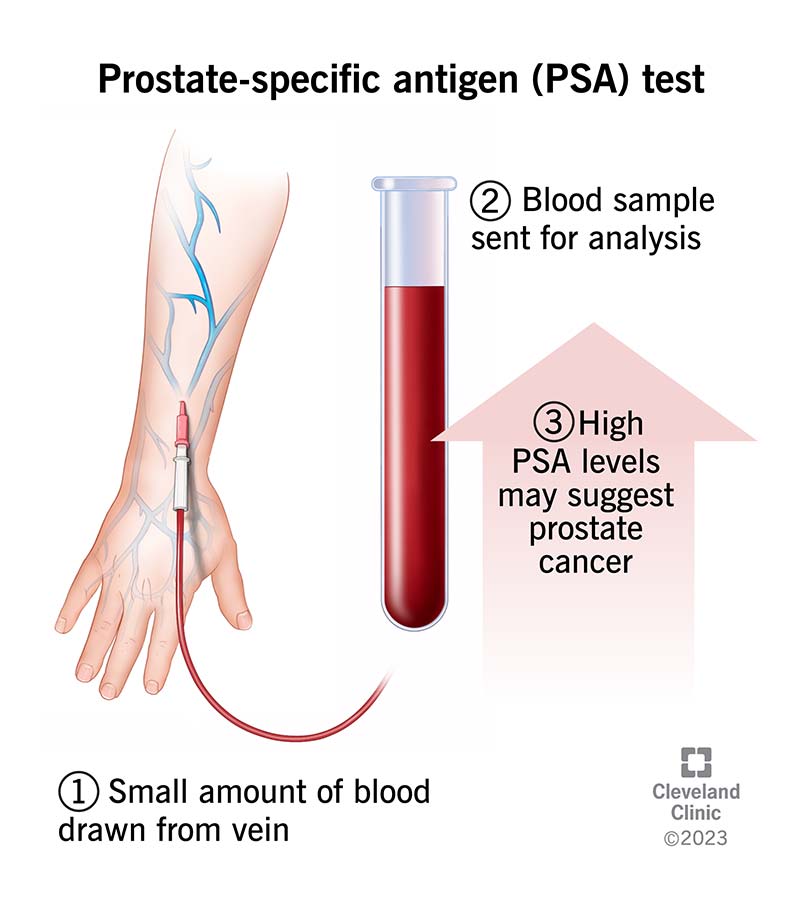

The prostate-specific antigen test, better known as the PSA test, is one of those small blood tests that can start a very big conversation. One quick needle stick, a few numbers on a lab report, and suddenly you may be discussing prostate health, cancer screening, family history, aging, and why the prostate insists on being such a dramatic little gland.
A PSA blood test measures the amount of prostate-specific antigen in the blood. PSA is a protein made by prostate cells. Most PSA stays in semen, but a small amount naturally leaks into the bloodstream. A low PSA level is common. A higher PSA level can happen for several reasons, including prostate cancer, benign prostatic hyperplasia, prostatitis, urinary tract infection, recent ejaculation, bike riding, certain procedures, or simply getting older. In other words, PSA is useful, but it is not a crystal ball. It is more like a smoke alarm: important, worth checking, but not proof that the kitchen is on fire.
What Is a PSA Test?
The PSA test is a laboratory blood test used to measure prostate-specific antigen in nanograms per milliliter of blood, written as ng/mL. Doctors use it mainly to screen for prostate cancer, evaluate prostate-related symptoms, and monitor people who have already been diagnosed with or treated for prostate cancer.
The test itself is simple. A healthcare professional draws blood from a vein, usually in the arm, and sends it to a lab. The complicated part is not the blood draw; it is interpreting what the number means. PSA levels can rise and fall, and a single result rarely tells the whole story. A doctor usually considers your age, prostate size, symptoms, medicines, family history, race, previous PSA results, and overall health before recommending the next step.
Purpose of the PSA Test
1. Screening for Prostate Cancer
The best-known purpose of the PSA test is prostate cancer screening. Prostate cancer is often slow-growing and may cause no symptoms in its early stages. Screening may help detect cancer before it spreads, when treatment options are usually more effective. However, screening also has downsides, including false positives, anxiety, unnecessary biopsies, overdiagnosis, and treatment of cancers that may never have caused harm.
That is why major medical organizations recommend shared decision-making. This means you and your healthcare provider discuss the potential benefits and risks before deciding whether PSA screening makes sense for you. For many average-risk men, this discussion often begins around age 50. Men at higher risk, including Black men and men with a father, brother, or son who had prostate cancer at a younger age, may need to start the conversation earlier, often around age 45 or even age 40 for those with multiple close relatives affected.
2. Checking Symptoms of Prostate Problems
A PSA test may also be ordered if you have urinary or pelvic symptoms. These can include frequent urination, difficulty starting or stopping urine flow, weak urine stream, waking up often at night to urinate, blood in urine or semen, pelvic discomfort, or pain with urination. These symptoms do not automatically mean cancer. In fact, benign prostate enlargement and inflammation are common culprits. Still, PSA testing can be part of the detective work.
3. Monitoring Prostate Cancer
For someone already diagnosed with prostate cancer, PSA testing becomes a tracking tool. Doctors may use PSA levels to monitor active surveillance, check how well treatment is working, or look for signs that cancer has returned after surgery, radiation, or other therapy. In this situation, the trend over time matters even more than one isolated number. A slowly changing PSA can mean something very different from a sharp rise.
Who Should Consider a PSA Test?
There is no one-size-fits-all answer, because prostate cancer risk varies. You may be more likely to benefit from a PSA discussion if you are between 50 and 69, have a family history of prostate cancer, are Black, have known inherited cancer-related gene changes, or have symptoms that suggest a prostate problem.
For men age 70 and older, routine PSA-based screening is generally not recommended by some preventive health guidelines because the potential harms may outweigh the benefits for many people in that age group. However, decisions can vary depending on life expectancy, personal preferences, previous PSA history, and overall health. A healthy 72-year-old marathon runner and a frail 72-year-old with multiple serious illnesses may need very different conversations.
How to Prepare for a PSA Blood Test
Preparation is usually easy, but a few details matter. Tell your healthcare provider about all medications and supplements you take. Drugs used for enlarged prostate, such as finasteride or dutasteride, can lower PSA levels and may affect interpretation. Also mention recent urinary infections, prostate procedures, catheter use, or prostate exams.
Your doctor may suggest avoiding ejaculation for 24 to 48 hours before the test because it can temporarily raise PSA in some men. Some clinicians also recommend avoiding long bike rides shortly before testing because pressure on the prostate may affect results. If you have symptoms of a urinary tract infection or prostatitis, your provider may treat that first and repeat PSA later. Testing during inflammation can make the prostate look guilty when it is just irritated.
Understanding PSA Test Results
PSA results are reported as a number, but the meaning depends on context. There is no single perfect cutoff that separates “normal” from “dangerous.” Historically, many doctors used 4.0 ng/mL as a general threshold, but modern interpretation is more nuanced.
Common PSA Ranges
A PSA below 4.0 ng/mL is often considered lower risk, but prostate cancer can still occur at lower PSA levels. A PSA between 4.0 and 10.0 ng/mL is sometimes called the “gray zone” because it may be caused by cancer or by noncancerous conditions. A PSA above 10.0 ng/mL is more concerning and usually leads to further evaluation. Still, even a high PSA does not diagnose cancer by itself.
Age also matters. PSA levels tend to rise as the prostate enlarges with age. A PSA that seems high for a man in his 40s may be less surprising in a man in his late 60s. Some doctors use age-specific ranges, PSA velocity, PSA density, free PSA percentage, or newer risk calculators to decide what to do next.
PSA Velocity
PSA velocity refers to how quickly PSA rises over time. A rapid increase may be more concerning than a stable mildly elevated PSA. For example, a PSA that jumps from 1.2 to 3.8 within a year may prompt closer evaluation, even if it is still under 4.0. On the other hand, a PSA that has stayed around 4.5 for several years may be interpreted differently.
Free PSA
PSA in the blood exists in different forms. Some is attached to proteins, and some circulates freely. The free PSA percentage can help estimate cancer risk, especially when total PSA is in the gray zone. A lower percentage of free PSA may be associated with a higher chance of prostate cancer, while a higher percentage may suggest a benign cause. Free PSA is not a final answer, but it can help decide whether a biopsy or additional testing is needed.
What Can Cause a High PSA Besides Cancer?
A high PSA result can be unsettling, but cancer is only one possible explanation. Benign prostatic hyperplasia, or BPH, is a common noncancerous enlargement of the prostate that can raise PSA. Prostatitis, which means inflammation or infection of the prostate, can also cause PSA to climb. Urinary tract infections, recent ejaculation, recent prostate stimulation, catheter placement, cystoscopy, prostate biopsy, and even natural aging may affect PSA levels.
This is why many providers repeat the test before jumping to invasive procedures. If PSA is mildly elevated and there are no alarming symptoms, your doctor may recommend waiting a few weeks and testing again under more controlled conditions. The prostate sometimes behaves like a moody neighbor: loud one week, quiet the next.
What Happens After an Abnormal PSA Result?
An abnormal PSA result does not automatically mean you need a biopsy. Your doctor may first repeat the PSA test, perform a digital rectal exam, check for infection, review medications, or order additional tests. Depending on your risk, follow-up may include free PSA, prostate health index testing, 4Kscore, urine-based tests, prostate MRI, or referral to a urologist.
If the concern remains high, a prostate biopsy may be recommended. During a biopsy, small tissue samples are taken from the prostate and examined under a microscope. A biopsy is the only way to confirm prostate cancer. If cancer is found, results may include the Grade Group, Gleason score, PSA level, MRI findings, and cancer stage. These details help determine whether active surveillance, surgery, radiation, hormone therapy, or another approach is most appropriate.
Benefits of PSA Testing
The biggest benefit of PSA testing is the possibility of detecting prostate cancer early. Early detection may reduce the risk of advanced disease and may give patients more treatment choices. PSA testing is also valuable after prostate cancer treatment because rising PSA may be an early sign that cancer has returned.
Another benefit is reassurance. A low and stable PSA can be comforting, especially for someone with a family history of prostate cancer. Of course, reassurance should not turn into ignoring symptoms. Even with a low PSA, new urinary problems, bone pain, blood in urine, or unexplained weight loss should be discussed with a healthcare provider.
Risks and Limitations of PSA Testing
The PSA test is helpful, but imperfect. It can produce false positives, meaning the PSA is high but cancer is not present. False positives can lead to stress, repeat testing, imaging, and biopsy. Biopsies can cause discomfort, bleeding, infection, and worry. PSA testing can also lead to overdiagnosis, which means finding a prostate cancer that would never have caused symptoms or shortened life.
Overdiagnosis can lead to overtreatment. Treatments for prostate cancer can be lifesaving, but they may also cause urinary leakage, bowel problems, erectile dysfunction, and other side effects. This is why shared decision-making matters. The goal is not simply to find every tiny cancer cell. The goal is to find clinically important cancer while avoiding unnecessary harm.
How Often Should PSA Be Tested?
Testing frequency depends on age, risk level, baseline PSA, and personal preference. Some men with low PSA may not need yearly testing. Others with higher risk or changing results may need closer follow-up. Men on active surveillance for low-risk prostate cancer may have PSA testing every few months, along with periodic exams, MRI, or repeat biopsy depending on the care plan.
The most practical advice is to ask your clinician what schedule fits your risk profile. A PSA test is most useful when it is part of a plan, not a random annual number floating in your patient portal like a mysterious stock price.
Questions to Ask Your Doctor About PSA Results
If your PSA result is confusing, you are not alone. Bring specific questions to your appointment. Ask what your PSA means for your age and risk level. Ask whether the result should be repeated. Ask whether infection, medication, ejaculation, or recent procedures could have affected the number. Ask whether free PSA, MRI, or referral to a urologist is appropriate. Ask what would happen if you choose monitoring instead of immediate biopsy.
Good PSA care is not just about numbers. It is about matching medical evidence to your values. Some people want aggressive investigation. Others prefer a more cautious approach. Both can be reasonable when guided by a knowledgeable clinician.
Practical Experiences: What PSA Testing Feels Like in Real Life
For many men, the PSA test is not physically difficult. The emotional part can be the bigger deal. The blood draw is usually over in minutes, but waiting for the result may feel like your inbox has become a suspense movie. One common experience is surprise. A man may feel perfectly healthy, get routine blood work, and suddenly see a PSA number flagged as high. That little red mark on the lab report can trigger a lot of late-night searching, and the internet is not always a calm travel guide.
Another common experience is confusion. Two friends may compare PSA numbers and reach different conclusions. One has a PSA of 3.9 and gets referred to a urologist because he is younger and his number rose quickly. Another has a PSA of 5.2 and is told to repeat the test later because he recently had prostatitis. This can feel inconsistent, but it reflects how PSA must be interpreted with context. The number is not the whole story; it is the headline. The article underneath includes age, symptoms, trend, prostate size, family history, and exam findings.
Some men feel embarrassed discussing prostate symptoms. That is understandable, but unnecessary. Doctors who handle prostate health have heard everything. Frequent nighttime urination, weak stream, dribbling, pelvic discomfort, sexual concerns, and anxiety about cancer are routine medical topics. Your provider is not judging your bathroom schedule. They are trying to understand what your prostate is up to and whether it needs attention.
Another real-life experience is the “repeat test roller coaster.” A mildly elevated PSA may lead to a second test several weeks later. During that time, a doctor may recommend avoiding ejaculation before the test, waiting until an infection clears, or reviewing medications. Sometimes the PSA drops, and everyone exhales. Sometimes it stays high, and the next step may be imaging or a specialist visit. The waiting can be frustrating, but repeating PSA can prevent unnecessary biopsy when the first result was temporarily elevated.
For patients referred to a urologist, the visit often focuses on risk assessment. The urologist may review prior PSA results, perform or discuss a digital rectal exam, order a prostate MRI, or consider additional blood or urine tests. Many patients expect an automatic biopsy, but modern prostate evaluation is often more layered. MRI and risk-based tools can help target biopsies more carefully or avoid them in some lower-risk situations.
Men already treated for prostate cancer may experience PSA testing differently. For them, PSA can become a surveillance marker. A very low PSA after treatment can bring relief, while a rising PSA can bring fear. This is where trend matters. Doctors usually look at patterns, timing, and treatment history before deciding what a change means. One small movement may not be a crisis, but a consistent rise deserves attention.
The best experience with PSA testing usually comes from preparation. Know why the test is being ordered. Ask what result would be considered concerning for you. Ask what the next step would be if the number is high. Avoid comparing your PSA result with someone else’s as if it were a fantasy football score. Your prostate has its own biography.
Most importantly, do not let fear keep you from asking questions. A PSA test is not a verdict. It is information. Used wisely, it can help detect serious disease, guide monitoring, and support better decisions. Used without context, it can create confusion. The sweet spot is informed, calm, personalized careplus maybe a sense of humor, because any gland that can affect both urination and cancer screening has clearly chosen a complicated career.
Conclusion
The prostate-specific antigen test is a simple blood test with a surprisingly complex job. It can help screen for prostate cancer, evaluate prostate symptoms, and monitor treatment, but it cannot diagnose cancer by itself. PSA levels can rise because of cancer, benign enlargement, inflammation, infection, aging, and other everyday factors. That is why the best interpretation comes from looking at the full picture, not just one number.
If you are considering PSA screening, talk with your healthcare provider about your age, family history, personal risk, and preferences. If your result is elevated, do not panic. Repeat testing, additional biomarkers, MRI, or urology evaluation may help clarify what is happening. The PSA test is not perfect, but when used thoughtfully, it can be a valuable tool for protecting prostate health.