The Very Large Telescope Will Get an Upgrade to Search for Planets Around Alpha Centauri

When astronomers announced that the Very Large Telescope would get an upgrade to search for planets around Alpha Centauri, it sounded like the kind of headline sci-fi writers leave on the kitchen table and whisper, “Don’t touch that, it’s the future.” But this was not fiction. It was a serious engineering push aimed at one of the biggest questions in astronomy: can we directly spot worlds around the nearest Sun-like stars to Earth?
That question matters because Alpha Centauri is not just another pretty set of stars twinkling politely in the night sky. It is our cosmic next-door neighbor. If astronomers can find planets there, especially worlds in the habitable zone, those planets instantly become some of the most important targets in all of exoplanet science. In plain English: if there is a place beyond the solar system where we might someday learn the most, Alpha Centauri is high on the list.
The story of this upgrade is really a story about ambition. Astronomers already knew that finding small planets around bright stars is brutally hard. A star is not merely brighter than a planet. It is absurdly brighter. Trying to see a faint world next to Alpha Centauri A or B is a bit like trying to spot a firefly while someone shines a stadium spotlight directly into your eyeballs. Not ideal. Yet instead of backing away slowly, scientists upgraded one of the most powerful ground-based observatories on Earth and told it to stare harder.
Why Alpha Centauri Is the Ultimate Neighborhood Watch
Alpha Centauri sits about 4.37 light-years away, which makes it the closest stellar system to our own. The system includes Alpha Centauri A and Alpha Centauri B, two Sun-like stars orbiting each other, plus the more distant red dwarf Proxima Centauri. Proxima already stole some headlines after the discovery of planets around it, but the bigger long-term dream has been to investigate Alpha Centauri A and B, the two stars that feel most like familiar solar-system real estate.
That is exactly why the search is so exciting. Planets around Alpha Centauri A or B would orbit stars that are more comparable to our Sun than Proxima is. If astronomers could find a temperate planet there, it would not just be “another exoplanet.” It would be a nearby benchmark world, a place where future telescopes could do far more than simply log its existence and move on.
There is also a practical reason for the obsession. Because Alpha Centauri is so close, any confirmed planet there would be easier to study than similar planets farther away. In astronomy, “easier” is a relative term. It still means years of analysis, difficult observing campaigns, and enough data processing to make a supercomputer want a nap. But closeness matters. A lot.
What the Very Large Telescope Upgrade Actually Means
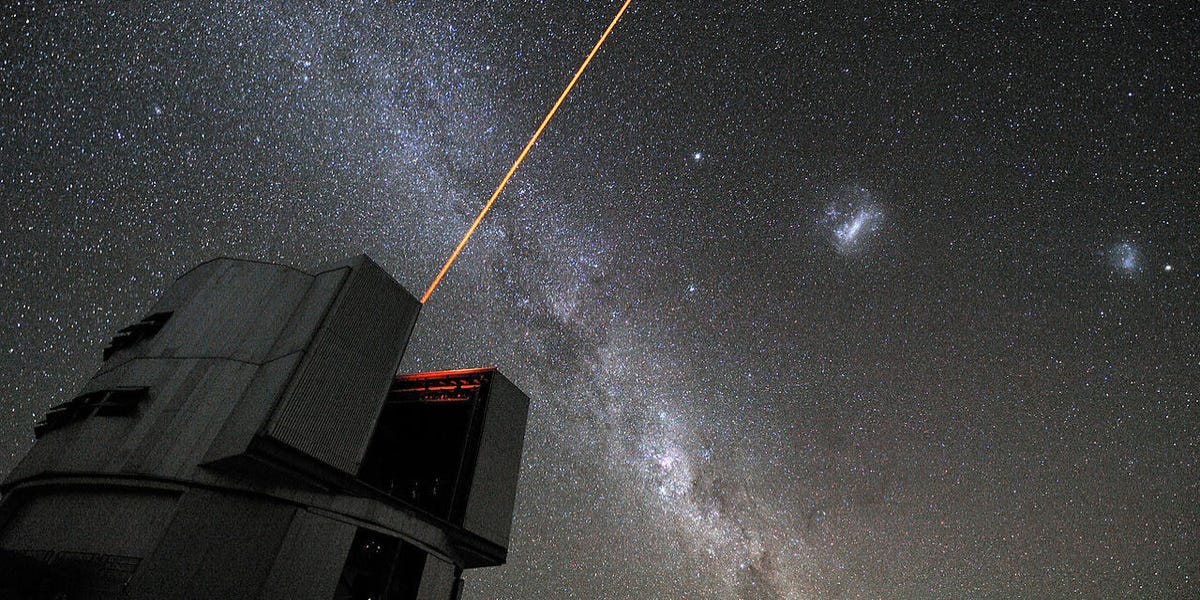
The Very Large Telescope, or VLT, is one of the world’s flagship observatories, perched in Chile’s Atacama Desert where the dry air and dark skies are ideal for precision astronomy. The upgrade tied to the Alpha Centauri search focused on an existing VLT instrument called VISIR, short for VLT Imager and Spectrometer for mid-Infrared. That instrument was modified so it could do a much more specialized job: hunt for heat signatures from planets near Alpha Centauri.
This matters because most exoplanet searches do not directly see planets. They infer them. A star wobbles a little. A star dims a little. Astronomers then say, “Aha, something is tugging or crossing.” That approach is powerful, but Alpha Centauri A and B present special challenges. Their geometry, brightness, and binary-star dynamics make the easy methods less easy. So scientists turned to direct imaging, the glamour-shot method of exoplanet science.
The upgraded system became part of a program called NEAR, short for Near Earths in the AlphaCen Region. NEAR was designed to work in thermal infrared wavelengths, where warm planets glow more strongly. This is a clever move because a temperate planet may not reflect much visible light, but it does emit heat. In other words, if you cannot catch the planet by the light it reflects, try catching it by the heat it leaks into the universe like a tiny cosmic toaster.
The Three Big Tricks Behind the Upgrade
First, coronagraphy. A coronagraph blocks most of a star’s overwhelming light so faint nearby objects become easier to detect. Think of it as giving the telescope a highly professional pair of sunglasses.
Second, adaptive optics. Earth’s atmosphere blurs incoming starlight. Adaptive optics corrects for that blur in real time, sharpening the image. Without this step, the atmosphere would smear delicate planetary signals into mush.
Third, mid-infrared optimization. The upgraded VISIR instrument was tuned for wavelengths where temperate planets are brightest. That shift is critical because rocky or sub-Neptune planets in habitable zones do not blaze like young giant planets. They whisper. Astronomers needed to build an instrument that could hear the whisper under the noise of the room.
Why Direct Imaging Around Alpha Centauri Is So Difficult
If exoplanet hunters had a complaint department, “direct imaging near bright stars” would have its own building. There are several reasons this job is miserable in the most scientifically rewarding way possible.
For one, Alpha Centauri A and B are bright. Very bright. Their glare dominates the scene. For another, astronomers are not searching for giant worlds parked far away from the stars, which are the easiest kinds of planets to image. They are trying to probe habitable zones, the much tighter regions where temperatures might allow liquid water. That means the planet is not just dim; it is dim and tucked in close to the blazing star like a moth near a porch light.
Then there is the thermal background. Mid-infrared astronomy is fantastic for finding warm planets, but it comes with an annoying side effect: the sky, the instrument, and even the telescope itself can glow in infrared too. So the telescope is not just trying to detect a planet. It is trying to detect a planet while its own hardware is effectively saying, “Hello, I am also warm.”
This is what makes the VLT upgrade so interesting. It was not a vanity upgrade or a marketing refresh. It was a focused technical answer to a brutally specific problem. Scientists wanted to prove that directly imaging low-mass, potentially habitable-zone planets from the ground was not an impossible fantasy. It was a calculated gamble that engineering could drag astronomy one step closer to the planets we actually care most about.
From Announcement to First Light: The Search Became Real
The original plan called for the upgraded VLT instrument to conduct a careful Alpha Centauri search, and that effort moved from concept to reality in 2019. The NEAR experiment achieved first light on the VLT and began a roughly 100-hour observing campaign centered on Alpha Centauri A and B.
That observing campaign was a big deal. In exoplanet work, telescope time is precious, expensive, and fought over with the intensity of a family argument about who gets the last slice of pizza. Dedicating about 100 hours to Alpha Centauri signaled just how seriously astronomers took the possibility of finding nearby planets through direct imaging.
The results, published later, showed that the technique worked impressively well. Researchers reached unprecedented sensitivity for warm sub-Neptune-size planets across much of Alpha Centauri A’s habitable zone. Translation: the upgrade was not just useful; it pushed the frontier. It proved that this kind of search could be done and done at a level that genuinely matters.
Did the Upgrade Find a Planet?
Sort of. Maybe. Welcome to astronomy, where the most exciting answer is often “possibly, but calm down.”
The 2021 analysis of the NEAR data reported a faint signal in the habitable zone of Alpha Centauri A. It was intriguing enough to get astronomers buzzing, but not solid enough to pop champagne. The signal could have been a planet candidate. It also could have been dust or an instrumental artifact. Scientists were careful not to oversell it, which is what responsible astronomy looks like when the universe hands you something suspiciously exciting.
Even without a confirmed planet, that result mattered. The weak signal showed the upgraded VLT was probing exactly the sort of territory astronomers hoped to reach. It moved the search from “in theory” to “we are actually seeing something interesting in the right place.” That is real progress.
Why the 2025 Webb Follow-Up Changed the Conversation
The plot thickened when NASA’s James Webb Space Telescope later added new evidence for a possible planet around Alpha Centauri A. Webb’s Mid-Infrared Instrument, using a coronagraphic setup of its own, found stronger evidence for what may be a gas giant orbiting in the star’s habitable zone. If confirmed, that object would be enormously important, though not because it is another Earth. It appears more likely to be a Saturn-mass world than a rocky twin of our home planet.
Still, the connection to the earlier VLT work is what makes this story especially juicy. The newer Webb observations did not emerge from nowhere. They built on the groundwork laid by the VLT and NEAR campaign. In a sense, the upgrade helped open the door, and Webb later peeked farther through it.
This does not mean astronomers have definitely found a habitable world around Alpha Centauri A. They have not. The candidate still needs confirmation, and scientists remain appropriately cautious. But it does mean the search has graduated from hopeful theory to a serious, data-rich campaign involving multiple top-tier observatories. That is a major shift.
Why This Upgrade Matters Beyond One Star System
It would be easy to read this story and think it is only about Alpha Centauri. It is not. It is also about learning how to build and operate instruments that can find small, warm worlds near bright stars. Alpha Centauri just happens to be the most tempting test case because it is so close.
The lessons from the VLT upgrade feed directly into the future of exoplanet imaging. Engineers and astronomers are learning how to combine coronagraphs, adaptive optics, thermal infrared observing, and clever data processing in ways that will help next-generation observatories. The Extremely Large Telescope and its METIS instrument are expected to benefit from this pathfinding work, potentially pushing planet hunting in nearby habitable zones to an even more astonishing level.
In other words, the VLT upgrade is not the endgame. It is a prototype for a new style of astronomy. It teaches scientists how to move from detecting giant baby planets far from their stars to detecting temperate worlds in more interesting neighborhoods. That is a huge conceptual shift. Exoplanet science is slowly transitioning from census-taking to close inspection.
There is also a broader cultural angle. Projects like Breakthrough Starshot have long imagined sending tiny laser-driven spacecraft toward Alpha Centauri in the far future. That dream becomes less abstract when astronomers can point to real planetary candidates. A mission to “some star system out there” is one thing. A mission aimed at an identified world around our nearest stellar neighbor is something else entirely.
What the Upgrade Tells Us About the Search for Life
Any discussion of Alpha Centauri quickly drifts toward the question everyone wants answered: could there be life there? Right now, the honest answer is that we do not know. The VLT upgrade was not a magic alien detector. It was a step toward finding planets in the right place to ask better questions later.
That distinction matters. Habitability is not the same as habitation. A planet in a habitable zone is merely in a region where temperatures might permit liquid water under the right conditions. It could still be dry, airless, overly thick with gas, pummeled by radiation, or just plain weird in ways the cosmos finds hilarious and human expectations do not.
But to figure any of that out, astronomers first need targets. The VLT upgrade helps create those targets. It narrows the field from “the universe is large and full of possibilities” to “here are specific nearby worlds worth studying with every tool we have.” That is how science makes progress: not with dramatic leaps every Tuesday, but with careful instrument upgrades that eventually lead to discoveries everyone calls sudden.
The Human Experience of Chasing a Planet Next Door
There is something wonderfully human about this whole effort. On paper, the VLT upgrade is a technical story about wavefront correction, infrared optimization, and starlight suppression. In practice, it feels like one of the oldest instincts we have: looking over the fence to see what is in the neighbor’s yard. Only in this case the fence is 4.37 light-years away, the yard contains multiple stars, and the nosy neighbors are armed with some of the best optics on Earth.
Imagine standing beneath the southern sky, where Alpha Centauri is not just a catalog entry but a bright, real presence overhead. To the naked eye, it looks calm and simple. Through the lens of modern astronomy, it becomes a place full of tension, possibility, and technical stubbornness. Scientists know the planets they want to find, if they exist, will be buried in glare. They know the data will be messy. They know the most exciting signal may turn out to be dust, noise, or some optical trick the instrument played after midnight. And still they look.
That persistence is part of what makes the search so compelling. Astronomers are not merely collecting photons. They are building patience into hardware. Every modified mirror, every coronagraphic mask, every calibration routine is an act of optimism disguised as engineering. The telescope says, in effect, “I know the star is shouting, but let me see if the planet is whispering underneath.”
For people who follow space science, this kind of project has a special emotional flavor. It is not as flashy as a rocket launch and not as instantly photogenic as a new nebula image. Instead, it is the slower thrill of knowing that a difficult problem is finally being attacked with the right tools. The excitement comes from the precision. You are watching humanity get better at asking the universe a sharper question.
There is also a delicious sense of scale. Alpha Centauri is both absurdly far away and weirdly close. In galactic terms, it is practically down the block. In human terms, it is unreachable with current crewed technology. That tension gives the story its emotional charge. We can see enough to care deeply, but not yet enough to know the whole truth. So every improved image, every better subtraction of starlight, every candidate signal feels like another crack in a locked door.
And then there is the imagination factor. The moment astronomers say “possible planet in the habitable zone,” the mind starts sprinting. Could there be clouds? Oceans? Giant moons? A sulfur-smelling atmospheric disaster? Something gloriously ordinary? Something utterly bizarre? Science, at its best, does not kill wonder. It disciplines wonder. It takes that rush of curiosity and gives it a telescope schedule, a data pipeline, and a peer-review process.
That is why the VLT upgrade resonates beyond astronomy circles. It turns a nearby star system from a familiar name into an active frontier. It gives the public a tangible way to understand that the search for other worlds is no longer just about proving planets exist. We crossed that bridge years ago. Now the work is becoming more intimate. We are beginning to inspect the nearest possibilities one by one, as if humanity has finally stopped asking, “Are there planets out there?” and started asking, “What, exactly, is next door?”
Conclusion
The headline that the Very Large Telescope would get an upgrade to search for planets around Alpha Centauri was not just a cool astronomy announcement. It marked the beginning of a more focused, more daring chapter in exoplanet science. By upgrading VISIR into a more specialized planet-hunting system and launching the NEAR campaign, astronomers showed that direct imaging of low-mass planets in nearby habitable zones is no longer a distant dream.
The search has already produced meaningful results: first light in 2019, unprecedented sensitivity in the Alpha Centauri system, a tantalizing candidate signal, and later support from Webb observations that pushed the case even further. No confirmed Earth-like planet around Alpha Centauri A or B exists yet, so the champagne should remain respectfully corked. But the direction of travel is unmistakable.
The VLT upgrade matters because it did more than improve a telescope. It improved our odds of answering one of the most profound questions in science using the nearest Sun-like stars available. And when the stars in question are the ones living right next door, even a tiny signal can feel like the universe leaning over and saying, “You’re getting warmer.”