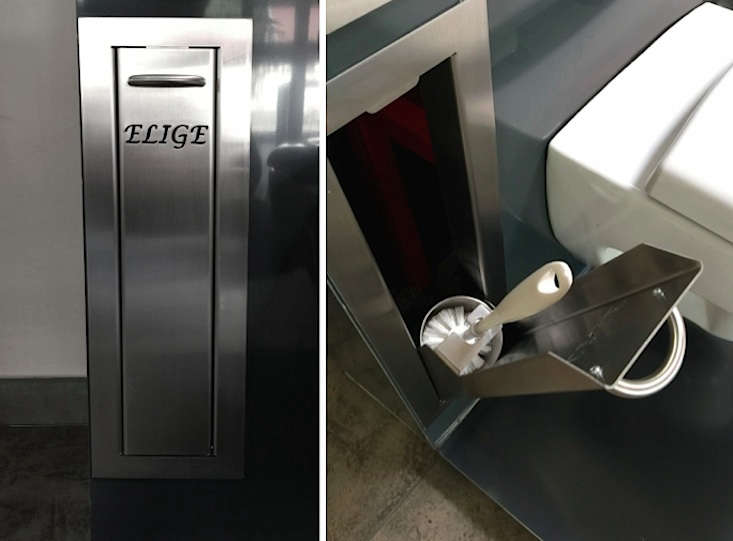

A wall-hung toilet can make a bathroom look wonderfully calm. The tank disappears into the wall, the bowl floats above the floor, and the mop finally gets to travel without crashing into porcelain obstacles. Then someone places a bulky toilet brush beside it, and the minimalist illusion ends with a plastic container squatting in the corner.
An integrated toilet brush holder for wall-hung toilets solves that awkward little design problem. Instead of leaving the brush on the floor, the holder is recessed into the toilet casing, mounted on the wall, or concealed behind a flush-fitting panel. The brush remains close enough for practical use but does not compete with the clean lines of the toilet.
This seemingly minor accessory can improve floor access, bathroom organization, hygiene, and visual consistency. It is especially useful in compact powder rooms, contemporary bathrooms, hotel-style suites, and renovations built around a concealed toilet carrier. However, successful integration requires more than cutting a brush-shaped hole in the drywall and hoping for the best. Placement, ventilation, drainage, materials, service access, and cleaning all matter.
Research basis: wall-hung toilets free the floor, conceal plumbing components and can simplify cleaning.
What Is an Integrated Toilet Brush Holder?
An integrated toilet brush holder is a built-in or wall-mounted storage system designed to keep a toilet-cleaning brush off the bathroom floor. Depending on the product and the surrounding construction, it may be:
- Recessed into the boxed-out wall surrounding a concealed toilet tank
- Built into an adjacent plumbing ledge or service wall
- Mounted directly to the finished wall beside the toilet
- Hidden behind a tileable or stainless steel push-to-open door
- Combined with a toilet paper holder, storage niche, or small cleaning compartment
The most fully integrated models appear almost flush with the wall. A narrow handle, discreet opening, or push panel is the only visible clue. Inside, a removable container catches residual water and keeps the brush from touching the surrounding construction.
Some products are specifically marketed for installation in the casing around a wall-hung toilet. Others are general recessed bathroom accessories that can be incorporated into a suitable partition. In either case, “integrated” should describe the accessory’s relationship to the finished wallnot an unauthorized modification to the toilet’s steel carrier, concealed tank, plumbing, or structural supports.
Why Wall-Hung Toilets and Built-In Brush Holders Work So Well Together
They preserve a clear bathroom floor
One of the greatest advantages of a wall-hung toilet is the open floor underneath it. There is no pedestal, exposed tank, or maze of hard-to-reach connections collecting dust. A freestanding brush holder partially gives that advantage back by creating another object that must be lifted, moved, and cleaned around.
A recessed or wall-mounted toilet brush holder keeps the floor genuinely clear. A mop, microfiber pad, or robotic floor cleaner can pass below it without performing an obstacle course worthy of a small domestic Olympics.
They support a minimalist bathroom design
Wall-hung toilets are often selected for modern interiors because their visible components are simple: a bowl, a seat, and a flush plate. Integrating the toilet brush continues that uncluttered visual language.
The effect is particularly strong when the holder matches another bathroom finish. Brushed stainless steel can coordinate with faucets and shower trim, while a tileable door can nearly disappear into the wall. Matte black works well in graphic contemporary rooms, although dark finishes may show mineral spotting more readily than expected.
They use otherwise wasted wall depth
A concealed toilet carrier usually sits within a framed wall or a purpose-built casing. That construction may create shallow spaces beside the tank or above portions of the plumbing assembly. When the framing plan allows it, a narrow recessed holder can use some of this otherwise inactive space.
This does not mean every empty-looking area is available. Pipes, fasteners, electrical cables, service zones, and structural framing may be hidden behind the surface. The accessory must be planned around those components rather than installed through them with the enthusiasm of a person who has just purchased a new hole saw.
They make compact bathrooms more functional
Every inch matters in a small bathroom. Removing the visible toilet tank can create more usable room, while wall-mounted fixtures help the space feel less crowded. Eliminating a floor-standing toilet brush holder adds another small but meaningful improvement.
The brush still needs to remain accessible. Hiding it in a vanity across the room may create a beautiful photograph but an inconvenient daily routine. An integrated holder beside the toilet balances discretion with practicality.
Research basis: concealed systems can reduce the toilet’s apparent footprint, permit flexible bowl heights and improve access around the fixture.
Essential Features to Look For
A removable inner container
The container surrounding the brush should be removable without dismantling the wall plate. This is one of the most important features because the holder itself requires regular cleaning. A fixed cavity that cannot be washed properly may become a stylish little laboratory for moisture, residue, and odors.
Stainless steel and washable plastic liners are common. Plastic inserts are lightweight and inexpensive to replace, while stainless steel offers a more substantial feel and excellent corrosion resistance when properly maintained.
Controlled ventilation
A toilet brush should not be sealed inside an airtight compartment while it is still wet. Trapped moisture can encourage unpleasant odors and biological growth. Look for a design with a concealed ventilation gap, vented lid, partially open back, or enough internal airflow to promote drying.
Ventilation should not mean displaying the brush head to everyone entering the bathroom. The best designs balance airflow with visual concealment.
A drip-resistant design
The brush container should catch residual water without allowing it to seep into the wall. Internal seams should be smooth, durable, and easy to inspect. The removable cup should sit securely so it cannot tip when the brush is inserted.
A small amount of standing liquid should never be treated as a permanent deodorizing strategy. The container needs to be emptied, washed, and dried regularly.
A replaceable brush head
Integrated hardware may last for many years, but a brush head is a consumable item. Choose a system with replacement heads that are readily available and attached using a common thread or dependable manufacturer-specific connection.
A gorgeous proprietary brush is less charming when the replacement part disappears from the market and the only alternative is replacing the entire wall fitting.
A practical handle and brush shape
A comfortable handle improves control and keeps hands farther from the bowl. The brush head should reach beneath the rim and into curved areas of the trapway. Rounded and tapered heads generally provide better access than oversized decorative shapes that look sophisticated but clean with the determination of a damp pom-pom.
Silicone brushes are easy to rinse and may retain less debris, but their softer fins do not always scrub mineral deposits as aggressively as traditional bristles. Conventional bristles often provide stronger mechanical cleaning but need careful rinsing and drying.
Accessible service and removal
The holder should remain removable after tile, wall panels, or decorative finishes are installed. Confirm how the outer trim, door, liner, and handle can be replaced. A product that can only be serviced by removing surrounding tile is not integrated; it is being held hostage by the wall.
Research basis: removable liners, concealed doors and wall-recessed configurations are established features in purpose-built brush holders.
Planning the Installation
Coordinate with the concealed carrier
A wall-hung toilet depends on a steel carrier secured to the building structure. The carrier supports the bowl and contains or surrounds the concealed flushing components. It should not be drilled, cut, notched, or altered to make room for an accessory unless the system manufacturer explicitly allows the modification.
Review the toilet carrier drawings before choosing a location. Identify the tank, flush valve, water supply, drain connection, mounting rods, frame members, and service opening behind the flush plate. Preserve access to all components that may require future maintenance.
Choose the side carefully
The most convenient position is normally beside the toilet, within comfortable reach but outside the user’s knee, elbow, and foot space. Consider which hand household members are likely to use and whether a vanity, shower screen, door swing, grab bar, or paper holder competes for the same wall area.
In a narrow room, a holder installed too close to the front edge of the bowl may snag clothing or create an uncomfortable projection. A fully recessed model reduces this risk.
Confirm wall depth
Measure the complete product depth, not merely the visible trim. Allow room for the container, mounting hardware, ventilation, wallboard, waterproofing, tile adhesive, and finished tile. A holder described as “compact” may still require more depth than a shallow plumbing chase provides.
When adequate depth is unavailable, a slim wall-mounted model is usually safer than forcing a recessed unit into a crowded cavity.
Plan for waterproofing and condensation
Bathrooms are humid, and the area around a toilet may be cleaned with sprays or wet cloths. The opening should be detailed so moisture cannot migrate behind the wall finish. In wet-room arrangements, use an installation method compatible with the waterproofing system.
A recessed accessory should have a defined interior enclosure rather than exposing raw drywall, wood, or insulation. Corrosion-resistant fasteners are also a sensible investment.
Protect accessibility clearances
In accessible or aging-in-place bathrooms, accessories must not interfere with transfer space, grab bars, wheelchair maneuvering, or required clear floor areas. Controls and accessories also need to remain within usable reach.
Commercial and public bathrooms are subject to formal accessibility standards and applicable building codes. Residential projects can still benefit from the same principles, even when strict public-facility rules do not apply. A designer, architect, contractor, or code professional should review the layout when accessibility is a project requirement.
Research basis: wall-hung toilets can contribute to accessible layouts, but required clearances and accessory placement must remain unobstructed.
Installation During a New Build or Remodel
The best time to install an integrated toilet brush holder is while the toilet service wall remains open. The contractor can compare the accessory dimensions with the carrier frame, move noncritical studs where permitted, add blocking, and create a clean finished opening.
- Select the toilet system and brush holder together. Obtain dimensional drawings for both products before framing begins.
- Map the concealed components. Mark the carrier, supply line, waste connection, flush plate access area, and any electrical service for bidet seats or smart toilets.
- Determine the finished height. Base the position on the installed bowl height and comfortable reach, not on the unfinished subfloor.
- Add structural support. Install blocking or a manufacturer-approved mounting frame where required.
- Complete wall and waterproofing details. Maintain the specified opening dimensions after board, membrane, adhesive, and tile are added.
- Test removal and service access. Confirm that the liner, brush, door, and mounting screws can be reached before applying sealant.
- Use sealant selectively. Seal edges where required for moisture protection, but do not permanently seal removable service components.
A plumber should handle the concealed toilet system, while a carpenter, tile installer, or general contractor may prepare the accessory opening. On complicated projects, coordination between trades is more valuable than the accessory itself. Nothing erases minimalist serenity faster than discovering that the brush compartment occupies the same physical location as a water line.
Can You Retrofit One in an Existing Bathroom?
A recessed holder can be retrofitted, but the project requires careful investigation. The installer must know what is behind the wall and whether enough unobstructed depth exists. Original carrier drawings, construction photographs, electronic scanners, and small inspection openings can help, but none should be treated as permission to cut blindly.
The flush plate provides service access to parts of the tank, yet it does not reveal every pipe or frame member. Avoid installing the brush holder directly beneath, above, or beside the plate until the concealed layout is confirmed.
When a safe cavity cannot be identified, use a high-quality wall-mounted toilet brush holder. It still clears the floor and can visually coordinate with the flush plate, faucets, towel hooks, and paper holder. This solution delivers most of the practical benefit with much less demolition.
Materials and Finishes
Stainless steel
Stainless steel is an excellent choice for a built-in holder because it is strong, corrosion-resistant, and easy to wipe. Brushed finishes tend to disguise fingerprints and small scratches better than mirror-polished metal. Avoid harsh abrasives and chloride-heavy cleaners unless the manufacturer confirms compatibility.
Powder-coated metal
Powder-coated finishes offer attractive matte colors, including black, white, bronze, and muted architectural shades. Inspect the coating periodically for chips, especially around moving doors and the opening where the brush handle enters.
Plastic liners
A removable plastic liner can be extremely practical even when the visible trim is metal. It is light, washable, and inexpensive to replace. Look for smooth surfaces without narrow seams that trap residue.
Tileable fronts
A tileable door creates the most concealed appearance. The panel should still open easily with damp hands and remain identifiable enough that guests do not spend five minutes pressing random wall tiles like contestants in a bathroom-themed escape room.
How to Keep an Integrated Holder Hygienic
Built-in storage does not make a toilet brush self-cleaning. In fact, a concealed holder makes good drying habits more important because moisture and odors are less visible.
- After scrubbing, rinse the brush in clean toilet-bowl water during the final flush.
- Allow excess water to drip into the bowl.
- Let the brush dry before returning it to an enclosed holder whenever possible.
- Clean the removable container with detergent and warm water.
- Disinfect when appropriate using a product suitable for the holder’s material.
- Follow the cleaner’s label directions, including contact time and ventilation requirements.
- Dry the liner and compartment before reassembly.
- Replace worn, flattened, cracked, or permanently stained brush heads.
Cleaning and disinfecting are not identical. Cleaning with soap or detergent removes soil and many germs. Disinfection is an additional process that uses an appropriate chemical product. Visible dirt should generally be removed before disinfectant is applied because residue can reduce its effectiveness.
Never mix bleach with ammonia, acids, toilet bowl cleaners, or other household chemicals. Use gloves when directed, ventilate the bathroom, and follow the product label rather than inventing a stronger home formula. More chemical is not automatically more hygienic; sometimes it is simply more dramatic.
Research basis: brushes and holders should be cleaned regularly, wet brushes benefit from drying, and surfaces should be cleaned before disinfection.
Common Design and Installation Mistakes
Blocking access to the toilet tank
The flush plate is often the service opening for the concealed tank. Do not place an accessory where it prevents plate removal or restricts access to valves and internal components.
Installing the holder too low
A very low opening may require unnecessary bending and may bring the handle into contact with floor-cleaning water. Position it for comfortable retrieval while maintaining a clean visual relationship with the bowl and paper holder.
Choosing a sealed, nonremovable container
A holder that cannot be emptied or washed will eventually become unpleasant. Removability should rank above decorative novelty.
Ignoring replacement parts
Confirm the availability and cost of brush heads, liners, hinges, seals, and handles. Built-in accessories deserve the same long-term planning as faucets and cabinet hardware.
Creating too many competing wall elements
The flush plate, toilet paper holder, grab bar, bidet control, brush holder, and outlet can quickly turn one small wall into an appliance dashboard. Align elements, repeat finishes, and preserve negative space.
Is an Integrated Toilet Brush Holder Worth It?
It is usually worthwhile when you are already constructing a concealed toilet wall, prioritizing an easy-clean floor, or creating a carefully detailed contemporary bathroom. The incremental installation effort can be modest if the accessory is selected before framing and tiling.
It may be less sensible in a low-budget renovation, rental property, extremely shallow wall, or bathroom where replacement parts will be difficult to obtain. A removable wall-mounted holder can provide better flexibility in those situations.
The most successful design is not necessarily the one that hides the brush most completely. It is the one that makes the brush easy to reach, easy to clean, easy to dry, and easy to replace while preserving the advantages of the wall-hung toilet.
Living With an Integrated Toilet Brush Holder: Practical Experience
The first thing people tend to notice after installing an integrated holder is not the holder itself. They notice the empty floor. With the toilet brush no longer standing beside the bowl, cleaning feels unexpectedly straightforward. A mop can sweep underneath the wall-hung toilet and continue along the base of the wall without stopping to relocate a dripping container.
That difference sounds minor until the bathroom has been cleaned a dozen times. Small obstacles create repeated chores. Removing one object from the floor saves only seconds during each cleaning session, but it also removes the dusty ring and occasional moisture mark that develop around a freestanding caddy.
The visual change is equally noticeable. In a small powder room, a conventional brush holder can look larger than it really is because it occupies valuable floor area. A recessed model lets the wall-hung toilet remain the main fixture. Visitors may not realize a brush is present until they need it, which is exactly the level of fame most toilet brushes deserve.
Daily usability depends heavily on placement. A holder installed slightly forward of the bowl is easy to reach but can feel intrusive when sitting down or standing up. One located too far behind the toilet looks tidy but requires an awkward twist. The best position is normally beside the bowl, within natural arm’s reach and clear of knees, feet, paper rolls, and grab bars.
The opening mechanism also matters more than showroom displays suggest. A push-to-open tile panel looks beautifully seamless, but the latch must operate reliably after exposure to humidity and cleaning residue. A discreet finger pull is less invisible but often easier to use. In a family bathroom or guest suite, obvious operation may be preferable to perfect concealment.
Drying is the main habit that determines whether the experience remains pleasant. Returning a wet brush immediately to a tightly enclosed compartment can produce odors. Allowing the brush to drain and dry first takes a little discipline, especially when someone is rushing. A holder with hidden airflow is more forgiving, but it does not eliminate the need to clean the liner.
Removable cups prove their value during maintenance. A smooth liner can be lifted out, washed, dried, and returned in a few minutes. Fixed containers are harder to inspect and may require reaching into a narrow cavity with a cloth. What looked elegant during installation can become irritating when the first deep cleaning arrives.
Finish selection influences long-term satisfaction as well. Brushed stainless steel is generally forgiving and coordinates with many flush plates. Polished metal reflects light beautifully but advertises fingerprints and water spots. Matte black creates a sharp architectural accent, yet dried droplets may be more visible. Tileable doors hide almost completely but require precise installation so grout lines remain aligned and the panel does not bind.
Another useful lesson is to buy spare consumable parts early. Keeping one replacement brush head and liner avoids future frustration if the product line changes. The metal housing may last as long as the bathroom, while the brush itself certainly should not.
In a well-planned installation, the holder feels like part of the architecture rather than an accessory added afterward. It preserves the open floor, keeps cleaning equipment nearby, and removes a visually awkward object from the room. The benefit is not revolutionary, and nobody will invite the neighbors over solely to admire it. Yet it is exactly the sort of thoughtful detail that makes a bathroom easier to live with every day.
Conclusion
An integrated toilet brush holder is a natural companion to a wall-hung toilet. Both products aim to reduce visual clutter, free the floor, and create a bathroom that is easier to maintain. A recessed stainless steel holder, tileable compartment, or slim wall-mounted unit can keep the brush accessible without allowing it to dominate the room.
Plan the holder before closing the toilet service wall. Protect the structural carrier and plumbing, preserve maintenance access, provide ventilation, and select a removable liner with replaceable brush heads. Most importantly, treat the compartment as washable equipment rather than a magical portal into which damp cleaning tools can disappear forever.
Note: Product dimensions, carrier layouts, waterproofing requirements, accessibility rules, and installation methods vary. Review manufacturer instructions and applicable building codes, and use qualified tradespeople when altering a concealed toilet wall.